Compounded medications are not FDA-approved Browse Products

Glutathione Cycling How Long on and Off

Glutathione cycling how long on and off. We cover the research, practical guidance, and what to discuss with your physician.

By FormBlends Editorial Research|Editorial research; no named clinician review documented||

This article is part of our Peptide Therapy collection. See also: GLP-1 Guides | Provider Comparisons

Key Takeaway

Glutathione cycling how long on and off. We cover the research, practical guidance, and what to discuss with your physician.

Glutathione cycling how long on and off is important for maintaining the peptide's effectiveness over time. The most common approach involves 8 to 12 weeks of active use followed by a 4-week break, allowing your body to maintain sensitivity and prevent potential receptor desensitization. Here is how to structure your cycles for optimal results.

Why should you cycle glutathione? Planned breaks explained

Continuous use of any signaling compound can lead to receptor downregulation, where your cells become less responsive over time. Planned breaks help maintain Glutathione's effectiveness by allowing receptors to resensitize .

Additional benefits of cycling include the ability to assess your baseline function during off periods and more cost-effective long-term use.

How long should a glutathione cycle be? 8, 12 and 4 week protocols

  • Standard: 8 weeks on, 4 weeks off (most common)
  • Extended: 12 weeks on, 4 weeks off
  • Maintenance: 4 weeks on, 4 weeks off (for maintenance after goals are met)

Your physician will recommend the protocol best suited to your goals and response .

Glutathione Cycling How Long on and Off: multiple vials of liquid and a syringe on a metal tray

What happens to glutathione effects during off weeks?

During breaks from Glutathione:
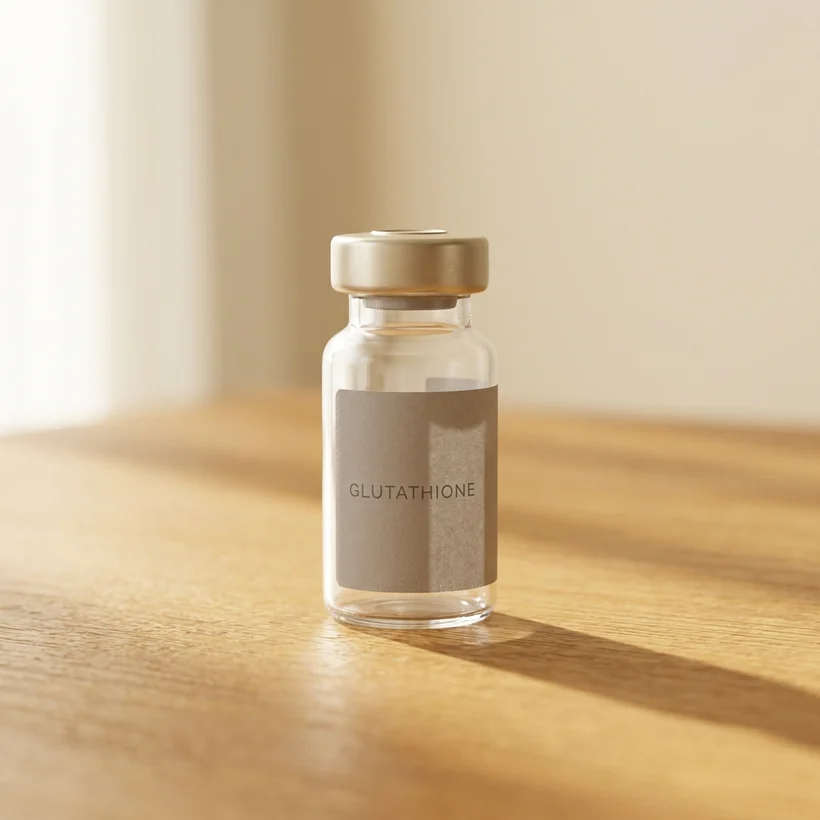
Glutathione Injectable

From the FormBlends catalog

Glutathione Injectable

Injectable antioxidant support for cellular wellness · From $119/mo · prescription review required; compounded medications are not FDA-approved.

Learn about Glutathione Injectable →
  • Benefits may gradually diminish over 1 to 2 weeks as exogenous levels clear
  • Structural improvements tend to persist if you maintain good habits
  • Your body continues producing its own endogenous peptides
  • Use off periods to evaluate your baseline and track lab values

Is a glutathione cycle right for you?

Glutathione may be appropriate depending on your health goals, medical history, and current medications. Consult with a physician who specializes in peptide therapy to determine whether it fits your individual situation.

How soon do glutathione results show up during a cycle?

Initial effects may be noticed within 1 to 2 weeks, with more significant changes typically emerging over 4 to 8 weeks. Individual response varies based on dosage, health status, and lifestyle factors.

Is glutathione FDA-approved and where is it obtained?

Glutathione isn't FDA-approved for any medical condition. It's available through physician-supervised compounding pharmacies and research channels. All use should be under medical oversight.

FormBlends offers physician-supervised peptide therapy. Start your consultation to discuss whether Glutathione is right for your goals.

Glutathione Injectable

Ready when you are

Glutathione Injectable

Injectable antioxidant support for cellular wellness · From $119/mo · prescription review required; compounded medications are not FDA-approved.

Learn about Glutathione Injectable →
Browse the full catalog →

Reported adverse events for glutathione

Safety reports submitted to the FDA document reported side effects and off-label usage patterns.

All reportsOff label useNauseaFatigueHeadache
Glutathione2,215148 (6.7%)135 (6.1%)116 (5.2%)101 (4.6%)

openFDA data updated 2026-10-28. A report means someone linked a symptom to a drug, not that the drug caused it, and report counts cannot give a rate among all users. Terms are MedDRA preferred terms.

Source: openFDA drug adverse event endpoint (FAERS), patient.drug.openfda.generic_name and reactionmeddrapt.exact counts (accessed 2026-11-16)

Questions about glutathione research and safety

Glutathione attracts interest for off-label protocols. Here is what public clinical registries and FDA safety databases document.

What side effects appear in glutathione safety reports?

The FDA Adverse Event Reporting System lists 2,215 total reports naming glutathione through October 2026. Reported reactions include nausea in 135 reports (6.1%), fatigue in 116 reports (5.2%), and headache in 101 reports (4.6%). Another 148 reports (6.7%) record off-label use.

Can glutathione use involve technique errors or lack of effect?

In the FDA safety database, 76 of 2,215 reports (3.4%) identify wrong technique in the product usage process. Another 76 reports (3.4%) cite the drug as ineffective. Patients considering glutathione should confirm all preparation and administration details with their prescribing physician or dispensing pharmacist.

Sources: openFDA drug adverse event endpoint (FAERS), patient.drug.openfda.generic_name and reactionmeddrapt.exact counts (accessed 2026-11-16); ClinicalTrials.gov and PubMed counts (accessed 2026-11-16)

Glutathione Cycling How Long on and Off
FormBlends guide cover for Glutathione Cycling How Long on and Off.

Peptide decision path

Move from research interest to supervised review

Related treatment context

Glutathione Cycling How Long on and Off should be evaluated through research status, legal access, source quality, safety context, and clinician oversight rather than a shortcut purchase decision.

Evidence check

Useful peptide pages should separate human data, animal research, mechanistic evidence, and marketing claims.

Safety check

Peptides can vary by legal status, compounding pathway, purity testing, patient history, and interaction risk.

Next step

Compare available peptide options and their evidence before choosing a plan. Each available prescription requires provider review.

FormBlends Editorial Context

  • Confirm whether the page is discussing an FDA-approved use, a compounded option, or research-only context.
  • Ask a licensed clinician how the evidence applies to your health history, medications, labs, and side-effect risk.
  • Check the latest label, trial update, pharmacy policy, or state rule when the article touches medication access.

Original tools and data

Use FormBlends tools and data

Compare provider prices, explore local access and check calculations using FormBlends tools and data.

Download the Peptide Quick Reference Card

A printable 2-page reference covering popular peptides, dosing ranges, stacking protocols, and storage.

Free download. We'll also send helpful GLP-1 guides to your inbox. Unsubscribe anytime.

Medical Disclaimer: This content is for informational purposes only and does not constitute medical advice. Always consult a qualified healthcare provider before starting, stopping, or changing any medication or treatment. FormBlends articles are source-checked against medical and regulatory references, but they are not a substitute for a personal medical consultation.

Written by FormBlends Editorial Research

Prepared by FormBlends Editorial Research.

Ready to get started?

Provider-reviewed GLP-1 and peptide therapy, delivered to your door.

Start Your Consultation

Ready to Start Your Weight Loss Journey?

Get a free medical consultation with a licensed provider. Compounded semaglutide first month $99, then $190 per month, shipping included.

Next Best Reads

FormBlends for iPhone

Reconstitution math, dose schedules and logs in one place

The free FormBlends iPhone app keeps peptide schedules, concentrations, reminders, inventory and progress notes together.

Free Tools

Calculators to support your weight loss journey.