Key Takeaway
How to inject BPC-157 subcutaneously? Step-by-step guide covering reconstitution calculator, dosing, injection technique, site selection, and safety tips from physician-supervised protocols.
Subcutaneous BPC-157 injection involves drawing the prescribed dose into an insulin syringe, pinching a fold of skin at the injection site, inserting the needle at a 45-degree angle, and slowly depressing the plunger. The process takes about 30 seconds once prepared. Before your first injection, your prescribing physician or their clinical team should walk you through the technique and provide specific instructions for your protocol. This guide covers the general principles, but always follow your provider's individualized directions.
Step 1[1]: Reconstitution (If Starting a New Vial)
BPC-157 arrives from the pharmacy as a lyophilized (freeze-dried) powder. Before you can inject it, you need to reconstitute it with bacteriostatic water.
What You Need
- One vial of lyophilized BPC-157
- One vial of bacteriostatic water (BAC water)
- One 1 mL insulin syringe (for reconstitution and injection)
- Alcohol swabs
Reconstitution Process
Remove the flip-top caps from both vials. Swab the rubber stoppers of both vials with alcohol and let them air dry for a few seconds. Draw the prescribed amount of bacteriostatic water into the syringe. Your pharmacy or physician will specify the exact volume. Common reconstitution volumes are 1 mL or 2 mL of BAC water per vial, which determines the concentration per unit on your syringe.
Insert the needle into the BPC-157 vial at an angle so the tip touches the glass wall inside. Slowly depress the plunger to let the water run down the side of the vial. Don't spray the water directly onto the powder, as this can damage the peptide through shear force. Let the water gently dissolve the powder. You can swirl the vial very gently to help dissolution, but don't shake it. Shaking creates foam and can denature the peptide.
The solution should become clear and colorless within a few minutes. If it remains cloudy or contains visible particles after gentle swirling, don't use it. Contact your pharmacy.
Once reconstituted, label the vial with the date. Store in the refrigerator at 36 to 46°F (2 to 8°C). Use within 28 days.
Step 2: Preparing Your Dose
Wash your hands thoroughly with soap and water. Remove the reconstituted BPC-157 vial from the refrigerator. Swab the rubber stopper with an alcohol pad. Using a fresh insulin syringe, pull back the plunger to draw in a small amount of air equal to your dose volume. Insert the needle through the rubber stopper and push the air into the vial. This equalizes pressure and makes drawing the liquid easier. Invert the vial and draw the prescribed dose into the syringe.
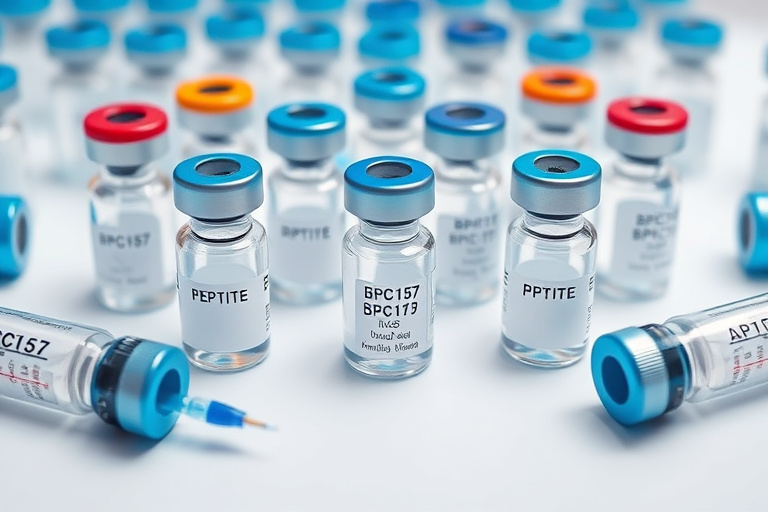
Check for air bubbles. If present, tap the syringe gently with your finger to move the bubbles to the top near the needle, then push the plunger slightly to expel them back into the vial. Small air bubbles in a subcutaneous injection aren't dangerous, but removing them ensures accurate dosing.
How Your Dose
Your physician will prescribe a dose in micrograms (mcg). The volume you draw depends on how the vial was reconstituted. For example, if a 5 mg (5000 mcg) vial was reconstituted with 2 mL of BAC water, each 0.1 mL (10 units on an insulin syringe) contains 250 mcg. Your pharmacy should provide a dosing card or your physician will specify the exact number of units to draw. If you're unsure about the volume, contact your provider before injecting.
Step 3: Choosing the Injection Site
Subcutaneous means "under the skin." The injection goes into the fat layer between the skin and the muscle. Common subcutaneous injection sites include the abdomen (the area around the navel, at least 2 inches away from the belly button), the front or outer thigh, and the back of the upper arm.

From the FormBlends catalog
BPC-157
The body protection compound for accelerated healing · From $169/mo · compounded by a licensed 503A pharmacy, dispensed only after provider review.
View BPC-157 →Injection Near the Injury Site
Many physicians recommend injecting BPC-157 as close to the target area as possible for musculoskeletal conditions. For a shoulder injury, you might inject subcutaneously near the shoulder. For a knee tendon issue, near the knee. The rationale is that local injection delivers a higher concentration of BPC-157 to the tissue that needs it. For GI-related use or general systemic effects, the abdomen is the standard site. Your physician will specify the preferred injection location for your protocol.
Rotating Sites
Even when injecting near a specific area, rotate the exact injection spot within that region. Repeated injection at the same exact point can cause localized tissue irritation, lipodystrophy (changes in the fat layer), or increased discomfort. Move the injection point by about half an inch to an inch each time.
Step 4: The Injection
Clean the injection site with an alcohol swab and let it dry completely. Alcohol stings if the skin is still wet when you insert the needle. Pinch a fold of skin between your thumb and index finger. This lifts the subcutaneous fat away from the muscle layer underneath. Hold the syringe like a pencil or dart. Insert the needle at a 45-degree angle into the pinched skin fold. For very lean individuals, 45 degrees is preferred. For individuals with more subcutaneous fat, a 90-degree angle is also acceptable.
Release the skin fold. Slowly depress the plunger to inject the full dose. There's no need to aspirate (pull back on the plunger to check for blood) with subcutaneous injections using insulin syringes. Once the plunger is fully depressed, wait 5 seconds before withdrawing the needle. This allows the solution to disperse and prevents backflow. Withdraw the needle at the same angle it entered. Press a clean alcohol swab or cotton ball gently against the injection site for a few seconds. Don't rub.
Dispose of the used syringe in a sharps container. Never reuse syringes.
Common Questions During the First Few Injections
Will it hurt?
Insulin syringes use very fine needles (typically 29 to 31 gauge), and most people describe the sensation as a brief, mild pinch. Some injection sites are more sensitive than others. The abdomen is generally the least painful site. Injecting cold solution directly from the refrigerator can increase discomfort slightly. letting the syringe warm in your hand for 30 seconds beforehand can help.
What if I see a small amount of blood?
A tiny drop of blood at the injection site is normal and happens when the needle nicks a small capillary. Apply gentle pressure with a cotton ball. This doesn't affect the efficacy of the injection.
What if there's a small bump at the injection site?
A small, temporary wheal (raised area) at the injection site is normal with subcutaneous injections. It's simply the injected fluid sitting in the subcutaneous space before it absorbs. It will resolve within 15 to 60 minutes.
Safety and Best Practices
BPC-157 has a strong preclinical safety profile with no identified toxic dose. Side effects from injection are typically limited to mild, transient injection site reactions. General best practices include always using a new, sterile syringe for each injection, never sharing needles or vials with another person, storing reconstituted BPC-157 in the refrigerator between uses, following your prescribed dose exactly, contacting your physician if you experience unexpected redness, swelling, warmth, or pain at the injection site that doesn't resolve within 24 hours, and keeping a log of injection dates, sites, and any observations to share with your physician at follow-up.
Related Questions
What size syringe should I use for subcutaneous BPC-157?
A standard 1 mL insulin syringe with a 29 to 31 gauge, half-inch needle is the most commonly used syringe for subcutaneous BPC-157 injection. These are widely available at pharmacies and are the same syringes used for insulin. The fine gauge minimizes discomfort, and the half-inch length is appropriate for subcutaneous depth in most body compositions.
What time of day should I inject BPC-157?
There's no definitive evidence that time of day significantly affects BPC-157 efficacy. Most protocols recommend consistency: pick a time that works for your schedule and stick with it. Some physicians suggest splitting the daily dose into two injections (morning and evening) for more consistent peptide levels, while others prefer a single daily injection. Follow your prescribing physician's specific recommendation.
Can I inject BPC-157 intramuscularly instead of subcutaneously?
Intramuscular (IM) injection is possible and has been used in some protocols, but subcutaneous is the standard route for BPC-157 in most clinical settings. Subcutaneous injection is simpler, less painful, uses shorter needles, and provides consistent absorption. IM injection delivers the peptide deeper into tissue, which some clinicians prefer for deep muscle or tendon injuries. Discuss the optimal route with your physician based on your specific condition.
Frequently Asked Questions
What results can I expect from Inject BPC-157 Subcutaneous?
Results vary based on the specific peptide, dosage, individual biology, and adherence to the protocol. Most users report noticeable effects within 2-6 weeks. Tracking biomarkers and keeping a symptom journal helps measure progress.
Is Inject BPC-157 Subcutaneous FDA approved?
Regulatory status varies by peptide. Some peptides are FDA-approved for specific medical uses, while others are available through compounding pharmacies for research or off-label use. Discuss the regulatory status with your provider.
How long does a typical Inject BPC-157 Subcutaneous cycle last?
Cycle length depends on the specific peptide and your goals. Most peptide protocols run 8-12 weeks followed by a 4-week break. Your provider can recommend the best cycling schedule for your situation.
Medical References
- Wilding JPH, Batterham RL, Calanna S, et al. Once-Weekly Semaglutide in Adults with Overweight or Obesity. N Engl J Med. 2021;384(11):989-1002. [PubMed | ClinicalTrials.gov | DOI]
- Davies M, Færch L, Jeppesen OK, et al. Semaglutide 2.4 mg once a week in adults with overweight or obesity, and type 2 diabetes (STEP 2). Lancet. 2021;397(10278):971-984. [PubMed | ClinicalTrials.gov | DOI]
- Wadden TA, Bailey TS, Billings LK, et al. Effect of Subcutaneous Semaglutide vs Placebo as an Adjunct to Intensive Behavioral Therapy on Body Weight in Adults With Overweight or Obesity (STEP 3). JAMA. 2021;325(14):1403-1413. [PubMed | ClinicalTrials.gov | DOI]
- Rubino D, Abrahamsson N, Davies M, et al. Effect of Continued Weekly Subcutaneous Semaglutide vs Placebo on Weight Loss Maintenance in Adults With Overweight or Obesity (STEP 4). JAMA. 2021;325(14):1414-1425. [PubMed | ClinicalTrials.gov | DOI]
Get Expert Injection Guidance from FormBlends
Self-injection is straightforward once you learn the technique, but learning from a medical team matters. At FormBlends, our physicians provide detailed injection instructions, dosing guidance, and ongoing support throughout your protocol. Pharmaceutical-grade BPC-157, proper supplies, and a clinical team that answers your questions. That's how peptide therapy should work.
Start your consultation at FormBlends.com
Ready when you are
BPC-157
The body protection compound for accelerated healing · From $169/mo · compounded by a licensed 503A pharmacy, dispensed only after provider review.
View BPC-157 →