Key Takeaway
Evidence-based guide to NAD+ dosage research protocols. Research findings, protocols, benefits, and safety from FormBlends.
Quick Answer: Nad+ dosage research protocols is an area of active research with promising preclinical data. This guide covers what current science tells us, including mechanisms, findings, and practical considerations. Nad+ isn't FDA-approved for any medical condition .
What NAD+ is and how the peptide acts in research
Nad+ is a peptide compound that has attracted significant research interest. Peptides are short chains of amino acids that act as signaling molecules, influencing processes from tissue repair to hormonal regulation .
The mechanism involves binding to specific cellular receptors and triggering downstream signaling cascades related to inflammation, cellular repair, and growth factor expression .
We want to be transparent: most NAD+ research has been conducted in animal models. While preclinical results have been consistently encouraging, we're still building the human clinical evidence base.
What preclinical NAD+ studies have reported
Key findings from preclinical literature on NAD+ include:
- Tissue-level effects. Studies in rodent models show NAD+ influences cellular behavior in relevant ways .
- Dose-response patterns. Benefits follow a dose-dependent curve with optimal ranges identified in animal protocols.
- Safety observations. Nad+ has demonstrated a favorable safety profile with no identified toxic dose in animal models .
- combined effect potential. Some studies have explored combining NAD+ with other compounds and found additive effects.
Safety and practical points to weigh before using NAD+
How physicians set NAD+ protocols for each patient
Dosing ranges vary by application. Your physician will determine the appropriate protocol based on your individual health profile .
From the FormBlends catalog
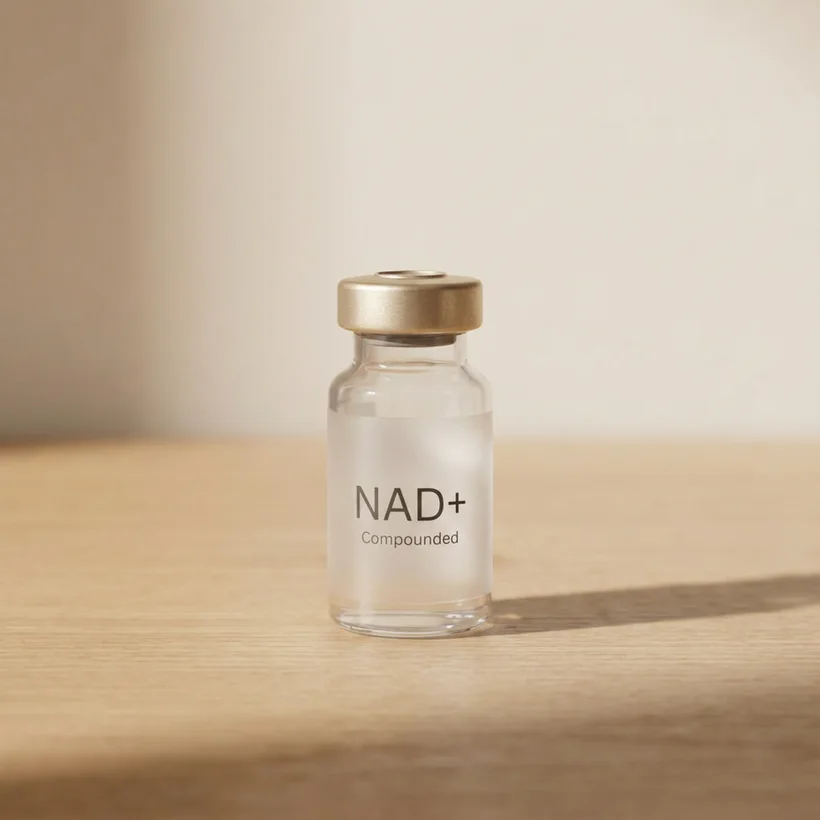
NAD+ Peptide Complex
Restore cellular energy and DNA repair capacity · From $179/mo · prescription review required; compounded medications are not FDA-approved.
Learn about NAD+ Peptide Complex →How NAD+ is given by subcutaneous injection
Nad+ is typically administered via subcutaneous injection. Your FormBlends physician will guide you through proper technique.
What patients may notice on NAD+ over time
Individual responses vary. Some patients notice effects within weeks, while others require a longer protocol. Consistent use under physician supervision produces the best outcomes.
How NAD+ is used alongside semaglutide and tirzepatide
Many patients use NAD+ alongside GLP-1 medications like semaglutide or tirzepatide. These treatments work through different pathways and can address complementary aspects of health nad+ with semaglutide combination guide.
Frequently Asked Questions
Is NAD+ approved by the FDA for any condition?
No. Nad+ isn't approved by the FDA for any disease. It's used under physician supervision.
How soon NAD+ effects may appear in patients
Some patients report effects within two to four weeks. Your provider will set expectations based on your goals.
What side effects NAD+ has shown in research
Nad+ has shown a clean safety profile in preclinical research. Common reported effects include mild injection site reactions.
Start a physician-supervised NAD+ consultation online
FormBlends offers physician-supervised peptide therapy through telehealth. Start your consultation today.
Sources
- Martens CR, Denman BA, Mazzo MR, et al. Chronic nicotinamide riboside supplementation is well-tolerated and elevates NAD+ in healthy middle-aged and older adults. Nat Commun. 2018;9(1):1286. PMID: 29599478.
- Yoshino M, Yoshino J, Kayser BD, et al. Nicotinamide mononucleotide increases muscle insulin sensitivity in prediabetic women. Science. 2021;372(6547):1224-1229.
- Airhart SE, Shireman LM, Risler LJ, et al. An open-label, non-randomized study of the pharmacokinetics of the nutritional supplement nicotinamide riboside (NR) and its effects on blood NAD+ levels in healthy volunteers. PLoS One. 2017;12(12):e0186459. PMID: 29211728.
Ready when you are
NAD+ Peptide Complex
Restore cellular energy and DNA repair capacity · From $179/mo · prescription review required; compounded medications are not FDA-approved.
Learn about NAD+ Peptide Complex →