Key Takeaway
Learn about NAD+ dosing for IV infusion, subcutaneous injection, and oral precursors. Evidence-based dosage guidance with physician oversight from FormBlends.
Quick Answer: NAD+ dosing varies by delivery method. IV infusions typically range from 250 mg to 750 mg per session. Subcutaneous injections commonly use 50 mg to 200 mg per dose. Oral precursors (NMN, NR) are studied at 250 mg to 1,200 mg daily. Your physician should determine the right dose for your goals and health profile. NAD+ therapy isn't FDA-approved for any medical condition.
What Is NAD+?
NAD+ (nicotinamide adenine dinucleotide) is a coenzyme involved in hundreds of metabolic reactions in every cell of your body. It supports mitochondrial energy production, DNA repair, and the activity of sirtuins and other regulatory enzymes.
NAD+ levels decline with age, and restoring them through supplementation has become a central focus of longevity and metabolic health research . Because NAD+ can be delivered through several routes, each with different bioavailability and dosing ranges, understanding the options is important for getting the most out of therapy.
This guide covers the dosing protocols most commonly used in clinical practice and research. But the right dose for you depends on your individual health profile, goals, and physician's assessment.
NAD+ Dosing by Delivery Method
IV NAD+ Infusion Dosing
Intravenous infusion delivers NAD+ directly into the bloodstream, bypassing the digestive system entirely. This provides near-100% bioavailability and is considered the most direct method of raising systemic NAD+ levels.
View data table
| Category | Clinical Interest Score | Detail |
|---|---|---|
| BPC-157 | 88 | Tissue repair and gut healing |
| TB-500 | 82 | Injury recovery |
| Sermorelin | 78 | Growth hormone support |
| Ipamorelin | 75 | Anti-aging and recovery |
| GHK-Cu | 70 | Skin and tissue repair |

Typical dosing ranges:
- Low dose (introductory): 250 mg per session. This is often used for first-time patients to assess tolerance.
- Standard dose: 500 mg per session. This is the most commonly used dose in clinical settings for general wellness and energy support.
- High dose: 750 mg to 1,000 mg per session. Sometimes used for intensive protocols or specific therapeutic goals under close physician supervision.
Infusion rate: The infusion is typically administered over 2 to 4 hours. Faster rates increase the likelihood of side effects such as chest tightness and nausea. Your clinician will adjust the drip rate based on your comfort.
Frequency: Initial protocols often involve a loading phase of 2 to 4 sessions over 1 to 2 weeks, followed by maintenance sessions every 2 to 4 weeks. Your physician will tailor the frequency to your needs.
Subcutaneous NAD+ Injection Dosing
Subcutaneous injection offers a practical at-home alternative to IV infusion. The NAD+ is absorbed gradually from the injection site into the bloodstream. Bioavailability is lower than IV but significantly higher than oral administration.
Typical dosing ranges:
- Starting dose: 50 mg to 100 mg per injection. This allows assessment of tolerance and response.
- Maintenance dose: 100 mg to 200 mg per injection, administered 2 to 5 times per week depending on the protocol.
Injection volume: Concentration of compounded NAD+ solutions varies, but injections are typically 0.5 mL to 1 mL per dose. Smaller volumes are generally more comfortable.
For step-by-step injection guidance, see our NAD+ how to inject guide.
Oral NAD+ Precursor Dosing (NMN and NR)
Oral precursors are converted to NAD+ through metabolic pathways after absorption. They offer the greatest convenience but have lower bioavailability compared to injectable routes.
NMN (Nicotinamide Mononucleotide):
- Clinical trials have studied doses ranging from 250 mg to 1,200 mg per day.
- A common protocol is 250 mg to 500 mg taken once daily in the morning.
- Higher doses (up to 1,200 mg) have been used in research settings and shown to be well tolerated.
NR (Nicotinamide Riboside):
- Clinical trials have typically used doses of 250 mg to 1,000 mg per day.
- A common starting dose is 300 mg per day, sometimes divided into two doses.
Both NMN and NR have demonstrated the ability to raise blood NAD+ levels in humans in clinical trials.
Factors That Influence Your Ideal Dose
NAD+ dosing isn't one-size-fits-all. Several factors will influence what your physician recommends:
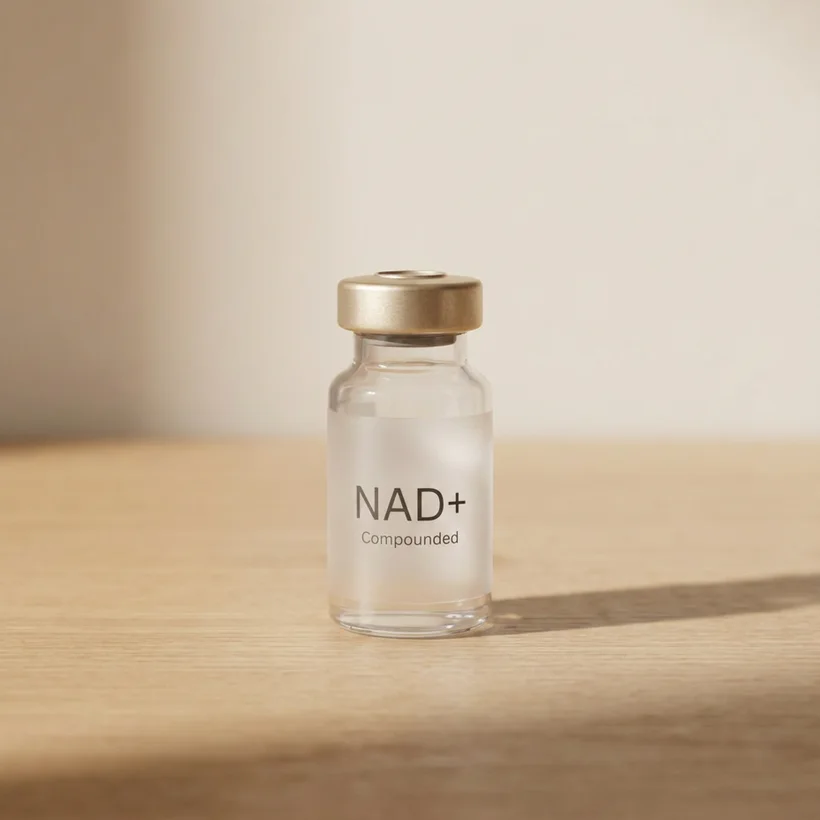
From the FormBlends catalog
NAD+ Peptide Complex
Restore cellular energy and DNA repair capacity · From $179/mo · compounded by a licensed 503A pharmacy, dispensed only after provider review.
View NAD+ Peptide Complex →Age
NAD+ levels decline with age, so older individuals may benefit from higher or more frequent dosing to achieve meaningful restoration. A 60-year-old starting NAD+ therapy may need a different protocol than a 35-year-old.
Health Goals
The reason you're pursuing NAD+ therapy matters. General wellness and energy support may require different dosing than protocols aimed at specific health concerns. Your physician will align the dose with your objectives.
Body Weight
Larger individuals may require higher doses to achieve comparable tissue NAD+ levels. Some clinicians adjust IV dosing based on body weight, though standardized weight-based protocols haven't been established in clinical trials.
Tolerance and Response
Some people are more sensitive to NAD+ therapy than others. Starting with a lower dose and adjusting based on your response and any side effects is a sound approach. See our NAD+ side effects guide for information on managing tolerability.
Combination Therapy
If you're using NAD+ alongside other peptide therapies or supplements, your physician may adjust the dose to account for potential combined effects or interactions.
Sample Dosing Protocols
The following are examples of dosing protocols commonly used in clinical practice. These are general frameworks, not prescriptions. Your physician will create a personalized protocol.
General Wellness Protocol
- Subcutaneous NAD+ 100 mg, 3 times per week
- Or oral NMN 500 mg daily
- Duration: ongoing, with periodic physician review
Intensive Loading Protocol
- IV NAD+ 500 mg, 3 to 4 sessions over 10 to 14 days
- Transition to subcutaneous NAD+ 100 to 200 mg, 2 to 3 times per week for maintenance
Anti-Aging and Longevity Protocol
- Subcutaneous NAD+ 150 mg, 3 to 5 times per week
- Monthly IV NAD+ 500 mg booster session (optional)
- Duration: ongoing, with periodic lab work and physician review
Timing and Administration Tips
- Morning dosing: Many clinicians recommend taking NAD+ or its precursors in the morning, as it supports cellular energy production and may interfere with sleep if taken late in the day.
- With or without food: IV and subcutaneous routes are unaffected by food intake. Oral precursors may be taken with or without food, though taking them with a light meal may reduce mild GI symptoms.
- Consistency matters: For subcutaneous and oral protocols, maintaining a consistent schedule helps sustain improved NAD+ levels over time.
- Hydration: Staying well hydrated before and after any NAD+ administration can reduce side effects such as nausea and lightheadedness.
Safety Considerations
NAD+ has demonstrated a favorable safety profile across clinical studies. Trials of oral NMN at doses up to 1,200 mg daily reported no serious adverse events . IV and subcutaneous administration carry slightly higher side effect rates, but effects are generally mild and manageable.
The most important safety practice is working with a qualified physician who can monitor your response and adjust your protocol. Self-dosing without medical guidance isn't recommended.
For a full overview of side effects, read our NAD+ side effects guide.
How FormBlends Can Help
Determining the right NAD+ dose requires medical expertise. At FormBlends, our licensed physicians evaluate your health history, goals, and tolerance to create a personalized dosing protocol.
When you work with us, you receive:
- A thorough medical evaluation before therapy begins
- A customized dosing protocol tailored to your needs
- Pharmaceutical-grade NAD+ from licensed compounding pharmacies
- Ongoing physician oversight with dose adjustments as needed
We believe that proper dosing, guided by a physician, is important for getting the best results from NAD+ therapy while minimizing side effects.
Frequently Asked Questions
What is the best dose of NAD+ for beginners?
For IV infusions, 250 mg is a common starting dose. For subcutaneous injections, 50 to 100 mg is typical. For oral NMN, 250 to 500 mg daily is a reasonable starting point. Your physician will adjust based on your response.
How often should I take NAD+?
Frequency depends on the delivery method and your goals. IV infusions are typically done weekly to monthly. Subcutaneous injections are commonly administered 2 to 5 times per week. Oral precursors are usually taken daily.
Can I take too much NAD+?
Clinical trials have tested NAD+ precursors at doses up to 1,200 mg daily without serious adverse effects. But taking more than your physician recommends isn't advisable. Higher IV doses or faster infusion rates increase the likelihood of side effects like chest tightness and nausea.
Should I take NAD+ in the morning or at night?
Morning administration is generally preferred because NAD+ supports energy production and circadian rhythm regulation. Taking it late in the day may cause difficulty sleeping in some individuals.
How long should I stay on NAD+ therapy?
There's no established maximum duration. Many physicians recommend ongoing therapy with periodic check-ins and lab work to assess response. Your physician will help you determine the appropriate duration based on your goals and health status.
Ready to Learn More?
If you want personalized guidance on NAD+ dosing, FormBlends can connect you with a licensed physician who will create a protocol tailored to your needs. Our team is here to help you get the most out of NAD+ therapy safely and effectively.
Disclaimer: This article is for informational purposes only and doesn't constitute medical advice. NAD+ therapy isn't FDA-approved for any medical condition. The dosing information presented here is based on clinical research and common clinical practice and shouldn't be used as a substitute for professional medical guidance. Always consult with a licensed healthcare provider before beginning any therapy. Individual results may vary. FormBlends doesn't claim that NAD+ cures, treats, or prevents any disease.
Ready when you are
NAD+ Peptide Complex
Restore cellular energy and DNA repair capacity · From $179/mo · compounded by a licensed 503A pharmacy, dispensed only after provider review.
View NAD+ Peptide Complex →