Key Takeaway
Learn how NAD+ supports muscle recovery through mitochondrial function, reduced inflammation, and improved cellular energy. Evidence-based guidance from FormBlends.
Quick Answer: NAD+ supports muscle recovery by fueling mitochondrial energy production in skeletal muscle, reducing exercise-induced inflammation, and activating sirtuins that regulate muscle repair. Animal studies show improved endurance and faster recovery with NAD+ restoration. Human data is growing but still limited. NAD+ therapy isn't FDA-approved for any medical condition.
What Is NAD+?
NAD+ (nicotinamide adenine dinucleotide) is a coenzyme important for cellular energy production, DNA repair, and the function of sirtuins, a family of enzymes that regulate metabolism, stress responses, and tissue repair.
Skeletal muscle is one of the most metabolically demanding tissues in the body. During exercise, muscle cells consume large amounts of NAD+ to fuel energy production and manage the oxidative stress that comes with intense physical activity. After exercise, NAD+ is needed to support the repair and adaptation processes that make muscles stronger.
NAD+ levels decline with age, and this decline correlates with reduced exercise capacity, slower recovery, and loss of muscle mass . This guide explores what the research says about NAD+ and muscle recovery, and what it may mean for athletes and active individuals.
How NAD+ Supports Muscle Recovery
Mitochondrial Energy Production
Every muscle contraction requires ATP, and the vast majority of ATP is produced in mitochondria through oxidative phosphorylation. NAD+ serves as a critical electron carrier in this process, shuttling electrons through the electron transport chain to generate energy.
View data table
| Category | Clinical Interest Score | Detail |
|---|---|---|
| BPC-157 | 88 | Tissue repair and gut healing |
| TB-500 | 82 | Injury recovery |
| Sermorelin | 78 | Growth hormone support |
| Ipamorelin | 75 | Anti-aging and recovery |
| GHK-Cu | 70 | Skin and tissue repair |
When NAD+ levels are low, mitochondrial efficiency drops. Muscle cells produce less ATP per unit of fuel, leading to earlier fatigue during exercise and slower energy restoration afterward. In aged mice, supplementation with the NAD+ precursor NMN restored mitochondrial function in skeletal muscle to levels comparable to younger animals.
Sirtuin-Mediated Muscle Repair
Sirtuins, particularly SIRT1 and SIRT3, play important roles in muscle recovery. SIRT1 activates PGC-1alpha, a master regulator of mitochondrial biogenesis, which stimulates the creation of new mitochondria in muscle cells . More mitochondria means more energy-producing capacity and better endurance.
SIRT3, located inside mitochondria, protects against oxidative damage and helps maintain the efficiency of energy production during and after exercise . Both enzymes require NAD+ as a substrate, meaning that NAD+ availability directly influences their activity.
Inflammation and Muscle Damage
Exercise, particularly intense or unfamiliar exercise, causes microscopic damage to muscle fibers. This triggers an inflammatory response that's a normal and necessary part of the repair process. But excessive or prolonged inflammation can delay recovery and increase soreness.
NAD+ helps modulate the inflammatory response through sirtuin-mediated suppression of NF-kB, a key inflammatory signaling pathway . In animal studies, NAD+ precursor supplementation reduced markers of muscle inflammation following exercise and accelerated the transition from inflammatory to repair phases.
Satellite Cell Activation
Muscle repair depends on satellite cells, the resident stem cells of skeletal muscle. When muscle fibers are damaged, satellite cells are activated, proliferate, and fuse with damaged fibers to repair them. This process is how muscles adapt and grow stronger after training.
Research has shown that NAD+ levels influence satellite cell function. In aged mice, satellite cell activity was impaired, and this impairment correlated with depleted NAD+ levels. Supplementation with NAD+ precursors partially restored satellite cell function in these animals.
Oxidative Stress Management
Intense exercise generates reactive oxygen species (ROS) in muscle tissue. While some ROS signaling is beneficial for adaptation, excessive oxidative stress damages proteins, lipids, and DNA within muscle cells, delaying recovery.
NAD+ supports the cellular antioxidant defense system. SIRT3 activates superoxide dismutase 2 (SOD2), a mitochondrial antioxidant enzyme, while NAD+ also supports glutathione recycling, another key antioxidant pathway . By maintaining strong antioxidant capacity, NAD+ may help muscles manage the oxidative burden of training.
Muscle Blood Flow
Recovery depends partly on adequate blood flow to deliver nutrients and remove metabolic waste products from exercised muscles. NAD+ influences vascular function through its role in endothelial cell health and nitric oxide signaling.
In aged mice, NAD+ precursor supplementation improved blood vessel function and increased capillary density in skeletal muscle . Better blood flow to muscle tissue supports faster delivery of amino acids, glucose, and oxygen needed for repair.
NAD+ and Exercise Performance
While this guide focuses on recovery, the relationship between NAD+ and exercise performance deserves mention. Several animal studies have shown that NAD+ precursors improve exercise capacity:
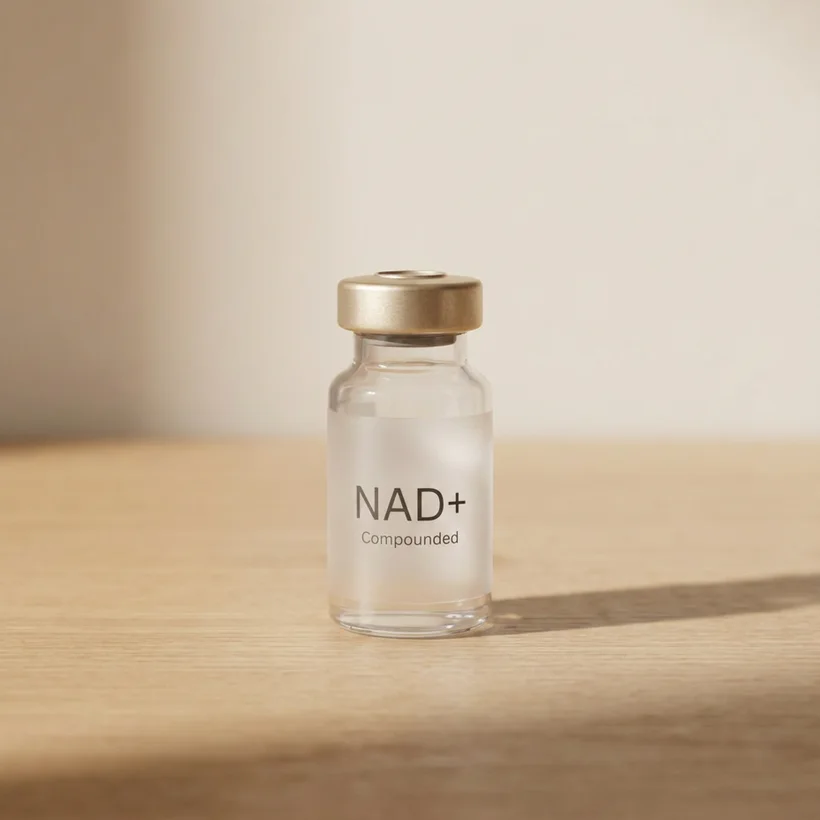
From the FormBlends catalog
NAD+ Peptide Complex
Restore cellular energy and DNA repair capacity · From $179/mo · compounded by a licensed 503A pharmacy, dispensed only after provider review.
View NAD+ Peptide Complex →- Aged mice treated with NMN showed improved treadmill endurance, running 20% to 60% farther than untreated controls.
- NMN supplementation improved oxygen use during exercise in animal models, suggesting enhanced aerobic capacity.
- Mitochondrial content in skeletal muscle increased with NAD+ precursor treatment, a hallmark of improved exercise adaptation.
A small human study of NMN supplementation in recreational runners showed improved aerobic capacity during exercise training, though the study was limited in size and duration.
What the Research Shows (and What It Does Not)
- Strong preclinical evidence: Animal studies consistently show that NAD+ restoration improves muscle mitochondrial function, reduces inflammation, supports satellite cell activity, and enhances exercise capacity.
- Plausible mechanisms: The roles of NAD+-dependent sirtuins in muscle biology are well characterized, providing a sound scientific basis.
- Limited human performance data: Large-scale human trials measuring muscle recovery and athletic performance with NAD+ therapy are still lacking. The available human data is encouraging but preliminary.
- Not a performance-enhancing drug: NAD+ is an endogenous coenzyme, not a banned substance. But it isn't a shortcut that replaces proper training, nutrition, and rest.
Practical Considerations for Active Individuals
Timing
Some clinicians recommend taking NAD+ or its precursors in the morning, both to support daytime energy and to avoid potential interference with sleep. Whether pre-workout or post-workout timing matters for NAD+ supplementation hasn't been established in human studies.
Combining with Other Recovery Strategies
NAD+ therapy works best as part of a thorough recovery approach that includes:
- Adequate protein intake to support muscle protein synthesis
- Sufficient sleep for hormonal recovery and tissue repair
- Proper hydration
- Periodized training to avoid overtraining
- Active recovery and mobility work
Age Considerations
The benefits of NAD+ restoration for muscle recovery may be most pronounced in individuals over 35 to 40, when NAD+ levels have declined meaningfully. Younger athletes with strong NAD+ levels may see less dramatic effects, though this hasn't been directly studied in humans.
Safety and Side Effects
NAD+ therapy has a favorable safety profile. Common side effects are mild and include flushing, nausea, and injection site reactions. No serious adverse events have been attributed to NAD+ precursors in published clinical trials.
For full safety details, see our NAD+ side effects guide. For dosing protocols, visit our NAD+ dosage guide.
How FormBlends Can Help
At FormBlends, we work with athletes, fitness enthusiasts, and active individuals who want to improve their recovery. Our licensed physicians can assess whether NAD+ therapy fits your training goals and health profile.
When you work with us, you receive:
- A personalized consultation with a licensed physician
- Pharmaceutical-grade NAD+ from licensed compounding pharmacies
- A recovery-focused protocol tailored to your activity level and goals
- Ongoing medical supervision and adjustments as your training evolves
We believe that recovery is where adaptation happens, and supporting it with science-backed tools like NAD+ is a smart approach to long-term performance and health.
Frequently Asked Questions
Will NAD+ help me recover faster from workouts?
Animal studies consistently show that NAD+ restoration improves muscle energy production, reduces inflammation, and supports repair processes. Many individuals report improved recovery after starting NAD+ therapy. But large-scale human performance trials are still needed to confirm these effects.
Is NAD+ a performance-enhancing substance?
NAD+ is an endogenous coenzyme that your body naturally produces. It isn't classified as a banned substance by WADA or other anti-doping organizations. But athletes subject to testing should always verify the status of any supplement with their governing body.
Can NAD+ help with age-related muscle loss?
Preclinical research suggests that NAD+ restoration may counteract some age-related changes in muscle tissue, including mitochondrial dysfunction, reduced satellite cell activity, and increased inflammation. Human data specific to sarcopenia (age-related muscle loss) is limited but growing.
Should I take NAD+ before or after exercise?
Optimal timing hasn't been established in human studies. Most clinicians recommend consistent daily dosing rather than timed around workouts. Morning administration is common because NAD+ supports energy production.
Can I combine NAD+ with other recovery supplements?
Yes. NAD+ works through different mechanisms than most common recovery supplements (protein, creatine, omega-3s). Your physician can help you design a thorough recovery protocol that includes NAD+ alongside other evidence-based strategies.
Ready to Learn More?
If you want to explore how NAD+ therapy could support your training and recovery, FormBlends can connect you with a licensed physician who understands the needs of active individuals. Our team is ready to help you perform and recover at your best.
Disclaimer: This article is for informational purposes only and doesn't constitute medical advice. NAD+ therapy isn't FDA-approved for any medical condition. The information presented here is based on a combination of preclinical and early clinical research and shouldn't be used as a substitute for professional medical guidance. Always consult with a licensed healthcare provider before beginning any therapy. Individual results may vary. FormBlends doesn't claim that NAD+ cures, treats, or prevents any disease.
Ready when you are
NAD+ Peptide Complex
Restore cellular energy and DNA repair capacity · From $179/mo · compounded by a licensed 503A pharmacy, dispensed only after provider review.
View NAD+ Peptide Complex →