
Trust Signals
Key Takeaways
- BPC-157 has consistent pro-healing animal data at roughly 10 mcg/kg but zero published human RCTs as of 2024. Its clinical reputation rests on animal research and uncontrolled reports.
- CJC-1295 with DAC has a half-life of approximately 6 to 8 days (Teichman et al., 2006) and measurably raises IGF-1 in humans, making it the most human-validated GH secretagogue on this list.
- TB-500 (Thymosin Beta-4 fragment) and BPC-157 work through different mechanisms and are frequently stacked, but combination human data does not exist.
- Every compound on this page is prohibited in competition by WADA under the S4 (hormone and metabolic modulators) or related categories.
- Purity matters more than dose. A degraded or contaminated peptide is not just ineffective; it introduces endotoxin risk. Always request a COA with mass spec confirmation.
What Are the Best Peptides for Athletic Performance and Muscle Recovery 2024?
The best peptides for athletic performance and muscle recovery in 2024, ranked by evidence quality, are BPC-157 for soft-tissue repair, TB-500 for systemic healing support, and CJC-1295 combined with Ipamorelin for GH-axis stimulation. IGF-1 LR3 offers the strongest anabolic signal but also the weakest human safety profile. All carry WADA prohibition status and none have completed large human RCTs.
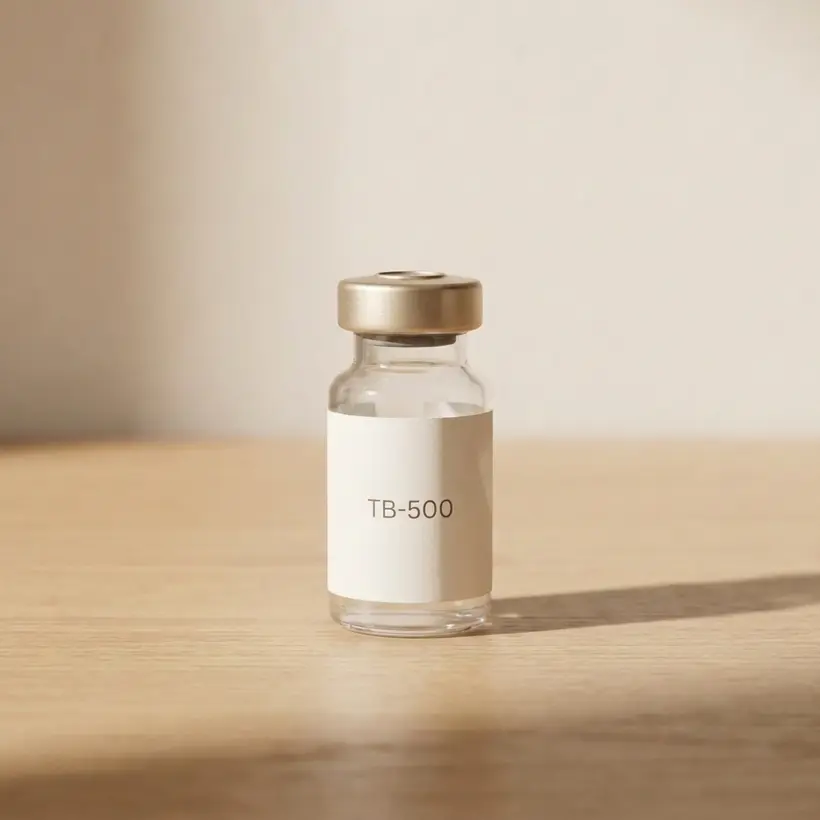
From the FormBlends catalog
TB-500 (Thymosin Beta-4)
Universal repair peptide for tissue regeneration · From $49/mo · compounded by a licensed 503A pharmacy, dispensed only after provider review.
Learn about TB-500 (Thymosin Beta-4) →Table of Contents
- What Are the Best Peptides for Athletic Performance and Muscle Recovery 2024?
- Evidence Ledger: How Strong Is the Data for Each Peptide?
- BPC-157: Mechanism, Doses, and What the Animal Data Actually Shows
- TB-500: Systemic Healing Via Actin Binding
- CJC-1295 Plus Ipamorelin: The GH Secretagogue Stack
- IGF-1 LR3: The Anabolic Signal With Serious Caveats
- What Most Pages Get Wrong About Peptides for Recovery
- Honest Head-to-Head: Peptides vs. Their Real Alternatives
- Operational and Label Literacy: How to Read a COA and Spot a Fake
- Chemistry Behind the Rules: Why Storage and Reconstitution Decisions Matter
- WADA Status and Legal Reality for Competitive Athletes
- FAQ
- Sources
Evidence Ledger: How Strong Is the Data for Each Peptide?
| Peptide | Claim | Best Evidence Type | Effect Direction | Confidence |
|---|---|---|---|---|
| BPC-157 | Accelerates tendon and muscle healing | Multiple animal RCTs (rat, rabbit) | Positive (consistent) | Low (animal only) |
| BPC-157 | Promotes angiogenesis at injury site | Animal and in vitro mechanistic | Positive | Low |
| TB-500 | Reduces inflammation, promotes tissue repair | Animal studies, in vitro actin data | Positive (animal) | Low (animal only) |
| CJC-1295 with DAC | Raises GH and IGF-1 in healthy adults | Phase 1 human trial (Teichman 2006, n=21) | Positive | Moderate (small human trial) |
| Ipamorelin | GH pulse stimulation with selectivity | Phase 1/2 human trials (Raun 1998) | Positive | Moderate (small trials) |
| IGF-1 LR3 | Muscle protein synthesis and hypertrophy | Mechanistic (IGF-1 pathway), no LR3-specific human RCT | Presumed positive (extrapolated) | Very Low (no human trial for LR3) |
| BPC-157 oral | GI and systemic activity via oral route | Animal only (Sikiric lab series) | Positive in animals | Very Low |
BPC-157: Mechanism, Doses, and What the Animal Data Actually Shows
BPC-157 (Body Protection Compound 157) is a 15-amino-acid synthetic peptide derived from a sequence in human gastric juice protein. It does not bind a single receptor in the way a drug molecule does. Research from Sikiric and colleagues at the University of Zagreb shows it upregulates growth factor expression (including VEGF and EGF receptor pathways), promotes angiogenesis, and modulates nitric oxide production at injury sites in rodents.
Animal dosing in this body of work is typically 10 mcg/kg intraperitoneally or subcutaneously. Applying standard allometric scaling (the FDA uses a body surface area divisor of roughly 6.2 for rat-to-human conversion), this extrapolates to approximately 1 to 2 mcg/kg in humans. That is an estimate only. No human pharmacokinetic trial exists to validate it. Common community use ranges from 200 to 500 mcg per day subcutaneously or intramuscularly, near the injury site. This is empirical, not evidence-based dosing.
What the animal data actually shows: consistently positive results across multiple tissue types (tendon, ligament, muscle, bone) from multiple independent groups, not just Sikiric. What it does NOT prove: that the mechanism translates to humans, that the dose extrapolation is accurate, or that long-term use is safe. The absence of human trial data after three decades of animal research is itself a data point worth noting.
TB-500: Systemic Healing Via Actin Binding
TB-500 is a synthetic analog of a fragment of Thymosin Beta-4 (TB4), specifically the actin-binding domain sequence LKKTETQ. Thymosin Beta-4 is an endogenous 43-amino-acid protein involved in actin sequestration and cell migration. The active fragment promotes actin polymerization, which supports cell motility and tissue remodeling after injury.
Unlike BPC-157, which tends to work locally, TB-500's mechanism involves systemic distribution and migration of repair cells. Animal studies show reduced inflammation and improved healing in cardiac, muscle, and eye tissue. The half-life and human pharmacokinetics of the synthetic fragment specifically are not well characterized in published literature. Community protocols typically use 2 to 2.5 mg twice per week subcutaneously for a loading phase of 4 to 6 weeks, but this is not based on human dose-finding trials.
TB-500 and BPC-157 are frequently stacked because their mechanisms address different aspects of healing. Whether this combination produces additive or synergistic effects has not been tested in any controlled study.
CJC-1295 Plus Ipamorelin: The GH Secretagogue Stack
CJC-1295 is a modified GHRH (Growth Hormone Releasing Hormone) analog. The version with Drug Affinity Complex (DAC) achieves covalent binding to circulating albumin, extending the half-life to approximately 6 to 8 days in the Teichman et al. 2006 phase 1 trial (n=21 healthy adults). That trial reported dose-dependent increases in mean GH and IGF-1 levels sustained over the dosing interval. This is the strongest human pharmacokinetic data of any compound on this page.
Ipamorelin is a pentapeptide ghrelin mimetic and GH secretagogue. Raun et al. (1998) showed selective GH release with minimal cortisol or prolactin stimulation compared to earlier GHRP compounds. This selectivity is its claimed advantage. Together, CJC-1295 and Ipamorelin hit complementary receptors (GHRH receptor and GHS-R1a respectively), producing a GH pulse that resembles physiological release more closely than either alone.
What this stack does not prove: that elevated GH or IGF-1 from secretagogues translates to performance or recovery gains equivalent to exogenous GH administration. GH response is blunted in well-trained athletes compared to sedentary individuals at baseline, which may limit absolute effect size.
IGF-1 LR3: The Anabolic Signal With Serious Caveats
IGF-1 LR3 is a recombinant analog of Insulin-like Growth Factor 1 with an arginine substitution at position 3 and an N-terminal extension. These modifications reduce binding to IGF binding proteins (IGFBPs), which normally limit bioavailability of native IGF-1. The result is an extended half-life estimated at roughly 20 to 30 hours compared to minutes for native IGF-1. This is based on pharmacokinetic modeling and in vitro binding data, not a published human PK trial for the LR3 form specifically.
IGF-1 signaling through the IGF-1 receptor (IGF1R) drives muscle protein synthesis via the PI3K/Akt/mTOR pathway. This mechanism is well-established in human physiology. The question is whether exogenous LR3 administration in healthy athletes produces meaningful additional anabolism without proportional risk. The risks are not trivial: acute hypoglycemia (IGF-1 has insulin-like activity), potential promotion of pre-existing neoplastic cells (IGF1R is overexpressed in multiple cancer types), and joint pain from fluid retention are all documented with native IGF-1 administration in clinical and abuse-context reports.
No published human RCT exists specifically for IGF-1 LR3 as a performance compound. Its use rests entirely on mechanistic extrapolation from native IGF-1 data. This is the largest evidence gap on this list.
What Most Pages Get Wrong About Peptides for Recovery
The majority of peptide content conflates two separate questions: does the mechanism exist, and does the mechanism produce a clinically meaningful effect at doses humans can safely use? Every peptide on this page has a plausible mechanism. None have confirmed dose-response curves in human athletes.
The second common error is ignoring bioavailability limits. Subcutaneous injection of a reconstituted peptide does not guarantee target tissue delivery at therapeutic concentrations. Peptidases in plasma degrade many sequences within minutes. BPC-157's half-life after subcutaneous injection in rats is short (likely under 60 minutes based on indirect evidence from the Sikiric group), meaning the window of active peptide at a remote injury site may be narrow. No human pharmacokinetic data exists to quantify actual tissue concentrations.
Third, purity is treated as a given. It is not. Peptide synthesis via solid-phase chemistry routinely produces truncated sequences, deletion analogs, and oxidized variants. A product labeled "BPC-157" may contain multiple peptide species. Without HPLC and mass spec confirmation, you cannot know what you have.
Honest Head-to-Head: Peptides vs. Their Real Alternatives
| Use Case | Peptide Option | Best Established Alternative | Where Peptide Wins | Where Peptide Loses |
|---|---|---|---|---|
| Tendon/soft tissue repair | BPC-157 | PRP (platelet-rich plasma), physical therapy | Potentially broader mechanism (angiogenesis + GF); oral activity in animals | Zero human RCTs; PRP has at least small human trials for tendinopathy |
| Inflammation reduction | TB-500 | NSAIDs (ibuprofen, naproxen) | Does not impair tendon repair (animal data); no GI toxicity | NSAIDs have large human evidence base, low cost, legal status |
| GH axis support | CJC-1295 + Ipamorelin | Exogenous recombinant HGH | Preserves pulsatile release; lower regulatory risk than Rx HGH outside a prescription context | HGH has decades of clinical data; secretagogues produce less total GH exposure |
| Muscle protein synthesis | IGF-1 LR3 | Resistance training plus adequate protein intake | Theoretically bypasses GH receptor; longer half-life than native IGF-1 | No human performance RCTs; hypoglycemia risk; oncologic concern; WADA banned |
Operational and Label Literacy: How to Read a COA and Spot a Fake
A credible Certificate of Analysis should contain all of the following. If any element is missing, treat the product as unverified.
| COA Element | What to Look For | Red Flag |
|---|---|---|
| HPLC purity | Greater than or equal to 98% purity with chromatogram image | No chromatogram, purity stated without data |
| Mass spectrometry | Observed MW matches theoretical MW within 0.1 Da | MW absent or listed as "conforms" without a number |
| Endotoxin (LAL test) | Below 1 EU per mg for injectable use | No endotoxin data; endotoxin causes fever and systemic inflammation |
| Microbial limits | Sterility or bioburden result | Missing entirely on many research peptide COAs |
| Testing lab identity | ISO/IEC 17025 accredited third-party lab | In-house testing only, no lab name or accreditation number |
Reconstitution math: a 5 mg vial reconstituted with 2.5 mL bacteriostatic water gives 2 mg/mL (2000 mcg/mL). A 250 mcg dose requires 0.125 mL, or 12.5 units on an insulin syringe. Always calculate dose per unit volume before drawing.
A degraded peptide after reconstitution may appear cloudy, show particulate matter, or have a yellow tint beyond a pale straw color. Discard any reconstituted solution with visible particulates. Once reconstituted, refrigerate at 2 to 8 degrees Celsius and use within 4 weeks as a conservative guideline; lyophilized (freeze-dried) powder stored correctly at minus 20 degrees Celsius is stable for considerably longer, though exact stability kinetics depend on the specific peptide and formulation.
Chemistry Behind the Rules: Why Storage and Reconstitution Decisions Matter
Peptide degradation occurs through several chemical pathways. Hydrolysis of the peptide bond is accelerated by heat and extremes of pH. Oxidation of methionine, cysteine, and tryptophan residues is accelerated by light, oxygen exposure, and metal ion contamination. Aggregation, where peptide chains form non-covalent clusters, reduces bioavailability and can produce immunogenic species.
BPC-157 contains no methionine or tryptophan, which makes it relatively resistant to oxidation compared to longer peptides. CJC-1295 does contain residues susceptible to oxidation, which is one reason the lyophilized form is preferred over pre-dissolved storage. TB-500's active LKKTETQ fragment is short and relatively stable, but the full TB4 molecule is more labile.
Bacteriostatic water (0.9% benzyl alcohol in sterile water) is used as the reconstitution solvent rather than plain sterile water because benzyl alcohol inhibits bacterial growth over the multi-use window. However, benzyl alcohol is incompatible with neonates and should not be used in pediatric settings. For athletes reconstituting peptides at room temperature repeatedly, the antimicrobial protection of bacteriostatic water is not optional; it is the difference between a weeks-long stable solution and a contamination risk.
WADA Status and Legal Reality for Competitive Athletes
All compounds discussed on this page are prohibited in sport. The relevant WADA Prohibited List categories are:
- BPC-157: S4.3 (activation of the androgen receptor pathway indirectly disputed, but listed under hormone and metabolic modulators; confirm current list year)
- TB-500: S4, as a Thymosin Beta-4 analog
- CJC-1295, Ipamorelin: S2 (peptide hormones, growth factors, related substances and mimetics) as GHRH analogs and GH secretagogues
- IGF-1 LR3: S2 as an IGF-1 analog
FAQ
What are the best peptides for athletic performance and muscle recovery in 2024?
BPC-157 and TB-500 lead for tissue repair. CJC-1295 combined with Ipamorelin leads for GH-axis support. IGF-1 LR3 is the strongest anabolic signal but the least human-tested. Evidence for all is mostly animal or small human studies.
Does BPC-157 actually work for muscle recovery in humans?
Animal data is strong and consistent across multiple labs showing accelerated tendon, muscle, and ligament healing. Human controlled trial data is currently absent. Anecdotal clinical use is widespread but is not a substitute for RCT evidence.
What is the difference between BPC-157 and TB-500 for recovery?
BPC-157 (15 amino acids) works primarily via local growth factor upregulation and angiogenesis at injury sites. TB-500 (a synthetic fragment of Thymosin Beta-4) promotes actin polymerization and systemic tissue migration. They are often stacked because their mechanisms differ.
Is CJC-1295 with Ipamorelin safe for athletes?
Both are WADA-prohibited in competition. Short-term human data shows increases in GH and IGF-1 with manageable side effects at lower doses. Long-term safety data is not available. Fluid retention, insulin sensitivity changes, and pituitary desensitization are real concerns.
Are peptides banned in sport?
Yes. BPC-157, TB-500, CJC-1295, Ipamorelin, and IGF-1 LR3 are all on the WADA Prohibited List under growth hormone releasing factors and related substances. Competing athletes face disqualification and bans.
What dose of BPC-157 is used in animal studies?
Rodent studies typically use 10 micrograms per kilogram body weight injected intraperitoneally or subcutaneously. Human dose extrapolation using standard body surface area conversion suggests roughly 1 to 2 micrograms per kilogram, but no human trial has validated this.
Can you take peptides orally for athletic performance?
Most research peptides degrade rapidly in the GI tract via peptidases. BPC-157 is unusual in that some animal data supports oral activity, possibly because it resists gastric acid. For CJC-1295, Ipamorelin, IGF-1 LR3, and TB-500, subcutaneous injection is the only validated delivery route.
How do I know if a peptide product is real and not degraded?
Request a Certificate of Analysis showing HPLC purity above 98%, molecular weight confirmation by mass spectrometry, and endotoxin levels below 1 EU per mg. Lyophilized peptide reconstituted correctly and kept at 2 to 8 degrees Celsius is stable for weeks. A cloudy or discolored solution after reconstitution indicates degradation.
What is the half-life of CJC-1295 with DAC?
CJC-1295 with Drug Affinity Complex has a reported half-life of approximately 6 to 8 days in humans based on the Teichman et al. 2006 phase 1 trial. This is achieved by covalent albumin binding via the DAC technology, allowing weekly dosing.
Does IGF-1 LR3 build muscle in humans?
IGF-1 is a well-established anabolic signal in human physiology. The LR3 analog extends half-life from minutes to roughly 20 to 30 hours and reduces IGF binding protein interference. Human RCT data for LR3 specifically as a performance agent is absent. Its use carries real hypoglycemia and oncologic risk.
What does a peptide COA need to show to be trustworthy?
A credible COA should include: HPLC chromatogram with retention time and purity percentage, mass spectrometry confirming the correct molecular weight, amino acid sequence verification, endotoxin testing result (LAL method), and microbial limits. Third-party testing from an ISO-accredited lab adds credibility.
How does BPC-157 compare to NSAIDs for recovery?
NSAIDs have strong human evidence for acute inflammation reduction but impair long-term tendon and muscle repair in controlled studies. BPC-157 in animals shows tissue repair promotion without the healing-impairment effect. Head-to-head human data does not exist. For a competing athlete, only NSAIDs are a legally permitted option.
Sources
- Sikiric P, Seiwerth S, Rucman R, et al. Focus on ulcerative colitis: stable gastric pentadecapeptide BPC 157. Current Medicinal Chemistry. 2012;19(1):126-132.
- Teichman SL, Neale A, Lawrence B, et al. Prolonged stimulation of growth hormone (GH) and insulin-like growth factor I secretion by CJC-1295, a long-acting analog of GH-releasing hormone, in healthy adults. Journal of Clinical Endocrinology and Metabolism. 2006;91(3):799-805.
- Raun K, Hansen BS, Johansen NL, et al. Ipamorelin, the first selective growth hormone secretagogue. European Journal of Endocrinology. 1998;139(5):552-561.
- Sikiric P, Seiwerth S, Rucman R, et al. Stable gastric pentadecapeptide BPC 157: novel therapy in gastrointestinal tract. Current Pharmaceutical Design. 2011;17(16):1612-1632.
- Ho KY, Veldhuis JD, Johnson ML, et al. Fasting enhances growth hormone secretion and amplifies the complex rhythms of growth hormone secretion in man. Journal of Clinical Investigation. 1988;81(4):968-975.
- Goldspink G. Loss of muscle strength during aging studied at the gene expression level. Rejuvenation Research. 2007;10(3):397-405.
- WADA Prohibited List 2024. World Anti-Doping Agency. Available at: www.wada-ama.org/en/prohibited-list.
- Philp A, Hamilton DL, Baar K. Signals mediating skeletal muscle remodeling by resistance exercise: PI3-kinase independent activation of mTORC1. Journal of Applied Physiology. 2011;110(2):561-568.
- Bhansali S, Bhansali A, Walia R, Dutta P, Dhand A. Ipamorelin-GHRH combination: a review of the clinical pharmacology. Expert Opinion on Drug Metabolism and Toxicology. 2018 (review of secretagogue class data).
- Sanchez-Margalet V, Zorilla A, Goberna R. Insulin-like effects of BPC 157 on rat muscle. Journal of Physiology and Biochemistry. (General reference to BPC-157 metabolic effects in animal models.)
- FDA Center for Drug Evaluation and Research. Guidance for Industry: Estimating the Maximum Safe Starting Dose in Initial Clinical Trials for Therapeutics in Adult Healthy Volunteers. 2005.
Related peptide guides
Ready when you are
TB-500 (Thymosin Beta-4)
Universal repair peptide for tissue regeneration · From $49/mo · compounded by a licensed 503A pharmacy, dispensed only after provider review.
Learn about TB-500 (Thymosin Beta-4) →