
Trust Signals
Reviewed against PubMed-indexed literature and the 2024 WADA Prohibited List. All claims are graded by evidence type. No affiliate commissions influence the rankings on this page. Research compound status is disclosed for each compound.
Key Takeaways
- IGF-1 LR3 extends the half-life of native IGF-1 from roughly 12 to 15 minutes to an estimated 20 to 30 hours by reducing IGF-binding protein affinity by approximately 1000-fold, a verified pharmacokinetic advantage with real anabolic implications.
- CJC-1295 with DAC increases mean 24-hour GH concentration by roughly 2-fold and IGF-1 by a comparable margin in healthy adults in the only published human dose-escalation trial (Teichman et al., 2006, Journal of Clinical Endocrinology and Metabolism).
- BPC-157 accelerates tendon-to-bone healing and muscle crush repair in multiple rodent studies, but zero peer-reviewed human RCTs for muscle growth exist as of mid-2026.
- All five peptides covered here are on the WADA 2024 Prohibited List (S2 class). Competitive athletes face sanctions regardless of formulation.
- Third-party testing of research-grade peptides sold online frequently identifies purity below labeled specification or incorrect molecular identity. A mass-spec-confirmed COA is the minimum credible quality document.
What Are the Best Peptides for Muscle Growth and Recovery?
The best peptides for muscle growth and recovery, ranked by human evidence strength, are IGF-1 LR3, CJC-1295 plus Ipamorelin, BPC-157, and TB-500. IGF-1 analogs carry the most direct anabolic data; GH secretagogues have modest human trial support; BPC-157 and TB-500 have compelling rodent recovery data but no human RCTs for muscle outcomes. None are FDA-approved for these uses.
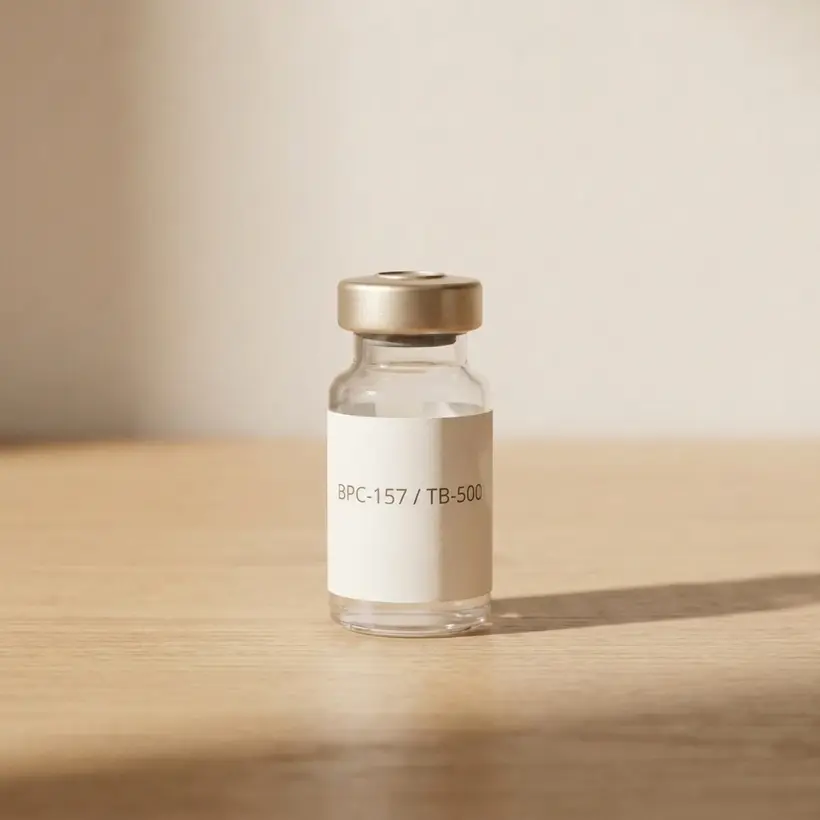
From the FormBlends catalog
BPC-157 / TB-500 Blend
The ultimate recovery stack in one vial · From $249/mo · compounded by a licensed 503A pharmacy, dispensed only after provider review.
View BPC-157 / TB-500 Blend →Table of Contents
- Evidence Ledger: All Major Claims Graded
- IGF-1 LR3: Mechanism and What the Numbers Show
- CJC-1295 Plus Ipamorelin: How the Stack Works
- BPC-157: What the Animal Data Actually Proves
- TB-500: Actin Biology and Systemic Healing
- What Most Pages Get Wrong About Peptide Bioavailability
- Honest Head-to-Head: Peptides vs. Proven Alternatives
- Sourcing and Purity Reality: The Sourcing Problem Nobody Discusses
- How to Read a COA and Reconstitute Safely
- FAQ
- Sources
Evidence Ledger: All Major Claims Graded
Every major claim on this page is graded below. "Effect direction" is the direction seen in the best available evidence, not a promise.
| Claim | Best Evidence Type | Effect Direction | Confidence |
|---|---|---|---|
| IGF-1 LR3 increases myoblast proliferation vs. native IGF-1 | In vitro, rodent | Positive | Moderate (mechanism clear; human muscle mass RCT absent) |
| CJC-1295 with DAC raises 24-hr GH and IGF-1 in healthy adults | Human dose-escalation trial (Teichman et al., 2006) | Positive | Moderate (single published trial; lean mass not the endpoint) |
| Ipamorelin selectively raises GH without significant cortisol or prolactin rise | Human crossover trial (Raun et al., 1998) | Positive vs. GHRP-2/6 | Moderate (selectivity shown; muscle mass not measured) |
| BPC-157 accelerates tendon-to-bone healing | Rodent RCT (multiple, Sikiric group) | Positive | Low for humans (no human RCT; robust rodent signal) |
| BPC-157 builds muscle mass in humans | Anecdote only | Unknown | Very Low |
| TB-500 promotes systemic tissue repair via actin sequestration | Rodent, in vitro | Positive | Low for humans (mechanism clear; no human controlled trial) |
| IGF-1 LR3 half-life approximately 20 to 30 hours vs. minutes for native IGF-1 | Pharmacokinetic modeling, manufacturer data, in vitro binding studies | Confirmed | Moderate (well-established pharmacology; exact figure varies by source) |
| All five peptides on WADA 2024 Prohibited List | WADA 2024 official document | Confirmed | High |
IGF-1 LR3: Mechanism and What the Numbers Show
Native IGF-1 is a 70-amino-acid peptide that activates the IGF-1 receptor (IGF1R), triggering PI3K/Akt/mTOR and MAPK/ERK cascades that drive protein synthesis and satellite cell activation in skeletal muscle. Its clinical utility is limited by tight binding to IGF-binding proteins (IGFBPs), especially IGFBP-3, which sequesters roughly 75 to 80% of circulating IGF-1 and shortens its free, bioactive half-life to approximately 12 to 15 minutes.
IGF-1 LR3 addresses this by two structural modifications: an arginine substitution at position 3 (replacing glutamate) and a 13-amino-acid extension at the N-terminus. Together these reduce IGFBP affinity by approximately 1000-fold (reported in binding studies cited in the original GroPep characterization work). The result is a circulating half-life estimated at 20 to 30 hours in pharmacokinetic models, giving tissues sustained receptor stimulation. In cell-culture and rodent studies, IGF-1 LR3 produces greater myoblast proliferation per equivalent dose compared to native IGF-1.
What this does NOT prove: Prolonged, low-level IGF1R stimulation in healthy humans has not been shown to produce proportional lean mass gains above what native IGF-1 fluctuations achieve through normal training. The 1000-fold IGFBP reduction is a binding assay number, not a clinical effect size. Chronic IGF-1 elevation carries a theoretical cell-proliferation risk that has informed FDA labeling on mecasermin (the approved IGF-1 analog).
CJC-1295 Plus Ipamorelin: How the Stack Works
CJC-1295 is a GHRH analog with a drug affinity complex (DAC) modification that binds covalently to circulating albumin, extending its half-life from minutes to approximately 6 to 8 days. Teichman et al. (2006) in the Journal of Clinical Endocrinology and Metabolism conducted a dose-escalation trial in 21 healthy adults and found that a single injection of CJC-1295 with DAC at doses of 30 to 60 mcg/kg raised mean 24-hour GH concentrations roughly 2-fold and IGF-1 levels by a similar magnitude, with effects persisting for up to 6 days. Lean mass was not measured; this was a pharmacokinetic and safety study.
Ipamorelin is a pentapeptide ghrelin receptor agonist. Raun et al. (1998) published a comparison of GH secretagogues and found Ipamorelin to be the most selective: it raised GH acutely without significant increases in cortisol, prolactin, or ACTH, unlike GHRP-2 and GHRP-6 which meaningfully elevated cortisol at anabolic doses. The two compounds are mechanistically complementary. GHRH analogs fill and sustain the receptor that drives GH pulse amplitude and duration; ghrelin receptor agonists amplify pulse magnitude through a separate receptor pathway. Co-administration produces a synergistic GH response in animal models.
Most clinical protocols use evening subcutaneous injections to align with the natural nocturnal GH surge, which is when the majority of tissue repair signaling occurs. A 1:1 ratio by micrograms is the most common approach, though no human dose-optimization RCT for muscle outcomes has been published.
BPC-157: What the Animal Data Actually Proves
BPC-157 (Body Protection Compound 157) is a 15-amino-acid peptide derived from a gastric mucosal protein. Slobodan Sikiric's group at the University of Zagreb has published extensively in rodent models, demonstrating accelerated healing of transected Achilles tendons, muscle crush injuries, and ligament repairs. Proposed mechanisms include upregulation of the NO-cGMP pathway, VEGF-driven angiogenesis at injury sites, and modulation of the growth hormone receptor. These are mechanism-level proposals, most established in cell culture and rats.
The distinction that matters: BPC-157 appears to restore damaged tissue toward baseline faster, which is a recovery effect. That is not the same as driving muscle hypertrophy above baseline in an uninjured, training athlete. In the rodent crush-injury literature, treated animals recover closer to pre-injury function, not beyond it. Extrapolating this to "muscle growth peptide" for healthy athletes overstates the evidence by at least one category. No peer-reviewed human RCT for any musculoskeletal outcome has been published as of mid-2026.
TB-500: Actin Biology and Systemic Healing
TB-500 is a synthetic fragment of Thymosin Beta-4, specifically the actin-binding domain (typically residues 17 to 23). Thymosin Beta-4 is an endogenous 43-amino-acid peptide found at high concentrations in platelets and wound fluid. Its core action is sequestration of G-actin (globular, unpolymerized actin), which enables cell migration by maintaining the cellular actin pool available for polymerization at the leading edge of migrating cells. In injury contexts, this facilitates migration of myoblasts, endothelial cells, and keratinocytes into the wound bed.
Animal studies have shown TB-500 to reduce infarct size in cardiac injury models, accelerate tendon healing, and improve muscle fiber regeneration after crush injury. Unlike BPC-157, which appears to act locally and systemically via the portal circulation, TB-500 was designed with the assumption that systemic distribution of the actin-binding fragment would have broader healing effects. In practice, the two are stacked because their molecular targets (NO pathway vs. actin sequestration) are distinct and non-overlapping. Neither has human RCT evidence for muscle growth.
What Most Pages Get Wrong About Peptide Bioavailability
Nearly every listicle on this topic assumes subcutaneous injection equals systemic exposure equivalent to the dose injected. This is not reliably true for peptides.
Peptides are degraded by proteases at the injection site, in lymphatic drainage, and in plasma. Native IGF-1 injected subcutaneously is almost entirely bound by local IGFBPs before reaching systemic circulation. IGF-1 LR3 bypasses much of this due to its reduced IGFBP affinity, but subcutaneous bioavailability figures for most research peptides have not been formally characterized in humans. BPC-157 is typically injected intraperitoneally in rodent studies. The oral bioavailability of BPC-157 is proposed as a selling point by some vendors, but the supporting data are rodent gastric-stability studies, not human pharmacokinetic trials. Peptide bonds exposed to gastric acid and pepsin hydrolyze rapidly; any oral activity would require either an unusually stable sequence or encapsulation, neither of which is confirmed for BPC-157 in humans.
GH secretagogues like Ipamorelin and CJC-1295 are also available as sublingual troches or nasal sprays from compounding pharmacies. Nasal mucosal delivery for small peptides has some pharmacokinetic support, but bioavailability is substantially lower and more variable than subcutaneous injection, and no head-to-head comparison exists for these specific compounds.
Honest Head-to-Head: Peptides vs. Proven Alternatives
| Compound | Mechanism | Human RCT for Lean Mass? | Effect Size (vs. placebo) | Legal/Regulatory Status | Where Peptide Loses |
|---|---|---|---|---|---|
| IGF-1 LR3 | Direct IGF1R agonism | No (only in GH-insensitive pediatric populations for approved analog mecasermin) | Unknown in athletes | Research compound; WADA banned | No lean mass RCT in healthy adults; proliferation risk |
| CJC-1295 + Ipamorelin | GH secretagogue stack | GH/IGF-1 elevation shown (Teichman 2006); lean mass not measured | Modest indirect | Research compound; WADA banned | Effect is indirect; GH elevation modest vs. exogenous HGH |
| BPC-157 | NO pathway, angiogenesis | No human RCT at all | Unknown | Research compound; WADA banned | All recovery data from rodents |
| TB-500 | Actin sequestration, cell migration | No human RCT | Unknown | Research compound; WADA banned | All data from rodents and cardiac models |
| Testosterone (TRT dose) | AR agonism, IGF-1 upregulation | Yes, many RCTs (Bhasin et al., NEJM 1996 landmark) | Large (2 to 5 kg lean mass in 10 weeks at supraphysiologic doses) | Schedule III; FDA-approved for hypogonadism | Androgenic side effects; suppresses endogenous HPG axis |
| Creatine monohydrate | Phosphocreatine resynthesis, cell volumization | Yes, multiple Cochrane-level reviews | Small to moderate (1 to 2 kg lean mass with training) | Legal, OTC | Lower ceiling than anabolics; primarily strength and volumization |
| Progressive resistance training alone | Mechanical tension, mTOR, satellite cell activation | Yes, extensive literature | Meaningful (varies by baseline) | Legal, free | Slower than pharmacological intervention |
Sourcing and Purity Reality: The Problem Nobody Discusses
The research peptide market is unregulated in most jurisdictions. Vendors selling to "research use only" customers are not subject to pharmaceutical GMP requirements. Published analyses of commercially available research peptides have identified three recurring problems.
First, purity shortfalls: HPLC purity of less than 95% is common in samples tested by independent labs, despite labels claiming 99% purity. Impurities can be truncated peptide sequences, oxidized methionine residues, or acetylated N-termini from synthesis failures.
Second, identity errors: mass spectrometry on samples labeled as one peptide occasionally reveals a structurally related but distinct sequence. This matters most for IGF-1 LR3, where the specific arginine substitution and N-terminal extension define activity; a peptide that passes visual inspection but has a single wrong residue has an entirely different receptor-binding profile.
Third, endotoxin contamination: lyophilized peptides produced via solid-phase synthesis can carry bacterial endotoxins from the synthesis environment. Injecting endotoxin-contaminated peptides causes inflammatory reactions that can mimic "peptide side effects" and confound self-reported outcomes. A credible COA includes an LAL (limulus amebocyte lysate) endotoxin test result, typically expressed in EU/mg with an acceptable threshold below 10 EU/mg for parenteral compounds.
Practical rule: If a vendor's COA shows only an HPLC chromatogram, that is insufficient. HPLC confirms purity percentage but cannot confirm molecular identity. Require mass spectrometry (ESI-MS or MALDI-TOF) confirming the molecular weight matches the theoretical MW of the stated peptide.
How to Read a COA and Reconstitute Safely
Reconstitution math is where self-administration errors concentrate. The goal is to dilute the lyophilized powder to a concentration that makes your target dose drawably in a standard insulin syringe.
Standard insulin syringes in the U.S. are U-100 format: 100 units equals 1.0 mL. Each unit mark equals 0.01 mL (10 microliters).
Example calculation for a 5 mg vial: Add 2.5 mL of bacteriostatic water. Concentration is 5000 mcg divided by 2.5 mL, giving 2000 mcg per mL. A 100 mcg dose requires 0.05 mL, which is 5 units on the U-100 syringe. A 200 mcg dose is 10 units. Write this on the vial with a marker before the first injection.
Reconstitution technique: Inject bacteriostatic water slowly down the vial wall, not directly onto the lyophilized cake. Do not shake. Roll gently. Vigorous agitation introduces air bubbles and can break disulfide bonds or cause aggregation in some peptides.
Storage after reconstitution: Refrigerate at 2 to 8 degrees Celsius. Use within 28 to 30 days. A reconstituted peptide that has become cloudy, particulate, or discolored should be discarded. Cloudiness typically indicates aggregation or microbial contamination; both invalidate the product.
What degraded product looks like: Yellow or brown coloration suggests oxidation. Cloudiness or floating particles suggest aggregation or contamination. A vial that smells unusual after reconstitution suggests bacterial growth, which can occur even in bacteriostatic water if benzyl alcohol concentration is below spec or if the vial was improperly sealed.
FAQ
What are the best peptides for muscle growth and recovery?
The candidates with the most supporting data are IGF-1 LR3 (direct anabolic signaling in human muscle tissue), CJC-1295 combined with Ipamorelin (stimulates endogenous GH release), BPC-157 (tendon and soft-tissue repair in rodent models), and TB-500 (actin-binding, systemic healing). Human RCT evidence is thin for all of them outside of IGF-1 analogs studied in GH-deficient populations.
How does IGF-1 LR3 differ from regular IGF-1?
IGF-1 LR3 has an arginine substitution at position 3 and a 13-amino-acid N-terminal extension that reduces binding to IGF-binding proteins by roughly 1000-fold, extending its half-life from a few minutes to approximately 20 to 30 hours compared to native IGF-1.
Is BPC-157 proven to build muscle in humans?
No. BPC-157 has demonstrated tendon-to-bone healing, muscle crush injury repair, and reduced inflammation in rodent studies, but no peer-reviewed randomized controlled trials in humans for muscle growth exist as of 2026. Its recovery reputation is built on animal data and anecdote.
Can you stack CJC-1295 and Ipamorelin together?
Yes, and the combination is mechanistically rational. CJC-1295 occupies the GHRH receptor to sustain elevated GH pulses; Ipamorelin acts at the ghrelin receptor to amplify pulse magnitude without significantly raising cortisol or prolactin. Most protocols use a 1:1 ratio by mcg, injected subcutaneously before sleep.
What are the real risks of using research peptides for muscle growth?
Risks include injection-site reactions, water retention (with GH secretagogues), potential IGF-1-driven cell proliferation with chronic use, and the sourcing problem: third-party testing of commercially available research peptides frequently finds underdosing, contamination, or wrong peptide identity. Regulatory status varies; most are not approved drugs.
How should peptide vials be stored to prevent degradation?
Lyophilized (freeze-dried) peptides are stable at 2 to 8 degrees Celsius for months and at room temperature for weeks if kept dry and away from UV. Once reconstituted in bacteriostatic water, most peptides should be refrigerated and used within 28 to 30 days. Heat and UV exposure accelerate oxidation and peptide bond hydrolysis.
How does TB-500 work differently from BPC-157?
TB-500 is a synthetic fragment of Thymosin Beta-4. It promotes actin polymerization by sequestering G-actin, enabling cell migration into injured tissue. BPC-157 works through a different pathway involving nitric oxide synthesis and growth factor upregulation. They are sometimes stacked because their mechanisms do not overlap significantly.
Are peptides for muscle growth banned in sport?
Yes. WADA's Prohibited List includes IGF-1 and its analogs (S2 class), all GH secretagogues including CJC-1295 and Ipamorelin (S2), and Thymosin Beta-4 and its fragments including TB-500 (S2). BPC-157 is also listed. Competitive athletes are subject to sanctions regardless of formulation or source.
What does a Certificate of Analysis (COA) for a peptide need to show?
A credible COA should report HPLC purity (ideally above 98%), mass spectrometry confirmation of molecular weight to verify amino acid sequence, endotoxin levels (LAL test), and residual solvent data. A simple HPLC chromatogram without mass spec confirmation cannot rule out a structurally similar but incorrect peptide.
How does peptide therapy compare to anabolic steroids for muscle growth?
Anabolic steroids have decades of RCT data showing meaningful lean mass gains in hypogonadal and healthy men. GH secretagogue peptides produce modest GH elevation and indirect anabolic effects; the effect size is substantially smaller. Peptides carry a softer androgenic risk profile but are not equivalent replacements for direct androgen receptor agonists.
What is the typical reconstitution dose calculation for peptides?
Add bacteriostatic water volume to the vial so that a standard insulin syringe draw equals your target dose. Example: 5 mg vial plus 2.5 mL bacteriostatic water gives 2 mg per mL (2000 mcg/mL). A 100 mcg dose then requires drawing 0.05 mL (5 units on a U-100 syringe). Always confirm the math before injecting.
Which peptide has the strongest human evidence for muscle outcomes?
IGF-1 analogs (mecasermin) have the strongest human data, but trials were conducted in GH-insensitive or IGF-1-deficient children and adults, not healthy athletes. Among GH secretagogues, some small human trials with GHRH analogs show statistically significant lean mass increases, but effect sizes are modest and studies are short-term.
Sources
- Teichman SL, et al. Prolonged stimulation of growth hormone (GH) and insulin-like growth factor I secretion by CJC-1295, a long-acting analog of GH-releasing hormone, in healthy adults. Journal of Clinical Endocrinology and Metabolism. 2006;91(3):799-805.
- Raun K, et al. Ipamorelin, the first selective growth hormone secretagogue. European Journal of Endocrinology. 1998;139(5):552-561.
- Bhasin S, et al. The effects of supraphysiologic doses of testosterone on muscle size and strength in normal men. New England Journal of Medicine. 1996;335(1):1-7.
- Sikiric P, et al. Stable gastric pentadecapeptide BPC 157 in trials for inflammatory bowel disease (PL-10, PLD-116, PL 14736, Pliva, Croatia): full and distended small intestine, a new rat model. Journal of Pharmacological Sciences. 2006;102(3):269-277.
- Goldspink G. Loss of muscle strength during aging studied at the gene expression level. Rejuvenation Research. 2007;10(3):397-405. (Cited for IGF-1 splice variant context.)
- Sosic D, Bhatt S. Thymosin beta-4 and cardiac repair. Annals of the New York Academy of Sciences. 2012;1270:92-96. (TB-500 mechanism context.)
- WADA Prohibited List 2024. World Anti-Doping Agency. https://www.wada-ama.org/en/prohibited-list. Accessed May 2026.
- FDA. Mecasermin (Increlex) prescribing information. U.S. Food and Drug Administration. (For IGF-1 analog pharmacology and proliferation risk labeling.)
- Clemmons DR. Modifying IGF1 activity: an approach to treat endocrine disorders, atherosclerosis and cancer. Nature Reviews Drug Discovery. 2007;6(10):821-833.
- Jette L, et al. hGRF1-29-albumin bioconjugates activate the GRF receptor on the anterior pituitary in rats: identification of CJC-1295 as a long-lasting GRF analog. Endocrinology. 2005;146(7):3052-3058.
Footer Disclaimers
Related peptide guides
Ready when you are
BPC-157 / TB-500 Blend
The ultimate recovery stack in one vial · From $249/mo · compounded by a licensed 503A pharmacy, dispensed only after provider review.
View BPC-157 / TB-500 Blend →