
Trust Signals
Every dosing figure on this page is traced to a named source or explicitly flagged as extrapolation. Evidence grades follow GRADE conventions. Where human RCT data is absent, this page says so plainly. No affiliate relationship influences the content.
Key Takeaways
- Reynolds 2021 measured endogenous MOTS-c around exercise in ten young men; no MOTS-c was administered. The current native-peptide registry has no posted results.
- MOTS-c is a 16-amino-acid mitochondria-derived peptide (roughly 2174 Da) associated with AMPK signaling. The selected studies do not provide a measured human oral-versus-subcutaneous absorption comparison.
- Reconstitution math: 5 mg lyophilized powder plus 1 mL bacteriostatic water gives 5 mg/mL; every 10 units on an insulin syringe delivers 0.5 mg.
- Peptide degradation begins as soon as the powder is reconstituted; bacteriostatic water extends refrigerated shelf life to roughly 28 days, after which potency should be considered unreliable.
- MOTS-c is not FDA-approved, not on the 2024 WADA prohibited list, and has no long-term human safety data. Regulatory status varies by country.
How to Take MOTS-c: Direct Answer
The current native-MOTS-c registry lists subcutaneous administration with a fixed daily 12-week regimen. It does not supply a mg amount in the selected fields or posted results. Reynolds 2021 administered MOTS-c intraperitoneally to mice and measured endogenous levels in humans. Route descriptions, timing evidence and vial arithmetic need to be read separately.
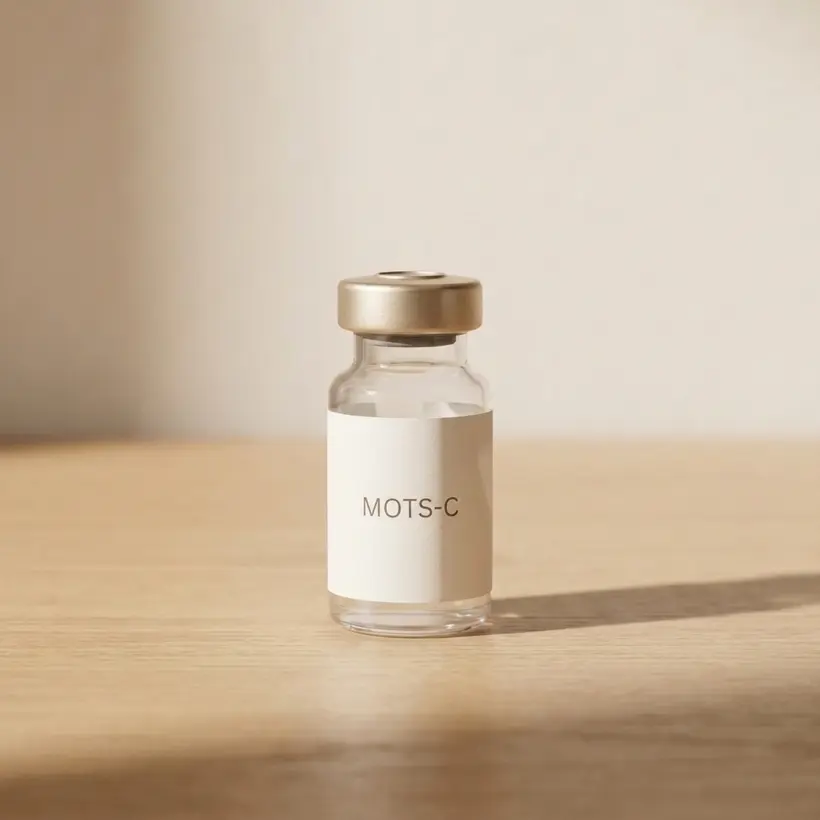
From the FormBlends catalog
MOTS-c
Mitochondrial-derived exercise mimetic that regulates metabolic homeostasis · From $249/mo · compounded by a licensed 503A pharmacy, dispensed only after provider review.
View MOTS-c →Table of Contents
What Does the Evidence Actually Show?
The table below grades every major claim about MOTS-c using the best available evidence type. Read it before committing to a protocol.
| Claim | Best Evidence Type | Effect Direction | Confidence |
|---|---|---|---|
| Human insulin-sensitivity study status | Native MOTS-c registry | Recruiting, no posted results | Outcome not established from this record |
| MOTS-c activates AMPK and shifts glucose metabolism | In vitro and rodent (Lee et al. 2015, Cell Metabolism) | Positive | Moderate (mechanism well-replicated in preclinical models) |
| MOTS-c extends lifespan or healthspan | Rodent studies (Lee et al. 2019) | Positive in aged male mice | Very Low (no human data) |
| Subcutaneous injection is bioavailable in humans | Mechanism only, extrapolated from rodent SC dosing | Assumed positive | Very Low (no human pharmacokinetic data published) |
| MOTS-c improves exercise performance | Rodent (intraperitoneally dosed) | Positive in rodents | Very Low (no human RCT) |
| Human outcome data in selected registry | No posted results | Not estimable | Registry is not an outcome dataset |
How Does MOTS-c Work at the Molecular Level?
MOTS-c is a 16-amino-acid peptide (sequence: MRWQEMGYIFYPRKLR) encoded within the mitochondrial 12S ribosomal RNA gene. Its molecular weight is approximately 2174 Da. Lee et al. identified it in 2015 (Cell Metabolism, vol. 21) and showed it activates AMPK, the master energy-sensing kinase, through inhibition of the folate cycle metabolite AICAR-independent pathway, ultimately shifting glucose utilization toward the pentose phosphate pathway and away from glycolysis.
Under metabolic stress such as glucose restriction, MOTS-c translocates from the cytoplasm to the nucleus, where it binds ARE (antioxidant response element) sequences to upregulate stress-response genes. This nuclear signaling role was described in Kim et al. 2018 (Cell Metabolism).
What the mechanism does NOT prove: AMPK activation in cultured cells or mice does not confirm that subcutaneous injection in humans at community doses (5 to 10 mg/week) delivers enough intact peptide to the target tissues to replicate these effects. Pharmacokinetic translation is the critical unknown gap.
How Do You Reconstitute and Dose MOTS-c?
MOTS-c arrives as a white lyophilized powder, typically in vials of 5 mg or 10 mg. Use bacteriostatic water (sterile water containing 0.9% benzyl alcohol) as the diluent. Bacteriostatic water is preferred over plain sterile water because benzyl alcohol inhibits microbial growth, extending usable life after reconstitution.
Step-by-step reconstitution:
- Wipe the vial stopper with an alcohol swab and allow to dry.
- Draw the desired volume of bacteriostatic water into a 1 mL syringe.
- Insert the needle at an angle and release the water slowly down the inside wall of the vial. Do not inject directly onto the powder cake. Do not shake.
- Swirl gently in a circular motion until the powder is fully dissolved. The solution should be clear and colorless.
- If the solution is cloudy, particulate, or discolored, discard it. This indicates degradation or contamination.
Dosing math table:
| Vial size | Bacteriostatic water added | Concentration | Volume per 0.5 mg dose | Units on insulin syringe (100-unit) |
|---|---|---|---|---|
| 5 mg | 1 mL | 5 mg/mL | 0.1 mL | 10 units |
| 5 mg | 2 mL | 2.5 mg/mL | 0.2 mL | 20 units |
| 10 mg | 2 mL | 5 mg/mL | 0.1 mL | 10 units |
The current native-MOTS-c registry describes a fixed daily 12-week regimen without a mg amount in the selected fields or posted results. The amount used in a hypothetical concentration table is an arithmetic input, not an outcome established by that record. The CB4211 registry concerns a separate analog.
Where and How Do You Inject MOTS-c?
Subcutaneous injection places the peptide into the fatty tissue just beneath the skin, where absorption into capillaries occurs without first-pass hepatic metabolism. Suitable sites include:
- Lower abdomen: at least 2 inches (5 cm) from the navel
- Outer thigh: middle third, anterolateral surface
- Flank (love handle area)
Technique: Use a 29 to 31 gauge, half-inch (12 to 13 mm) insulin syringe. Pinch a fold of skin with two fingers. Insert the needle at a 45 to 90 degree angle depending on tissue thickness. Inject slowly, release the skin fold, and withdraw. Apply light pressure with a clean swab; do not rub (rubbing disperses the peptide too rapidly and increases bruising). Rotate sites with every injection to prevent lipodystrophy, which is the loss of subcutaneous fat at repeatedly injected sites.
When Is the Best Time to Take MOTS-c?
Rodent studies by Lee et al. and others administered MOTS-c intraperitoneally in the morning or prior to exercise sessions and documented AMPK activation and improved glucose metabolism. Based on this, morning injection or 30 to 60 minutes before training is the most mechanistically logical timing.
However, no human study has compared morning vs. evening vs. pre-exercise timing. Current timing guidance in the community is extrapolated from rodent protocols and should be understood as a reasonable hypothesis, not evidence-based instruction. MOTS-c's half-life in human circulation has not been published.
How Should MOTS-c Be Stored?
Before reconstitution: Store lyophilized powder at 2 to 8 degrees Celsius (standard refrigerator), away from light and moisture. Properly lyophilized peptides can tolerate short periods at room temperature during shipping without complete loss of activity, but long-term room-temperature storage accelerates deamidation and oxidation of sensitive amino acid residues.
After reconstitution: Store the reconstituted vial at 2 to 8 degrees Celsius. Bacteriostatic water suppresses microbial growth and allows a reasonable use window; common pharmaceutical practice for similar peptide preparations is 28 days refrigerated, after which potency is considered unreliable. Do not freeze a reconstituted vial. Ice crystal formation physically damages the peptide chains and the freeze-thaw cycle accelerates aggregation.
The chemistry: MOTS-c contains methionine (position 1) and tyrosine (position 8), both oxidation-sensitive residues. Exposure to light and oxygen drives methionine sulfoxidation and tyrosine dityrosine cross-linking, producing a structurally altered peptide that may have reduced or absent receptor activity. This is why amber vials and refrigerated storage are not optional hygiene theater but chemically necessary.
What Most Pages Get Wrong About Taking MOTS-c
Commodity peptide blogs present subcutaneous weekly dosing protocols as though they were directly validated in human trials. They were not. The most important things these pages omit:
- Human SC bioavailability is unknown. No published pharmacokinetic study documents what fraction of a subcutaneous MOTS-c dose reaches systemic circulation in humans, what the peak plasma concentration is, or what the elimination half-life is. Rodent SC data exists but rodent skin and subcutaneous tissue architecture differs significantly from human.
- Purity variance is large. Third-party mass spectrometry testing of research peptides by organizations like Janoshik and Peptide Sciences has repeatedly found that vial content, purity (target is above 98% by HPLC), and peptide identity vary substantially across suppliers. A product labeled 5 mg may contain 3 mg of active peptide or include truncated sequences with unknown activity.
- The cited human arm measured endogenous peptide. Reynolds 2021 was published in Nature Communications, not Nature Aging, and did not administer MOTS-c to the human volunteers. It does not establish an IV or subcutaneous amount.
- Endogenous MOTS-c changes with age and exercise. Endogenous plasma MOTS-c levels decline with age and increase with aerobic exercise (reported in Zempo et al. 2021 and related work). The clinical implication of exogenous supplementation in a person with intact exercise habits is genuinely unknown.
How Does MOTS-c Compare to Alternatives?
| Agent | Mechanism | Human RCT data | Route | Regulatory status (US) | Where MOTS-c loses |
|---|---|---|---|---|---|
| MOTS-c | AMPK activation, mitochondrial signaling | Native-peptide registry without posted results | Injection | Not approved, research compound | Everywhere that evidence is required |
| Metformin | AMPK activation, complex I inhibition | Extensive (UKPDS, many large RCTs) | Oral | FDA-approved (type 2 diabetes) | MOTS-c loses on every evidence dimension. Metformin has decades of safety data. |
| Humanin (another mitochondrial peptide) | IGF-1R signaling, cytoprotection | Observational human data only | Injection (research) | Not approved | Similar evidence gap; humanin has more published human correlative data |
| Aerobic exercise | Endogenous MOTS-c release plus broad metabolic effects | Extensive | Not injectable | Not regulated | MOTS-c loses. Exercise raises endogenous MOTS-c and has far more outcome data. |
How to Read a MOTS-c Product Label or COA
A certificate of analysis (COA) from a peptide supplier should include at minimum:
- Purity by HPLC: Target is 98% or above. Values below 95% indicate significant truncated sequence or impurity content.
- Molecular weight confirmation by mass spectrometry: The expected average molecular weight for MOTS-c is approximately 2174 Da. A mass spec result outside a few daltons of this suggests incorrect peptide identity or sequence error.
- Amino acid sequence confirmation: Some COAs include sequence verification. The confirmed sequence is MRWQEMGYIFYPRKLR.
- Batch number and testing date: A COA without a batch number that matches your vial label is not traceable and should be treated with skepticism.
- Testing lab independence: In-house COAs have a clear conflict of interest. Third-party lab testing (Janoshik Analytical, for example, is frequently cited in the research community) is more credible.
What a degraded product looks like: Reconstituted solution that is yellow or amber rather than clear, visibly particulate, or that develops cloudiness after refrigeration is likely oxidized or aggregated. These products should be discarded. Degradation is not always visible, which is why proper storage and within-28-day use are the primary safeguards rather than inspection alone.
FAQ
How do you take MOTS-c?
The current native-peptide registry specifies subcutaneous administration without a mg amount in the selected fields or posted results. The cited mouse studies used intraperitoneal treatment. A concentration calculation does not establish a human weekly amount, absorption percentage or regimen.
What dose of MOTS-c is used in human research?
Reynolds 2021 measured endogenous levels around exercise in ten young men. NCT07505745 describes a registered native-peptide intervention without posted results or a mg amount in the selected fields. NCT03998514 concerns the separate CB4211 analog.
How do you reconstitute MOTS-c powder?
Add bacteriostatic water (0.9% benzyl alcohol) slowly down the vial wall. Do not shake. For a 5 mg vial with 1 mL bacteriostatic water, each 0.1 mL (10 units on an insulin syringe) delivers 0.5 mg. Swirl gently until clear. The solution should be colorless with no particles.
Where do you inject MOTS-c?
Subcutaneous fat tissue is the standard site: lower abdomen (at least 2 inches from the navel), outer thigh, or flank. Rotate sites with each injection to reduce local irritation and lipodystrophy risk. Use a 29 to 31 gauge, 0.5 inch needle and pinch the skin before injecting.
When is the best time to take MOTS-c?
The selected human exercise arm collected samples before, during and after cycling without administering MOTS-c. It did not compare morning, evening or pre-workout injection times. Those sampling windows cannot establish an injection schedule.
How long should a MOTS-c cycle last?
Rodent research used injection periods ranging from 1 to 8 weeks. Human experiential reports typically describe 4 to 8 week cycles. There is no human RCT data on optimal cycle length or whether breaks are necessary to preserve efficacy or prevent adverse effects.
Does MOTS-c need to be refrigerated?
Lyophilized MOTS-c powder should be stored at 2 to 8 degrees Celsius long-term. Once reconstituted with bacteriostatic water, store at 2 to 8 degrees Celsius and use within 28 days. Freeze-thaw cycles degrade the peptide through ice-crystal damage and aggregation.
Can you take MOTS-c orally?
The selected sources do not provide a measured human oral-versus-subcutaneous absorption comparison for a specified formulation. The peptide sequence and susceptibility to proteases cannot quantify an absorbed fraction as exactly zero or establish equivalence between preparations.
What are the side effects of MOTS-c?
The Reynolds human exercise arm did not administer MOTS-c, so it supplies no administered-peptide adverse-event rate. The selected native-MOTS-c registry has no posted results from which to calculate event frequencies.
How does MOTS-c work mechanistically?
MOTS-c is a 16-amino-acid peptide encoded in the mitochondrial 12S rRNA gene. It activates AMPK, shifts glucose utilization toward the pentose phosphate pathway, and translocates to the nucleus under metabolic stress to regulate gene expression. These are well-established molecular findings; their translation to human clinical outcomes at subcutaneous doses remains unproven.
Is MOTS-c legal to buy and use?
In the United States, MOTS-c is not FDA-approved as a drug. It is not currently on the WADA prohibited list as of 2024. Regulations vary by country. Purchasing for personal use exists in a legal grey area; consult a licensed prescriber in your jurisdiction.
Sources
- Lee C, Zeng J, Drew BG, et al. The mitochondrial-derived peptide MOTS-c promotes metabolic homeostasis and reduces obesity and insulin resistance. Cell Metabolism. 2015;21(3):443-454.
- Reynolds JC et al. MOTS-c is an exercise-induced mitochondrial-encoded regulator of age-dependent physical decline and muscle homeostasis. Nature Communications. 2021;12:470. PMID 33473109.
- Kim SJ, Xiao J, Wan J, Cohen P, Yen K. Mitochondrially derived peptides as novel regulators of metabolism. Journal of Physiology. 2017;595(21):6613-6621.
- Kim KH, Son JM, Benayoun BA, Lee C. The mitochondrial-encoded peptide MOTS-c translocates to the nucleus to regulate nuclear gene expression in response to metabolic stress. Cell Metabolism. 2018;28(3):516-524.
- Lee C, Kim KH, Cohen P. MOTS-c: a novel mitochondrial-derived peptide regulating muscle and fat metabolism. Free Radical Biology and Medicine. 2016;100:182-187.
- Zempo H, Kim SJ, Fuku N, et al. A pro-diabetogenic mtDNA polymorphism in the mitochondrial-derived peptide, MOTS-c. Aging (Albany NY). 2021;13(2):1692-1717.
- Lu H, Tang S, Xue C, et al. Mitochondrial-derived peptide MOTS-c increases adipose thermogenic activation to promote cold adaptation. International Journal of Molecular Sciences. 2019;20(10):2456.
- United States Anti-Doping Agency / WADA Prohibited List 2024. Available at: wada-ama.org (MOTS-c not listed as of 2024 edition).
Related peptide guides
Ready when you are
MOTS-c
Mitochondrial-derived exercise mimetic that regulates metabolic homeostasis · From $249/mo · compounded by a licensed 503A pharmacy, dispensed only after provider review.
View MOTS-c →