Key Takeaway
What to realistically expect from PT-141 (bremelanotide) therapy. Covers onset times, clinical trial outcomes, realistic timelines, and how to set evidence-based expectations.
Quick Answer: PT-141 (bremelanotide) typically begins working within 30 to 60 minutes of injection. Clinical trials showed statistically significant improvements in sexual desire and reductions in distress related to low desire. Individual responses vary, and not every person experiences the same degree of benefit.
What Is PT-141?
PT-141 (bremelanotide) is a synthetic peptide that activates melanocortin-4 receptors in the brain to enhance sexual desire and arousal . It's FDA-approved as Vyleesi for hypoactive sexual desire disorder (HSDD) in premenopausal women and is used off-label for male sexual dysfunction.
If you're researching PT-141, you probably want to know what the experience actually looks like. When does it start working? What does it feel like? How does life change after starting therapy? This guide addresses those questions with data from clinical trials and honest context about what the evidence does and doesn't show. For a full overview, see our PT-141 benefits guide.
Setting Realistic Expectations
Before discussing outcomes, we need to be direct about something: PT-141 isn't a magic switch. It doesn't create desire where none would otherwise exist. Rather, it appears to lower the threshold for desire and arousal by acting on the brain's melanocortin system. The effect is best described as removing a barrier rather than generating something artificial.
View data table
| Category | Clinical Interest Score | Detail |
|---|---|---|
| BPC-157 | 88 | Tissue repair and gut healing |
| TB-500 | 82 | Injury recovery |
| Sermorelin | 78 | Growth hormone support |
| Ipamorelin | 75 | Anti-aging and recovery |
| GHK-Cu | 70 | Skin and tissue repair |
Here is what the clinical data actually tells us:
- Not everyone responds: In clinical trials, a meaningful percentage of participants did not experience significant improvement. PT-141 works for many people, but not all.
- Effects are on-demand: PT-141 works per-dose, not cumulatively. There's no "building up" over weeks. Each dose either works or it doesn't on that occasion.
- Context matters: Sexual desire is influenced by stress, relationships, hormones, sleep, and many other factors. PT-141 addresses the neurological component but can't override significant psychological or relational barriers.
The Clinical Trial Data
The strongest "before and after" evidence comes from the RECONNECT Phase 3 clinical trials, which studied over 1,200 premenopausal women with HSDD over 24 weeks.
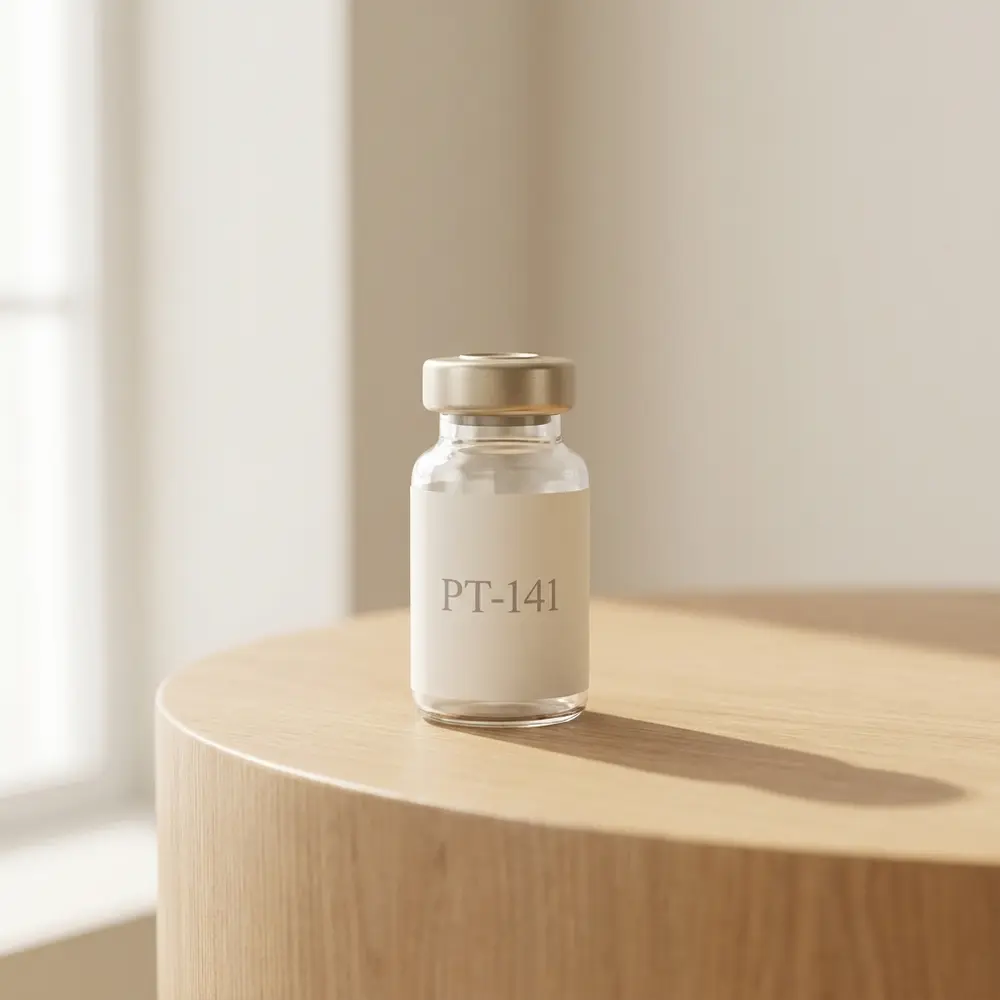
From the FormBlends catalog
PT-141 (Bremelanotide)
for women with low sexual desire. · From $189/mo · compounded by a licensed 503A pharmacy, dispensed only after provider review.
View PT-141 (Bremelanotide) →What Was Measured
The trials used two validated outcome measures:
- Female Sexual Function Index - Desire Domain (FSFI-D): A standardized score measuring sexual desire intensity and frequency
- Female Sexual Distress Scale - Desire/Arousal/Orgasm (FSDS-DAO): A measure of distress related to sexual dysfunction
The Results
Women using PT-141 showed:
- Statistically significant increases in FSFI-D scores compared to placebo, indicating improved desire
- Statistically significant decreases in FSDS-DAO scores compared to placebo, indicating reduced distress about low desire
- Increased number of satisfying sexual events (SSEs) per month, though this was a secondary endpoint
These are population-level results. Individual experiences within the trials varied considerably, which is expected with any medication affecting complex behaviors like sexual desire.
Timeline: What to Expect
First 45 to 60 Minutes (Per Dose)
PT-141 is an on-demand medication. After injection, here is the typical timeline for each use:
- 0 to 30 minutes: The peptide is being absorbed from the subcutaneous injection site into the bloodstream and crossing into the central nervous system.
- 30 to 60 minutes: Most users who respond to PT-141 begin to notice effects in this window. This may present as a subtle shift in receptivity, increased awareness of arousal cues, or a heightened interest in intimacy.
- 1 to 2 hours: Peak effects typically occur during this period.
- 2 to 6+ hours: Effects gradually taper. Some users report sustained effects for 6 to 12 hours or longer.
Nausea Window
Nausea, the most common side effect, typically occurs within 30 to 60 minutes of injection and usually resolves within 1 to 2 hours . For many users, nausea decreases with subsequent doses as the body adjusts. See our PT-141 side effects guide for management strategies.
Before and After: What Changes
Before PT-141
People who seek PT-141 therapy typically describe experiences like:
- Low or absent sexual desire that developed over time
- Feeling that desire used to be present but has diminished
- Distress or frustration about the gap between desired and actual libido
- Strain on intimate relationships due to mismatched desire levels
- Previous treatments (hormones, PDE5 inhibitors) that addressed physical function but not desire itself
After PT-141 (When It Works)
Individuals who respond to PT-141 commonly describe:
- A return of spontaneous interest in intimacy that had been absent
- Greater receptivity to arousal cues from a partner
- Improved confidence in sexual situations
- Reduced distress and frustration related to low desire
- Better connection with their partner
These descriptions reflect the subjective experience of responders. Not everyone who uses PT-141 will have this experience, and the degree of improvement varies.
Male Experience
While the FDA-approved data is from studies in women, men who use PT-141 off-label for erectile dysfunction have reported:.
- Improved ability to achieve and maintain erections
- Increased spontaneous desire, not just physical arousal
- Effectiveness in cases where PDE5 inhibitors (Viagra, Cialis) did not work, likely because the mechanism is entirely different
Male clinical trial data is more limited than female data, and these observations should be considered in that context.
Factors That Influence Your Results
Several factors can influence how you respond to PT-141:
- Underlying cause: PT-141 addresses neurological desire pathways. If low desire is primarily hormonal, psychological, or relational, results may be limited or require complementary interventions.
- Medications: Certain medications, including SSRIs and other antidepressants, can suppress sexual desire through mechanisms PT-141 may not fully overcome.
- Stress and sleep: Chronic stress and sleep deprivation affect sexual desire through multiple pathways. Addressing these factors may improve PT-141 response.
- Dosing and timing: Taking PT-141 too close to activity (less than 45 minutes) may reduce its effectiveness. See our PT-141 dosage guide for optimal timing.
- Expectations: Expecting a dramatic, instantaneous transformation can lead to disappointment. The effect is often described as subtle but meaningful.
Safety and Side Effects
The "after" picture includes side effects for some users. The most commonly reported is nausea, followed by flushing and headache. These are generally mild and transient. For complete safety information, see our PT-141 side effects guide.
How FormBlends Can Help
Knowing what to expect from PT-141 starts with a thorough evaluation of your situation. At FormBlends, our physician-supervised telehealth platform provides:
- A confidential assessment of your sexual health concerns and medical history
- Honest discussion of what PT-141 can and can't do for your specific situation
- Pharmaceutical-grade PT-141 from licensed pharmacies
- Guidance on optimal timing, dosing, and technique
- Follow-up consultations to assess your response and adjust your approach
We set realistic expectations from the start. Our goal isn't just to prescribe a peptide but to help you understand whether it's the right tool for your needs.
Frequently Asked Questions
How quickly does PT-141 work?
Most responders notice effects within 30 to 60 minutes of subcutaneous injection. Peak effects typically occur 1 to 2 hours after dosing. The effects can last several hours.
Does PT-141 work the first time?
Many users notice effects on their first dose, but some require several uses to find the optimal timing and context. If you don't respond after a few properly administered doses, discuss alternatives with your physician.
Will PT-141 make me feel different throughout the day?
PT-141 is an on-demand medication with effects limited to the hours following injection. It doesn't alter your baseline desire level throughout the day or between doses. There's no cumulative effect with repeated use.
What if PT-141 doesn't work for me?
Not everyone responds to PT-141. If you don't experience meaningful improvement after several properly timed doses, your physician can explore other options, including hormonal evaluations, other medications, or complementary approaches. A lack of response to PT-141 doesn't mean your situation is untreatable.
Do the effects of PT-141 wear off over time?
The on-demand nature of PT-141 means each dose acts independently. But overuse (exceeding the recommended frequency) could theoretically lead to receptor desensitization. Following the prescribed frequency limits helps maintain effectiveness. See our PT-141 dosage guide for details.
Find Out What PT-141 Can Do for You
If you want to understand whether PT-141 is the right fit for your situation, FormBlends can connect you with a licensed physician for a confidential, personalized evaluation.
Disclaimer: This article is for informational purposes only and doesn't constitute medical advice. PT-141 (bremelanotide) is FDA-approved only for the treatment of HSDD in premenopausal women. The outcomes described here are based on clinical trial data and generalized patient experiences. Individual results vary significantly. Always consult with a licensed healthcare provider before beginning any peptide therapy. FormBlends doesn't claim that PT-141 cures, treats, or prevents any disease beyond its FDA-approved indication.
Ready when you are
PT-141 (Bremelanotide)
for women with low sexual desire. · From $189/mo · compounded by a licensed 503A pharmacy, dispensed only after provider review.
View PT-141 (Bremelanotide) →