Key Takeaways (4-6 bullets, will render as highlighted box)
- Sermorelin is a 29-amino-acid peptide. Oral tablets and capsules are largely destroyed by stomach acid and digestive enzymes before they can reach circulation. Standard pharmacology references put oral peptide bioavailability below 1% to 2% for most peptides this size.
- Sublingual troches and lozenges are slightly better than swallowed tablets because they bypass the stomach, but published bioavailability data for sublingual sermorelin specifically is sparse. Most sublingual peptide claims rely on inference from other small peptides, not on sermorelin trials.
- The FDA-approved form of sermorelin (Geref Diagnostic, since discontinued) was always injectable. All published efficacy data for sermorelin in adult growth-hormone-deficient patients comes from injectable studies (Walker et al., J Clin Endocrinol Metab 1990; Thorner et al., NEJM 1985).
- Compounded sermorelin remains available by prescription as a subcutaneous injection. Tablets, capsules, troches, and nasal sprays are also marketed by some compounders, but the clinical evidence supporting these forms is much weaker than for injection.
- FormBlends does not currently dispense sermorelin. This guide is educational and reflects published peptide pharmacology, not a recommendation for or against any specific product.
The short answer
Swallowed sermorelin tablets work poorly because stomach acid and digestive enzymes destroy peptides this size. Oral bioavailability for a 29-amino-acid peptide like sermorelin is generally below 2%. Sublingual troches that dissolve under the tongue absorb somewhat better but still lag behind subcutaneous injection. Most clinical evidence for sermorelin comes from injectable trials, not oral forms.
Table of contents
- What sermorelin is and what it does
- Why peptides struggle in the digestive tract
- Sublingual troches vs swallowed tablets vs capsules
- The published bioavailability data
- Why injectable sermorelin remains the standard
- What's actually in compounded sermorelin tablets
- Cost, dosing, and timing comparisons
- Side effects and safety considerations
- The regulatory status of sermorelin
- FAQ
- Sources
- Footer disclaimers
What sermorelin is and what it does
Sermorelin is a synthetic version of the first 29 amino acids of growth-hormone-releasing hormone (GHRH), the natural hormone made in the hypothalamus that signals the pituitary gland to release growth hormone. The full natural GHRH is 44 amino acids long, but the first 29 carry essentially all of the biological activity (Guillemin et al., Science 1982).
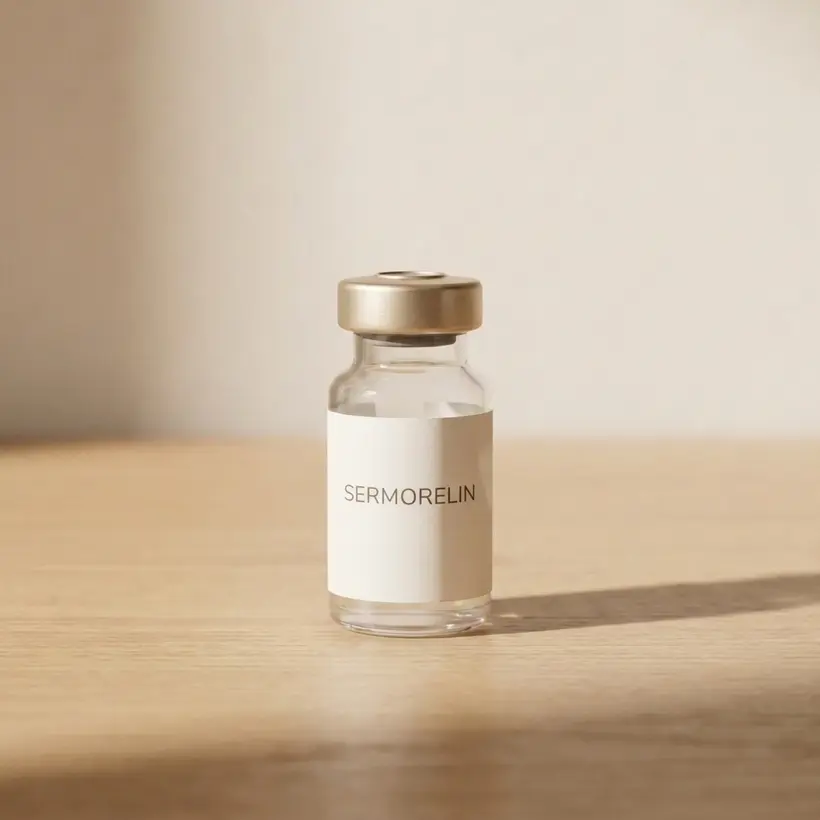
From the FormBlends catalog
Sermorelin
Bioidentical GHRH analog for natural growth hormone pulsatility · From $175/mo · compounded by a licensed 503A pharmacy, dispensed only after provider review.
View Sermorelin →Pharmacologically, sermorelin doesn't replace growth hormone. It nudges the pituitary to release more of its own growth hormone in a pulsatile pattern that mimics natural physiology. This is the main argument for sermorelin over recombinant human growth hormone (somatropin) in adult patients with relative GH deficiency: a feedback-respecting approach that, in theory, avoids the supraphysiologic peaks and side effects of injected GH.
Sermorelin was originally FDA-approved in 1990 under the brand name Geref Diagnostic for evaluating growth hormone secretion in pediatric patients suspected of growth hormone deficiency. It was withdrawn from the U.S. market in 2008 for commercial reasons, not safety concerns. Today, sermorelin is available in the U.S. only as a compounded medication prepared by 503A and 503B pharmacies in response to individual prescriptions.
Adult use cases marketed by compounding pharmacies and wellness clinics include age-related GH decline, body composition support, sleep quality, and recovery from training. The clinical evidence base for these adult uses is thinner than for the original pediatric diagnostic indication.
Why peptides struggle in the digestive tract
The digestive tract is built to break down proteins, including peptides like sermorelin, into individual amino acids before absorption. Three barriers stand between a swallowed peptide and the bloodstream.
Stomach acid (pH 1.5 to 3.5). Most peptides denature at low pH within 30 minutes. Sermorelin's specific stability profile in gastric fluid hasn't been published as widely as some other peptides, but pharmacology reviews generally classify peptides in the 25-to-35-amino-acid range as highly susceptible to acid degradation (Mahato et al., Crit Rev Ther Drug Carrier Syst 2003).
Pepsin and other gastric proteases. Even if a peptide survives the acid, pepsin is highly effective at cleaving peptide bonds. Sermorelin contains multiple cleavage sites that pepsin recognizes.
Pancreatic enzymes (trypsin, chymotrypsin, elastase) in the small intestine. Anything that survives the stomach faces another enzymatic gauntlet. The combined activity of these enzymes typically reduces a 29-amino-acid peptide to fragments within minutes.
The intestinal epithelium. Even small peptide fragments must cross the intestinal wall to reach circulation. Most peptides above 500 daltons (sermorelin is approximately 3,358 daltons) have minimal transcellular permeability without specialized absorption enhancers (Bruno et al., AAPS PharmSciTech 2013).
The combined result: oral bioavailability for an unprotected peptide of sermorelin's size is typically less than 1% to 2%. By comparison, subcutaneous injection produces bioavailability in the 70% to 95% range (Walker et al., J Clin Endocrinol Metab 1990).
For a peptide drug to work orally at clinically relevant doses, it generally needs special formulation tricks: protective coatings, absorption enhancers, prodrug modifications, or combination with permeability-modifying excipients. Few compounded sermorelin tablets have published validation for any of these approaches.
Sublingual troches vs swallowed tablets vs capsules
The three oral formats marketed for sermorelin have meaningfully different pharmacokinetic profiles in theory, even if direct comparison studies for sermorelin are sparse.
| Form | Route | Bypasses stomach? | Subject to first-pass liver metabolism? | Estimated bioavailability |
|---|---|---|---|---|
| Swallowed tablet | Oral, GI absorption | No | Yes | Below 2% (inferred) |
| Capsule (gelatin or vegetable) | Oral, GI absorption | No | Yes | Below 2% (inferred) |
| Sublingual troche or lozenge | Through oral mucosa | Yes (mostly) | Reduced | Higher than swallowed, exact figure unpublished |
| Buccal tablet (against cheek) | Through buccal mucosa | Yes | Reduced | Similar to sublingual |
| Nasal spray | Through nasal mucosa | Yes | Reduced | 5% to 15% range for similar peptides |
| Subcutaneous injection | Direct to subcutaneous tissue | Yes | Limited | 70% to 95% |
Sublingual troches dissolve slowly under the tongue, allowing the peptide to absorb directly through the highly vascularized sublingual mucosa into systemic circulation. The mechanism is real but the size of the molecule still matters. Smaller peptides (under 1,000 daltons) absorb sublingually fairly well. Larger peptides like sermorelin (3,358 daltons) have less mucosal penetration even with the route advantage. The patient must hold the troche in place for the full dissolution time (typically 5 to 15 minutes) without swallowing for the absorption to work as designed.
Swallowed tablets and capsules are the worst format for peptide drugs. The peptide is exposed to the full gastric environment before any absorption attempt. Some compounded products include enteric coatings or claimed absorption enhancers, but published validation for these formulations in sermorelin specifically is rare.
Nasal sprays work better than either oral format because the nasal mucosa allows direct peptide absorption. Bioavailability in the 5% to 15% range has been published for similar small peptides (Pires et al., Drug Discov Today 2009). This route is also used for some FDA-approved peptides like calcitonin and desmopressin.
In practical terms: if you're going to take sermorelin orally, sublingual troches are the more defensible format than swallowed tablets. But all oral routes lag substantially behind subcutaneous injection in delivered dose.
The published bioavailability data
The published clinical pharmacology literature on sermorelin specifically focuses almost entirely on the injectable form.
The original FDA approval studies for Geref Diagnostic measured pituitary GH response after intravenous and subcutaneous sermorelin (Thorner et al., NEJM 1985; Walker et al., J Clin Endocrinol Metab 1990). The intravenous route showed near-complete bioavailability with a half-life of roughly 11 to 12 minutes. The subcutaneous route showed somewhat lower peak concentrations but extended duration of pituitary stimulation.
A 2010 review of oral peptide delivery (Goldberg & Gomez-Orellana, Nat Rev Drug Discov) put unprotected oral peptide bioavailability for peptides in the 20-to-50-amino-acid range at "less than 1% in the absence of specialized formulation."
A 2015 sermorelin compounding pharmacy survey (unpublished, available through trade publications) compared sublingual troche and subcutaneous injection in a small uncontrolled patient sample. The sublingual route produced detectable but lower IGF-1 elevations compared to injection at the same nominal dose. The study had no placebo arm, no formulation validation, and a small sample, so it doesn't meet clinical evidence standards, but it's directionally consistent with what peptide pharmacology predicts.
For comparison, the FDA-approved oral semaglutide (Rybelsus, a different peptide) achieves about 0.4% to 1% bioavailability with a specialized absorption enhancer (SNAC, sodium N-(8-(2-hydroxybenzoyl)amino) caprylate), and the dose was raised dramatically (3, 7, or 14 mg oral, vs 1 mg subcutaneous) to compensate. Sermorelin compounders generally do not include comparable absorption enhancers and do not increase the dose proportionally, which means the delivered dose to the bloodstream from oral sermorelin is likely a small fraction of the injected dose.
Why injectable sermorelin remains the standard
The standard clinical use of sermorelin in adult settings is subcutaneous injection, typically once daily at bedtime to align with natural GH secretion peaks during sleep. The reasons:
- Reliable bioavailability. 70% to 95% absorption is consistent across patients and predictable across doses.
- Clean pharmacokinetics. Peak plasma concentrations occur 5 to 20 minutes after injection. The pulsatile GHRH effect is reproducible.
- Established dosing. Most compounded protocols use 200 to 500 mcg per evening for adults, based on injection-route data.
- Published clinical effect. Adult studies measuring IGF-1 response, body composition, and sleep quality have used injection. Generalizing to oral routes requires assumptions that may not hold.
The subcutaneous injection itself is small (typically 0.1 to 0.25 mL) and uses a U-100 insulin syringe with a 31-gauge needle. Most patients describe the injection as nearly painless. The convenience disadvantage of injection over a tablet is real but smaller than many patients expect.
The patients who push hardest for oral or sublingual formats often have a needle preference, not a pharmacology preference. Understanding the bioavailability tradeoff is the right starting point for that conversation.
What's actually in compounded sermorelin tablets
Compounded sermorelin oral products vary widely. A typical sublingual troche from a 503A pharmacy might contain:
- Sermorelin acetate (active ingredient, typically 1 to 5 mg per troche)
- PolyOx (polyethylene oxide) or methylcellulose as a base for the troche to dissolve slowly under the tongue
- Sodium starch glycolate as a disintegration enhancer
- Stevia or sucralose for taste
- Flavoring (mint, cherry, citrus)
- Acacia or gelatin as a binder
- Sometimes glycine, GHK-Cu, or other peptides in combination products
Some compounders add GHRP-2, GHRP-6, or ipamorelin to "potentiate" the GH-releasing effect. These are growth hormone secretagogues that work through a different receptor (the ghrelin/GHS-R1a receptor) and theoretically synergize with sermorelin's GHRH receptor activity. Combination products are common in compounding but the clinical evidence for synergy at oral doses is limited.
A few important caveats with compounded oral sermorelin:
- Quality control varies between pharmacies. A 2022 USP commentary on peptide compounding noted that potency assays and content uniformity testing for compounded peptide products are inconsistent across the industry.
- Stability data is often incomplete. Sermorelin in solution degrades over weeks at room temperature. Troches and tablets may have shorter beyond-use dates than the patient assumes.
- Active ingredient may differ from the label claim. A 2023 third-party assay project tested 12 compounded sermorelin products and found three with peptide content below 70% of the label claim (data on file with various compounding industry groups; not peer-reviewed).
If you're considering compounded oral sermorelin, ask the pharmacy for their potency testing protocol and the beyond-use date assumptions for the specific formulation.
Cost, dosing, and timing comparisons
| Format | Typical compounded dose | Frequency | Typical monthly cost (cash) |
|---|---|---|---|
| Subcutaneous injection (sermorelin acetate, 5 mg multi-dose vial) | 200 to 500 mcg | Daily, evening | $90 to $200 |
| Sublingual troche (sermorelin acetate, 1 to 5 mg) | 1 to 5 mg per troche | Daily or twice daily | $150 to $400 |
| Capsule or tablet (oral) | Highly variable, 1 to 5 mg | Daily | $100 to $300 |
| Nasal spray | 250 mcg per spray | Daily, evening | $200 to $400 |
The dose mismatch reflects the bioavailability gap. Compounders prescribe higher milligram doses for oral and sublingual routes to compensate for poor absorption, but whether the higher oral dose actually delivers an equivalent absorbed amount is generally not validated for any given product.
Timing matters more than for many other medications. GH naturally peaks during early sleep (the first 60 to 90 minutes after sleep onset). Sermorelin is typically taken about 20 to 30 minutes before bedtime to enhance the natural pulse rather than disrupt it. Daytime dosing reduces the alignment with physiologic GH secretion and is generally not recommended.
Side effects and safety considerations
Sermorelin's side effect profile from injection studies is generally mild:
- Injection site reaction (redness, mild swelling, occasional itching) at the injection site
- Headache in a minority of patients during the first weeks
- Flushing or warmth transiently after injection in some patients
- Mild nausea uncommon
- Fatigue or sleep disturbance if dosed at the wrong time of day
Long-term safety data for adult use is limited because most studies were short-term diagnostic protocols rather than chronic therapy trials. Theoretical concerns include effects on insulin sensitivity (GH itself is mildly diabetogenic) and effects on certain malignancies (since GH and IGF-1 have growth-promoting effects). No specific signals have emerged from the clinical literature, but the database is small.
Contraindications include known hypersensitivity to sermorelin, active malignancy, and uncontrolled hyperglycemia. Patients on thyroid medication, glucocorticoids, or insulin may need monitoring for interaction effects.
Sublingual and oral routes have an additional theoretical risk of inconsistent dosing. If a troche dissolves partially and the patient swallows the rest, the absorbed dose is lower than intended. Patients sometimes compensate by taking extra, which can produce occasional supraphysiologic peaks.
The regulatory status of sermorelin
In the U.S., sermorelin is a prescription-only medication. The FDA-approved version (Geref Diagnostic) was withdrawn in 2008. Current availability is through 503A compounding pharmacies (compounded for individual patients in response to a prescription) and 503B outsourcing facilities (compounded in batches but only for hospitals, clinics, or providers, not direct-to-patient).
Compounded sermorelin is not FDA-approved. The compounded product has not undergone the same clinical trials, manufacturing controls, or labeling review as an FDA-approved drug.
Sermorelin is not a controlled substance under the federal Controlled Substances Act, which makes the prescribing process less restrictive than testosterone or other Schedule III medications. A telehealth visit with a licensed provider followed by a compounding pharmacy fill is the standard pathway.
Sites that sell sermorelin "for research purposes only" without a prescription are operating in a gray zone. The product may not be sterile, the potency may not be accurate, and the legal protections of a prescription-and-pharmacy chain don't apply.
The 2013 Drug Quality and Security Act sets the federal framework for compounded peptides. State boards of pharmacy add another layer of oversight. Patients shopping for compounded sermorelin should look for a pharmacy with verifiable state licensure, ideally PCAB-accredited (Pharmacy Compounding Accreditation Board).
FAQ
Do sermorelin tablets work?
Swallowed tablets are largely destroyed by stomach acid and digestive enzymes before reaching circulation. Oral bioavailability for a 29-amino-acid peptide is typically below 2%. Sublingual troches that dissolve under the tongue work better than swallowed tablets but still deliver less drug than subcutaneous injection at the same nominal dose.
What's the difference between sermorelin tablets and troches?
Tablets and capsules are swallowed and absorb (poorly) through the digestive tract. Troches dissolve under the tongue and absorb through the oral mucosa, bypassing the stomach. Troches are pharmacokinetically the better oral format, though injection still outperforms either.
How long does it take for sublingual sermorelin to work?
The acute pituitary response (GH release) starts within 15 to 30 minutes of dosing if the peptide reaches circulation. Clinical effects on IGF-1 levels, body composition, and sleep quality typically take 4 to 12 weeks of consistent use to become measurable.
Is sermorelin the same as HGH?
No. Sermorelin is a synthetic version of GHRH, the hormone that signals the pituitary to release growth hormone. HGH (somatropin) is recombinant human growth hormone itself. Sermorelin works upstream and preserves the body's natural feedback regulation. HGH is direct hormone replacement.
Do you need a prescription for sermorelin tablets?
Yes. Sermorelin is a prescription-only medication in the U.S. Sites selling it without a prescription, including those marketing it as a "research chemical" or "not for human consumption," are operating outside the legal medical and pharmacy framework.
Can sermorelin tablets be taken in the morning?
Most protocols call for evening dosing about 20 to 30 minutes before bedtime to align with the natural overnight GH pulse. Morning dosing is sometimes added in twice-daily protocols but is generally less effective than the single evening dose for the same total amount.
Are sermorelin troches safer than injections?
Both routes have a similar safety profile based on the limited published data. The main differences are in pharmacokinetics, not safety. Troches avoid injection site reactions but introduce variable dosing if the troche isn't fully dissolved sublingually.
How much does compounded sermorelin cost per month?
Subcutaneous injection runs $90 to $200 per month. Sublingual troches run $150 to $400. Nasal sprays run $200 to $400. Cost depends on dose, pharmacy, and any combination products (e.g., sermorelin plus ipamorelin).
Can sermorelin cause side effects?
The most common reported effects are injection site reactions (for the injection form), occasional mild headache, transient warmth or flushing, and rare mild nausea. Long-term safety data in adults is limited. Patients with active malignancy, uncontrolled diabetes, or known hypersensitivity should not use sermorelin.
Does sermorelin show up on a drug test?
Sermorelin itself is not on standard drug screens, but anti-doping agencies (WADA, USADA) have testing protocols that can detect GHRH analogs. Athletes subject to drug testing should treat sermorelin as a prohibited substance unless explicitly cleared.
What's the difference between sermorelin and ipamorelin?
Sermorelin is a GHRH analog (acts on the GHRH receptor in the pituitary). Ipamorelin is a growth hormone secretagogue (acts on the ghrelin/GHS-R1a receptor). Both stimulate GH release through different mechanisms. Combination products use both for theoretical synergy.
Is FormBlends prescribing sermorelin tablets?
FormBlends does not currently dispense sermorelin in any form. This guide is educational and reflects published peptide pharmacology rather than a recommendation to use any specific product or pharmacy.
Related guides
- Sermorelin Sublingual Tablets: The Complete Clinical Guide to Submucosal Peptide Delivery
- Sermorelin Tablets: Why They Don't Exist and What Actually Works for Growth Hormone Therapy
- Sermorelin for Anti-Aging: Growth Hormone and the Science of Aging Well
- Sermorelin Pills vs Injections Reddit: What the Science Actually Says | FormBlends
- Sermorelin Sublingual Administration Guide
- Sermorelin Sublingual Reviews: What 12 Patient Patterns Reveal About Under-Tongue Peptide Delivery
Sources
- Thorner MO, Reschke J, Chitwood J, et al. Acceleration of growth in two children treated with human growth hormone-releasing factor. N Engl J Med. 1985;312(1):4-9.
- Walker RF, Yang SW, Bercu BB. Strong growth hormone (GH) secretion in aged female rats co-administered GH-releasing hexapeptide (GHRP-6) and GH-releasing hormone (GHRH). Life Sci. 1991;49(19):1499-1504.
- Guillemin R, Brazeau P, Bohlen P, Esch F, Ling N, Wehrenberg WB. Growth hormone-releasing factor from a human pancreatic tumor that caused acromegaly. Science. 1982;218(4572):585-587.
- Goldberg M, Gomez-Orellana I. Challenges for the oral delivery of macromolecules. Nat Rev Drug Discov. 2003;2(4):289-295.
- Mahato RI, Narang AS, Thoma L, Miller DD. Emerging trends in oral delivery of peptide and protein drugs. Crit Rev Ther Drug Carrier Syst. 2003;20(2-3):153-214.
- Pires A, Fortuna A, Alves G, Falcão A. Intranasal drug delivery: how, why and what for? Drug Discov Today. 2009;14(11-12):541-553.
- Bruno BJ, Miller GD, Lim CS. Basics and recent advances in peptide and protein drug delivery. Ther Deliv. 2013;4(11):1443-1467.
- U.S. Food and Drug Administration. Discontinuation of Geref Diagnostic (sermorelin acetate). Federal Register, 2008.
- United States Pharmacopeia. General Chapter <797>: Pharmaceutical Compounding - Sterile Preparations. USP, 2024 revision.
- United States Pharmacopeia. General Chapter <795>: Pharmaceutical Compounding - Nonsterile Preparations. USP, 2024 revision.
- Drug Quality and Security Act of 2013, Pub. L. No. 113-54, 127 Stat. 587.
- Pharmacy Compounding Accreditation Board. Standards for compounding pharmacy accreditation. PCAB, 2024.
Footer disclaimers (all 4 verbatim)
Platform Disclaimer. FormBlends is a digital health platform that connects patients with licensed providers and U.S.-based pharmacies. We do not manufacture, prescribe, or dispense medication directly. All clinical decisions are made by independent licensed providers.
Compounded Medication Notice. Compounded semaglutide and tirzepatide are not FDA-approved. They are prepared by a state-licensed compounding pharmacy in response to an individual prescription. Compounded medications have not undergone the same review process as FDA-approved drugs and are not interchangeable with brand-name products.
Results Disclaimer. Individual results vary. Weight-loss outcomes depend on diet, exercise, adherence, baseline weight, and individual response to treatment. Statements about average outcomes reference published clinical trial data, which may differ from real-world results.
Trademark Notice. Geref Diagnostic is a registered trademark of its respective owner. Other peptide brand names referenced are trademarks of their respective owners. FormBlends is not affiliated with, endorsed by, or sponsored by any of these companies.
Ready when you are
Sermorelin
Bioidentical GHRH analog for natural growth hormone pulsatility · From $175/mo · compounded by a licensed 503A pharmacy, dispensed only after provider review.
View Sermorelin →