Key Takeaway
Quality sleep is the foundation of every health goal. This sleep peptide stack DSIP resource covers the important information you need to make informed decisions. A sleep peptide stack using DSIP, CJC-1295, Ipamorelin, and other compounds can dramatically improve your sleep architecture.
Quality sleep is the foundation of every health goal. This sleep peptide stack DSIP resource covers the important information you need to make informed decisions. A sleep peptide stack using DSIP, CJC-1295, Ipamorelin, and other compounds can dramatically improve your sleep architecture. If you have tried sleep hygiene, supplements, and behavioral changes without adequate results, peptide therapy may provide the missing piece.
This guide covers the most effective peptide combinations for sleep and how they work through your body's natural sleep systems.
The Sleep Stack Components
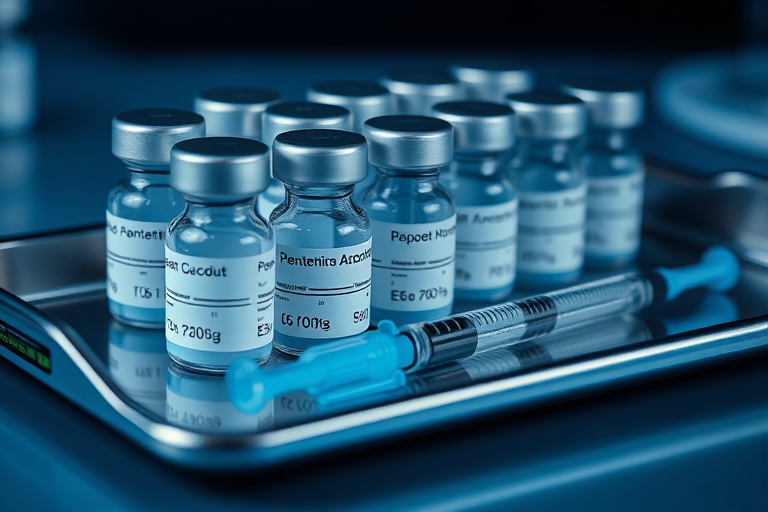
CJC-1295 (100mcg) + Ipamorelin (200mcg): The foundation of any sleep stack. GH peptides improve deep slow-wave sleep, which is the most restorative sleep phase. Inject at bedtime on an empty stomach. Most users notice sleep improvement within the first week.
DSIP (Delta Sleep-Inducing Peptide): DSIP is a neuropeptide that promotes delta wave sleep, the deepest phase of non-REM sleep. Typical dosing: 100-300mcg subcutaneous at bedtime. DSIP may help normalize disrupted sleep patterns and improve sleep onset.
Free Download: Wolverine Stack Card Sleep improvement protocol card with dosing, timing, and sleep tracking templates. Get yours free) we'll email it to you instantly. [Download Your Free Stack Card]
Recommended sleep stack protocol: - CJC-1295 (100mcg) + Ipamorelin (200mcg) at bedtime, empty stomach - DSIP (100-200mcg) at bedtime, can be injected alongside GH peptides - Both are subcutaneous injections in the abdomen - Continue for 8-12 weeks, then cycle GH peptides (1 month off)
Supporting strategies: - Magnesium glycinate (200-400mg) at bedtime - Room temperature 65-68 degrees Fahrenheit - No screens 30-60 minutes before bed - Consistent sleep/wake schedule - Avoid caffeine after 2 PM
Track your sleep quality in the alongside your injection schedule. Read about for detailed information.
What to Expect
Night 1-3: You may notice deeper sleep immediately, particularly from DSIP. Vivid dreams are common as REM sleep improves.
Week 1-2: Sleep onset improves. Fewer nighttime awakenings. Morning energy increases noticeably.
Week 3-4: Sleep architecture stabilizes. Consistent deep sleep produces cumulative recovery benefits. Daytime energy and cognitive function improve.
Month 2-3: Full sleep improvement benefits established. Training recovery improves dramatically. Mood and stress resilience benefit from restored sleep.
For GLP-1 users: If your GLP-1 medication disrupts sleep (reported by some users), this stack may counteract those effects. The sleep-enhancing properties of GH peptides and DSIP work through different pathways than GLP-1. Discuss with your .
How to Measure Sleep Quality Objectively
Saying "I slept better" isn't data. Objective sleep tracking turns subjective feelings into actionable numbers your provider can use to adjust your protocol.
From the FormBlends catalog
Sleep + Recovery Stack
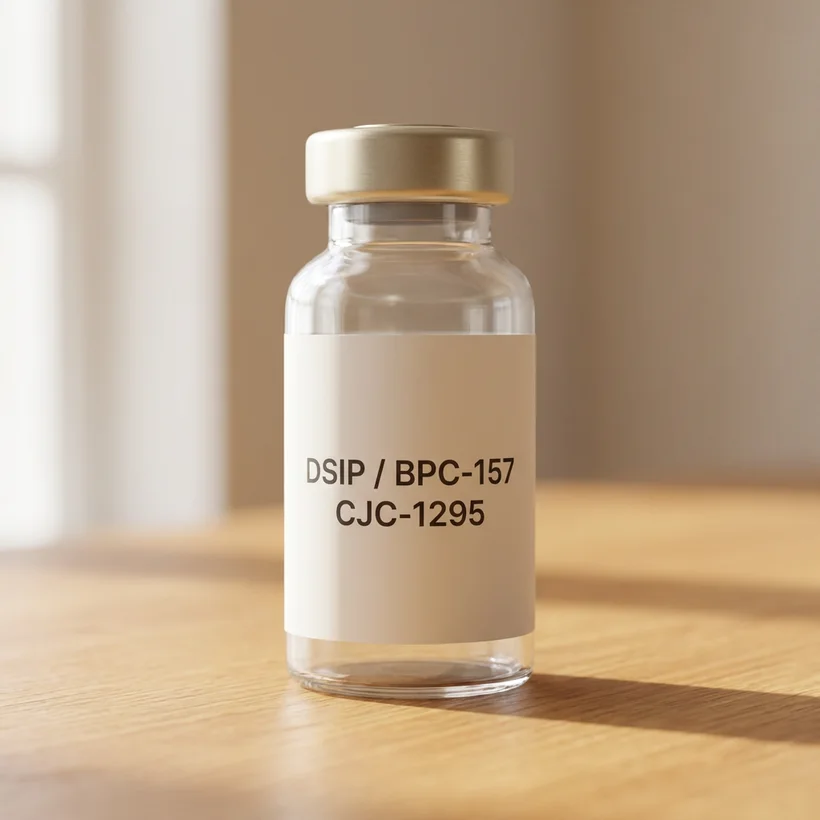
Sleep and repair support with DSIP, BPC-157, and CJC · From $299/mo · compounded by a licensed 503A pharmacy, dispensed only after provider review.
View Sleep + Recovery Stack →Wearable device metrics that matter: - Deep sleep percentage: This is the single most important metric for sleep stack users. Deep slow-wave sleep is where GH release peaks, tissue repair occurs, and memory consolidation happens. Aim for 15-20% of total sleep time in deep sleep. Many adults over 40 get less than 10% without intervention. Track this weekly and share trends with your provider - Sleep onset latency: How long does it take you to fall asleep after lights out? DSIP should reduce this. Target: under 20 minutes. If you're consistently above 30 minutes after 2 weeks on protocol, your provider may adjust the DSIP dose - Wake-after-sleep-onset (WASO): Total minutes awake after initially falling asleep. GH peptides often reduce nighttime awakenings. Target: under 30 minutes total awake time throughout the night - REM sleep percentage: Should be 20-25% of total sleep time. REM supports emotional processing and cognitive function. Both DSIP and improved GH signaling can support healthy REM cycles - Resting heart rate during sleep: A declining overnight heart rate (compared to your pre-protocol baseline) indicates improved autonomic recovery. This metric correlates with overall sleep quality and recovery status
Wearable devices that track these metrics well: Oura Ring, Whoop, Apple Watch (Series 9+), and Garmin watches with advanced sleep tracking all provide the metrics listed above. No device is perfectly accurate for sleep staging, but consistency matters more than absolute accuracy. Use the same device throughout your protocol so trends are comparable.
Manual tracking for those without wearables: - Rate sleep quality 1-10 each morning before checking your phone - Log the time you got into bed, estimated time you fell asleep, and time you woke up - Note any nighttime awakenings (how many, and approximately how long each lasted) - Rate morning alertness 1-10 at 30 minutes after waking (before caffeine) - Log caffeine, alcohol, and exercise timing from the previous day (these affect sleep significantly)
Bring 4+ weeks of sleep data to every provider check-in. Patterns in the data reveal whether the protocol is working better than any single night's impression.
The Bedtime Routine That Maximizes Your Sleep Stack
Peptides support your sleep biology, but they work best when your environment and habits are also improved. A structured bedtime routine amplifies the effects of your sleep stack.
2 hours before bed: - Eat your last meal. GH peptides require a 2+ hour fast for maximum effect. If you eat too close to injection time, insulin from digestion blunts the GH response. This is the most common compliance mistake that reduces sleep stack effectiveness - Dim household lighting. Bright overhead lights suppress melatonin. Switch to lamps, candles, or smart bulbs set to warm tones below 3000K - Stop all work-related communication. Email, Slack, and work texts activate your stress response and raise cortisol, which directly opposes the GH release you're trying to stimulate
1 hour before bed: - Take magnesium glycinate (200-400mg) with a small amount of water. Magnesium supports GABA activity, which synergizes with both DSIP and natural sleep onset - Begin your wind-down activity: reading (physical book, not a screen), light stretching, meditation, or a warm shower/bath. A warm shower 30-60 minutes before bed creates a temporary body temperature rise followed by a drop, which signals your brain that sleep is approaching
15-30 minutes before bed: - Prepare your injection supplies. Draw your CJC-1295/Ipamorelin and DSIP - Set your room temperature to 65-68 degrees Fahrenheit. Cool environments promote deeper sleep - Inject your sleep stack (subcutaneous, abdomen). The injection itself takes under 2 minutes - Turn off all remaining lights. If you use an eye mask, put it on after your injection - Avoid looking at your phone after injection. The blue light and mental stimulation from screen content will counteract the sleep-promoting effects you just initiated
Consistency is the multiplier. Performing this routine at the same time every night (within a 30-minute window) trains your circadian rhythm to expect sleep at that time. After 2-3 weeks of consistent timing, your body begins the sleep onset process before you even inject.
When the Sleep Stack Is Not Enough
Sometimes peptides and good sleep hygiene still don't produce adequate results. If your sleep quality hasn't improved meaningfully after 4-6 weeks on a properly dosed protocol with good compliance, additional factors need investigation.
Medical conditions that override peptide sleep benefits: - Sleep apnea: No peptide stack fixes obstructive sleep apnea. If you snore loudly, stop breathing during sleep (partner-reported), or wake up with headaches and dry mouth, get a sleep study. CPAP or an oral appliance must be addressed before a sleep peptide stack can produce its full effect - Chronic pain: Pain disrupts sleep architecture at a level that peptides can't fully overcome. If an injury or chronic pain condition is the root cause of poor sleep, address the pain (a healing peptide protocol may be appropriate) alongside the sleep stack - Anxiety and racing thoughts: If sleep onset problems come from an inability to stop thinking, your provider may recommend adding Selank (an anxiolytic peptide) to the protocol or addressing the anxiety through other treatment
Lab markers to check if the sleep stack underperforms: - Cortisol (AM and PM): improved evening cortisol prevents sleep onset regardless of peptide use - Thyroid panel: Both hypothyroidism and hyperthyroidism disrupt sleep patterns - Iron and ferritin: Low iron causes restless leg syndrome, which fragments sleep - Testosterone (for men): Low testosterone is associated with poor sleep quality and vice versa - Vitamin D: Deficiency is linked to shorter sleep duration and more nighttime awakenings
Your will investigate these factors if your sleep stack results plateau.
Frequently Asked Questions
Is the sleep stack habit-forming?
No. GH peptides and DSIP work by enhancing your body's natural sleep mechanisms, not by sedating you. They aren't addictive and don't produce dependency or tolerance for sleep effects. You can stop without rebound insomnia.
Can I use this stack with melatonin?
Yes. Low-dose melatonin (0.5-1mg) complements the sleep stack by supporting circadian rhythm regulation. It works through a different pathway than GH peptides or DSIP.
Will this stack help with sleep apnea?
Peptide sleep stacks don't treat sleep apnea, which is a structural/mechanical condition requiring specific treatment (CPAP, oral appliances, weight loss). But if you have both poor sleep quality and sleep apnea, addressing both issues simultaneously may improve overall sleep. Consult your sleep specialist.
How long can I safely use the sleep stack?
GH peptides should be cycled (3 months on, 1 month off). DSIP cycling protocols are less established. most providers recommend similar cycling patterns. Long-term use requires regular provider monitoring.
Let's Make This Happen
The research is clear. The options are available. The only question is whether it's right for you. A FormBlends provider can help you decide (no pressure, no commitment.
Sources &. References
- Sikiric P, Hahm KB, Blagaic AB, et al. Stable Gastric Pentadecapeptide BPC 157, Robert's Cytoprotection, Adaptive Cytoprotection, and Therapeutic Effects. Curr Pharm Des. 2018;24(18):1990-2001. Doi:10.2174/1381612824666180515125918
- Chang CH, Tsai WC, Lin MS, et al. The promoting effect of pentadecapeptide BPC 157 on tendon healing involves tendon outgrowth, cell survival, and cell migration. J Appl Physiol. 2011;110(3):774-780. Doi:10.1152/japplphysiol.00945.2010
- Seiwerth S, Brcic L, Vuletic LB, et al. BPC 157 and blood vessels. Curr Pharm Des. 2014;20(7):1121-1125. Doi:10.2174/13816128113199990421
- Bock-Marquette I, Saxena A, White MD, et al. Thymosin beta4 activates integrin-linked kinase and promotes cardiac cell migration, survival and cardiac repair. Nature. 2004;432(7016):466-472. Doi:10.1038/nature03000
- Malinda KM, Sidhu GS, Mani H, et al. Thymosin beta4 accelerates wound healing. J Invest Dermatol. 1999;113(3):364-368. Doi:10.1046/j.1523-1747.1999.00708.x
- Ionescu M, Frohman LA. Pulsatile secretion of growth hormone (GH) persists during continuous stimulation by CJC-1295, a long-acting GH-releasing hormone analog. J Clin Endocrinol Metab. 2006;91(12):4792-4797. Doi:10.1210/jc.2006-1702
Nothing in this article should be construed as medical advice. The information provided is educational only. Always consult with your healthcare provider before beginning, modifying, or discontinuing any medication or treatment. FormBlends connects patients with licensed providers for individualized care.
Last updated: 2026-03-24
Ready when you are
Sleep + Recovery Stack
Sleep and repair support with DSIP, BPC-157, and CJC · From $299/mo · compounded by a licensed 503A pharmacy, dispensed only after provider review.
View Sleep + Recovery Stack →