Key Takeaway
Complete guide to sleep improvement peptide stacks using DSIP, sermorelin, Selank, and epitalon. Protocols for deeper sleep and better recovery under physician care.
A sleep improvement peptide stack uses targeted peptides to improve sleep architecture, increase deep sleep phases, normalize circadian rhythm signaling, and enhance the restorative processes that occur during quality sleep.
Sleep isn't just rest. It's when your body repairs tissue, consolidates memories, releases growth hormone, clears metabolic waste from the brain, and resets immune function. Poor sleep doesn't just make you tired. It accelerates aging, promotes weight gain, weakens immunity, and impairs cognitive function.
For patients who have tried melatonin supplements, sleep hygiene adjustments, and still struggle with sleep quality, peptide therapy offers a fundamentally different approach. Rather than sedating you, sleep peptides improve the biological systems that regulate natural, restorative sleep. At FormBlends, we use these protocols for patients dealing with chronic sleep issues, age-related sleep deterioration, and high-performance individuals who need to maximize recovery. stress relief in men: anxiolytic peptide guide.
Which sleep peptides act on deep sleep, anxiety, and the pineal gland?
DSIP (Delta Sleep-Inducing Peptide)
DSIP was first identified in 1977 from the cerebral venous blood of rabbits during induced sleep. This nonapeptide (nine amino acids) promotes delta wave sleep, which is the deepest and most restorative phase of the sleep cycle.
Sleep benefits of DSIP:
- Promotes entry into and maintenance of deep delta wave sleep
- Normalizes disrupted sleep patterns without morning grogginess
- Modulates stress response by influencing cortisol and ACTH levels
- May reduce chronic pain perception, which often disrupts sleep
- Doesn't create dependency or tolerance like sedative medications
- Supports circadian rhythm normalization
How sermorelin links deep sleep to growth hormone release
While sermorelin is primarily known as a growth hormone secretagogue, its impact on sleep is one of the most consistently reported benefits. Growth hormone release and deep sleep are intimately connected. The largest GH pulses occur during deep sleep, and sermorelin enhances both the depth and duration of this sleep phase.
Sleep benefits of sermorelin:
- Enhances slow-wave (deep) sleep duration and quality
- Increases growth hormone release during sleep (amplifying repair)
- Improves morning energy by promoting more restorative overnight recovery
- May improve sleep onset when administered before bed
How Selank targets anxiety-driven bedtime racing thoughts
Selank is a synthetic tuftsin analog with anxiolytic (anti-anxiety) properties. For many patients, poor sleep is driven by anxiety, racing thoughts, or an overactive stress response. Selank addresses the neurological component of sleep disruption without sedation.
Sleep benefits of Selank:
- Reduces anxiety and mental hyperactivity that prevent sleep onset
- Modulates GABA, serotonin, and dopamine systems
- No sedative effect, so it doesn't cause morning drowsiness
- Promotes calm alertness during the day and easier transition to sleep at night
- May improve REM sleep quality
How epitalon supports the pineal gland's own melatonin output
Epitalon (also called epithalon) is a synthetic tetrapeptide based on epithalamin, a substance produced by the pineal gland. The pineal gland is responsible for melatonin production, and epitalon supports its healthy function. Unlike exogenous melatonin supplements, epitalon helps your body produce melatonin naturally and in the right amounts at the right times.
Sleep benefits of epitalon:
- Supports natural melatonin production by the pineal gland
- Helps normalize circadian rhythm signaling
- May support telomere length (linked to biological aging and sleep regulation)
- Improves sleep quality without the tolerance issues common with melatonin supplements
Recommended Sleep Peptide Stacks
Pairing DSIP with sermorelin for deep sleep and GH recovery
This is our core sleep improvement protocol. DSIP directly promotes delta wave sleep while sermorelin amplifies growth hormone release during that deep sleep phase. The result is sleep that's both deeper and more restorative.

- DSIP: 100-200 mcg subcutaneously, 30-60 minutes before bed
- Sermorelin: 200-300 mcg subcutaneously, 30-60 minutes before bed (on an empty stomach)
- Best for: General sleep improvement, age-related sleep deterioration, athletes needing recovery
Adding Selank to a three-peptide sleep stack
Adding Selank addresses the anxiety and mental hyperactivity component. This three-peptide approach covers delta sleep promotion, stress reduction, and GH-linked recovery.
- DSIP: 100-200 mcg before bed
- Selank: 300-600 mcg intranasal, 1-2 hours before bed
- Sermorelin: 200-300 mcg before bed
- Best for: Patients whose poor sleep is driven by anxiety, stress, or racing thoughts
Using epitalon with sermorelin to reset a disrupted body clock
For patients with disrupted circadian rhythms from shift work, travel, or irregular schedules, this stack helps reset the body's internal clock while improving the hormonal support for restorative sleep.
- Epitalon: 5-10 mg daily, subcutaneously, for 10-20 day cycles
- Sermorelin: 200-300 mcg before bed
- Best for: Shift workers, frequent travelers, patients with circadian rhythm disruption
Timing evening doses around fasting and winding down
Sleep peptide timing is particularly important because you're working with your body's natural sleep-wake cycle.
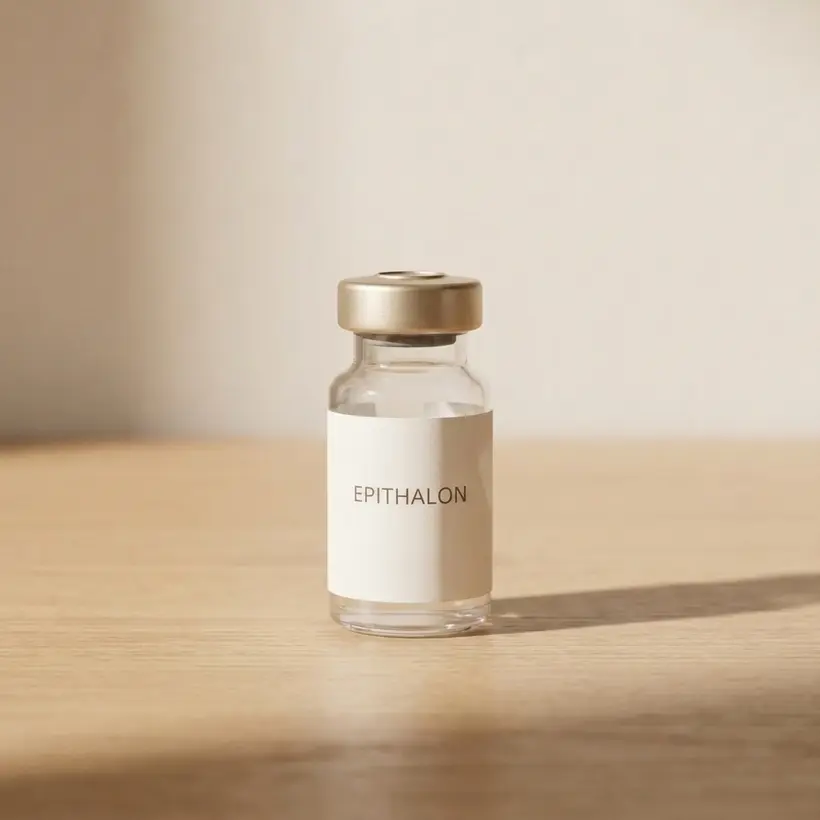
From the FormBlends catalog
Epithalon (Epitalon)
Compounded product information and independent clinical review · From $199/mo · prescription review required; compounded medications are not FDA-approved.
View Epithalon (Epitalon) →Evening Protocol
- 2-3 hours before bed: Begin winding down. Dim lights, reduce screen exposure. If using Selank, administer intranasally during this window.
- 90 minutes before bed: Stop eating. The fasting window is important for sermorelin effectiveness.
- 30-60 minutes before bed: Administer DSIP and sermorelin subcutaneously.
- In bed: Allow the peptides to work naturally. Most patients report falling asleep more easily within the first few nights.
Running a short daily epitalon cycle followed by a long break
Epitalon is typically administered in short, concentrated cycles rather than ongoing daily use. A standard cycle is 10 days of daily injections, followed by a 4-6 month break. The effects on pineal function and melatonin production persist long after the cycle ends.
Cycle lengths for DSIP, sermorelin, Selank, and epitalon
- DSIP: 4-8 week cycles with 2-4 week breaks
- Sermorelin: 12-16 week cycles with 4-6 week breaks
- Selank: 4-8 week cycles with 2-4 week breaks
- Epitalon: 10-20 day cycles, 2-3 times per year
Timeline of sleep changes after starting sleep peptides
Sleep improvements tend to be among the fastest and most noticeable benefits of peptide therapy.
Days 1-3
Many patients notice a difference from the first night. Sleep onset becomes easier. Vivid dreams may increase (a sign of improved REM cycling). Some patients report sleeping more deeply than they have in years.
Sleep changes in the first two weeks
Sleep continuity improves. Fewer middle-of-the-night awakenings. Morning energy and alertness increase significantly. The "fog" that accompanies chronic poor sleep begins clearing.
Sleep and recovery changes from weeks 3 to 6
Consistent, high-quality sleep becomes the norm rather than the exception. Daytime cognitive performance improves. Mood stabilizes. Exercise recovery accelerates (from increased GH release during sleep). Skin appearance may improve as overnight repair processes become more effective.
Longer-term sleep and body changes, weeks 6 to 12
Long-term benefits accumulate. Body composition improves as sleep-dependent metabolic processes normalize. Immune function strengthens. Stress tolerance increases. Many patients report that their overall quality of life improves dramatically when sleep is improved.
Non-sedative sleep peptides versus sleep drugs that induce unconsciousness
Sleep peptides are non-sedative and non-addictive, which distinguishes them from many conventional sleep medications. They work by improving natural sleep processes rather than forcing unconsciousness.
Common side effects of sleep peptide stacks
- Vivid or unusual dreams (common, usually viewed positively)
- Mild morning grogginess during the first few days (resolves as the body adjusts)
- Injection site reactions
- Mild headache (uncommon)
- Slight changes in blood pressure (DSIP can have mild hypotensive effects)
Advantages Over Conventional Sleep Aids
- No dependence or tolerance development
- No next-day cognitive impairment
- No rebound insomnia when stopping
- Actually improves sleep architecture rather than just inducing unconsciousness
- Compatible with long-term use under physician guidance
Conditions that rule out sermorelin or DSIP use
- Active cancer (particularly for sermorelin due to GH effects)
- Pregnancy or breastfeeding
- Severe hypotension (DSIP can lower blood pressure slightly)
- Known allergy to any component
Frequently Asked Questions
Can sleep peptides help people who depend on sleep medication?
Sleep peptides can support the transition away from conventional sleep medications. But this must be done gradually and under physician supervision. Abruptly stopping benzodiazepines or other sleep drugs is dangerous. Many patients are able to reduce or eliminate sleep medication use over time as peptide-supported natural sleep improves.
Can sleep peptides be used with other peptide protocols?
Yes. In fact, sleep peptides complement other protocols beautifully. Better sleep enhances healing, GH release, immune function, and body composition changes. Sermorelin in particular does double duty as both a sleep optimizer and a GH peptide.
Are sleep peptides safe for nightly use?
Within the recommended cycle lengths, nightly use is standard. These peptides don't create tolerance the way sleep medications do. But periodic breaks between cycles are recommended to allow natural function to maintain its baseline. Your physician will guide cycling.
Can DSIP help sleep disrupted by chronic pain?
DSIP has analgesic (pain-reducing) properties that may help. For patients whose sleep is disrupted by chronic pain, combining a sleep stack with a healing peptide protocol (BPC-157 + TB-500) can address both issues simultaneously.
How do sleep peptides compare to melatonin supplements?
Melatonin supplements provide exogenous hormone and can suppress your body's natural production with chronic use. Epitalon supports your pineal gland's own melatonin production. DSIP and sermorelin work through entirely different mechanisms (delta sleep promotion and GH release). Sleep peptides are a more sophisticated and sustainable approach.
What should you know before starting sleep peptides?
Quality sleep is the foundation of every aspect of health, from mental clarity to physical recovery to emotional well-being. If you have been struggling with poor sleep despite your best efforts, peptide therapy may provide the biological support your body needs. At FormBlends, our physicians design personalized sleep improvement protocols with thorough assessment, pharmaceutical-grade peptides, and ongoing monitoring.
Schedule your consultation with a FormBlends physician today and discover how peptide therapy can help you sleep deeper, recover faster, and wake up ready to perform.
Sources
- Khavinson VKh, Bondarev IE, Butyugov AA. Epithalon peptide induces telomerase activity and telomere elongation in human somatic cells. Bulletin of Experimental Biology and Medicine. 2003;135(6):590-592.
- U.S. Food and Drug Administration. July 23-24, 2026 Meeting of the Pharmacy Compounding Advisory Committee (BPC-157, KPV, TB-500, MOTS-c, emideltide, Semax, epitalon).
Ready when you are
Epithalon (Epitalon)
Compounded product information and independent clinical review · From $199/mo · prescription review required; compounded medications are not FDA-approved.
View Epithalon (Epitalon) →