Key Takeaway
TB-500 for beginners explained clearly. Everything first-time users need to know about Thymosin Beta-4, including what it does, how to use it, dosing, safety, and realistic expectations.
If you're new to peptides, TB-500 for beginners can feel overwhelming. We simplify everything you need to know, from the basic science to your first injection, so you can make an informed decision about whether TB-500 is right for you.
TB-500 in Plain Language
Your body naturally produces a protein called Thymosin Beta-4 (TB4). It's found in almost every cell in your body and plays a major role in healing injured tissue. When you cut your skin, strain a muscle, or damage a tendon, TB4 is one of the key players that helps repair the damage.
TB-500 is a lab-made version of this natural protein. It replicates the healing effects of TB4 by using the same active segment of the molecule. Researchers and practitioners use TB-500 to support recovery from injuries, reduce inflammation, and potentially speed up the healing process for soft tissues like muscles, tendons, and ligaments.
What Does TB-500 Actually Do?
1. Builds New Blood Vessels
When tissue is damaged, it needs extra blood supply to deliver oxygen and nutrients for repair. TB-500 stimulates the growth of new blood vessels (angiogenesis) in the injured area . This is particularly important for tendons and ligaments, which naturally have limited blood flow and therefore heal slowly.
View data table
| Category | Clinical Interest Score | Detail |
|---|---|---|
| BPC-157 | 88 | Tissue repair and gut healing |
| TB-500 | 82 | Injury recovery |
| Sermorelin | 78 | Growth hormone support |
| Ipamorelin | 75 | Anti-aging and recovery |
| GHK-Cu | 70 | Skin and tissue repair |

2. Helps Cells Move to the Injury
Repair cells need to physically migrate to the injury site. TB-500 promotes cell migration by reorganizing a structural protein inside cells called actin . Think of it as clearing the road so emergency vehicles can get to the scene faster.
3. Reduces Inflammation
Some inflammation after an injury is normal and helpful. But too much inflammation, especially the chronic kind that persists for weeks or months, actually slows healing. TB-500 helps bring inflammation levels down to a range that supports recovery rather than blocking it.
4. Supports Collagen Production
Collagen is the primary structural protein in tendons, ligaments, and skin. TB-500 promotes the production of organized collagen fibers, which means the repaired tissue is stronger and more functional than the disorganized scar tissue the body might produce on its own.
Who Uses TB-500?
TB-500 is used by many people, though it isn't an FDA-approved medication. Common user profiles include:
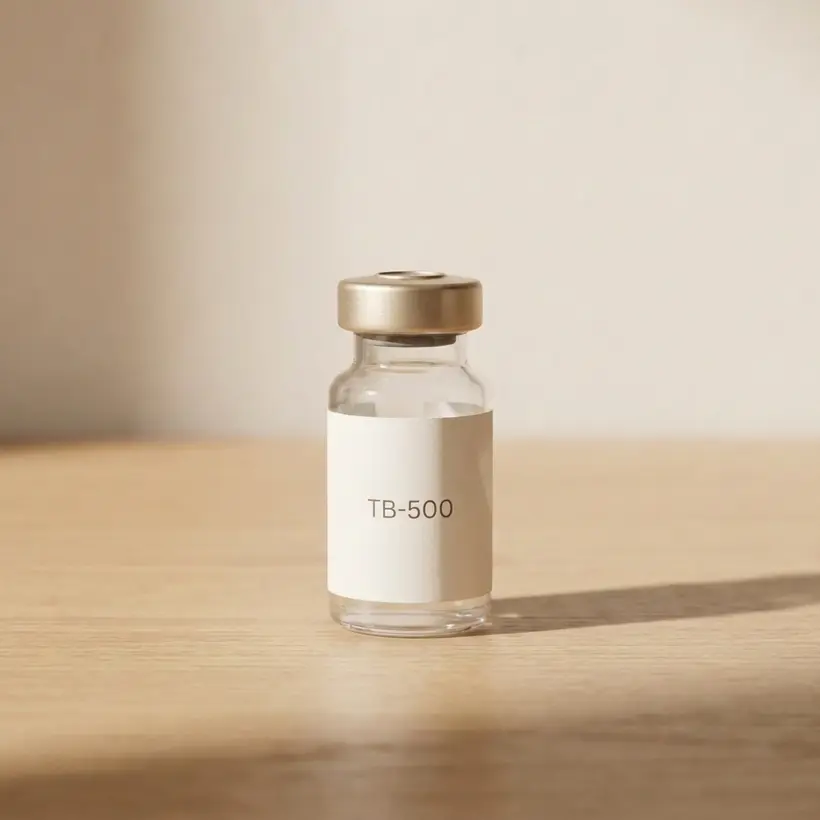
From the FormBlends catalog
TB-500 (Thymosin Beta-4)
Universal repair peptide for tissue regeneration · From $49/mo · compounded by a licensed 503A pharmacy, dispensed only after provider review.
Learn about TB-500 (Thymosin Beta-4) →- Athletes recovering from injuries: Muscle strains, tendon injuries, ligament sprains
- People with chronic tendon issues: Tennis elbow, Achilles tendinopathy, rotator cuff problems
- Post-surgical recovery: Supporting tissue healing after orthopedic procedures
- General recovery improvement: Reducing training-related inflammation and improving recovery between workouts
- Older adults: Addressing age-related decline in tissue repair capacity
How TB-500 Is Used
Form
TB-500 comes as a white powder (lyophilized or freeze-dried) in a small glass vial, typically containing 2 mg, 5 mg, or 10 mg of peptide. Before use, you mix it with bacteriostatic water in a process called reconstitution calculator. We have a detailed TB-500 how to reconstitute guide that walks you through each step.
Administration
TB-500 is administered via subcutaneous injection, meaning the injection goes just under the skin (not into the muscle or vein). The most common injection sites are the lower abdomen and the front of the thigh. The needles used are very small (insulin syringes with 29 to 31 gauge needles), and most people report that the injections are nearly painless after the first one or two attempts.
Typical Beginner Protocol
Phase 1: Loading (4 to 6 weeks)
- Dose: 2.0 to 2.5 mg per injection
- Frequency: Twice per week
- Purpose: Build up peptide levels in the body
Phase 2: Maintenance (4 to 8 weeks)
- Dose: 2.0 to 2.5 mg per injection
- Frequency: Once per week or every two weeks
- Purpose: Maintain healing support while reducing frequency
After completing both phases, take at least 4 to 8 weeks off before considering another cycle. See our TB-500 cycling protocol guide for a deeper look at cycle structure.
What to Expect as a Beginner
- Week 1: You may not feel much. Some people notice a mild sense of wellbeing or slight fatigue. This is normal.
- Weeks 2 to 3: If you're treating a specific injury, you might start noticing reduced pain or stiffness, particularly in the morning.
- Weeks 3 to 5: More noticeable improvements in mobility, range of motion, and pain levels.
- Weeks 5 to 8: Continued progress. Structural changes take longer than pain reduction, so patience is important.
- Weeks 8 to 12: For chronic injuries, this is where deeper healing and remodeling often becomes apparent.
Realistic Expectations
TB-500 isn't a miracle cure. It supports healing but doesn't replace proper rehabilitation, rest, and nutrition. Results vary based on injury type, severity, age, and overall health. Pain reduction often comes before actual structural repair, so don't push too hard too soon just because you feel better. Some injuries may require multiple cycles to achieve full recovery. TB-500 isn't a steroid, growth hormone, or performance enhancer in the traditional sense.
Side Effects for Beginners
TB-500 has a generally mild side effect profile:
- Injection site reactions: Minor redness or a small bump that resolves within hours
- Fatigue: Some users feel tired for the first few days. This typically resolves on its own.
- Head rush: Brief lightheadedness after injection. Sitting down for a few minutes helps.
- Temporary hair shedding: A small number of users report this during the loading phase. It reverses after the cycle.
Because TB-500 promotes cell migration and new blood vessel growth, most practitioners advise against using it if you have an active cancer diagnosis.
important Supplies Checklist
| Item | Purpose | Where to Find |
|---|---|---|
| TB-500 vials | The peptide itself | Peptide research suppliers |
| Bacteriostatic water | Diluent for reconstitution | Online medical suppliers, some pharmacies |
| Insulin syringes (1 mL, 29-31 gauge) | Drawing and injecting | Pharmacies, medical supply stores |
| Alcohol swabs | Cleaning vial tops and injection sites | Any pharmacy |
| Sharps container | Safe needle disposal | Pharmacies, medical supply stores |
Common Beginner Mistakes
- Starting without a plan: Map out your entire cycle before your first injection.
- Choosing cheap, untested suppliers: Always look for third-party Certificates of Analysis showing purity above 98% peptide sourcing guide.
- Stopping too early: Structural healing takes longer than pain relief. Finish your cycle.
- Ignoring rehabilitation: TB-500 creates a favorable environment for healing, but tissue still needs mechanical stimulus to remodel correctly.
- Not tracking progress: Keep a simple log of pain scores, range of motion, and functional ability.
- Improper storage: See our TB-500 storage instructions guide.
TB-500 vs Other Beginner Peptides
| Peptide | Primary Use | Administration | Beginner Friendly |
|---|---|---|---|
| TB-500 | Tissue repair, anti-inflammation | Subcutaneous injection | Yes |
| BPC-157 | Gut and tissue healing | Subcutaneous injection or oral | Yes |
| Sermorelin | Growth hormone support | Subcutaneous injection | Yes |
Storage Basics for Beginners
Proper storage is important for maintaining TB-500's effectiveness:
- Before reconstitution (powder form): Store in the refrigerator at 36 to 46 degrees Fahrenheit (2 to 8 degrees Celsius). Unreconstituted TB-500 is relatively stable and can last for months when refrigerated. Keep it away from light and out of the freezer.
- After reconstitution (mixed with water): Always refrigerate. Use within 3 to 4 weeks for best potency. Never leave reconstituted TB-500 at room temperature for extended periods. Don't shake the vial. Gently swirl if needed to mix.
- Travel considerations: If traveling, use an insulated bag with a cold pack. Brief temperature excursions (a few hours) are unlikely to destroy the peptide, but prolonged heat exposure will degrade it.
For a deeper look at storage best practices, see our TB-500 storage instructions guide.
Legal Notes
TB-500 isn't approved by the FDA for human use. It's available in many countries as a research chemical. Competitive athletes should know that TB-500 is on the WADA prohibited list . See our TB-500 legal status guide for details.
Frequently Asked Questions
Do I need a prescription for TB-500?
In most jurisdictions, TB-500 is sold as a research peptide and doesn't require a prescription. Some clinics offer it under medical supervision. Regulatory status varies by country.
How painful are the injections?
Most beginners are surprised by how mild the injections are. Insulin syringes use very thin needles (29 to 31 gauge). Many people describe the sensation as a brief pinch lasting less than a second.
Can I take TB-500 with other supplements or medications?
TB-500 doesn't have well-documented interactions with common supplements or medications. We recommend discussing any new peptide use with a healthcare provider, especially if you're taking blood thinners, immunosuppressants, or cancer treatments.
What if TB-500 doesn't work for me?
If you complete a full cycle without noticeable improvement, consider whether the peptide source was legitimate, whether your dosing and storage were correct, and whether the injury may require a different intervention.
Is TB-500 safe for women?
TB-500 isn't a hormone and has no androgenic or estrogenic effects. Both men and women use it at the same doses.
Medical References
- Goldstein AL, Hannappel E, Sosne G, Kleinman HK. Thymosin beta4: a multi-functional regenerative peptide. Basic properties and clinical applications. Expert Opin Biol Ther. 2012;12(1):37-51. [PubMed | DOI]
Your Next Steps
- Research your specific injury or goal to confirm TB-500 is appropriate
- Source TB-500 from a reputable supplier with third-party testing
- Gather all necessary supplies
- Read our TB-500 how to reconstitute and TB-500 storage instructions guides
- Plan your full cycle before starting
- Set up a tracking system
- Consider consulting a healthcare provider familiar with peptide therapy
Have questions about getting started? Browse our complete TB-500 guide library or reach out to our team for support.
Ready when you are
TB-500 (Thymosin Beta-4)
Universal repair peptide for tissue regeneration · From $49/mo · compounded by a licensed 503A pharmacy, dispensed only after provider review.
Learn about TB-500 (Thymosin Beta-4) →