Key Takeaway
TB-500 is a synthetic healing peptide based on Thymosin Beta-4. This beginner's guide covers what it's, how it works, dosing protocols, side effects, and how to get started safely.
TB-500 is a synthetic peptide based on a naturally occurring protein called Thymosin Beta-4, used in physician-supervised protocols for tissue repair, injury recovery, and inflammation reduction.
What Is TB-500?
TB-500 is the synthetic version of a region of Thymosin Beta-4, a 43-amino-acid peptide found in nearly every cell of the human body. Thymosin Beta-4 plays a central role in tissue repair by regulating actin, a protein that controls cell structure and movement. When tissue is damaged, Thymosin Beta-4 helps repair cells migrate to the injury site, promotes new blood vessel formation, and reduces inflammation.
The synthetic version, TB-500, is designed to deliver these regenerative signals at therapeutic concentrations. It has been used in veterinary medicine (particularly in horse racing) for years and has gained significant traction in human peptide therapy over the past decade.
TB-500 isn't FDA-approved for any medical condition. It's available through compounding pharmacies when prescribed by a licensed physician.
How Does TB-500 Work?
TB-500 works through several interconnected biological mechanisms:
View data table
| Category | Clinical Interest Score | Detail |
|---|---|---|
| BPC-157 | 88 | Tissue repair and gut healing |
| TB-500 | 82 | Injury recovery |
| Sermorelin | 78 | Growth hormone support |
| Ipamorelin | 75 | Anti-aging and recovery |
| GHK-Cu | 70 | Skin and tissue repair |

- Actin regulation. TB-500 upregulates actin production, which is important for cell movement and structural integrity. This allows cells involved in repair (fibroblasts, endothelial cells, immune cells) to reach damaged tissue more efficiently.
- Angiogenesis. The peptide promotes the growth of new blood vessels in injured areas. Better blood supply means more oxygen and nutrients reach the repair site, accelerating healing.
- Anti-inflammatory activity. TB-500 downregulates inflammatory cytokines, reducing swelling and pain associated with acute and chronic injuries.
- Cell differentiation. Research suggests TB-500 can influence stem cell differentiation toward tissue-specific cell types, supporting more effective repair.
Because TB-500 is a small peptide fragment, it has the ability to travel through tissues more freely than larger proteins, reaching injury sites throughout the body rather than acting only at the injection location.
What Is TB-500 Used For?
Physicians prescribing TB-500 typically do so for the following applications:
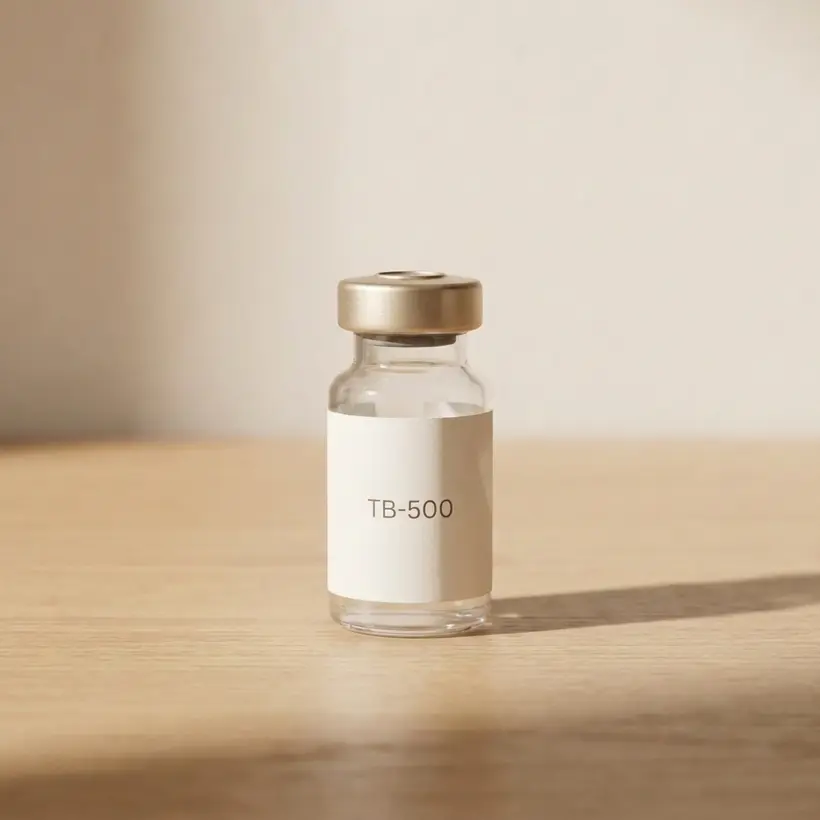
From the FormBlends catalog
TB-500 (Thymosin Beta-4)
Universal repair peptide for tissue regeneration · From $49/mo · compounded by a licensed 503A pharmacy, dispensed only after provider review.
Learn about TB-500 (Thymosin Beta-4) →- Tendon and ligament injuries (tendinopathy, sprains, partial tears)
- Muscle strains and tears
- Post-surgical recovery
- Chronic joint inflammation and stiffness
- Wound healing and tissue repair
- Recovery from overtraining in athletes
Some practitioners also use TB-500 as part of broader regenerative protocols that may include BPC-157 for complementary healing effects.
Beginner Dosing: What to Expect
TB-500 protocols are determined by your prescribing physician based on your specific condition, body weight, and treatment goals. The following is a general outline of how most beginner protocols are structured.
Loading Phase (Weeks 1 Through 4 to 6)
The initial phase uses higher doses to build therapeutic levels in the body. Typical loading doses range from 2 to 2.5 mg administered via subcutaneous injection twice per week. Some protocols use slightly higher or lower doses depending on the severity of the condition.
Maintenance Phase (Following Loading)
After the loading phase, doses are reduced. Common maintenance protocols involve 2 to 2.5 mg once per week or once every two weeks. The maintenance phase sustains the healing effects established during loading.
Protocol Duration
Total treatment length ranges from 8 to 16 weeks. Some conditions may require longer protocols. Your physician will assess progress and adjust accordingly.
Important: These are general guidelines. Your physician will prescribe specific doses and timing for your situation. Don't self-dose based on internet protocols.
How Is TB-500 Administered?
TB-500 is most commonly administered via subcutaneous injection, meaning the needle goes into the fat layer just beneath the skin rather than into muscle. Common injection sites include the lower abdomen and the thigh.
For beginners, here is a simplified overview of the injection process:
- Reconstitute the peptide. TB-500 typically comes as a lyophilized (freeze-dried) powder. You add bacteriostatic water to the vial according to your physician's instructions to create an injectable solution.
- Draw the correct dose. Using an insulin syringe, draw the prescribed volume from the vial.
- Clean the injection site. Wipe the area with an alcohol swab and let it dry.
- Inject subcutaneously. Pinch the skin, insert the needle at a 45-degree angle, inject slowly, and withdraw.
- Store the reconstituted vial. Keep it refrigerated at 2 to 8 degrees Celsius. Reconstituted TB-500 is typically stable for 3 to 4 weeks when stored properly.
Your physician or pharmacy will provide detailed injection instructions. Many telehealth providers also offer video tutorials for first-time patients.
Side Effects and Safety
TB-500 has shown a favorable safety profile in both preclinical research and clinical observation. Commonly reported side effects are mild and include:
- Temporary head rush or lightheadedness shortly after injection
- Mild fatigue or lethargy lasting a few hours
- Redness, minor swelling, or itching at the injection site
These effects typically diminish after the first few injections as your body adjusts.
Serious adverse events are rare in published literature. But the limited scope of human data means long-term safety profiles aren't fully established. This is why physician supervision is important. Your doctor monitors for any unexpected responses and adjusts your protocol as needed.
Individuals with active cancer or a history of cancer should discuss TB-500 with their oncologist before use, as the peptide's pro-angiogenic and cell-proliferative properties could theoretically interact with tumor biology.
Where to Get TB-500 Safely
The safest pathway for a beginner is through a telehealth provider that connects you with a licensed physician and sources peptides from a regulated compounding pharmacy. This ensures:
- Clinical evaluation before prescribing
- Pharmaceutical-grade peptide with verified purity
- Proper reconstitution and dosing instructions
- Ongoing physician support throughout your protocol
Avoid purchasing TB-500 from unregulated online vendors for self-administration. Research-grade peptides sold as "not for human consumption" lack the quality guarantees needed for safe injection.
Related Questions
- Can beginners combine TB-500 with BPC-157? Yes, many physicians prescribe TB-500 and BPC-157 together for combined healing effects. BPC-157 supports gut and soft tissue healing through different pathways, and the combination is widely used in clinical peptide practice. Your physician can determine whether a combination protocol is appropriate for your needs.
- Is TB-500 the same as Thymosin Beta-4? TB-500 is a synthetic peptide that replicates the active region of Thymosin Beta-4. They're closely related but not identical. TB-500 is specifically designed for therapeutic use, while Thymosin Beta-4 is the full naturally occurring protein.
- Do I need blood work before starting TB-500? Some physicians require baseline blood work before starting peptide therapy to evaluate overall health markers and rule out contraindications. Even when not strictly required, baseline labs provide a reference point for monitoring your response to treatment.
Frequently Asked Questions
Is TB-500 For Beginners FDA approved?
Regulatory status varies by peptide. Some peptides are FDA-approved for specific medical uses, while others are available through compounding pharmacies for research or off-label use. Discuss the regulatory status with your provider.
How long does a typical TB-500 For Beginners cycle last?
Cycle length depends on the specific peptide and your goals. Most peptide protocols run 8-12 weeks followed by a 4-week break. Your provider can recommend the best cycling schedule for your situation.
How should I store TB-500 For Beginners?
Most peptides should be stored refrigerated at 36-46 degrees F (2-8 degrees C) after reconstitution calculator. Unreconstituted lyophilized peptides can often be stored at room temperature. Always check the specific storage instructions for your product.
Medical References
- Goldstein AL, Hannappel E, Sosne G, Kleinman HK. Thymosin beta4: a multi-functional regenerative peptide. Basic properties and clinical applications. Expert Opin Biol Ther. 2012;12(1):37-51. [PubMed | DOI]
Start TB-500 the Right Way With FormBlends
FormBlends makes peptide therapy accessible for beginners. Our physicians walk you through every step, from clinical evaluation to injection technique to ongoing monitoring. Every peptide is sourced from regulated compounding pharmacies. No prior experience required. Begin at FormBlends.com.
Ready when you are
TB-500 (Thymosin Beta-4)
Universal repair peptide for tissue regeneration · From $49/mo · compounded by a licensed 503A pharmacy, dispensed only after provider review.
Learn about TB-500 (Thymosin Beta-4) →