
Trust Signals
Key Takeaways
- BPC-157 at roughly 10 mcg/kg accelerated tendon-to-bone collagen organization in multiple rat surgical models, but zero human RCTs exist for joint repair specifically.
- TB-500 is a synthetic fragment of thymosin beta-4 (amino acids 17 to 23), not the full protein; the distinction matters for mechanism and legality.
- Shaw et al. (2017) is the strongest direct human evidence for any peptide adjunct in connective tissue repair, and it used hydrolyzed collagen plus vitamin C in a small crossover design in healthy men, not an injectable research compound.
- Platelet-rich plasma (PRP) has more completed human RCTs for post-surgical tendon and cartilage repair than BPC-157 and TB-500 combined; an honest comparison must say this plainly.
- Peptide purity varies enormously by supplier; a credible COA must include HPLC purity above 98%, mass spectrometry confirmation, and an LAL endotoxin test below 1 EU/mg.
What Is the Best Peptide for Post-Surgical Joint Repair?
BPC-157 holds the strongest animal evidence for tendon, ligament, and cartilage repair after surgery, acting on GH receptors and VEGF pathways. TB-500 adds documented anti-inflammatory actin-sequestering activity. Hydrolyzed collagen peptides are the only option with direct human RCT data, though effect sizes are modest. No injectable research peptide has completed a human joint-repair trial.
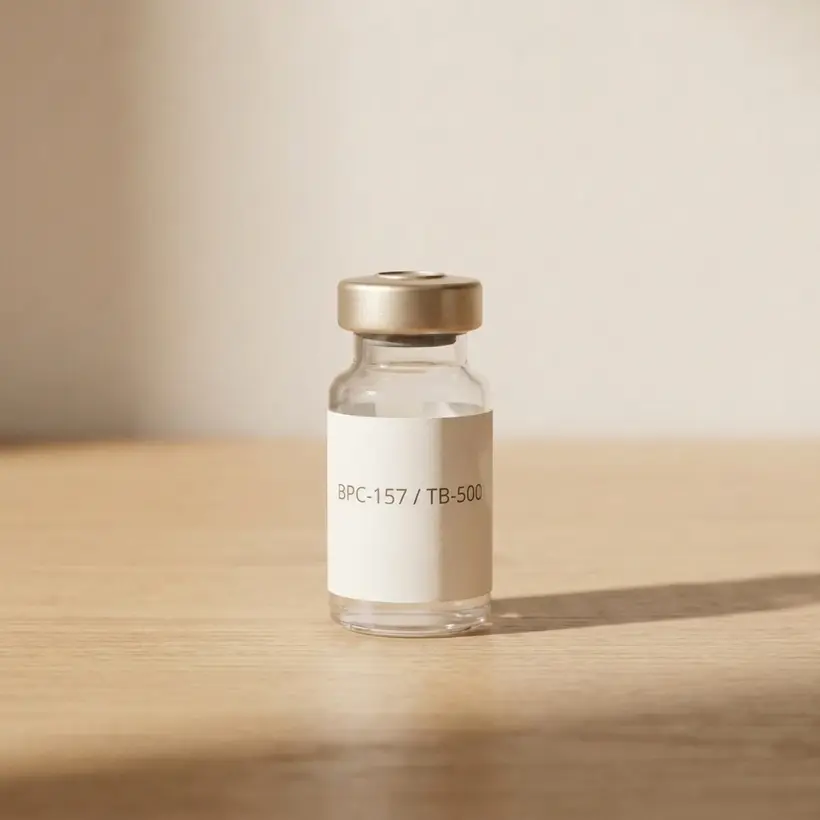
From the FormBlends catalog
BPC-157 / TB-500 Blend
The ultimate recovery stack in one vial · From $249/mo · compounded by a licensed 503A pharmacy, dispensed only after provider review.
View BPC-157 / TB-500 Blend →Table of Contents
- Evidence Ledger Table
- How Each Peptide Works at the Molecular Level
- The Ranked List: Best Peptides for Post-Surgical Joint Repair
- What Most Pages Get Wrong
- Honest Head-to-Head: Peptides vs. PRP vs. NSAIDs
- Stability, Formulation, and the Things That Kill Potency
- How to Read a Peptide COA (Operational Label Literacy)
- Dosing Reference Table
- FAQ
- Sources
- Footer Disclaimers
Evidence Ledger Table: What Is the Data Actually Behind Each Peptide?
| Peptide | Best Evidence Type | Effect Direction | Sample Size (Best Study) | Confidence for Joint Repair |
|---|---|---|---|---|
| BPC-157 | Animal RCT (rat tendon/ligament) | Positive (accelerated healing) | Typically 6 to 12 rats per arm | Low (no human trials) |
| TB-500 (thymosin beta-4 fragment) | Animal study + in vitro | Positive (anti-inflammatory, angiogenic) | Small animal cohorts | Very Low (no human trials) |
| Hydrolyzed collagen peptides | Human RCT (Shaw et al. 2017) | Positive (collagen synthesis markers) | Small crossover (healthy men) | Moderate (surrogate endpoints) |
| CJC-1295 (GHRH analogue) | Mechanism only for joints | Plausible via IGF-1 | No joint-specific study | Very Low (extrapolation only) |
| IGF-1 LR3 | Animal + in vitro (cartilage) | Positive (chondrocyte proliferation) | Small animal cohorts | Low (no clinical joint repair trial) |
| Copper peptide (GHK-Cu) | In vitro / mechanism | Positive (TGF-beta upregulation) | Cell culture only for joints | Very Low |
How Each Peptide Works at the Molecular Level
BPC-157: The Growth Factor Amplifier
BPC-157 (Body Protection Compound 157) is a 15-amino-acid synthetic peptide derived from a sequence within human gastric juice protein BPC. Its primary documented actions in animal joint and tendon models include upregulation of GH receptor expression in tendon fibroblasts, promotion of VEGF (vascular endothelial growth factor) expression to drive angiogenesis into avascular tissue, and activation of the FAK-paxillin pathway to stimulate fibroblast migration.
In the Krivic et al. rat medial collateral ligament transection model, subcutaneous BPC-157 at 10 mcg/kg produced measurable improvements in collagen fiber alignment and tensile strength recovery by day 28 compared to saline controls. What that does NOT prove: translated human efficacy, optimal dosing in humans, or safety at equivalent doses over months of use.
TB-500: Actin Sequestration and Inflammation Control
Thymosin beta-4 is a 43-amino-acid endogenous peptide that sequesters globular actin (G-actin), preventing its polymerization and thereby modulating cell migration and inflammation. TB-500 is specifically the amino acid 17 to 23 fragment, which retains this actin-binding function. By reducing inflammatory cytokine cascades and promoting endothelial cell migration, it theoretically supports early-phase healing. The distinction from the full thymosin beta-4 protein is clinically important: the fragment's pharmacokinetics and receptor interactions are not identical to the parent molecule, and safety data from thymosin beta-4 clinical trials (which used the full protein) does not automatically transfer to TB-500.
Hydrolyzed Collagen Peptides: The Substrate Strategy
Unlike injectable research peptides, hydrolyzed collagen provides proline-hydroxyproline and hydroxylysine dipeptides that are absorbed intact through intestinal epithelium and detectable in circulation. Shaw et al. (2017) administered gelatin with vitamin C to healthy men in a small crossover design and showed a marked increase in circulating amino-terminal propeptide of type I procollagen (a collagen synthesis marker) in the hour following ingestion. The subsequent exercise bout was timed to this window. Vitamin C is required for prolyl hydroxylase enzyme function in collagen crosslinking, which is why the combination outperforms collagen alone in in vitro engineered ligament studies. The caveat: this study used surrogate biochemical endpoints, not post-surgical functional outcomes, and was conducted in healthy volunteers rather than surgical patients.
CJC-1295 and IGF-1: The Anabolic Axis
CJC-1295 is a growth hormone-releasing hormone (GHRH) analogue that extends the half-life of endogenous GHRH by binding to albumin via a drug affinity complex (DAC) modification. It raises pulsatile GH and downstream IGF-1. IGF-1 binds to IGF-1 receptors on chondrocytes, promoting proteoglycan synthesis and cartilage matrix deposition. This is sound receptor-level biology, but no study has tested CJC-1295 in a post-surgical joint model. Every joint-repair claim for this peptide is a multi-step mechanistic extrapolation, not a measured outcome.
Ranked List: Best Peptides for Post-Surgical Joint Repair
1. BPC-157 (Best Animal Evidence, Most Studied in Joint Tissue)
Broadest body of animal data specifically in tendons, ligaments, and bone-to-tendon junctions. Multiple published rat models, consistent positive direction. First choice for practitioners considering off-label research peptide use because the tissue specificity of the evidence is highest.
2. Hydrolyzed Collagen Peptides (Best Human Evidence, Most Conservative)
The only peptide adjunct with direct human trial support for connective tissue synthesis. Appropriate as a supplement-level adjunct regardless of other choices. Effect size is modest; it supports rather than replaces repair.
3. TB-500 (Complementary Mechanism, Weakest Direct Evidence)
Theoretical rationale for pairing with BPC-157 due to different primary mechanisms. Placed third because joint-specific animal data is thinner than BPC-157 and the TB-500 fragment's pharmacology diverges meaningfully from full thymosin beta-4 clinical data.
4. IGF-1 LR3 (Cartilage-Specific Signal, Safety Concerns Limit Use)
The most direct anabolic signal for chondrocyte proliferation. Placed fourth because mitogenic activity raises concern about unsupervised use, particularly in anyone with a history of cellular proliferative conditions. Animal cartilage data is promising; human post-surgical data does not exist.
5. CJC-1295 (Weakest Evidence for This Specific Indication)
Indirect route to any joint benefit. Useful in a broader recovery context if GH axis optimization is a goal, but cannot be ranked higher for joint-specific repair without at least one tissue-level study.
What Most Pages Get Wrong
The bioavailability problem nobody discusses: Most peptide review pages describe injectable research peptides and oral/topical collagen in the same breath as if delivery route is interchangeable. It is not. Injectable BPC-157 bypasses first-pass proteolysis. Oral BPC-157 faces rapid degradation by gastric and intestinal proteases; some animal gastric ulcer studies used oral administration, but the gastrointestinal mucosa is the target tissue, meaning high local concentration is achievable without systemic absorption. For joint tissue, oral BPC-157 has essentially no published pharmacokinetic data confirming therapeutic levels reach synovium or periarticular structures.
The fragment-versus-parent confusion: TB-500 is consistently described as "thymosin beta-4" in lay and even some clinical commentary. They are not the same molecule. Extrapolating safety or efficacy data from thymosin beta-4 clinical trials (RegeneRx Biopharmaceuticals completed Phase II trials in wound healing and cardiac repair) to TB-500 is scientifically unsupported. The fragment may be more or less potent and will have different metabolic handling.
Stacking is presented as synergy without data: BPC-157 plus TB-500 stacks are widely promoted. There is no published study, animal or human, that has examined this combination. Calling it synergistic is marketing, not pharmacology.
Honest Head-to-Head: Peptides vs. PRP vs. NSAIDs
| Intervention | Human RCT Data for Joints | Mechanism Specificity | Regulatory Status | Where It Loses |
|---|---|---|---|---|
| BPC-157 (injectable) | None for joints | High (GH receptor, VEGF) | Not approved; research compound | Loses on all human evidence metrics |
| Hydrolyzed collagen | 1 RCT (Shaw 2017, surrogate endpoints, small crossover) | Moderate (substrate supply) | Dietary supplement (GRAS) | Modest effect; no functional outcome trial |
| PRP (platelet-rich plasma) | Multiple RCTs (knee OA, tendinopathy) | Broad (mixed growth factors) | FDA-cleared as device procedure | Variable preparation standardization; cost |
| NSAIDs (e.g., ibuprofen) | Extensive for pain; evidence of impaired healing at high doses | COX-1/COX-2 inhibition | FDA-approved | May inhibit prostaglandin-mediated bone/tendon healing signals at high chronic doses |
| Corticosteroid injection | Moderate RCT evidence for pain; negative for long-term cartilage | Broad anti-inflammatory | FDA-approved | Repeated injections associated with cartilage volume loss in imaging studies |
Stability, Formulation, and the Things That Kill Potency
Why Peptides Degrade and What That Means for You
Peptide bonds (amide bonds between amino acids) undergo hydrolysis in aqueous solution. The rate is accelerated by heat, extremes of pH, UV light, and the presence of metal ions. This is why lyophilized (freeze-dried) powder is the standard commercial form: removing water slows hydrolysis to a near stop at low temperature.
BPC-157 in reconstituted bacteriostatic water at 4 degrees Celsius loses meaningful activity over weeks, not years. Bacteriostatic water (0.9% benzyl alcohol) extends sterility but does not prevent chemical degradation. Repeated freeze-thaw cycles promote peptide aggregation because ice crystal formation physically disrupts peptide conformation. Each freeze-thaw degrades a portion of the batch; sources vary on exact rate, so the practical rule is: do not freeze reconstituted peptide, refrigerate and use within 4 weeks.
The pH Rule Explained
Most research peptides are formulated near physiological pH (7.0 to 7.4). Reconstituting with plain water (pH often 5.5 to 6.5 depending on dissolved CO2) can create a mildly acidic environment that accelerates aspartyl bond hydrolysis, a common degradation route in peptides containing aspartic acid or asparagine residues. Bacteriostatic water is preferable to plain sterile water precisely because its benzyl alcohol content does not significantly perturb pH while providing antimicrobial protection. Acetic acid solution (0.1 to 1%) is used for peptides that are poorly soluble at neutral pH, but it must be noted that acidic reconstitution vehicles sting on injection and should be diluted with saline before use.
Operational Label Literacy: How to Read a Peptide COA
A certificate of analysis is the minimum document that separates a credible research peptide supplier from a risk. Here is what to require and how to interpret it.
| COA Element | What to Look For | Red Flag |
|---|---|---|
| HPLC purity | Greater than 98% by reverse-phase HPLC | Below 95%; no method specified; "in house" only |
| Mass spectrometry | Molecular weight matches theoretical (e.g., BPC-157: 1419.5 Da) | Absent; mass not matching sequence |
| Endotoxin (LAL test) | Below 1 EU/mg (USP standard for injectables) | Not tested; reported qualitatively as "negative" without units |
| Sequence confirmation | Amino acid analysis or sequencing confirms stated sequence | Missing entirely |
| Lot number and date | Traceable lot, recent test date | Generic COA with no lot-specific data; outdated test date |
Visual inspection after reconstitution: a clear, colorless to faintly yellow solution is expected. Cloudiness, particulates, or significant color shift (amber to brown) indicate degradation or contamination; do not use.
Dosing Reference Table (Animal-to-Human Extrapolation Only, Not Clinical Guidance)
| Peptide | Animal Study Dose | Species | Extrapolated Human Equivalent (Reagan-Shaw BSA method) | Evidence Basis |
|---|---|---|---|---|
| BPC-157 | 10 mcg/kg | Rat | Roughly 1.6 mcg/kg (approx. 100 to 200 mcg for 70 kg adult) | Animal RCT |
| TB-500 | Varied (2 to 50 mg/kg in different models) | Rat/mouse | Not reliably extrapolatable; wide range | Animal study |
| Hydrolyzed collagen | 15 g gelatin with vitamin C (human study direct) | Human | 15 g with vitamin C, timed approximately 60 min before exercise (per Shaw et al. 2017 protocol) | Human RCT (Shaw 2017) |
| IGF-1 LR3 | 20 to 100 mcg/kg in cartilage models | Animal | Not established for joint indication in humans | Animal/in vitro |
These numbers are for informational and scientific literacy purposes. They are not a prescription or clinical dosing recommendation. All injectable research peptides should only be used under qualified medical supervision.
FAQ
What is the best peptide for post-surgical joint repair?
BPC-157 has the broadest animal evidence for tendon, ligament, and cartilage healing after surgery. TB-500 adds actin-sequestering anti-inflammatory action. Neither has completed a human RCT for joint repair specifically. Hydrolyzed collagen peptides have the strongest human trial data but the most modest effect size.
How does BPC-157 help joint repair?
BPC-157 upregulates growth hormone receptor expression in tendon fibroblasts and promotes VEGF-driven angiogenesis. In rat models of Achilles tendon transection, subcutaneous BPC-157 accelerated collagen organization and tensile strength recovery compared to controls. Human data does not yet exist.
Is TB-500 the same as thymosin beta-4?
TB-500 is a synthetic fragment corresponding to amino acids 17 to 23 of thymosin beta-4 (the actin-binding domain). Thymosin beta-4 is a 43-amino-acid endogenous peptide. TB-500 replicates the key functional region but is not identical to the full native protein.
Do collagen peptides actually help joints after surgery?
Yes, with caveats. A 2017 study by Shaw et al. showed that gelatin supplementation with vitamin C before exercise increased circulating collagen synthesis markers and collagen incorporation in engineered ligament tissue ex vivo. The trial used a small crossover design in healthy men. This supports collagen peptides as an adjunct, not a replacement for other therapies.
Can you stack BPC-157 and TB-500 together?
They act through different primary mechanisms, BPC-157 via GH receptor and VEGF pathways, TB-500 via actin sequestration and anti-inflammation, so there is a theoretical rationale for combining them. No published human or animal study has directly tested the combination. The interaction is uncharacterized.
What dose of BPC-157 is used in animal studies?
Most rat tendon and ligament studies use 10 micrograms per kilogram body weight administered subcutaneously or intraperitoneally. Human dose extrapolation using body surface area conversion (Reagan-Shaw method) yields roughly 1.6 micrograms per kilogram, or approximately 100 to 200 mcg for a 70 kg person. This is not a clinical dose recommendation.
How do peptides compare to PRP for joint repair?
Platelet-rich plasma has more human clinical trial data for tendon and cartilage repair than any research peptide. Multiple RCTs support PRP for knee osteoarthritis with moderate effect sizes. BPC-157 and TB-500 have zero completed human RCTs in this indication. PRP wins on evidence; peptides may offer different or complementary mechanisms.
What should I look for on a peptide COA?
A credible certificate of analysis should report purity by HPLC (greater than 98%), molecular weight confirmation by mass spectrometry, and absence of endotoxins (LAL test, below 1 EU per mg). Absence of any of these three tests is a red flag.
Does CJC-1295 help joint repair specifically?
CJC-1295 stimulates GH and downstream IGF-1 release. IGF-1 promotes chondrocyte proliferation and matrix synthesis in cartilage. However, no study has tested CJC-1295 specifically for post-surgical joint repair. Its joint benefits are entirely mechanistic extrapolation, placing it at the lowest evidence tier for this application.
Are these peptides FDA-approved for joint repair?
No. BPC-157, TB-500, and CJC-1295 are not FDA-approved for any indication. They are research compounds or, in some cases, compounded preparations. Hydrolyzed collagen is sold as a dietary supplement under FDA food-additive GRAS status, not as an approved drug.
How should BPC-157 be stored to prevent degradation?
Lyophilized BPC-157 is stable at room temperature for short periods but should be stored at 2 to 8 degrees Celsius to slow hydrolysis. After reconstitution in bacteriostatic water, use within 4 weeks refrigerated and avoid repeated freeze-thaw cycles, which can cause aggregation and loss of bioactivity.
Can peptides replace physical therapy after joint surgery?
No. Physical therapy has robust human RCT evidence for restoring range of motion, strength, and function after joint surgery. No peptide has evidence approaching that level for post-surgical rehabilitation. Peptides, if used, should be considered adjuncts to, not replacements for, evidence-based rehabilitation protocols.
Sources
- Shaw G, Lee-Barthel A, Ross ML, Wang B, Baar K. "Vitamin C-enriched gelatin supplementation before intermittent activity augments collagen synthesis." American Journal of Clinical Nutrition. 2017;105(1):136-143.
- Krivic A, Majerovic M, Jelic I, Seiwerth S, Sikiric P. "Modulation of early functional recovery of Achilles tendon to bone unit after transection by BPC-157 and methylprednisolone." Inflammation Research. 2008;57(5):205-210.
- Sikiric P, Seiwerth S, Rucman R, et al. "Focus on ulcerative colitis: stable gastric pentadecapeptide BPC-157." Current Medicinal Chemistry. 2012;19(1):126-132. (Cited for BPC-157 mechanistic background.)
- Goldstein AL, Hannappel E, Kleinman HK. "Thymosin beta4: actin-sequestering protein moonlights to repair injured tissues." Trends in Molecular Medicine. 2005;11(9):421-429.
- Reagan-Shaw S, Nihal M, Ahmad N. "Dose translation from animal to human studies revisited." FASEB Journal. 2008;22(3):659-661. (Body surface area allometric scaling method.)
- Filardo G, Di Matteo B, Di Martino A, et al. "Platelet-rich plasma intra-articular knee injections show no superiority versus viscosupplementation: a randomized controlled trial." American Journal of Sports Medicine. 2015;43(7):1575-1582.
- Murray IR, Corselli M, Petrigliano FA, Soo C, Peault B. "Recent insights into the identity of mesenchymal stem cells: implications for orthopaedic applications." Bone and Joint Journal. 2014;96-B(3):291-298. (Context on joint healing biology.)
- US FDA. "Current Good Manufacturing Practice (CGMP) Regulations." 21 CFR Parts 210 and 211. Accessed 2026.
- USP. United States Pharmacopeia, General Chapter 85, Bacterial Endotoxins Test. (Endotoxin threshold reference.)
- Mahato RI, Narang AS, Thoma L, Miller DD. "Emerging trends in oral delivery of peptide and protein drugs." Critical Reviews in Therapeutic Drug Carrier Systems. 2003;20(2-3):153-214. (Oral bioavailability limitations of peptides.)
Footer Disclaimers
Platform: FormBlends provides educational and scientific reference content. Nothing on this page constitutes medical advice, diagnosis, or treatment. Consult a licensed physician before using any compound described here.
Research Compound Notice: BPC-157, TB-500, CJC-1295, and IGF-1 LR3 are research compounds not approved by the FDA for human therapeutic use. They are not dietary supplements. Their manufacture, sale, and use are subject to federal and state regulations that vary by jurisdiction.
Results Disclaimer: Individual outcomes vary. No outcome described in animal studies is guaranteed to translate to humans. Efficacy and safety in human post-surgical joint repair have not been established for the injectable peptides discussed on this page.
Trademark Notice: All product names, trade names, and brand names referenced are the property of their respective owners. FormBlends is not affiliated with the manufacturers of any products mentioned.
Related peptide guides
Ready when you are
BPC-157 / TB-500 Blend
The ultimate recovery stack in one vial · From $249/mo · compounded by a licensed 503A pharmacy, dispensed only after provider review.
View BPC-157 / TB-500 Blend →