Key Takeaway
TB-500 oral vs injection comparison. We examine bioavailability, effectiveness, convenience, and research behind both administration routes for Thymosin Beta-4.
The TB-500 oral vs injection debate is one of the most common questions we receive. We compare both administration routes, covering bioavailability, practical considerations, cost implications, and what the research tells us about effectiveness.
The Core Issue: Bioavailability
Bioavailability refers to the percentage of an administered compound that reaches systemic circulation in its active form. This is the single most important factor when comparing oral and injectable TB-500, and it heavily favors injection .
TB-500 is a 43-amino-acid peptide. When taken orally, it must survive the acidic environment of the stomach (pH 1.5 to 3.5), resist degradation by digestive enzymes like pepsin and trypsin, and then cross the intestinal barrier to enter the bloodstream. Peptides of this size face significant challenges at each of these steps .
Why Injection Is the Standard
Subcutaneous injection bypasses the entire gastrointestinal tract. The peptide is deposited directly into the tissue beneath the skin, where it's absorbed into the bloodstream through capillary networks. This route provides:
- Near-complete bioavailability: Virtually all of the injected peptide reaches systemic circulation
- Predictable dosing: The amount you inject is very close to the amount your body receives
- Consistent absorption: Subcutaneous absorption rates are relatively uniform and well-characterized
- No first-pass metabolism: The peptide avoids hepatic processing that can further reduce active compound levels
The Case for Oral Administration
Despite the bioavailability disadvantage, oral peptide formulations have gained traction for several reasons:
- Convenience: No needles, no reconstitution, no sterile technique required
- Compliance: Many people are more likely to maintain a consistent protocol when it doesn't involve injections
- Accessibility: Oral formulations can be easier to obtain and transport
- Needle avoidance: A significant portion of the population has genuine phobia or strong aversion to injections
Oral TB-500: What the Science Says
Traditional Oral Peptide Challenges
Historically, peptides larger than about 10 amino acids have been considered importantly non-bioavailable via the oral route. The gastrointestinal tract evolved to break down proteins and peptides into individual amino acids for absorption, not to allow intact peptide sequences to pass through .

For TB-500 specifically, no peer-reviewed studies have demonstrated clinically meaningful oral bioavailability using standard capsule or tablet formulations . This doesn't mean oral TB-500 products don't work at all, but it means we lack solid data on how much of the active peptide actually reaches the bloodstream.
Emerging Oral Delivery Technologies
Several technologies are being developed to improve oral peptide delivery:
- Enteric coatings: Acid-resistant coatings that protect the peptide through the stomach and release it in the more neutral pH of the small intestine
- Absorption enhancers: Compounds like sodium caprate (C10) that temporarily increase intestinal permeability to allow peptide passage
- Nanoparticle encapsulation: Lipid or polymer nanoparticles that shield the peptide from enzymatic degradation and help with transport across the intestinal wall
- Sublingual and buccal delivery: Absorption through the mucous membranes of the mouth, bypassing the GI tract entirely
Some oral TB-500 products on the market claim to use one or more of these technologies. The challenge is that most haven't provided independent bioavailability data to validate their claims .
Head-to-Head Comparison
| Factor | Injectable TB-500 | Oral TB-500 |
|---|---|---|
| Bioavailability | High (near 100%) | Low to unknown (estimated under 5% without enhancers) |
| Research Support | Strong preclinical data | Very limited data |
| Dosing Precision | Precise and predictable | Variable and uncertain |
| Convenience | Requires reconstitution, syringes, sterile technique | Simple capsule or liquid |
| Cost Per Effective Dose | Lower (more peptide reaches target) | Higher (much of the dose is lost to digestion) |
| Onset of Action | Faster (direct systemic absorption) | Slower and less predictable |
| Side Effects | Injection site reactions possible | GI upset possible. fewer injection-related issues |
| Storage Requirements | Refrigeration after reconstitution | Generally shelf-stable |
| Skill Required | Basic injection technique | None |
Practical Guidance: Choosing Your Route
When to Choose Injectable TB-500
We recommend injectable TB-500 in the following situations:
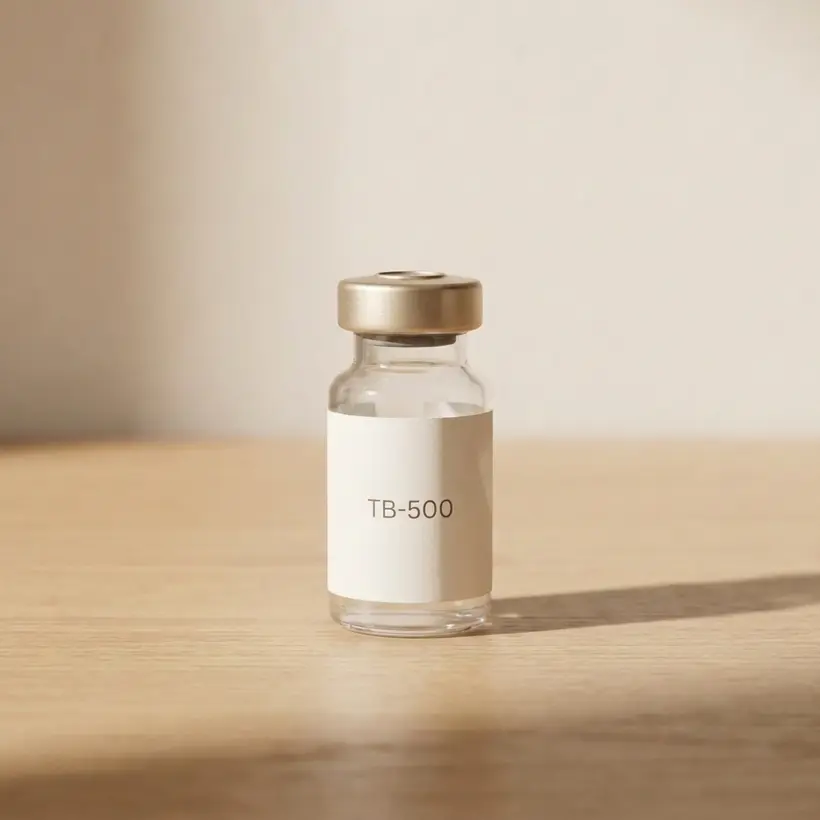
From the FormBlends catalog
TB-500 (Thymosin Beta-4)
Universal repair peptide for tissue regeneration · From $49/mo · compounded by a licensed 503A pharmacy, dispensed only after provider review.
Learn about TB-500 (Thymosin Beta-4) →- You're treating a specific injury and need reliable, evidence-backed results
- You're comfortable with subcutaneous injections or willing to learn
- You want predictable dosing and proven bioavailability
- You're combining TB-500 with other injectable peptides like BPC-157
- Cost efficiency matters to you (lower dose needed for the same systemic effect)
When Oral TB-500 May Be Acceptable
Oral TB-500 might be considered if:
- You have a genuine needle phobia that prevents you from using injectables
- You're using TB-500 for general wellness rather than treating a specific injury
- You have sourced a product with validated delivery technology and third-party testing
- You understand and accept that results may be less predictable or less potent
- Local regulations make injectable peptides difficult to obtain
How to Administer Injectable TB-500
For those choosing the injectable route, here is a brief overview of the process:
- Reconstitution: TB-500 comes as a lyophilized (freeze-dried) powder. Add bacteriostatic water slowly along the side of the vial. See our TB-500 how to reconstitute guide for detailed instructions.
- Drawing the dose: Use an insulin syringe (typically 29 to 31 gauge) to draw the appropriate volume based on your reconstitution concentration.
- Injection site: Clean the injection site with an alcohol swab. Common sites include the lower abdomen (avoiding the navel area) and the front of the thigh.
- Technique: Pinch the skin, insert the needle at a 45-degree angle, inject slowly, release the skin, and withdraw the needle.
- Storage: Store reconstituted TB-500 in the refrigerator. See our TB-500 storage instructions guide for temperature and shelf life details.
Oral Dosing Considerations
If you choose the oral route, be aware of the following:
- Higher doses may be needed: To compensate for low oral bioavailability, some oral protocols call for significantly higher doses than injectable protocols. But the actual effective dose reaching systemic circulation remains uncertain.
- Take on an empty stomach: Oral peptides may have slightly better absorption when taken without food, as the presence of other proteins triggers additional enzymatic activity.
- Sublingual products: If available, sublingual (under the tongue) formulations may provide better absorption than capsules since they bypass the stomach entirely. Hold under the tongue for 60 to 90 seconds before swallowing.
- Consistency matters: Take oral TB-500 at the same time each day to maintain whatever steady-state levels are achievable.
The BPC-157 Comparison Point
BPC-157, another popular healing peptide, has shown oral bioavailability in research studies. BPC-157 is a 15-amino-acid peptide derived from gastric juice, which means it's naturally stable in the GI environment . This is a key distinction. BPC-157's oral route has supporting research. TB-500's doesn't.
If you're interested in an oral healing peptide with better evidence, BPC-157 may be the stronger choice for oral administration. TB-500 remains primarily an injectable peptide based on current evidence.
Cost Analysis
When comparing costs, consider the effective cost per dose rather than the sticker price:
- Injectable TB-500: A 5 mg vial used at 2.5 mg per injection provides 2 doses. If nearly all of each dose reaches your system, the cost-per-effective-milligram is straightforward.
- Oral TB-500: If oral bioavailability is 2 to 5% (a generous estimate for an unenhanced formulation), you would need 20 to 50 times the injectable dose to achieve similar systemic levels. This makes oral administration significantly more expensive per effective milligram.
Some oral products are marketed at lower absolute prices than injectable TB-500, but this comparison is misleading without accounting for the bioavailability difference.
Frequently Asked Questions
Can I switch between oral and injectable TB-500 mid-cycle?
We generally don't recommend switching routes mid-cycle because the dosing isn't directly comparable. If you start with injections, finish the cycle with injections. If you want to try oral TB-500, do so as a separate protocol so you can evaluate its effects independently.
Are there any oral TB-500 clinical trials?
As of our last review, there are no published human clinical trials specifically testing oral TB-500 for any indication. Some manufacturers reference in-house data, but independent peer-reviewed studies are lacking .
Is sublingual TB-500 better than oral capsules?
In theory, yes. Sublingual absorption bypasses the stomach and first-pass liver metabolism, which should result in better bioavailability than oral capsules. But TB-500 is a relatively large peptide, and absorption through the oral mucosa is still limited for molecules of this size. Sublingual delivery is likely better than capsules but still inferior to injection.
Does oral TB-500 have different side effects than injectable?
Oral TB-500 may cause mild GI symptoms (nausea, bloating) that aren't seen with injections. Injectable TB-500 can cause injection site reactions (redness, minor swelling) that oral formulations avoid. The systemic side effects (temporary fatigue, lightheadedness) could theoretically occur with either route if adequate levels are achieved.
Medical References
- Goldstein AL, Hannappel E, Sosne G, Kleinman HK. Thymosin beta4: a multi-functional regenerative peptide. Basic properties and clinical applications. Expert Opin Biol Ther. 2012;12(1):37-51. [PubMed | DOI]
Our Recommendation
Based on available evidence, injectable TB-500 remains the gold standard for administration. The bioavailability advantage is substantial, the dosing is predictable, and the research supporting its effectiveness was conducted using injectable or direct-application methods .
Oral TB-500 isn't something we can confidently recommend for specific therapeutic goals given the current state of evidence. If oral administration is your only option, manage your expectations accordingly and prioritize products from suppliers who provide transparent third-party testing and bioavailability data.
New to TB-500 and need help getting started? Read our TB-500 for beginners guide or contact our team for personalized advice.
Ready when you are
TB-500 (Thymosin Beta-4)
Universal repair peptide for tissue regeneration · From $49/mo · compounded by a licensed 503A pharmacy, dispensed only after provider review.
Learn about TB-500 (Thymosin Beta-4) →