Key Takeaway
TB-500 vs PT-141 compared side by side. Learn which peptide is better for healing, sexual health, or specific wellness goals.
&bull. FormBlends
TB-500 is better for tissue healing and injury recovery, while PT-141 is better for sexual dysfunction and low libido. These peptides serve completely unrelated functions. TB-500 promotes cell migration and tissue repair through actin upregulation. PT-141 (bremelanotide) activates melanocortin receptors in the brain to stimulate sexual arousal and desire. PT-141 is notably one of the few peptides with full FDA approval for a specific indication.
What Is TB-500?
TB-500 is a synthetic peptide based on the active healing region of thymosin beta-4. It promotes tissue repair by upregulating actin for cell migration, promoting angiogenesis, and reducing inflammation. It has broad healing applications across muscles, tendons, ligaments, and cardiac tissue.
What Is PT-141?
PT-141 (bremelanotide) is a synthetic melanocortin receptor agonist derived from the peptide Melanotan II. Unlike erectile dysfunction drugs such as sildenafil (Viagra) that work on blood flow, PT-141 acts directly on the central nervous system by binding to melanocortin-4 receptors (MC4R) in the brain. This triggers sexual arousal and desire at the neurological level.
View data table
| Category | Clinical Interest Score | Detail |
|---|---|---|
| BPC-157 | 88 | Tissue repair and gut healing |
| TB-500 | 82 | Injury recovery |
| Sermorelin | 78 | Growth hormone support |
| Ipamorelin | 75 | Anti-aging and recovery |
| GHK-Cu | 70 | Skin and tissue repair |

PT-141 was approved by the FDA in 2019 under the brand name Vyleesi for the treatment of hypoactive sexual desire disorder (HSDD) in premenopausal women. It's also used off-label for male sexual dysfunction.
TB-500 vs PT-141: Head-to-Head Comparison
| Feature | TB-500 | PT-141 |
|---|---|---|
| Primary Function | Tissue healing and repair | Sexual arousal and desire |
| Key Mechanism | Actin upregulation, cell migration | MC4R activation in the brain |
| Best For | Injury recovery, inflammation | Low libido, sexual dysfunction |
| FDA Approved | No | Yes (Vyleesi, for HSDD in women) |
| Administration | Subcutaneous injection | Subcutaneous injection (autoinjector) |
| Typical Dosage | 2-5 mg twice weekly Contact provider for current pricing | 1.75 mg as needed Contact provider for current pricing |
| Onset of Action | 1-3 weeks for healing effects | 45 minutes to 2 hours |
| Dosing Pattern | Regular schedule | As needed (max 1 dose per 24 hours) |
| Works for Both Sexes | Yes | Yes (FDA-approved for women. off-label for men) |
| Research Level | Preclinical and veterinary | Full human clinical trials |
Benefits of TB-500
- Tissue repair: Promotes healing of muscles, tendons, ligaments, and wounds.
- Anti-inflammatory: Reduces local and systemic inflammation.
- Improved mobility: Restores joint flexibility and range of motion.
- Cardiac support: Research shows potential for heart tissue repair.
- Systemic reach: Works throughout the body when injected subcutaneously.
Benefits of PT-141
- Increased sexual desire: Works on the brain to stimulate genuine arousal and libido, not just physical response.
- Works for both sexes: Effective for both men and women, unlike many sexual health treatments.
- Non-vascular mechanism: Doesn't rely on blood flow changes, making it suitable for people who can't use PDE5 inhibitors.
- FDA-approved option: Vyleesi is an FDA-approved prescription treatment with established safety data.
- On-demand dosing: Used only when needed rather than daily, reducing unnecessary medication exposure.
When to Choose TB-500
- Sports or overuse injuries
- Post-surgical tissue recovery
- Chronic inflammation and joint stiffness
- Wound healing support
TB-500 benefits
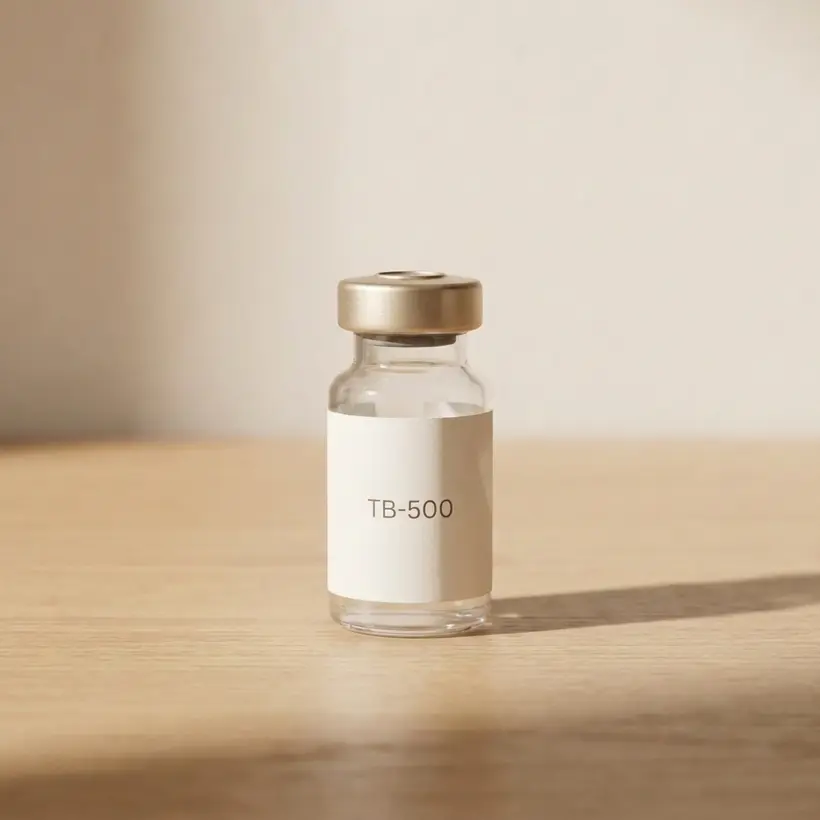
From the FormBlends catalog
TB-500 (Thymosin Beta-4)
Universal repair peptide for tissue regeneration · From $49/mo · compounded by a licensed 503A pharmacy, dispensed only after provider review.
Learn about TB-500 (Thymosin Beta-4) →When to Choose PT-141
- Low libido or hypoactive sexual desire disorder
- Sexual dysfunction not responsive to PDE5 inhibitors
- Female sexual arousal concerns
- Desire-based (not just performance-based) sexual health issues
PT-141 benefits
Can You Stack TB-500 and PT-141?
TB-500 and PT-141 act on entirely different systems with no known interaction. There's no therapeutic reason to stack them unless you're addressing both tissue healing and sexual health simultaneously. Each should be used for its specific purpose under medical guidance.
Side Effects and Safety
TB-500 side effects: Generally well-tolerated. Injection site reactions, temporary fatigue, and lightheadedness are most common.
PT-141 side effects: Common side effects include nausea (reported in approximately 40% of clinical trial participants), flushing, headache, and injection site reactions. Nausea is the most frequently cited reason for discontinuation. PT-141 shouldn't be used more than once in a 24-hour period or more than 8 times per month.
Frequently Asked Questions
Does PT-141 work like Viagra?
No. Viagra (sildenafil) works by increasing blood flow to the genitals through PDE5 inhibition. PT-141 works in the brain by activating melanocortin-4 receptors to stimulate sexual desire and arousal. PT-141 targets the psychological/neurological component of sexual function, while Viagra targets the physical/vascular component.
Can PT-141 be used by men?
Yes. While PT-141 (Vyleesi) is FDA-approved only for premenopausal women with HSDD, it's used off-label by men for sexual dysfunction. Clinical studies have shown efficacy in men with erectile dysfunction, particularly those who don't respond to PDE5 inhibitors.
How long does PT-141 last?
PT-141 effects typically begin within 45 minutes to 2 hours after injection and can last up to 12 to 24 hours. The duration varies by individual. Most users report peak effects within 2 to 4 hours of administration.
Can TB-500 improve sexual health?
TB-500 has no direct effect on sexual health or libido. It's specifically designed for tissue repair and healing. For sexual health concerns, PT-141 is the appropriate peptide choice.
Medical References
- Goldstein AL, Hannappel E, Sosne G, Kleinman HK. Thymosin beta4: a multi-functional regenerative peptide. Basic properties and clinical applications. Expert Opin Biol Ther. 2012;12(1):37-51. [PubMed | DOI]
Key Points
TB-500 and PT-141 serve completely different purposes with no functional overlap. TB-500 is the clear choice for tissue healing, injury recovery, and inflammation reduction. PT-141 is the clear choice for sexual desire and arousal concerns, with the added advantage of FDA approval. Choose based on your specific health need. Always consult a healthcare provider before starting any peptide protocol.
Peptide comparison guide
Ready when you are
TB-500 (Thymosin Beta-4)
Universal repair peptide for tissue regeneration · From $49/mo · compounded by a licensed 503A pharmacy, dispensed only after provider review.
Learn about TB-500 (Thymosin Beta-4) →