Key Takeaway
What is the best protocol for combining TB-500 with semaglutide? Learn about dosing, timing, cycle structure, and physician-supervised approaches for this peptide-GLP-1 combination.
The best protocol for combining TB-500 with semaglutide involves a loading phase for TB-500, staggered introduction with semaglutide titration, and ongoing physician monitoring. TB-500 supports tissue repair and reduces inflammation through thymosin beta-4 activity, while semaglutide drives appetite suppression and metabolic improvement through GLP-1 receptor activation. These compounds work through independent pathways, making them safe to combine under medical supervision.
How TB-500 and Semaglutide
TB-500: The Repair and Recovery Peptide
TB-500 is a synthetic fragment of thymosin beta-4, a naturally occurring 43-amino-acid protein found throughout the body. Thymosin beta-4 plays a central role in cell migration, blood vessel formation, and tissue repair. TB-500 replicates the active region responsible for these biological effects.
TB-500 is particularly valued for its effects on connective tissue, muscle recovery, and inflammatory modulation. It's administered via subcutaneous injection, typically following a loading-and-maintenance dosing pattern.
Semaglutide: The GLP-1 Weight Management Medication
Semaglutide is a GLP-1 receptor agonist available as Ozempic (for type 2 diabetes) and Wegovy (for chronic weight management). It mimics the incretin hormone GLP-1, binding to receptors in the brain, pancreas, and gut. Its effects include appetite suppression through hypothalamic signaling, enhanced glucose-dependent insulin secretion, reduced glucagon release, and delayed gastric emptying.
Semaglutide follows a graduated titration schedule, starting at 0.25 mg weekly and increasing over 16 to 20 weeks to the target maintenance dose.
Can You Combine TB-500 and Semaglutide?
Yes. TB-500 and semaglutide have no known pharmacological interaction. TB-500 works through actin regulation, cell migration, and anti-inflammatory pathways. Semaglutide works through GLP-1 receptor activation. These are entirely separate biological systems. Neither compound is metabolized through CYP450 liver enzymes, both undergo proteolytic degradation, and they don't compete for shared receptors or binding sites. For a complete cost breakdown, see our cheapest GLP-1 without insurance.

Potential Benefits of This Combination
Musculoskeletal Recovery During Weight Loss
Semaglutide patients who increase physical activity as part of their weight management program place new stress on tendons, ligaments, and muscles. TB-500's tissue repair profile, documented across preclinical models, provides a rationale for including it as a recovery support compound during this active phase.
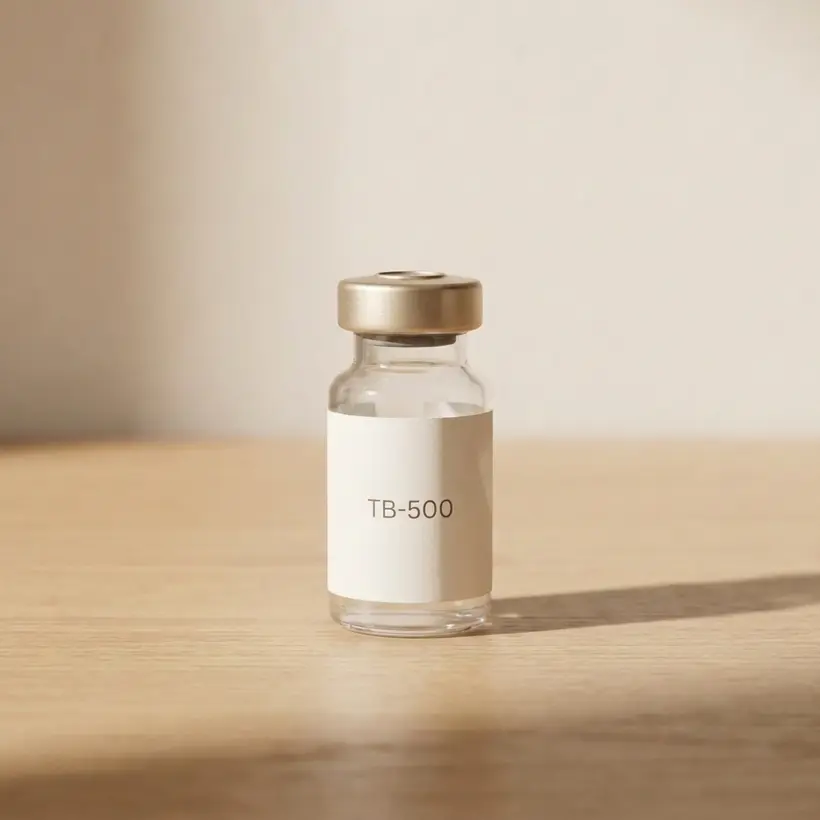
From the FormBlends catalog
TB-500 (Thymosin Beta-4)
Universal repair peptide for tissue regeneration · From $49/mo · compounded by a licensed 503A pharmacy, dispensed only after provider review.
Learn about TB-500 (Thymosin Beta-4) →Anti-Inflammatory Support
TB-500 has demonstrated anti-inflammatory properties in preclinical research. Chronic low-grade inflammation is common in patients with obesity and metabolic dysfunction. While semaglutide addresses metabolic inflammation through weight loss and improved insulin sensitivity, TB-500 may provide additional anti-inflammatory support through its direct modulation of inflammatory pathways.
Tissue Remodeling During Body Composition Changes
Losing 15 percent or more of body weight involves significant remodeling of connective tissue, skin, and vasculature. TB-500's angiogenic properties and role in cell migration may support healthier tissue adaptation during this transformation.
Lean Mass Considerations
One concern with GLP-1-mediated weight loss is lean mass loss. While TB-500 isn't an anabolic agent, its tissue repair properties and anti-inflammatory effects may indirectly support muscle health during the metabolic stress of caloric restriction and rapid weight change.
Protocol Considerations: Step by Step
Your physician will customize every aspect of this protocol. The following represents a commonly used clinical framework.
Step 1[2]: Begin Semaglutide Titration (Weeks 1 to 4)
Start semaglutide at 0.25 mg weekly, following the standard titration schedule. Use this initial period to establish your baseline GI tolerance, appetite response, and any side effects. Don't add TB-500 yet. From $299
Step 2: Introduce TB-500 Loading Phase (Weeks 4 to 8)
After establishing your semaglutide baseline, begin the TB-500 loading phase. Loading doses are typically higher than maintenance doses to build tissue concentration. A common loading protocol is 5 to 10 mg of TB-500 per week, split into two subcutaneous injections, for 4 to 6 weeks. Your physician will determine the specific dose based on your weight, goals, and health status.
During this period, semaglutide continues its standard titration (typically increasing to 0.5 mg at week 5, then 1.0 mg at week 9).
Step 3: Transition TB-500 to Maintenance (Weeks 8 to 12)
After the loading phase, reduce TB-500 to a maintenance dose, typically 2.5 to 5 mg per week in one or two injections. Semaglutide continues its titration toward the target dose. Your physician adjusts both compounds based on your response.
Step 4: Ongoing Monitoring and Cycle Management
TB-500 is typically cycled rather than used indefinitely. Common cycles run 8 to 16 weeks, followed by a 4-week break before resuming if needed. Semaglutide continues as a long-term medication per your physician's recommendation. Blood work every 8 to 12 weeks monitors metabolic markers, inflammation levels, and organ function.
Injection Logistics
Both semaglutide and TB-500 are administered subcutaneously. Use different injection sites for each compound. Semaglutide is injected once weekly. TB-500 is typically injected two to three times per week during loading and one to two times per week during maintenance. Rotate injection sites across the abdomen, thigh, and upper arm.
Who Should Consider This Protocol
- Active patients on semaglutide who are increasing exercise intensity and want connective tissue and recovery support.
- Patients with existing joint or tendon issues who are starting or continuing semaglutide therapy and want proactive musculoskeletal care.
- Patients undergoing significant weight loss who are interested in supporting tissue remodeling during body composition changes.
- Patients with inflammatory conditions who want additional anti-inflammatory support alongside their weight management program.
- Athletes or highly active individuals using semaglutide for weight management who need recovery support for training demands.
This protocol isn't appropriate for patients who are pregnant or nursing, individuals under 18, those with active malignancies, or patients with contraindications to semaglutide.
Frequently Asked Questions
Can I inject TB-500 and semaglutide on the same day?
Yes. There's no requirement to separate injection days. Many patients administer semaglutide on one day of the week and TB-500 on two or three other days, but overlapping days isn't a safety concern. Just use different injection sites.
Will TB-500 affect my weight loss from semaglutide?
TB-500 doesn't interact with GLP-1 receptors, appetite signaling, or the metabolic pathways that drive semaglutide's weight loss effects. There's no known mechanism by which TB-500 would diminish semaglutide's efficacy.
How long should I run this combination?
Semaglutide is typically a long-term medication. TB-500 is cycled, with common cycles of 8 to 16 weeks followed by breaks. Some patients run two or three TB-500 cycles over the course of a year while maintaining semaglutide continuously. Your physician determines cycle length and frequency based on your goals and response.
Is TB-500 with semaglutide FDA-approved?
Semaglutide is FDA-approved for type 2 diabetes (Ozempic) and chronic weight management (Wegovy). TB-500 isn't FDA-approved for any indication. The combination is used under physician supervision based on the independent safety profiles of each compound and their mechanistic compatibility.
Medical References
- Goldstein AL, Hannappel E, Sosne G, Kleinman HK. Thymosin beta4: a multi-functional regenerative peptide. Basic properties and clinical applications. Expert Opin Biol Ther. 2012;12(1):37-51. [PubMed | DOI]
- Wilding JPH, Batterham RL, Calanna S, et al. Once-Weekly Semaglutide in Adults with Overweight or Obesity. N Engl J Med. 2021;384(11):989-1002. [PubMed | ClinicalTrials.gov | DOI]
- Davies M, Færch L, Jeppesen OK, et al. Semaglutide 2.4 mg once a week in adults with overweight or obesity, and type 2 diabetes (STEP 2). Lancet. 2021;397(10278):971-984. [PubMed | ClinicalTrials.gov | DOI]
- Wadden TA, Bailey TS, Billings LK, et al. Effect of Subcutaneous Semaglutide vs Placebo as an Adjunct to Intensive Behavioral Therapy on Body Weight in Adults With Overweight or Obesity (STEP 3). JAMA. 2021;325(14):1403-1413. [PubMed | ClinicalTrials.gov | DOI]
- Rubino D, Abrahamsson N, Davies M, et al. Effect of Continued Weekly Subcutaneous Semaglutide vs Placebo on Weight Loss Maintenance in Adults With Overweight or Obesity (STEP 4). JAMA. 2021;325(14):1414-1425. [PubMed | ClinicalTrials.gov | DOI]
Physician-Supervised Protocols at FormBlends
The best protocol is one designed specifically for your body, goals, and medical history. At FormBlends, our physicians build personalized combination protocols using pharmaceutical-grade compounds from licensed compounding pharmacies. We monitor your progress with regular check-ins and blood work to ensure your protocol remains improved throughout treatment.
Start your consultation at FormBlends.com
Ready when you are
TB-500 (Thymosin Beta-4)
Universal repair peptide for tissue regeneration · From $49/mo · compounded by a licensed 503A pharmacy, dispensed only after provider review.
Learn about TB-500 (Thymosin Beta-4) →