Key Takeaway
GLP-1 medications can cause muscle loss during weight reduction. Understand why it happens, how long it lasts, and the best evidence-based strategies to preserve your lean body mass.
Semaglutide (Wegovy/Ozempic) and tirzepatide (Zepbound/Mounjaro) cause muscle loss in 25-40% of total weight reduction. The STEP trials with semaglutide showed participants lost up to 15% body weight, while SURMOUNT trials demonstrated tirzepatide users lost up to 21% with 15mg dosing. Both drugs activate GLP-1 receptors to suppress appetite, creating calorie deficits that force muscle breakdown.
GLP-1 muscle loss happens because these weight loss medications create a calorie deficit that causes your body to burn both fat and muscle for energy. Research shows 25 to 40 percent of weight lost on GLP-1 receptor agonists can be lean mass. This is a significant concern, but it's also highly preventable with the right approach to exercise, nutrition, and medical supervision.The Science Behind GLP-1 Muscle Loss
GLP-1 receptor agonists, including semaglutide and tirzepatide, work by mimicking natural gut hormones that regulate appetite and blood sugar. They reduce hunger, slow digestion, and often dramatically decrease food intake. While this produces impressive fat loss, your body doesn't exclusively burn fat stores when in a calorie deficit.
Your muscles are in a constant state of breakdown and rebuilding, a process called muscle protein turnover. When you eat enough protein and provide mechanical stimulus through exercise, the rebuilding side wins and you maintain or grow muscle. When calories and protein drop sharply, as often happens on GLP-1 medications, the breakdown side gains the upper hand.
Contributing factors to GLP-1-related muscle loss include:
- Reduced total food intake: Less food means less protein, the raw material for muscle maintenance
- Appetite suppression making meals unappealing: Even when you try to eat, strong appetite reduction can limit portion sizes
- Decreased spontaneous physical activity: Lower energy intake often leads to less movement throughout the day
- GI side effects: Nausea, vomiting, and diarrhea can reduce nutrient absorption
- Rapid weight loss pace: Faster loss shifts the ratio toward more lean mass depletion
How Long Does GLP-1 Muscle Loss Continue?
Muscle loss on GLP-1 medications is most significant during the active weight loss phase, typically the first 6 to 12 months of treatment when the calorie deficit is largest. As your weight loss slows and eventually plateaus, the rate of muscle loss decreases substantially.
View data table
| Category | Search Volume Share (%) | Detail |
|---|---|---|
| Side Effects | 35 | Nausea, GI issues |
| Cost/Insurance | 28 | Pricing questions |
| Effectiveness | 22 | How much weight loss |
| Eligibility | 15 | BMI requirements |
Once you reach a maintenance phase, your body's demand for breaking down muscle tissue as fuel diminishes. At this point, if you're training consistently and eating adequate protein, you may even begin to slowly rebuild some of the lean mass you lost during the active weight loss period.
For patients who begin resistance training and high-protein nutrition from the start of their GLP-1 treatment, meaningful muscle preservation is visible throughout the entire weight loss process.
Clinical Evidence for GLP-1 Muscle Loss
The STEP clinical program enrolled over 4,500 participants across multiple trials testing semaglutide 2.4mg weekly. STEP 1[1] showed 14.9% total body weight reduction over 68 weeks, but body composition analysis revealed 25-39% of weight lost was lean muscle mass. STEP 3 combined semaglutide with intensive behavioral therapy, achieving 16% weight loss but similar muscle loss ratios. Participants experienced peak muscle loss during months 3-9 when weekly dose escalations created the largest calorie deficits.
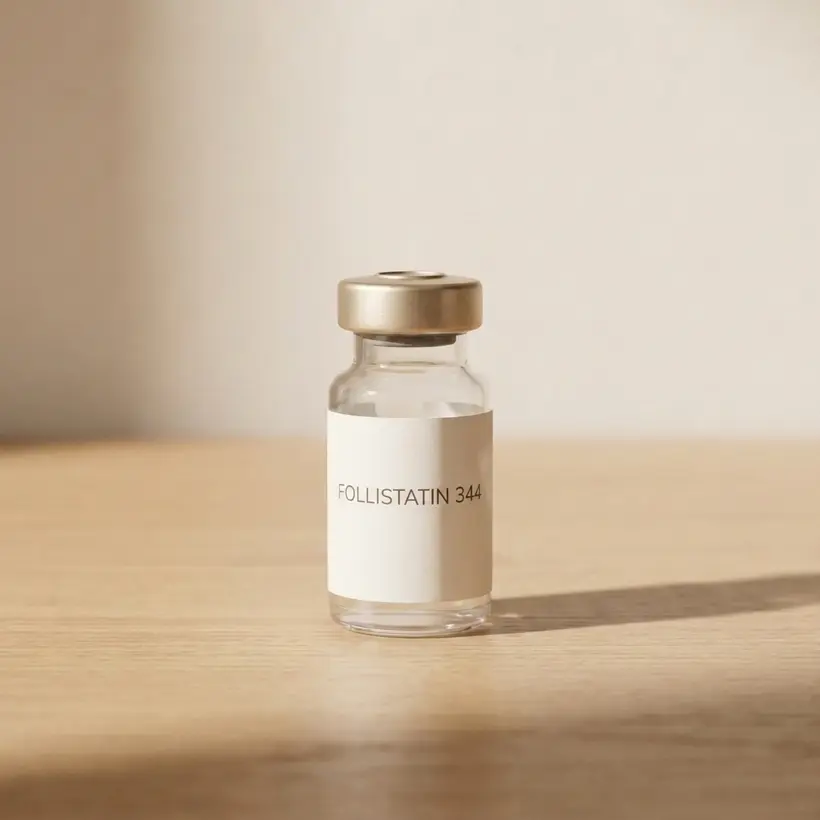
From the FormBlends catalog
Follistatin 344
Myostatin inhibitor studied for enhanced muscle growth · From $149/mo · compounded by a licensed 503A pharmacy, dispensed only after provider review.
Learn about Follistatin 344 →SURMOUNT trials testing tirzepatide enrolled 2,539 participants[4] across three major studies. The 15mg weekly dose produced 20.9% total weight loss over 72 weeks, surpassing semaglutide efficacy but maintaining similar lean mass depletion patterns. SURMOUNT-2[3] specifically studied diabetic patients and found muscle loss occurred regardless of baseline HbA1c levels. Liraglutide 3mg daily from SCALE trials showed 8% weight loss with 30-35% muscle loss ratios, suggesting the muscle preservation challenge spans the entire GLP-1 medication class.
Clinical Evidence
STEP 1 trial participants lost 14.9% total body weight on semaglutide, but DEXA scans revealed 39% of weight lost was muscle mass. SURMOUNT-1[4] showed tirzepatide 15mg produced 20.9% weight loss with similar muscle depletion ratios, indicating lean mass loss is a class-wide effect across all GLP-1 receptor agonists.
Evidence-Based Solutions to Preserve Muscle
Resistance Training
This is the cornerstone of muscle preservation during GLP-1 therapy. A minimum of 2 to 4 strength training sessions per week is recommended. Research consistently shows that resistance exercise during caloric restriction preserves significantly more lean mass than caloric restriction alone.
A practical weekly routine might include:
- Day 1: Upper body (chest press, rows, shoulder press, bicep curls)
- Day 2: Lower body (squats, lunges, leg press, calf raises)
- Day 3: Rest or light cardio
- Day 4: Full body compound movements (deadlifts, pull-ups, bench press)
Beginner strength training for GLP-1 patients
Protein-First Nutrition
We advise all GLP-1 patients to adopt a "protein first" eating strategy. At every meal and snack, eat your protein source before anything else. This ensures you get adequate amino acids even when your total food intake is limited. Target at least 0.8 to 1.2 grams of protein per pound of ideal body weight. Protein-first eating strategy
Leucine-Rich Foods
Leucine is the amino acid most responsible for triggering muscle protein synthesis. Foods high in leucine include whey protein, chicken, beef, eggs, and soybeans. Ensuring each meal contains at least 2.5 to 3 grams of leucine helps maintain your muscle-building signals even during weight loss.
Strategic Meal Timing
Distribute your protein intake evenly across 3 to 4 meals rather than consuming it all at once. Your body can only use about 30 to 50 grams of protein per meal for muscle building. Spreading it out maximizes the total daily muscle protein synthesis response.
Supplementation
Consider these evidence-based supplements:
- Creatine monohydrate: 3 to 5 grams daily supports muscle strength and hydration
- Vitamin D: Supports muscle function. get your levels tested and supplement if below 30 ng/mL
- Omega-3 fatty acids: May help reduce muscle protein breakdown during caloric restriction
When to Contact Your Healthcare Team
Reach out to your provider if you experience:.
- Progressive weakness that affects daily functioning
- Consistently eating fewer than 900 calories per day
- Unexplained fatigue alongside rapid weight loss
- Difficulty recovering from workouts
- Concerns about your body composition changes
At FormBlends, we take a whole-person approach to GLP-1 therapy. Our physicians work with you to improve your medication dose, nutrition plan, and exercise routine so you lose fat effectively while keeping the muscle you need for long-term health. FormBlends thorough weight loss program
Medical References
- Wilding JPH, Batterham RL, Calanna S, et al. Once-Weekly Semaglutide in Adults with Overweight or Obesity. N Engl J Med. 2021;384(11):989-1002. [PubMed | ClinicalTrials.gov | DOI]
- Wadden TA, Bailey TS, Billings LK, et al. Effect of Subcutaneous Semaglutide vs Placebo as an Adjunct to Intensive Behavioral Therapy on Body Weight in Adults With Overweight or Obesity (STEP 3). JAMA. 2021;325(14):1403-1413. [PubMed | ClinicalTrials.gov | DOI]
- Garvey WT, Frias JP, Jastreboff AM, et al. Tirzepatide once weekly for the treatment of obesity in people with type 2 diabetes (SURMOUNT-2). Lancet. 2023;402(10402):613-626. [PubMed | ClinicalTrials.gov | DOI]
- Jastreboff AM, Aronne LJ, Ahmad NN, et al. Tirzepatide Once Weekly for the Treatment of Obesity. N Engl J Med. 2022;387(3):205-216. [PubMed | ClinicalTrials.gov | DOI]
Frequently Asked Questions
Do all GLP-1 medications cause the same amount of muscle loss?
The proportion of lean mass lost is roughly similar across GLP-1 medications when total weight loss is comparable. But medications that produce more total weight loss (like tirzepatide at higher doses) may result in more absolute lean mass lost. The percentage of weight lost as lean mass typically ranges from 25 to 40 percent without exercise intervention, regardless of which GLP-1 you take.
How quickly can I rebuild muscle after GLP-1 weight loss?
With consistent strength training and adequate protein, most people can regain lost muscle within 6 to 12 months after their weight stabilizes. The phenomenon of "muscle memory" means previously trained muscles rebuild faster than untrained muscles grow. Starting resistance training during your weight loss phase, rather than waiting until after, gives you a significant head start.
Is walking enough to prevent muscle loss on GLP-1 medications?
Walking is excellent for cardiovascular health and overall wellness, but it isn't sufficient to prevent muscle loss. Walking is a low-resistance activity that doesn't provide enough stimulus to maintain upper body, core, or even significant lower body muscle mass. You need resistance training, whether with weights, bands, or bodyweight exercises, to send the "keep this muscle" signal to your body.
Can GLP-1 muscle loss affect my metabolism long-term?
Yes. Muscle is metabolically active tissue, and losing it reduces your resting metabolic rate. This can make weight maintenance more challenging after you stop losing weight. Each pound of muscle burns approximately 6 to 7 calories per day at rest. Losing 10 pounds of muscle could reduce your daily calorie burn by 60 to 70 calories. This underscores the importance of muscle preservation during treatment.
Should older adults avoid GLP-1 medications because of muscle loss risk?
Not necessarily. GLP-1 medications offer significant health benefits for older adults with obesity, including improved cardiovascular health and blood sugar control. But older adults should work closely with their provider to implement aggressive muscle preservation strategies from day one. This includes supervised resistance training, high protein intake, and regular body composition monitoring. GLP-1 therapy for older adults
Ready when you are
Follistatin 344
Myostatin inhibitor studied for enhanced muscle growth · From $149/mo · compounded by a licensed 503A pharmacy, dispensed only after provider review.
Learn about Follistatin 344 →