The short answer
Bai is a useful soda swap, not a weight-loss drink. Each bottle has about 10 calories and 1 g of sugar, sweetened with erythritol and stevia. Replacing one daily 140-calorie soda with Bai saves about 950 calories per week, which translates to roughly 14 lbs per year if everything else stays constant.
Table of contents
- The 30-second answer
- What's actually in a bottle of Bai
- The calorie math (and what 130 calories per day adds up to)
- The sweetener question: erythritol and stevia
- The "health halo" trap
- Bai vs other low-calorie drinks
- The hydration angle (and why it matters more than people think)
- How Bai fits on a GLP-1 plan
- FAQ
- Footer disclaimers
What's actually in a bottle of Bai
A standard 18 oz bottle of Bai contains:
Check your GLP-1 eligibility
Use our free BMI Calculator to see if you may qualify for provider-reviewed GLP-1 therapy.
Try the BMI Calculator →- Filtered water
- Fruit juice concentrate (less than 1% by volume, present mostly for flavor and color)
- Erythritol (a sugar alcohol)
- Natural flavors
- Citric acid
- Coffeefruit extract (the source of the caffeine)
- Stevia leaf extract
- Vitamin C (ascorbic acid)
- White tea extract
Per 18 oz bottle:
- Calories: 10
- Total sugars: 1 g (from the juice concentrate)
- Erythritol: 9 g (not counted in the calorie total, FDA labeling rule)
- Caffeine: 55 mg (about 60% of an 8 oz cup of coffee)
- Sodium: 5 mg
The 10-calorie label is technically accurate by FDA labeling rules, which exclude erythritol from total calorie counts because it's not metabolized by the body the same way as sugar. The actual energy delivered to the bloodstream is closer to 10 calories. The 9 g of erythritol passes through largely unabsorbed.
The fruit-juice content is the part of the marketing that's worth a closer look. The bottles say "fruit drink" and feature flavors like Brasilia Blueberry and Costa Rica Clementine. The actual juice concentrate is well under 1% of the formula, present in trace amounts for flavor and color. Calling Bai a fruit drink is a stretch. It's a flavored, lightly caffeinated water with non-nutritive sweeteners.
The calorie math (and what 130 calories per day adds up to)
The case for Bai (or any low-calorie flavored water) as a weight-loss tool comes down to substitution math.
A regular 12 oz can of cola: 140 calories, 39 g of sugar. A 16 oz bottle of sweetened iced tea: 180 calories, 45 g of sugar. A 20 oz Gatorade: 140 calories, 36 g of sugar. A 20 oz vanilla latte: 250 to 350 calories, 30 to 40 g of sugar.
If you drink one 12 oz cola per day and replace it with one 18 oz Bai, you save 130 calories per day. Over a week, that's 910 calories. Over a month, about 3,940 calories. Over a year, 47,500 calories.
A pound of body fat represents roughly 3,500 calories. The math works out to about 13.5 lbs of body fat per year of weight loss attributable to this single swap, assuming nothing else in your diet changes.
That's a real result. It's also the upper bound of what soda swaps achieve, because in practice people compensate for the saved calories elsewhere (a phenomenon documented in the 2014 Hu et al. analysis in Public Health Nutrition).
The actual real-world effect of soda-to-zero-calorie-drink swaps in randomized trials is closer to 4 to 7 lbs per year of weight loss, not 13.5 lbs. Useful, just not as dramatic as the raw math suggests.
The sweetener question: erythritol and stevia
Bai uses two non-nutritive sweeteners: erythritol and stevia leaf extract. Both have been on the U.S. market for over a decade and have been studied more than most artificial sweeteners.
Erythritol is a sugar alcohol that occurs naturally in small amounts in fruits and fermented foods. About 90% of ingested erythritol is absorbed in the small intestine and excreted unchanged in urine. It doesn't significantly affect blood glucose or insulin levels. Generally regarded as safe by the FDA since 2001.
The 2023 paper in Nature Medicine by Witkowski et al. that linked erythritol to platelet activation and cardiovascular events generated headlines but had meaningful limitations. The study was observational and looked at endogenous erythritol levels (which the body produces naturally during fructose metabolism), not dietary intake. The authors didn't establish that drinking erythritol-sweetened beverages increases cardiovascular risk in healthy adults. As of early 2026, the FDA position on erythritol hasn't changed, and the major U.S. health organizations (AHA, ADA) haven't issued advisories.
Stevia is a plant-derived sweetener extracted from the leaves of Stevia rebaudiana. The active sweetening compounds are steviol glycosides. The FDA has approved stevia leaf extract as Generally Recognized as Safe (GRAS) since 2008. The acceptable daily intake (ADI) is 4 mg/kg of body weight, which translates to about 270 mg for a 150 lb adult, far above what's in a single Bai bottle.
Both sweeteners have minimal effect on blood sugar, which is the relevant feature for a weight-loss tool. Neither produces an insulin response of any meaningful size.
The trade-off: some people experience GI symptoms (gas, bloating, mild diarrhea) at higher erythritol intakes, usually above 30 g per day. A single bottle of Bai contains 9 g, so most people tolerate one or two bottles per day without GI effects. Three or four bottles in one day pushes some people over the symptom threshold.
The "health halo" trap
The hardest weight-loss problem isn't the calories in the drink. It's the psychological compensation that comes with drinking a "healthy" beverage.
A 2019 study in the Journal of Consumer Research found that participants who drank a beverage labeled "low calorie" subsequently consumed about 11% more calories at the next meal than those who drank an unlabeled identical beverage. The effect is the "health halo": when something feels healthy, the brain unconsciously gives itself permission to eat more elsewhere.
In the Bai case specifically, the trap looks like this:
- You replace a daily soda with a Bai (saves 130 calories).
- Mentally, you've "earned" something with the calorie savings.
- You eat 30 extra calories of dark chocolate after dinner that you wouldn't have otherwise.
- The net savings drops to 100 calories per day.
That's still a gain. But the gain is smaller than the math says it should be, and the gap is why most weight-loss plans require active calorie tracking, not just smart swaps.
The version of this that breaks the math entirely:
- You replace a daily soda with a Bai (saves 130 calories).
- Mentally, you've "earned" something more substantial.
- You add a 200-calorie "healthy" snack in the afternoon that you wouldn't have otherwise.
- Net daily calories: up by 70.
The drink itself didn't cause this. The reasoning around the drink did. The mitigation is awareness: track total calories for at least the first two weeks of any swap, so you can confirm the substitution is producing the expected deficit.
Bai vs other low-calorie drinks
| Drink | Calories | Sugar | Caffeine | Sweeteners | Notes |
|---|---|---|---|---|---|
| Bai (18 oz) | 10 | 1 g | 55 mg | Erythritol, stevia | Fruit-flavored |
| Diet Coke (12 oz) | 0 | 0 g | 46 mg | Aspartame | Classic option |
| Coke Zero (12 oz) | 0 | 0 g | 34 mg | Aspartame, ace-K | Better cola taste |
| Sparkling water (12 oz) | 0 | 0 g | 0 mg | None | Best for water displacement |
| LaCroix (12 oz) | 0 | 0 g | 0 mg | None | Same as sparkling |
| Vitaminwater Zero (20 oz) | 5 | 0 g | 0 mg | Stevia, erythritol | Vitamin-fortified |
| Hint (16 oz) | 0 | 0 g | 0 mg | None | Just water + fruit essence |
| Gatorade Zero (20 oz) | 5 | 0 g | 0 mg | Sucralose, ace-K | Electrolytes |
| Iced black coffee (12 oz, no sugar) | 5 | 0 g | 90 mg | None | Highest caffeine |
| Unsweetened iced tea (12 oz) | 2 | 0 g | 50 mg | None | Cheapest option |
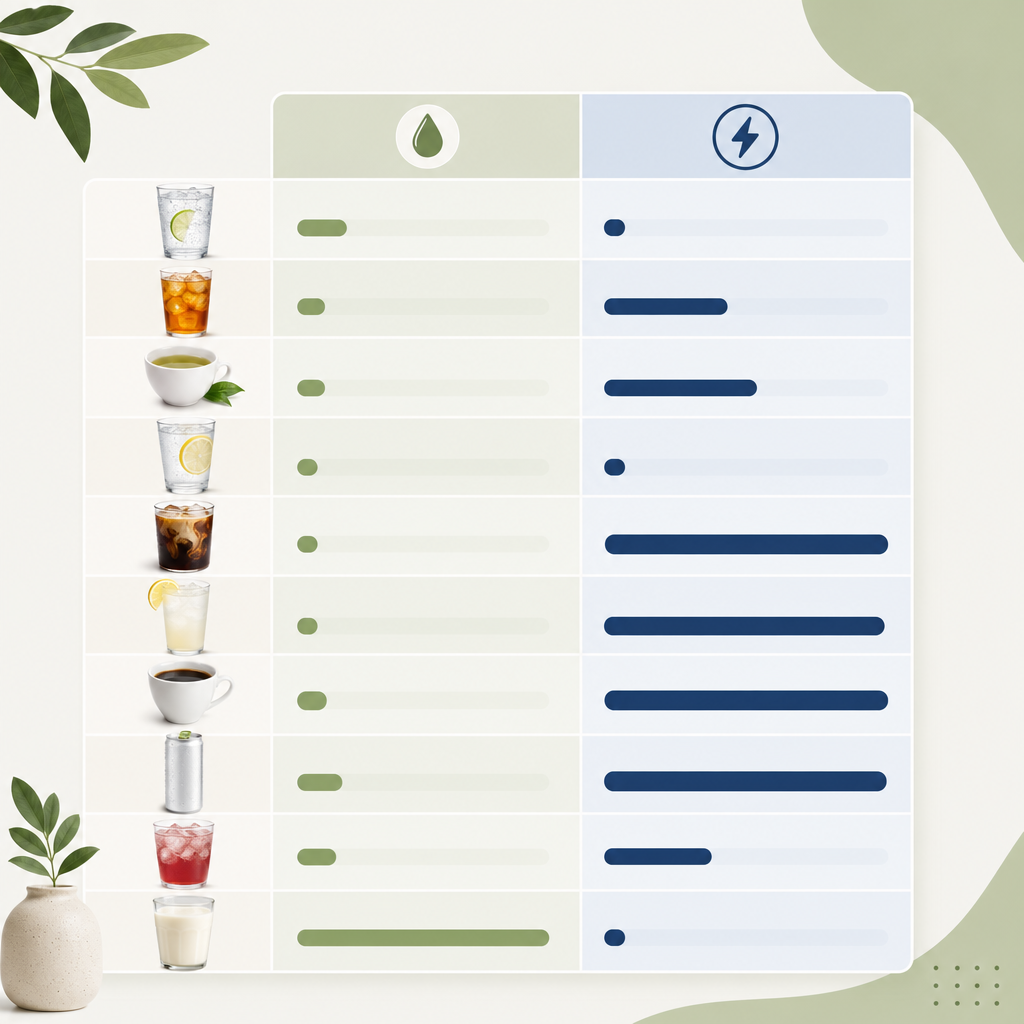
The drinks worth picking based on what you're trying to accomplish:
- If you want zero calories and zero sweeteners: plain water, sparkling water, LaCroix, or Hint. Cheapest and lowest risk.
- If you want soda taste without the sugar: Diet Coke or Coke Zero (uses aspartame, which has the longest safety record).
- If you want a fruit-flavored option with some functional benefit: Bai (caffeine, mild antioxidant content from white tea extract).
- If you want energy without coffee taste: Bai or one of the sugar-free energy drinks.
There's no single "best" low-calorie drink for weight loss. There's only "best for the substitution you're making." Bai is a strong soda swap and a mediocre water swap.
The hydration angle (and why it matters more than people think)
About 75% of U.S. adults are chronically under-hydrated, drinking less than the 64 oz daily intake recommended by most clinical guidelines (2022 Boston University meta-analysis on hydration and metabolic outcomes).
Mild chronic dehydration affects weight in three measurable ways:
- Increased calorie intake from misread thirst signals. The brain registers thirst and hunger through overlapping pathways. People who don't drink enough water often eat in response to thirst cues, adding 100 to 300 calories per day they didn't need.
- Reduced exercise performance. Even 1 to 2% dehydration measurably reduces strength training output and cardiovascular endurance. Less productive workouts mean less muscle preservation and lower calorie burn.
- Slower metabolic rate. A 2003 study in the Journal of Clinical Endocrinology & Metabolism (Boschmann et al.) showed that drinking 500 mL of water increased resting metabolic rate by 30% for about an hour. The effect is small in absolute terms but compounds over a year of consistent hydration.
If you don't like the taste of plain water, a low-calorie flavored drink that gets you to drink more total fluid is a real benefit. Bai counts here. So does sparkling water, unsweetened iced tea, and water with lemon. The flavor isn't the point. The fluid intake is.
This is the strongest case for keeping Bai in the rotation: not as a weight-loss drink, but as a hydration-assist tool for people who otherwise don't drink enough water.
How Bai fits on a GLP-1 plan
If you're on compounded semaglutide or compounded tirzepatide, hydration becomes more important, not less. GLP-1 medications blunt the thirst signal alongside the appetite signal, and dehydration drives several of the most common side effects (constipation, headache, fatigue, dry mouth).
Most patients on GLP-1 therapy benefit from 80 to 100 oz of fluid per day, which is a step up from the standard 64 oz target. Hitting that target with plain water alone is hard for many people. Adding 1 to 2 bottles of Bai or another low-calorie flavored drink to the daily rotation gets the total volume up without adding meaningful calories.
The cautions:
1. Watch the caffeine total. Bai has 55 mg of caffeine per bottle. Two bottles plus a morning coffee can push daily caffeine over 300 mg, which can worsen GLP-1-related nausea, anxiety, or palpitations in some patients.
2. Erythritol and slowed digestion. GLP-1 medications slow gastric emptying. Some patients find that sugar alcohols (erythritol included) cause more GI discomfort on the medication than off, particularly during titration. If you've had GI tolerance issues, start with one bottle per day and watch.
3. Don't replace meals with drinks. This is a broader rule for GLP-1 patients. Reduced appetite makes it tempting to "have a Bai instead of lunch" on busy days. The math works for calories but not for protein. You still need a real protein-containing meal, ideally with 30+ g of protein.
For more on GLP-1 hydration strategy, see why GLP-1 medications can cause headaches and how to fix them.
FAQ
Is Bai actually good for weight loss?
Bai is useful as a soda swap. Replacing one daily 140-calorie sweetened drink with Bai saves about 130 calories per day, which adds up to 4 to 7 lbs per year of weight loss in real-world studies. Bai itself isn't a weight-loss drink, just a low-calorie substitute.
How many calories are in a bottle of Bai?
A standard 18 oz bottle of Bai has 10 calories and 1 g of sugar from juice concentrate. The remaining sweetness comes from erythritol (9 g) and stevia, neither of which counts as calories under FDA labeling rules.
Does Bai have caffeine?
Yes. Each 18 oz bottle has about 55 mg of caffeine, sourced from coffeefruit extract and white tea extract. That's roughly 60% of an 8 oz cup of coffee.
Is the erythritol in Bai safe?
Erythritol has been on the FDA's GRAS list since 2001 and has a long safety record. A 2023 paper linking endogenous erythritol levels to cardiovascular events generated concern but didn't establish that dietary erythritol from beverages causes harm. As of 2026, no major U.S. health organization has advised against erythritol intake.
Does Bai count as water for hydration purposes?
Yes. The body absorbs water from any fluid source, with minor adjustments for caffeine content (mild diuretic) and sugar content (irrelevant in Bai's case). One bottle of Bai provides approximately 17 oz of effective hydration.
Is Bai better than Diet Coke for weight loss?
On the calorie metric, they're nearly identical (10 vs 0 calories per typical serving). The differences are in caffeine (Bai has 55 mg, Diet Coke has 46 mg per 12 oz), sweeteners (erythritol/stevia vs aspartame), and flavor (fruit vs cola). Pick based on taste preference. The weight-loss difference is negligible.
Can drinking Bai cause digestive issues?
At one or two bottles per day, most people tolerate Bai without GI symptoms. Higher intake (3+ bottles per day, or 27+ g of erythritol) can cause gas, bloating, or mild diarrhea in some people. Sensitivity varies considerably.
Does Bai count as soda?
Technically no. It's classified as a fruit drink with antioxidant beverage labeling. From a weight-loss standpoint, it functions as a soda substitute. From a flavor standpoint, it's closer to a juice-flavored sparkling water than a cola.
Can I drink Bai while on a GLP-1 medication?
Yes, in moderation. One or two bottles per day is fine for most patients. Watch total caffeine intake and start slowly if you've had GI tolerance issues during titration.
Is Bai keto-friendly?
Yes. With 1 g of sugar and the rest of the sweetness from non-nutritive sweeteners, Bai fits within standard ketogenic carb limits. The 1 g of sugar from juice concentrate is unlikely to affect ketosis at typical intake levels.
Will Bai stop my weight loss?
Drinking Bai itself won't stop weight loss. The "health halo" effect (eating more elsewhere because you drank something "healthy") can erode the calorie savings if you're not tracking. Real-world weight-loss outcomes from soda swaps land at about 60 to 70% of what the raw math predicts.
What's the best drink for weight loss?
Plain water remains the best option on every metric (cost, calorie count, hydration efficiency, no GI effects). Bai, sparkling water, unsweetened tea, and black coffee are all reasonable second-tier options. The "best" drink is the one you'll actually drink enough of to stay hydrated.
Author / review note
Reviewed by the FormBlends Medical Team. References cited include the FDA GRAS listing for erythritol and stevia, the Boschmann et al. 2003 paper in the Journal of Clinical Endocrinology & Metabolism on water-induced thermogenesis, the Witkowski et al. 2023 paper in Nature Medicine on erythritol and cardiovascular outcomes, and the 2022 Boston University meta-analysis on hydration status in U.S. adults.
Footer disclaimers
Platform Disclaimer. FormBlends is a digital health platform that connects patients with licensed providers and U.S.-based pharmacies. We do not manufacture, prescribe, or dispense medication directly. All clinical decisions are made by independent licensed providers.
Compounded Medication Notice. Compounded semaglutide and tirzepatide are not FDA-approved. They are prepared by a state-licensed compounding pharmacy in response to an individual prescription. Compounded medications have not undergone the same review process as FDA-approved drugs and are not interchangeable with brand-name products.
Results Disclaimer. Individual results vary. Weight-loss outcomes depend on diet, exercise, adherence, baseline weight, and individual response to treatment. Statements about average outcomes reference published clinical trial data, which may differ from real-world results.
Trademark Notice. Bai, Diet Coke, Coke Zero, LaCroix, Hint, Gatorade, Vitaminwater, and other brand names referenced in this article are the property of their respective owners. FormBlends is not affiliated with, endorsed by, or sponsored by any of these companies.
Related guides
- Is Yogalates Good for Weight Loss? An Honest Look at What the Research Actually Shows
- Is Burning 200 Calories a Day Good for Weight Loss? The Math, the Catch, and What 200 Calories Actually Looks Like
- The Best Time to Eat Ice Cream for Weight Loss? An Honest Answer Backed by the Calorie Math
- Does Humana Cover Ozempic for Weight Loss? The 2026 Plan-by-Plan Answer
- Are Peanut Butter and Jelly Sandwiches Good for Weight Loss? An Honest Look
- Is Jasmine Rice Good for Weight Loss? The Honest Answer Backed by the Numbers
See your options in about 2 minutes
Take the free quiz and see what fits you. Quick, private, and no commitment to continue.
See my options →