The short answer
A 6-inch whole wheat pita has about 170 calories, 5 g of fiber, and 6 g of protein. It can fit a weight-loss plan when you stick to one pita, fill it with lean protein and vegetables, and skip the deep-fried pita chip versions. White pita is closer to refined bread and offers little fiber.
Table of contents
- The 30-second answer
- What pita actually is
- White vs whole wheat pita on the nutrition label
- Calorie density vs satiety
- The glycemic question
- Pita vs other common breads (table)
- How pita fits into a GLP-1 plan
- Smart pita assemblies for weight loss
- The pita chip trap
- FAQ
- Footer disclaimers
What pita actually is
Pita is a flatbread made from wheat flour, water, yeast, salt, and a small amount of oil. Most commercial pita uses one of two flour bases: enriched white flour or whole wheat flour. The dough bakes at very high heat, around 475 to 500 degrees, which causes the steam inside to puff the loaf and create the pocket. That structure is what makes pita useful for sandwiches and gyros, and it's also why portion control feels easier with pita than with a slice of regular bread. One pita is one container, not two slices that sometimes turn into four.
Check your GLP-1 eligibility
Use our free BMI Calculator to see if you may qualify for provider-reviewed GLP-1 therapy.
Try the BMI Calculator →The base recipe is simple. The differences between brands come from the flour milling, the inclusion of dough conditioners, and whether the bread is enriched. The shorter the ingredient list, the closer you are to a traditional product. Brands like Joseph's, Toufayan, and Ozery Bakery all sell whole grain or whole wheat versions with fewer than seven ingredients. Some store-brand white pitas have more than 15.
The reason this matters for weight loss isn't the additives. It's that the whole wheat versions almost always carry meaningfully more fiber, and fiber is what changes how pita behaves in your body.
White vs whole wheat pita on the nutrition label
Per one 6-inch pita (around 60 to 64 grams), here's what the typical retail product looks like:
| Macro | White pita | Whole wheat pita |
|---|---|---|
| Calories | 165 | 170 |
| Total fat | 0.7 g | 1.7 g |
| Sodium | 320 mg | 340 mg |
| Total carbohydrate | 33 g | 35 g |
| Dietary fiber | 1 g | 5 g |
| Total sugars | 1 g | 1 g |
| Protein | 5 g | 6 g |
The calorie difference is essentially nothing. The fiber gap is the entire story. A 4 g difference in fiber per pita changes the glycemic load, the satiety, and the gut response. Whole wheat pita lands in the same fiber neighborhood as a serving of oatmeal. White pita lands in the same neighborhood as a slice of white sandwich bread.
Note that the labels say "wheat flour" on white pita too. That's not a sign of whole grain. The first ingredient on a real whole wheat pita reads "whole wheat flour" or "stone-ground whole wheat flour." If it just says "wheat flour" or "enriched wheat flour," it's white pita.
The protein content is also higher than most people expect. At 5 to 6 g per pita, a single pita gives you roughly the protein in a large egg. That's not enough to be a protein source on its own, but it's not negligible either, and it's a reason pita scores better on satiety than rice or refined pasta of equal calories.
Calorie density vs satiety
Calorie density is calories per gram of food. Air-popped popcorn is around 4 calories per gram. A pita is about 2.7 calories per gram. A piece of cheese is around 4 calories per gram. A large apple is around 0.5 calories per gram. Foods that are denser in calories per gram tend to be less filling per calorie consumed, which is why a 200-calorie cookie is forgettable while a 200-calorie bowl of vegetable soup feels like a meal.
Pita sits in the middle. It's denser than fruit and vegetables, less dense than most baked goods or cheeses. That means it has a real but limited role in a weight-loss meal. The trick is to use the pita as the carbohydrate anchor and let the fillings do the satiety work. A pita with 4 ounces of grilled chicken, 1 cup of romaine, sliced cucumber, tomato, and 2 tablespoons of tzatziki lands at about 380 calories and 35 g of protein, which is a real meal. The same pita with falafel, fried eggplant, and tahini sauce can hit 700 calories without feeling much different.
Satiety also depends on how slowly the meal raises blood sugar. The fiber in whole wheat pita slows that rise. The protein and fat in the fillings slow it further. White pita with a small amount of low-protein filler (like hummus and lettuce) raises blood sugar quickly and tends to leave you hungry within 90 minutes.
The glycemic question
The glycemic index of white pita is around 57. Whole wheat pita lands closer to 53. Both are categorized as medium glycemic index foods, similar to white rice and lower than instant oatmeal or potato. That's the GI per 50 g of carbohydrate, which is a useful number but not the whole story.
The glycemic load is the more practical measure. Glycemic load multiplies GI by the actual carbs in a serving and divides by 100. A whole wheat pita has a glycemic load of about 17, which is on the higher end of medium. By comparison, a slice of whole grain bread has a load around 9, and a half cup of cooked quinoa is around 13. So pita produces a bigger glucose response per pita than a slice of bread, mostly because a pita contains more carbohydrate.
For most people that's not a problem. For people on GLP-1 medications, who already have improved post-meal glucose control because of the medication's effect on gastric emptying and insulin response, a single pita per meal is generally well-tolerated. For people with insulin resistance or prediabetes who are not on medication, pairing pita with at least 25 g of protein and 1 g of fat per 10 g of carb tends to flatten the glucose curve.
A 2023 review in Nutrients on glycemic load and weight management found that swapping refined-flour breads for whole grain alternatives reduced post-meal insulin response by 18 to 23 percent. The clinical relevance for sustained weight loss is real but modest. Choose the whole wheat version, but don't expect the swap alone to drive the scale.
Pita vs other common breads (head-to-head)
| Bread | Serving | Cal | Protein | Fiber | Carbs | Sodium | GI | Best for |
|---|---|---|---|---|---|---|---|---|
| Whole wheat pita (6") | 1 pita / 64 g | 170 | 6 g | 5 g | 35 g | 340 mg | 53 | Sandwich anchor, fiber per cal |
| White pita (6") | 1 pita / 60 g | 165 | 5 g | 1 g | 33 g | 320 mg | 57 | Lowest cost, low fiber |
| Whole wheat sandwich bread | 2 slices / 56 g | 160 | 8 g | 4 g | 26 g | 260 mg | 51 | Most familiar |
| White sandwich bread | 2 slices / 50 g | 130 | 4 g | 1 g | 26 g | 280 mg | 75 | Lowest fiber |
| Sourdough (white) | 1 slice / 36 g | 95 | 4 g | 1 g | 18 g | 210 mg | 54 | Lower glycemic, white |
| Wrap (10" flour) | 1 wrap / 64 g | 200 | 6 g | 2 g | 36 g | 460 mg | 60 | High sodium, easy folding |
| Low-carb tortilla | 1 / 49 g | 90 | 8 g | 11 g | 19 g | 350 mg | n/a | Lowest net carb |
| Bagel (plain, medium) | 1 / 100 g | 270 | 11 g | 2 g | 53 g | 460 mg | 70 | Highest cal density |
| English muffin (whole grain) | 1 / 57 g | 130 | 5 g | 3 g | 25 g | 220 mg | 53 | Pre-portioned |
| Brown rice | 1 cup / 195 g | 215 | 5 g | 3.5 g | 45 g | 10 mg | 68 | Naturally gluten-free |
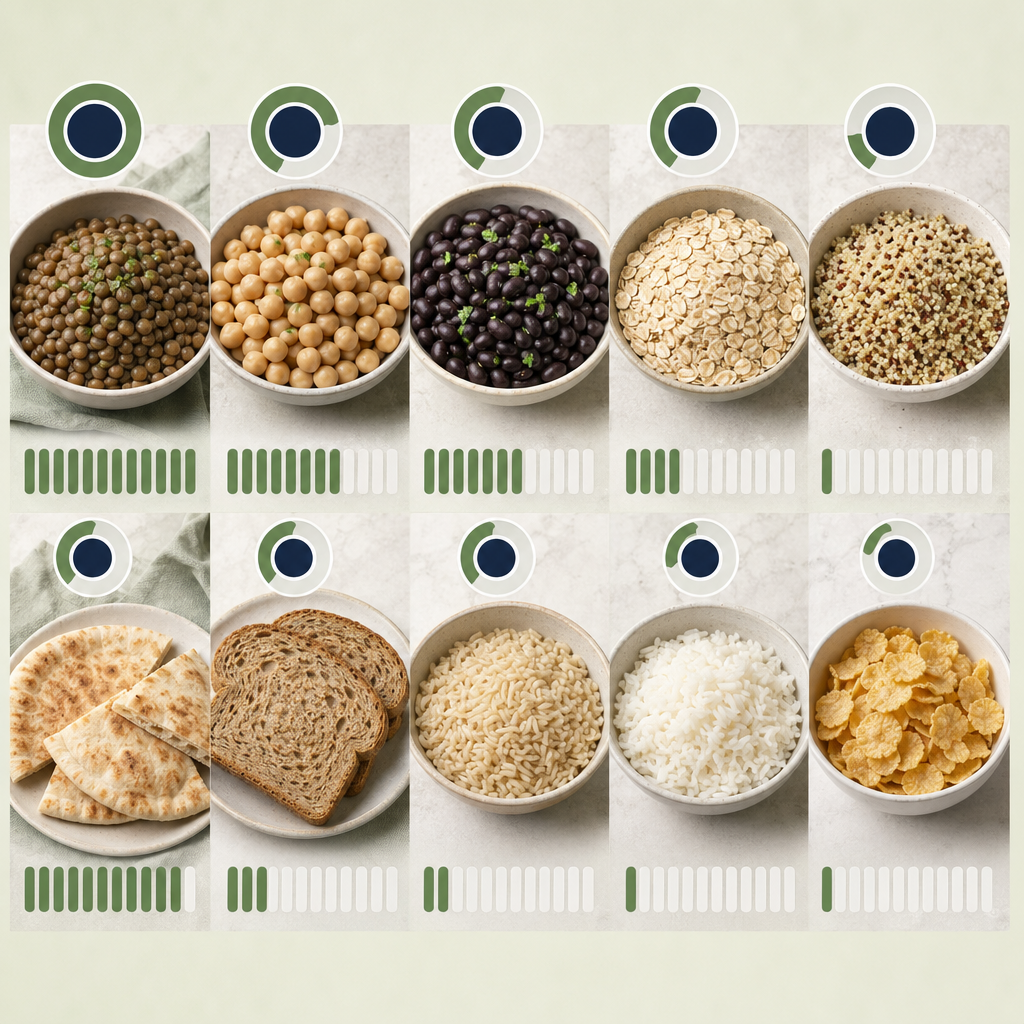
The takeaway: a whole wheat pita is roughly tied with whole wheat sandwich bread on fiber per calorie. It beats sourdough, white pita, white bread, and bagels on fiber. Low-carb tortillas win on protein and net carb math. Bagels are the worst calorie-for-calorie choice.
How pita fits into a GLP-1 plan
If you're on compounded semaglutide or tirzepatide, your appetite changes within a few weeks. Smaller meals feel adequate, and high-fat meals can produce more nausea than usual. Pita is well-suited to this pattern for three reasons.
First, the calorie ceiling per pita is fixed. Unlike a sandwich bread loaf where two slices can quietly become three, one pita is one pita. That structural portion control matters when you're titrating a medication and trying to find the right meal size.
Second, the fat content is low. A whole wheat pita has under 2 g of fat, which means the GI side effects associated with high-fat meals on GLP-1s (delayed gastric emptying causing reflux or nausea) are less likely. If you've struggled with reflux on a tirzepatide titration, our piece on why GLP-1 medications can cause acid reflux covers it in more detail.
Third, the pita pocket lets you load the fillings vertically without the bread itself growing. A pita filled with grilled fish, a half cup of slaw, and one tablespoon of yogurt sauce is around 320 calories and 28 g of protein. The same protein and vegetable load on two slices of bread becomes a much taller sandwich that can be hard to finish on a titration dose.
The catch is the same one that applies to any carbohydrate on a GLP-1: protein needs to come first. Most weight-loss patients on these medications are at or below the 0.8 g per kg per day protein floor, and the 6 g in a pita is not the answer. Plan the protein, then add the pita.
Smart pita assemblies for weight loss
The pita is just the wrapper. The fillings determine whether the meal is 350 calories or 700. Here are five assemblies that consistently land between 350 and 450 calories with at least 25 g of protein.
- Mediterranean chicken pita. 1 whole wheat pita, 4 oz grilled chicken, 1 cup romaine, 1/4 cup diced cucumber, 1/4 cup diced tomato, 2 tbsp tzatziki. About 390 calories, 38 g protein.
- Tuna and white bean pita. 1 whole wheat pita, 1 can (5 oz) tuna in water, 1/4 cup canned white beans (rinsed), 2 tbsp diced red onion, 1 tbsp light mayo, lemon. About 360 calories, 32 g protein, 9 g fiber.
- Egg white breakfast pita. 1 whole wheat pita, 4 egg whites + 1 whole egg scrambled, 1 oz feta, 1/2 cup spinach, salsa. About 360 calories, 28 g protein.
- Turkey and avocado pita. 1 whole wheat pita, 4 oz sliced turkey breast, 1/4 avocado, 1 slice provolone, lettuce, tomato, mustard. About 420 calories, 30 g protein.
- Falafel pita (homemade, baked, not fried). 1 whole wheat pita, 4 baked falafel patties, 1/2 cup chopped cucumber-tomato salad, 2 tbsp tahini sauce. About 440 calories, 18 g protein, 11 g fiber. Lower protein, higher fiber, vegetarian.
What you want to avoid: pita with hummus and feta only (low protein, ends at 420 calories with no real meal value), pita with fried falafel and tahini (often 650+ calories per pita), and shawarma pita ordered out (typically 800 to 1,100 calories).
The pita chip trap
Pita chips are a different food from pita bread. They're cut from pita, brushed with oil, and baked or fried. The calorie density goes from 2.7 calories per gram for pita to about 4.5 calories per gram for pita chips, which is right in the same range as Doritos.
A typical 1 oz serving of pita chips (about 11 chips) is 130 calories with 6 g of fat and 270 mg of sodium. The 8 oz bag is 1,040 calories. Most people eat two to three servings in a sitting because the texture suppresses the satiety signal that pita bread doesn't.
If you like pita chips, the move is to make your own. Cut a whole wheat pita into 8 wedges, mist with olive oil spray (not pour, mist), bake at 400 degrees for 7 to 9 minutes. The result is around 180 calories for the whole pita, with the fat coming in at under 3 g. Store-bought pita chips are between 4 and 6 g of fat per ounce because the manufacturer wants the crunch.
The pita-chip and store-bought-hummus combination is the silent calorie sink in many weight-loss plans. A bowl of pita chips with hummus while making dinner can run 500 calories before the actual meal starts.
FAQ
Is pita bread better than regular bread for weight loss?
Whole wheat pita is roughly equivalent to whole wheat sandwich bread for weight loss, with a slight edge on fiber per calorie if you compare equal weights. White pita is no better than white bread. The portion control aspect (one pita versus two slices) is often the practical advantage.
How many calories are in one pita bread?
A standard 6-inch whole wheat pita has about 170 calories. White pita is around 165 calories. Larger 8-inch pitas can run 240 to 280 calories. Mini pitas (4 inches) are typically 70 to 80 calories.
Can I eat pita bread every day on a diet?
Yes, if you stick to one whole wheat pita per meal and pair it with at least 25 g of protein and a vegetable. The pita itself is not the variable that drives weight gain. The fillings, the chips made from pita, and the second pita are.
Is pita bread keto-friendly?
No. A standard whole wheat pita has 35 g of total carbohydrate and 30 g of net carbs. That's more than a strict ketogenic plan allows for an entire day. Low-carb tortillas (around 5 to 8 g net carbs) are the keto-compliant alternative.
Is whole wheat pita actually whole grain?
Only if the first ingredient on the label says "whole wheat flour" or "stone-ground whole wheat flour." If it says "wheat flour" or "enriched wheat flour," it's white pita with caramel coloring or molasses for the brown tint. Read the panel, not the front of the bag.
Does pita bread spike blood sugar?
A whole wheat pita has a glycemic load of about 17, which is medium-high. It will raise blood sugar more than a slice of bread. Pairing with protein and fat flattens the response. For people without insulin resistance, the rise is generally well-tolerated.
Is pita bread good on a GLP-1 medication like compounded semaglutide or tirzepatide?
Generally yes. The fixed portion size, low fat content, and pocket structure make pita a good carbohydrate anchor for GLP-1 patients. Smaller pitas (4 inch) work well during early titration when appetite is most suppressed.
How does pita compare to a tortilla for weight loss?
A 10-inch flour tortilla is about 200 calories with 2 g of fiber. A whole wheat pita is 170 calories with 5 g of fiber. Pita wins on fiber per calorie. Low-carb tortillas (90 calories, 11 g fiber, 8 g protein) beat both for net carb math.
Are pita chips healthy?
No, not in any meaningful sense. They're crackers cut from pita, brushed with oil, and baked. Calorie density is roughly double pita bread. A typical serving (11 chips, 1 oz) is 130 calories. Most people eat two to three servings without noticing.
What's the lowest-calorie pita?
Joseph's Lavash-style pita and Joseph's Flax-Oat-Bran pita run about 60 to 70 calories per pita with 6 to 7 g of protein and 6 g of fiber. They're thinner than traditional pita and more like a flatbread, but the macros are excellent for weight loss.
Does pita bread cause bloating?
Whole wheat pita is high in fiber (5 g), which can cause gas and bloating in people not used to high-fiber diets. White pita has 1 g of fiber and rarely causes that issue. If you're sensitive to wheat or gluten, both versions can cause bloating.
Is gluten-free pita better for weight loss?
Not inherently. Most gluten-free pitas use rice flour and tapioca starch, which raise blood sugar faster than wheat-based pita. Gluten-free is the right choice for celiac disease or gluten sensitivity, not for weight loss specifically.
Author / review note
Reviewed by the FormBlends Medical Team. This article was last reviewed and updated on April 28, 2026. References cited above include the Nutrients 2023 review on glycemic load and weight management; Atkinson, Foster-Powell, and Brand-Miller, "International Tables of Glycemic Index and Glycemic Load Values: 2008," Diabetes Care; and the U.S. Dietary Guidelines for Americans, 2020-2025.
Footer disclaimers
Platform Disclaimer. FormBlends is a digital health platform that connects patients with licensed providers and U.S.-based pharmacies. We do not manufacture, prescribe, or dispense medication directly. All clinical decisions are made by independent licensed providers.
Compounded Medication Notice. Compounded semaglutide and tirzepatide are not FDA-approved. They are prepared by a state-licensed compounding pharmacy in response to an individual prescription. Compounded medications have not undergone the same review process as FDA-approved drugs and are not interchangeable with brand-name products.
Results Disclaimer. Individual results vary. Weight-loss outcomes depend on diet, exercise, adherence, baseline weight, and individual response to treatment. Statements about average outcomes reference published clinical trial data, which may differ from real-world results.
Trademark Notice. Brand names referenced in this article are the property of their respective owners. FormBlends is not affiliated with, endorsed by, or sponsored by any brand-name pharmaceutical manufacturer.
Related guides
- Is Propel Good for Weight Loss? A Label-First Look at Zero-Cal Electrolyte Water
- Is Skinny Pop Healthy for Weight Loss? An Honest Answer Backed by the Nutrition Label
- Are Grits Healthy for Weight Loss? Here's What the Nutrition Label Actually Says
- Is Cream Cheese Healthy for Weight Loss? An Honest Answer Backed by the Nutrition Label
- Are Ritz Crackers Healthy for Weight Loss? An Honest Answer Backed by the Nutrition Label
- Is Fairlife Milk Good for Weight Loss? An Honest Look at the Numbers
See your options in about 2 minutes
Take the free quiz and see what fits you. Quick, private, and no commitment to continue.
See my options →