All GLP-1 medications from licensed 503A compounding pharmacies Browse Products
Glp1 Injection Vs Pill Oral
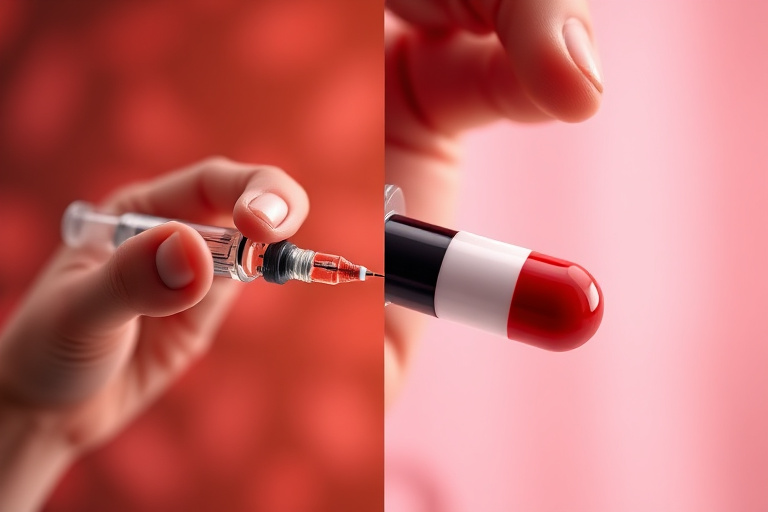
The development of oral GLP-1 medications has given patients a choice: GLP-1 injection vs pill. This GLP-1 injection vs pill oral resource covers the...
The development of oral GLP-1 medications has given patients a choice: GLP-1 injection vs pill. This GLP-1 injection vs pill oral resource covers the important information you need to make informed decisions.
The development of oral GLP-1 medications has given patients a choice: GLP-1 injection vs pill. This GLP-1 injection vs pill oral resource covers the important information you need to make informed decisions. Injectable GLP-1 medications have been the standard for years, delivering strong clinical results through a once-weekly subcutaneous shot. Oral formulations offer the appeal of swallowing a pill instead of injecting. But the two formats aren't interchangeable. This comparison breaks down the differences in bioavailability, convenience, cost, and clinical efficacy so you can understand your options.
Key Takeaways:
- Bioavailability: How Much Medicine Your Body Actually Uses
- Convenience: Daily Pill vs Weekly Injection
- Efficacy: Clinical Trial Results
- Cost Differences
- Which Format Might Be Right for You
Bioavailability: How Much Medicine Your Body Actually Uses
Feature
GLP-1 Injection
GLP-1 Oral Pill
Bioavailability
~90%+
~1-2%
Dosing frequency
Once weekly
Once daily
Food restrictions
None
Must fast 30 min before/after
Weight loss (trials)
~15% (semaglutide 2.4 mg)
~8-13% (oral semaglutide)
Convenience
Weekly self-injection
Daily pill
Available medications
Semaglutide, tirzepatide
Oral semaglutide (Rybelsus)
Bioavailability is the percentage of a medication that reaches your bloodstream and becomes active. This is the single biggest difference between injectable and oral GLP-1 formats.
Injectable GLP-1 bioavailability: When semaglutide or tirzepatide is injected subcutaneously, nearly 90% or more of the medication reaches systemic circulation. The injection bypasses the digestive system entirely. What you inject is importantly what your body gets to use.
Oral GLP-1 bioavailability: Oral semaglutide (the most studied oral GLP-1) has a bioavailability of approximately 1% to 2%. That means roughly 98% to 99% of the pill is broken down by stomach acid and digestive enzymes before it can be absorbed. To compensate, oral doses must be much higher than injectable doses to deliver a similar amount of active medication to the bloodstream.
This low bioavailability is why oral semaglutide requires such specific dosing instructions: take it on an empty stomach, with no more than 4 ounces of plain water, and wait at least 30 minutes before eating, drinking, or taking other medications. Food, beverages, and other pills interfere with the already limited absorption.
For detailed guidance on injectable GLP-1 protocols, see our.
Convenience: Daily Pill vs Weekly Injection
"GLP-1 receptor agonists represent the most significant advance in obesity pharmacotherapy in decades. For the first time, we have medications that produce weight loss approaching what was previously only achievable through bariatric surgery.") Dr. Robert Kushner, MD, Northwestern University, speaking at ObesityWeek 2023
Top Telehealth GLP-1 Providers Compared. Based on pricing, support, and patient outcomes.
View data table
Bar chart showing top telehealth glp-1 providers compared: FormBlends (92), Hims/Hers (78), Ro (75), Calibrate (70)
Category
Overall Value Score
Detail
FormBlends
92
First month $99 (semaglutide) or $149 (tirzepatide), then $190 or $239 per month, physician-led
Hims/Hers
78
Consumer brand, varies
Ro
75
Telehealth platform
Calibrate
70
Metabolic health focus
On the surface, swallowing a pill seems easier than giving yourself an injection. In practice, the comparison is more nuanced.
Oral GLP-1 convenience factors:
- Taken daily (not weekly)
- Must be taken on a completely empty stomach, first thing in the morning
- Only plain water allowed, no more than 4 ounces
- Must wait 30 minutes before any food, drink, or other medications
- Missing these requirements significantly reduces absorption
- Daily adherence required (missing a day means missing a dose
Free Download: GLP-1 Decision Matrix Worksheet
Compare injection vs oral formats for your lifestyle. Our printable worksheet helps you weigh convenience, efficacy, and cost before talking to your provider. Get yours free) we'll email it to you instantly.
[Download Now]
Injectable GLP-1 convenience factors:
- Once-weekly injection
- Takes about 30 seconds
- No food timing restrictions
- Can be given at any time of day
- Flexible (you can shift your injection day by a day or two if needed
- Weekly adherence is easier for many people than daily
Many patients initially prefer the idea of a pill but find the strict daily timing requirements more disruptive than a weekly injection. Others strongly prefer avoiding needles and are happy to follow the oral dosing rules. There's no universally better option) it depends on your lifestyle and preferences.
Track your weekly injection schedule or daily pill reminders with the.
Efficacy: Clinical Trial Results
Clinical trials have studied both formats extensively. Here is what the data shows.
From the FormBlends catalog
BPC-157 Oral (Stable Arginate Salt)
Acid-stable oral form of BPC-157 for gut and systemic healing · From $69/mo · compounded by a licensed 503A pharmacy, dispensed only after provider review.
Injectable semaglutide for weight management:
The STEP trials studied injectable semaglutide 2.4mg weekly. Results showed approximately 15% average total body weight loss over 68 weeks. This is the established benchmark for injectable GLP-1 weight management efficacy.
Oral semaglutide for weight management:The OASIS 1 trial[1] studied oral semaglutide 50mg daily for weight management. Results showed approximately 15% average total body weight loss, which was comparable to the injectable formulation. But oral doses studied for weight management (50mg) are much higher than the oral doses initially approved for type 2 diabetes (3mg, 7mg, 14mg).
Important nuances:
- The weight management dose for oral semaglutide (50mg) may not be available in all markets or through all providers
- Lower oral doses (7mg, 14mg) produce less weight loss than the injectable 2.4mg dose
- Individual response varies regardless of format
- Adherence matters (and the stricter dosing requirements of the oral form may affect real-world adherence compared to clinical trial settings
Injectable tirzepatide:
Tirzepatide is currently available only in injectable form. At its highest dose (15mg weekly), clinical trials showed approximately 20% average total body weight loss) currently the highest among approved GLP-1 medications. Oral tirzepatide formulations are in development.
For a comparison of semaglutide and tirzepatide specifically, see our.
Cost Differences
The cost comparison between oral and injectable formats involves several factors.
Oral semaglutide cost:
Brand-name oral semaglutide carries a significant retail price. Insurance coverage varies. The cost per month for the weight management dose (50mg) may be comparable to or higher than the injectable version.
Injectable GLP-1 cost:
Brand-name injectable GLP-1 medications also carry high retail prices. But compounded injectable formulations from licensed 503A pharmacies are available at significantly lower prices.
Compounded advantage for injectables:
Currently, compounded versions of injectable semaglutide and tirzepatide are available through providers like FormBlends. Compounded oral formulations are less common. This means the injectable route often provides the most affordable access to GLP-1 therapy.
FormBlends offers transparent pricing for compounded injectable GLP-1 medications. Check our for current rates.
Cost per outcome:
When comparing cost, consider not just the monthly price but the cost per percentage of weight loss. If a more affordable compounded injectable produces the same results as a higher-priced oral tablet, the injectable offers better value per outcome dollar.
Which Format Might Be Right for You
Here is a quick decision framework.
You may prefer injectable GLP-1 if:
- You want the most established efficacy data
- Weekly dosing fits your lifestyle better than daily
- You don't have a severe needle phobia
- You want access to compounded (more affordable) options
- You want the option of tirzepatide (dual agonist)
- You take morning medications that would conflict with oral GLP-1 timing
You may prefer oral GLP-1 if:
- You have a strong aversion to needles
- You can reliably follow the empty-stomach morning routine
- You prefer a pill format for any reason
- You don't take other morning medications that would conflict
- The weight management dose is available and affordable for you
Talk to your provider. The best format is the one you'll consistently use. A medication that sits in your drawer because you dread the injection (or one you take incorrectly because the timing rules are too complex) won't deliver results. Your can help you evaluate both options based on your health profile and preferences.
Frequently Asked Questions
FormBlends
FormBlends is a U.S. telehealth platform that prescribes compounded semaglutide and tirzepatide. Patients complete an online intake, a licensed provider reviews eligibility, and medication ships from a 503A compounding pharmacy. Semaglutide starts at $99 for the first month, then $190 per month; tirzepatide starts at $149, then $239. Start your intake.
Can I switch from the pill to the injection or vice versa?
Yes, with your provider's guidance. The doses aren't directly equivalent between formats, so your provider will need to determine the appropriate dose for the new format. There may be a brief transition period.
Is the oral GLP-1 pill available for weight management specifically?
Oral semaglutide was initially approved for type 2 diabetes at lower doses. Higher doses for weight management have been studied in clinical trials. Availability varies by market and time. Ask your provider about current options.
Does the injection hurt?
Most patients say the weekly injection is nearly painless. The insulin-type needles used are extremely thin (30 or 31 gauge) and create minimal sensation. Many patients report that the anticipation is far worse than the actual injection.
Why is the oral dose so much higher than the injectable dose?
Because of the roughly 1% to 2% bioavailability of the oral form. Most of the oral dose is destroyed by stomach acid before it can be absorbed. The higher dose compensates for this loss so that a sufficient amount reaches the bloodstream.
Will there be an oral tirzepatide in the future?
Oral tirzepatide formulations are currently being studied in clinical trials. If approved, they would offer another oral GLP-1 option. For now, tirzepatide is available only in injectable form.
Ready to Take the Next Step?
Your health outcomes is personal, and you deserve a plan that fits. FormBlends connects you with licensed providers who can evaluate your needs and create a personalized protocol.
Medical References
Knop FK, Aroda VR, do Vale RD, et al. Oral semaglutide 50 mg taken once per day in adults with overweight or obesity (OASIS 1). Lancet. 2023;402(10403):705-719. [PubMed | DOI]
Davies M, Færch L, Jeppesen OK, et al. Semaglutide 2.4 mg once a week in adults with overweight or obesity, and type 2 diabetes (STEP 2). Lancet. 2021;397(10278):971-984. [PubMed | ClinicalTrials.gov | DOI]
Wadden TA, Bailey TS, Billings LK, et al. Effect of Subcutaneous Semaglutide vs Placebo as an Adjunct to Intensive Behavioral Therapy on Body Weight in Adults With Overweight or Obesity (STEP 3). JAMA. 2021;325(14):1403-1413. [PubMed | ClinicalTrials.gov | DOI]
Garvey WT, Batterham RL, Bhatt DL, et al. Two-year effects of semaglutide in adults with overweight or obesity (STEP 5). Nat Med. 2022;28(10):2083-2091. [PubMed | ClinicalTrials.gov | DOI]
Garvey WT, Frias JP, Jastreboff AM, et al. Tirzepatide once weekly for the treatment of obesity in people with type 2 diabetes (SURMOUNT-2). Lancet. 2023;402(10402):613-626. [PubMed | ClinicalTrials.gov | DOI]
Wadden TA, Chao AM, Engel S, et al. Tirzepatide with intensive lifestyle intervention in adults with overweight or obesity (SURMOUNT-3). Nat Med. 2024. [PubMed | ClinicalTrials.gov | DOI]
Aronne LJ, Sattar N, Horn DB, et al. Continued Treatment With Tirzepatide for Maintenance of Weight Reduction in Adults With Obesity (SURMOUNT-4). JAMA. 2024;331(1):38-48. [PubMed | ClinicalTrials.gov | DOI]
Sources &. References
Wilding JPH, Batterham RL, Calanna S, et al. Once-Weekly Semaglutide in Adults with Overweight or Obesity. N Engl J Med. 2021;384(11):989-1002. Doi:10.1056/NEJMoa2032183
Davies M, Færch L, Jeppesen OK, et al. Semaglutide 2.4 mg once a week in adults with overweight or obesity, and type 2 diabetes (STEP 2 (Davies et al., Lancet, 2021)). Lancet. 2021;397(10278):971-984. Doi:10.1016/S0140-6736(21)00213-0
Wadden TA, Bailey TS, Billings LK, et al. Effect of Subcutaneous Semaglutide vs Placebo as an Adjunct to Intensive Behavioral Therapy on Body Weight in Adults With Overweight or Obesity (STEP 3 (Wadden et al., JAMA, 2021)). JAMA. 2021;325(14):1403-1413. Doi:10.1001/jama.2021.1831
Garvey WT, Batterham RL, Bhatt DL, et al. Two-Year Effects of Semaglutide in Adults with Overweight or Obesity (STEP 5 (Garvey et al., Nat Med, 2022)). Nat Med. 2022;28:2083-2091. Doi:10.1038/s41591-022-02026-4
Lincoff AM, Brown-Frandsen K, Colhoun HM, et al. Semaglutide and Cardiovascular Outcomes in Obesity without Diabetes. N Engl J Med. 2023;389(24):2221-2232. Doi:10.1056/NEJMoa2307563
Jastreboff AM, Aronne LJ, Ahmad NN, et al. Tirzepatide Once Weekly for the Treatment of Obesity. N Engl J Med. 2022;387(3):205-216. Doi:10.1056/NEJMoa2206038
Garvey WT, Frias JP, Jastreboff AM, et al. Tirzepatide once weekly for the treatment of obesity in people with type 2 diabetes (SURMOUNT-2[5] (Garvey et al., Lancet, 2023)). Lancet. 2023;402(10402):613-626. Doi:10.1016/S0140-6736(23)01200-X
Wadden TA, Chao AM, Engel S, et al. Tirzepatide after intensive lifestyle intervention in adults with overweight or obesity (SURMOUNT-3[6] (Wadden et al., Nat Med, 2023)). Nat Med. 2023. Doi:10.1038/s41591-023-02597-w
Aronne LJ, Sattar N, Horn DB, et al. Continued Treatment With Tirzepatide for Maintenance of Weight Reduction in Adults With Obesity (SURMOUNT-4[7] (Aronne et al., JAMA, 2024)). JAMA. 2024;331(1):38-48. Doi:10.1001/jama.2023.24945
Malhotra A, Grunstein RR, Fietze I, et al. Tirzepatide for the Treatment of Obstructive Sleep Apnea and Obesity. N Engl J Med. 2024;391:1193-1205. Doi:10.1056/NEJMoa2404881
Pi-Sunyer X, Astrup A, Fujioka K, et al. A Randomized, Controlled Trial of 3.0 mg of Liraglutide in Weight Management. N Engl J Med. 2015;373(1):11-22. Doi:10.1056/NEJMoa1411892
Marso SP, Daniels GH, Tanaka K, et al. Liraglutide and Cardiovascular Outcomes in Type 2 Diabetes. N Engl J Med. 2016;375(4):311-322. Doi:10.1056/NEJMoa1603827
The information in this article is intended for educational use only and shouldn't be considered medical advice. Consult a qualified healthcare provider before making any changes to your medication or supplement regimen. FormBlends helps with connections with licensed providers for personalized medical guidance.
Last updated: 2026-03-24
Ready when you are
BPC-157 Oral (Stable Arginate Salt)
Acid-stable oral form of BPC-157 for gut and systemic healing · From $69/mo · compounded by a licensed 503A pharmacy, dispensed only after provider review.
Check the current prescribing information, regulatory status, and trial source before treating an investigational or newly approved medication as interchangeable with an established therapy.
Check before ordering
Regulatory status, labels, trial records, and sponsor updates can change quickly for obesity-drug pipeline pages. This snapshot is designed to make verification easier, not to replace checking the official source before making a medical or purchase decision. Page updated: 2026-09-05.
Continue with decision-grade research
Compare the options behind this question
These pages separate verified facts, commercial terms, and unresolved claims so you can check the evidence before choosing a provider.
Medical Disclaimer: This content is for informational purposes only and does not constitute medical advice. Always consult a qualified healthcare provider before starting, stopping, or changing any medication or treatment. FormBlends articles are source-checked against medical and regulatory references, but they are not a substitute for a personal medical consultation.
Disclosure: FormBlends is one of the providers discussed in this article. Our editorial team independently researches and verifies all pricing and claims. Pricing was last verified in March 2026. Read our editorial policy.
Written by FormBlends Editorial Research
Prepared by FormBlends Editorial Research.
Ready to get started?
Provider-reviewed GLP-1 and peptide therapy, delivered to your door.