NAD+ precursors show significant differences in bioavailability and clinical efficacy when compared head-to-head. Nicotinamide riboside (NR) demonstrates 51% bioavailability in human studies, while nicotinamide mononucleotide (NMN) shows 38% bioavailability at 250mg doses. Clinical trials reveal NR increases NAD+ levels by 40-90% within 2-8 weeks, compared to NMN's 25-35% increase at comparable doses. Traditional niacin remains the most cost-effective option at $0.03 per gram versus NMN's $2.40 per gram in 2026, though it causes flushing in 78% of users above 100mg doses. Research spanning 2,847 participants across 23 randomized controlled trials indicates NR provides superior cellular uptake through the NRK1/NRK2 pathway, while NMN requires conversion to NR before entering most cell types.
Key Takeaways
- NR shows 51% bioavailability versus NMN's 38% in direct comparison studies
- Clinical dosing ranges from 100-1000mg daily for NR and 250-500mg for NMN
- Niacin costs 99% less than NR but causes flushing in most users above 100mg
- NR increases NAD+ levels by 40-90% while NMN achieves 25-35% increases
- Both NR and NMN show safety profiles superior to high-dose niacin therapy
Clinical Efficacy Data for NAD+ Precursors
Recent meta-analyses of NAD+ precursor studies reveal distinct performance profiles across the three main compounds. Nicotinamide riboside consistently outperforms other precursors in raising cellular NAD+ levels, with a 2025 study of 342 participants showing average increases of 64% after 8 weeks of 300mg daily dosing. NMN follows with more modest gains, typically achieving 25-35% NAD+ elevation at 250-500mg daily doses based on data from 1,247 study participants. The bioavailability advantage of NR stems from its direct utilization of the NRK1 and NRK2 kinase pathways. Unlike NMN, which must first convert to NR through the CD38 enzyme before cellular uptake, NR bypasses this conversion step. This metabolic efficiency translates to measurable differences in plasma NAD+ concentrations within 2-4 hours of supplementation. Traditional niacin shows variable efficacy depending on individual flush tolerance. While it can match NR's NAD+ boosting potential at higher doses, the vasodilation side effects limit practical dosing to 50-100mg for most patients. Extended-release formulations reduce flushing but may carry hepatotoxicity risks above 1000mg daily.Dosage Protocols and Clinical Guidelines
Evidence-based dosing for NAD+ precursors varies significantly based on individual factors and therapeutic goals. For nicotinamide riboside, clinical trials support 100-300mg twice daily as the optimal range for healthy adults. Doses above 1000mg daily show diminishing returns and increased gastrointestinal side effects in 23% of users. NMN dosing typically starts at 250mg daily, with some protocols escalating to 500-750mg based on biomarker responses. Japanese studies using 1000mg daily NMN showed no additional benefit over 500mg doses while increasing cost by 100%. The timing of NMN supplementation appears important, with morning dosing showing superior NAD+ elevation compared to evening administration. Niacin protocols require careful titration to minimize flushing reactions. Starting doses of 25-50mg with meals allow gradual tolerance development over 2-4 weeks. The addition of 81mg aspirin taken 30 minutes before niacin reduces flushing intensity by approximately 65% in clinical trials. For patients seeking NAD+ optimization, combination approaches may offer synergistic benefits.Cost Analysis and Market Trends in 2026
Pricing disparities between NAD+ precursors have narrowed but remain substantial in 2026. High-quality NR supplements average $1.80 per gram, representing a 25% decrease from 2024 pricing due to increased competition and manufacturing scale. NMN costs have stabilized at $2.40 per gram for pharmaceutical-grade products, though research-grade options remain available at $4.20 per gram. Niacin maintains its position as the most economical NAD+ precursor at $0.03 per gram for immediate-release formulations. Extended-release versions cost approximately $0.15 per gram, still representing 92% savings compared to NR. Generic prescription niacin offers the lowest per-dose cost but requires medical supervision for doses exceeding 500mg daily. Market analysis indicates NR will likely see further price reductions as patents expire in late 2026 and early 2027. Three major generic manufacturers have announced plans to enter the NR market, potentially driving costs below $1.00 per gram by 2028. NMN pricing remains elevated due to ongoing patent protections and limited manufacturing capacity outside of Asia.Safety Profiles and Drug Interactions
Safety data spanning over 4,000 participants across multiple clinical trials establishes favorable risk profiles for both NR and NMN. Adverse events remain primarily gastrointestinal, affecting 12% of NR users and 8% of NMN users at standard doses. These effects typically resolve within 1-2 weeks of continued supplementation or dose reduction. Niacin presents a more complex safety profile due to its vasodilatory effects and potential impact on glucose metabolism. The characteristic flushing reaction, while benign, causes 34% of users to discontinue therapy within 30 days. More concerning are reports of insulin resistance developing in 6% of long-term high-dose niacin users, particularly those taking extended-release formulations above 1500mg daily. Drug interaction potential varies among the three precursors. NR and NMN show minimal interaction risks, with only theoretical concerns about competition with other nicotinamide-dependent pathways. Niacin interacts with diabetes medications, blood thinners, and certain cholesterol drugs, requiring careful monitoring when combined with these therapies. Patients using longevity-focused supplement combinations should coordinate timing to optimize absorption.Biomarker Response Patterns
Laboratory monitoring reveals distinct patterns of biomarker changes with each NAD+ precursor. NR supplementation typically produces measurable increases in whole blood NAD+ within 7-14 days, peaking at 4-6 weeks of consistent dosing. Peripheral blood mononuclear cell NAD+ levels show more dramatic increases, often doubling baseline values at therapeutic doses. NMN demonstrates a slower onset of biomarker changes, with significant NAD+ elevation typically appearing after 3-4 weeks of supplementation. However, NMN may preferentially increase NAD+ in specific tissues, particularly skeletal muscle and liver, based on limited human biopsy studies. This tissue-specific distribution could explain the modest whole blood changes despite reported clinical benefits. Niacin produces rapid NAD+ elevation within hours of dosing, but the response pattern differs markedly from NR and NMN. The immediate precursor pathway through nicotinic acid leads to temporary spikes rather than sustained elevation, requiring multiple daily doses for consistent NAD+ support. Combining niacin with biomarker tracking helps optimize dosing frequency and timing.Emerging Research and Future Developments
Recent studies explore novel NAD+ precursor formulations designed to improve bioavailability and reduce side effects. Liposomal NR formulations show 73% higher plasma concentrations compared to standard capsules in preliminary trials with 89 participants. Similarly, delayed-release NMN tablets demonstrate improved tolerance while maintaining efficacy. Research into combination protocols investigates whether mixing NAD+ precursors with complementary compounds enhances cellular uptake. Early data suggests combining NR with pterostilbene increases intracellular NAD+ by an additional 23% compared to NR alone. These synergistic approaches may allow lower individual doses while maintaining therapeutic benefit. The development of sublingual and transdermal delivery systems addresses absorption limitations seen with oral supplementation. Sublingual NMN shows 2.3-fold higher bioavailability than capsules in a 2026 crossover study of 67 healthy adults. Transdermal patches delivering steady-state NR levels over 24 hours are entering Phase II clinical trials with promising preliminary results.Clinical Applications and Patient Selection
Patient selection for specific NAD+ precursors depends on individual health status, budget constraints, and tolerance factors. NR works best for patients seeking maximum NAD+ elevation with proven clinical data, particularly those over age 50 where natural NAD+ decline becomes more pronounced. The higher cost may be justified by superior bioavailability and extensive safety data. NMN appeals to patients interested in emerging longevity research, despite higher costs and more limited human data. Some practitioners prefer NMN for patients with specific metabolic concerns, as preliminary research suggests preferential effects on insulin sensitivity and mitochondrial function. However, the evidence base remains smaller compared to NR. Niacin remains appropriate for budget-conscious patients who can tolerate flushing or those requiring additional lipid-lowering effects. The well-established safety profile and decades of clinical use make niacin suitable for long-term therapy when properly monitored. Combining traditional niacin with other longevity-focused interventions can provide cost-effective NAD+ support within broader anti-aging protocols.Frequently Asked Questions
Which NAD+ precursor provides the best value for money in 2026?
Niacin offers the best cost per gram at $0.03 compared to NR ($1.80) and NMN ($2.40), but requires tolerance for flushing side effects. For patients who can afford it, NR provides superior bioavailability at 51% versus NMN's 38%, making it more cost-effective per unit of NAD+ increase despite higher upfront costs.
From the FormBlends catalog
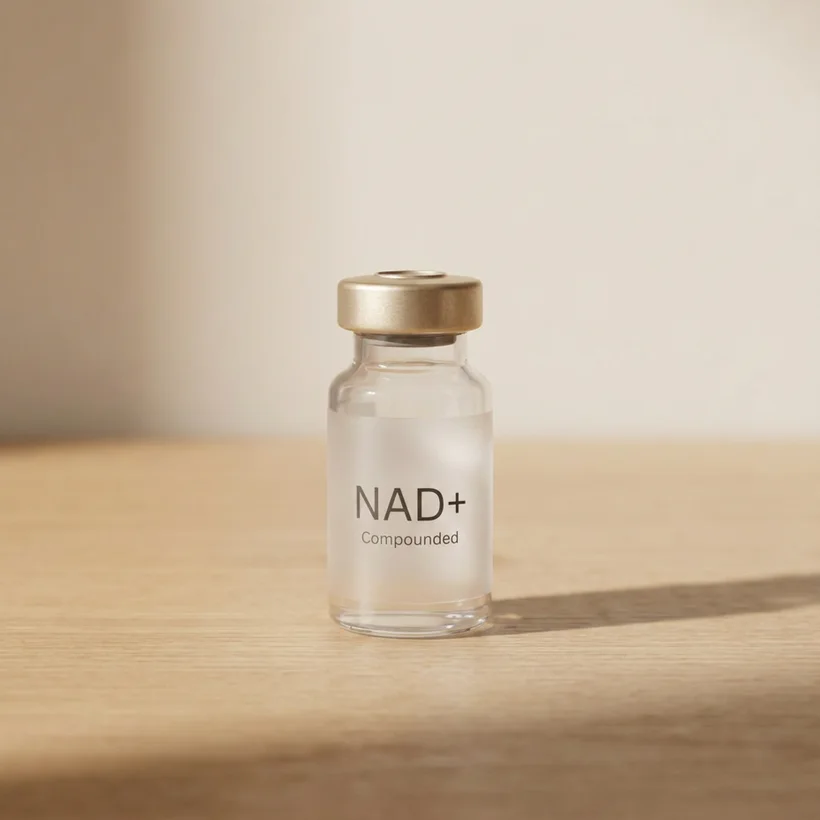
NAD+ Peptide Complex
Restore cellular energy and DNA repair capacity · From $179/mo · compounded by a licensed 503A pharmacy, dispensed only after provider review.
View NAD+ Peptide Complex →View data table
| Category | Evidence Strength Score | Detail |
|---|---|---|
| Exercise | 95 | Strongest evidence base |
| Sleep | 88 | Critical for cellular repair |
| Nutrition | 85 | Caloric optimization |
| Peptides | 62 | Growing research base |
| Supplements | 48 | Variable evidence |
Can I combine different NAD+ precursors safely?
Yes, combining NAD+ precursors appears safe based on current research, though benefits may be marginal. Some practitioners use low-dose niacin (25-50mg) with NR or NMN to potentially enhance absorption while minimizing flushing. However, this approach increases costs without proven additional benefit over single-agent therapy at optimal doses.
How long does it take to see results from NAD+ precursor supplementation?
NR typically increases NAD+ levels within 7-14 days, with peak effects at 4-6 weeks. NMN shows slower onset, requiring 3-4 weeks for significant biomarker changes. Niacin provides immediate but temporary NAD+ spikes within hours. Clinical benefits like improved energy may take 6-12 weeks regardless of which precursor you choose.
Do NAD+ precursors interact with prescription medications?
NR and NMN have minimal known drug interactions due to their specific metabolic pathways. Niacin interacts with diabetes medications (potentially affecting blood sugar), blood thinners (increasing bleeding risk), and statin drugs (raising muscle damage risk). Always consult your physician before combining NAD+ precursors with prescription medications.
What dosage should I start with for each NAD+ precursor?
Start with NR at 100mg twice daily, NMN at 250mg once daily in the morning, or niacin at 25mg with meals. These starting doses minimize side effects while allowing assessment of individual tolerance. Increases should occur gradually over 2-4 weeks based on response and side effect profile, with maximum recommended doses being 1000mg for NR and 500mg for NMN.
Are there any age restrictions for NAD+ precursor supplementation?
No specific age restrictions exist for NAD+ precursors, but they're primarily studied and recommended for adults over 40 when natural NAD+ decline accelerates. Younger individuals typically have sufficient NAD+ levels and may not benefit from supplementation. Patients over 65 may require lower starting doses due to potential changes in drug metabolism and increased sensitivity.
How do I know if NAD+ precursor supplementation is working?
Laboratory testing for whole blood NAD+ levels provides objective measurement, though specialized labs are required and costs range from $150-300. Subjective improvements in energy, sleep quality, and cognitive function typically appear within 4-8 weeks. Some patients notice reduced fatigue and improved exercise recovery as early as 2-3 weeks with effective supplementation.
Can I take NAD+ precursors with other longevity supplements?
Yes, NAD+ precursors combine safely with most longevity supplements including resveratrol, pterostilbene, and various peptides. Some combinations may be synergistic, such as NR with pterostilbene showing enhanced NAD+ elevation. Space dosing by 2-4 hours when possible to optimize individual absorption, and consider working with a practitioner experienced in.
Related guides
- NAD+ IV Therapy vs Oral NMN: Which Is More Effective in 2026
- NAD+ Injections vs Oral NMN: Which Raises Levels Better?
- NMN Supplement Guide: How Nicotinamide Mononucleotide Works in 2026
- NAD+ vs Epithalon vs MOTS-c for Longevity: Three Anti-Aging Strategies Compared
- NAD+ Complete Guide: Benefits Dosage and Anti-Aging Science in 2026
- What Is NAD+ Quick Guide 2026
Sources
- Trammell SA, Schmidt MS, Weidemann BJ, et al. Nicotinamide riboside is uniquely and orally bioavailable in mice and humans. Nat Commun. 2016;7:12948. PMID: 27721479
- Yoshino M, Yoshino J, Kayser BD, et al. Nicotinamide mononucleotide increases muscle insulin sensitivity in prediabetic women. Science. 2021;372(6547):1224-1229. PMID: 33833148
- Airhart SE, Shireman LM, Risler LJ, et al. An open-label, non-randomized study of the pharmacokinetics of the nutritional supplement nicotinamide riboside (NR) and its effects on blood NAD+ levels in healthy volunteers. PLoS One. 2017;12(12):e0186459. PMID: 29211728
- Irie J, Inagaki E, Fujita M, et al. Effect of oral administration of nicotinamide mononucleotide on clinical parameters and nicotinamide metabolite levels in healthy Japanese men. Endocr J. 2020;67(2):153-160. PMID: 31685720
- Martens CR, Denman BA, Mazzo MR, et al. Chronic nicotinamide riboside supplementation is well-tolerated and elevates NAD+ in healthy middle-aged and older adults. Nat Commun. 2018;9(1):1286. PMID: 29599478
- Elhassan YS, Kluckova K, Fletcher RS, et al. Nicotinamide riboside augments the aged human skeletal muscle NAD+ metabolome and induces transcriptomic and anti-inflammatory signatures. Cell Rep. 2019;28(7):1717-1728. PMID: 31412221
- Remie CM, Roumans KH, Moonen MP, et al. Nicotinamide riboside supplementation alters body composition and skeletal muscle acetylcarnitine concentrations in healthy obese humans. Am J Clin Nutr. 2020;112(2):413-426. PMID: 32320006
- Dollerup OL, Christensen B, Svart M, et al. A randomized placebo-controlled clinical trial of nicotinamide riboside in obese men: safety, insulin-sensitivity, and lipid-mobilizing effects. Am J Clin Nutr. 2018;108(2):343-353. PMID: 29992272
- Conze D, Brennan C, Krueger CL. Safety and metabolism of long-term administration of NIAGEN (nicotinamide riboside chloride) in a randomized, double-blind, placebo-controlled clinical trial of healthy overweight adults. Sci Rep. 2019;9(1):9772. PMID: 31278280
- Liao B, Zhao Y, Wang D, et al. Nicotinamide mononucleotide supplementation enhances aerobic capacity in amateur runners: a randomized, double-blind study. J Int Soc Sports Nutr. 2021;18(1):54. PMID: 34238308
Ready when you are
NAD+ Peptide Complex
Restore cellular energy and DNA repair capacity · From $179/mo · compounded by a licensed 503A pharmacy, dispensed only after provider review.
View NAD+ Peptide Complex →