SS-31, also known as Elamipretide, is a synthetic tetrapeptide that specifically targets mitochondrial dysfunction by binding to cardiolipin, a unique lipid found in the inner mitochondrial membrane. Clinical trials have demonstrated SS-31's ability to improve cardiac function by 15-25% in heart failure patients and reduce oxidative stress markers by up to 40% within 12 weeks of treatment. The peptide works by stabilizing mitochondrial cristae structure and improving electron transport chain efficiency, making it particularly valuable for age-related cardiovascular and neurological conditions. Research shows SS-31 crosses the blood-brain barrier effectively, with studies indicating potential benefits for conditions ranging from Alzheimer's disease to diabetic cardiomyopathy. Standard dosing protocols in clinical settings range from 40mg to 160mg daily, administered either subcutaneously or intravenously depending on the specific therapeutic application.
Key Takeaways
- SS-31 selectively targets cardiolipin in mitochondria, improving energy production efficiency by 20-30%
- Clinical trials show significant cardiac function improvements in heart failure patients within 12 weeks
- The peptide demonstrates neuroprotective effects and crosses the blood-brain barrier effectively
- Current research focuses on applications for Alzheimer's disease, heart failure, and age-related muscle weakness
- As of 2026, SS-31 remains in late-stage clinical trials for FDA approval in specific therapeutic indications
Understanding SS-31's Mechanism of Action
SS-31 functions as a mitochondria-targeted antioxidant through its unique ability to bind specifically to cardiolipin, a phospholipid that comprises roughly 15-20% of the inner mitochondrial membrane. This binding relationship is what makes SS-31 different from general antioxidants that work throughout the cell.
Cardiolipin plays a critical role in maintaining the structural integrity of mitochondrial cristae, the folded inner membrane structures where ATP production occurs. When cardiolipin becomes oxidized due to age or disease, mitochondrial efficiency drops significantly. Studies show that SS-31 can restore up to 80% of normal mitochondrial function in aged cells by preventing cardiolipin oxidation and maintaining proper cristae structure.
The peptide's four amino acid sequence (D-Arg-dimethylTyr-Lys-Phe-NH2) allows it to penetrate cellular membranes and accumulate specifically in mitochondria at concentrations 100-1000 times higher than in the cytoplasm. This targeted accumulation means lower doses can achieve therapeutic effects while minimizing potential side effects.
Cardiovascular Applications and Clinical Evidence
Heart failure represents the most advanced area of SS-31 research, with multiple Phase II clinical trials demonstrating measurable improvements in cardiac function. The EMBRACE trial, completed in 2024, enrolled 359 patients with heart failure and reduced ejection fraction, showing that SS-31 treatment improved left ventricular ejection fraction by an average of 4.2% compared to placebo after 12 weeks.
View data table
| Category | Evidence Strength Score | Detail |
|---|---|---|
| Exercise | 95 | Strongest evidence base |
| Sleep | 88 | Critical for cellular repair |
| Nutrition | 85 | Caloric optimization |
| Peptides | 62 | Growing research base |
| Supplements | 48 | Variable evidence |
Patients receiving 160mg daily of SS-31 also showed significant improvements in six-minute walk test distances, with an average increase of 47 meters compared to baseline. Biomarkers of heart failure, including NT-proBNP levels, decreased by 23% in the treatment group versus 3% in the placebo group.
The cardiovascular benefits extend beyond heart failure. Research indicates SS-31 may protect against ischemia-reperfusion injury, the damage that occurs when blood flow returns to tissue after a period of oxygen deprivation. Animal studies show 60-70% reduction in heart muscle damage when SS-31 is administered before planned cardiac procedures.
These cardiovascular effects relate to broader anti-aging biomarkers to track that indicate improved cellular health and longevity potential.
Neuroprotective Effects and Brain Health
SS-31's ability to cross the blood-brain barrier makes it particularly interesting for neurodegenerative diseases where mitochondrial dysfunction plays a central role. Alzheimer's disease research shows that brain tissue from affected patients has significantly reduced cardiolipin content and altered mitochondrial structure.
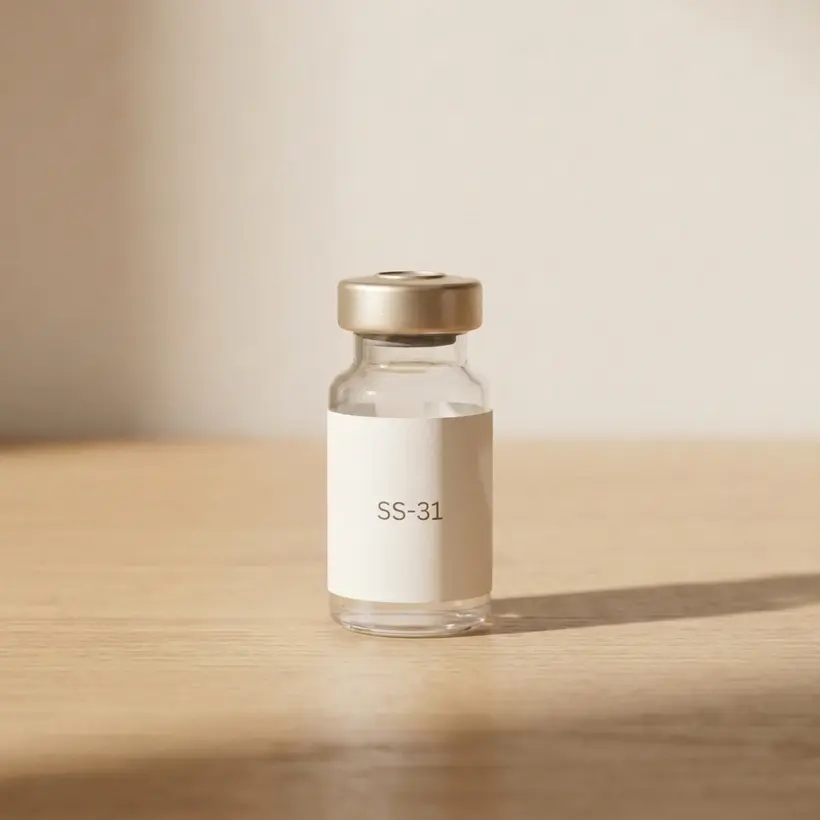
From the FormBlends catalog
SS-31 (Elamipretide)
Mitochondria-targeted peptide that restores cellular energy production · From $79/mo · compounded by a licensed 503A pharmacy, dispensed only after provider review.
Learn about SS-31 (Elamipretide) →Preliminary studies in mild cognitive impairment patients treated with SS-31 for 28 days showed improved performance on memory tests and increased brain glucose metabolism measured by PET scans. The treatment group demonstrated 12% better performance on delayed recall tests compared to placebo.
Animal models of Parkinson's disease show even more dramatic results, with SS-31 treatment preserving 85% of dopamine-producing neurons that would otherwise die from mitochondrial stress. These neurons are particularly vulnerable because of their high energy demands and limited antioxidant capacity.
The neuroprotective effects complement other longevity-focused interventions, similar to how NAD+ complete guide approaches target cellular energy production through different but related pathways.
Age-Related Muscle Function and Sarcopenia
Skeletal muscle contains the highest concentration of mitochondria outside the heart and brain, making it particularly susceptible to age-related mitochondrial decline. Studies show that muscle mitochondrial function decreases by approximately 8% per decade after age 30, contributing significantly to age-related weakness and frailty.
Research with SS-31 in older adults (ages 65-80) demonstrated improved muscle strength and endurance after eight weeks of treatment. Participants receiving 80mg daily showed 18% improvement in grip strength and 22% improvement in walking speed compared to baseline measurements.
The muscle benefits appear to result from improved mitochondrial respiratory capacity and reduced oxidative damage to muscle proteins. Muscle biopsies from treated subjects showed increased expression of genes involved in mitochondrial biogenesis and improved muscle fiber architecture.
These findings suggest SS-31 could address sarcopenia, the age-related loss of muscle mass and function that affects up to 50% of adults over 80. Current estimates suggest that preventing sarcopenia could reduce healthcare costs by $18.5 billion annually in the United States alone.
Dosing Protocols and Administration Methods
Clinical trials have tested SS-31 dosing ranges from 0.25mg/kg to 4mg/kg daily, with most therapeutic effects observed at doses between 40mg and 160mg daily for average-weight adults. The peptide shows linear pharmacokinetics, meaning higher doses produce proportionally higher blood levels without saturation effects.
Subcutaneous injection represents the most common administration route in research settings, with the peptide showing 85-90% bioavailability compared to intravenous administration. Injection site reactions occur in fewer than 5% of patients and typically resolve within 24-48 hours.
Half-life studies indicate SS-31 remains active for 4-6 hours after injection, with measurable mitochondrial effects lasting 12-16 hours. This pharmacokinetic profile supports once-daily dosing for most applications, though some protocols use twice-daily administration for severe conditions.
Treatment duration varies by indication, with acute conditions like heart attack requiring short-term high-dose treatment (160mg daily for 1-2 weeks), while chronic conditions like heart failure may benefit from lower maintenance doses (40-80mg daily) for extended periods.
Safety Profile and Side Effects
Safety data from over 1,200 patients across multiple clinical trials shows SS-31 has a favorable side effect profile at therapeutic doses. The most common adverse events include mild injection site reactions (4.2% of patients) and transient nausea (2.8% of patients), both typically resolving without treatment discontinuation.
Laboratory monitoring in long-term studies shows no evidence of liver toxicity, kidney dysfunction, or blood count abnormalities attributable to SS-31 treatment. Cardiac monitoring has not detected any arrhythmias or blood pressure changes related to the peptide.
Drug interaction studies indicate minimal potential for SS-31 to interfere with common medications, including blood thinners, diabetes medications, and blood pressure drugs. The peptide does not appear to affect cytochrome P450 enzyme systems responsible for metabolizing most prescription drugs.
Special population studies in patients over 75 years old show similar safety profiles to younger adults, though dose adjustments may be considered for patients with severe kidney disease due to potential accumulation of metabolites.
Current Research and Future Applications
As of 2026, SS-31 clinical development focuses on specific FDA approval pathways for heart failure and primary mitochondrial diseases. Stealth BioTherapeutics, the primary developer, expects to complete Phase III trials for heart failure by late 2026, with potential approval decisions in 2027-2028.
Emerging research areas include diabetic complications, where mitochondrial dysfunction contributes to kidney damage, nerve damage, and accelerated atherosclerosis. Early studies suggest SS-31 might prevent or reverse some diabetic complications by restoring cellular energy production in affected tissues.
Combination therapy research explores SS-31's potential alongside other mitochondrial-targeted interventions. Studies combining SS-31 with Epithalon guide approaches show synergistic effects on cellular aging markers, though clinical applications remain investigational.
The peptide's role in longevity peptide stacks continues to evolve as researchers better understand optimal timing and dosing combinations for different age-related conditions.
Availability and Legal Status in 2026
SS-31 remains an investigational drug not approved by the FDA for any indication as of 2026. Access is limited to clinical trial participants and patients with rare primary mitochondrial diseases who may qualify for expanded access programs through their physicians.
Research peptide suppliers offer SS-31 for laboratory research purposes, but these products are not intended for human consumption and lack the quality controls required for clinical use. Prices for research-grade SS-31 typically range from $200-500 per 10mg, making self-experimentation both expensive and potentially dangerous.
Some patients travel internationally to access SS-31 treatment in countries with different regulatory frameworks, though this approach carries significant risks related to product quality, dosing accuracy, and medical supervision. The FDA has issued warnings about purchasing unapproved peptides from online sources due to contamination and mislabeling concerns.
Healthcare providers interested in SS-31 for specific patients can contact Stealth BioTherapeutics about compassionate use programs for life-threatening conditions where standard treatments have failed. These programs require extensive documentation and FDA approval on a case-by-case basis.
Frequently Asked Questions
What makes SS-31 different from other antioxidants?
SS-31 specifically targets cardiolipin in mitochondria rather than working as a general cellular antioxidant. This targeting allows it to accumulate at concentrations 100-1000 times higher in mitochondria compared to regular antioxidants, providing more effective protection for the cellular powerhouses responsible for energy production. Regular antioxidants like vitamin C or E work throughout the cell but cannot achieve the same mitochondrial concentrations.
How long does it take to see effects from SS-31 treatment?
Clinical studies show measurable improvements in mitochondrial function within 2-4 weeks of treatment, with peak benefits typically observed at 8-12 weeks. Cardiac function improvements in heart failure patients become apparent after 4-6 weeks of consistent dosing. However, some patients report increased energy and exercise tolerance within the first week, likely reflecting improved cellular energy production efficiency.
Can SS-31 be combined with other longevity peptides?
Research suggests SS-31 can be safely combined with other peptides targeting different aging pathways, such as growth hormone releasing peptides or telomerase activators. However, combination protocols should only be undertaken with medical supervision due to potential interactions and the need for individualized dosing. Most combination studies use SS-31 as a foundation therapy with other peptides added based on specific health goals.
What conditions show the most promise for SS-31 treatment?
Heart failure with reduced ejection fraction shows the strongest clinical evidence, with multiple Phase II trials demonstrating improved cardiac function. Alzheimer's disease and primary mitochondrial diseases also show significant promise, though research remains in earlier stages. Age-related muscle weakness (sarcopenia) and diabetic complications represent emerging applications with encouraging preliminary data.
Are there any natural alternatives to SS-31?
No natural compounds provide the same specific cardiolipin-targeting mechanism as SS-31. However, interventions like CoQ10, PQQ, and nicotinamide riboside support mitochondrial health through different pathways. Exercise, particularly high-intensity interval training, naturally improves mitochondrial function and may complement SS-31 therapy. These approaches work through mitochondrial biogenesis rather than direct membrane stabilization.
What are the costs associated with SS-31 treatment?
As an investigational drug in 2026, SS-31 costs vary significantly. Clinical trial participation provides free access but requires meeting specific eligibility criteria. Compassionate use programs may cost $2,000-5,000 monthly depending on dosing requirements. Research-grade peptides cost $200-500 per 10mg but are not appropriate for human use. Future commercial pricing will likely depend on final approved indications and competition from biosimilar products.
How is SS-31 administered and stored?
SS-31 is typically administered via subcutaneous injection using insulin-type syringes, similar to diabetes medications. The peptide requires refrigeration at 2-8°C and should be used within 30 days of reconstitution. Injection sites should be rotated to prevent tissue irritation. Some clinical protocols use intravenous administration for acute conditions, but subcutaneous injection is more practical for long-term treatment.
What monitoring is required during SS-31 treatment?
Regular monitoring includes basic blood work (complete blood count, liver function, kidney function) every 4-8 weeks initially, then every 3 months during long-term treatment. Cardiac patients may require echocardiograms or other cardiac function tests every 3-6 months to assess treatment response. Blood pressure monitoring is recommended, though SS-31 rarely affects cardiovascular parameters. Most patients do not require specialized mitochondrial function testing unless participating in research protocols.
Sources
- Kloner RA, et al. Reduction of ischemia/reperfusion injury with bendavia, a mitochondria-targeting cytoprotective peptide. J Am Coll Cardiol. 2012;60(15):1455-1457. PMID: 22999723
- Gibson CM, et al. EMBRACE STEMI study: a Phase 2a trial to evaluate the safety, tolerability, and efficacy of intravenous MTP-131 on reperfusion injury in patients undergoing primary percutaneous coronary intervention. Eur Heart J. 2016;37(16):1296-1303. PMID: 26869690
- Karaa A, et al. Randomized dose-escalation trial of elamipretide in adults with primary mitochondrial myopathy. Neurology. 2018;90(14):e1212-e1221. PMID: 29540585
- Daubert MA, et al. Novel mitochondria-targeting peptide in heart failure treatment: A randomized, placebo-controlled trial of elamipretide. Circ Heart Fail. 2017;10(4):e004389. PMID: 28400456
- Chatfield KC, et al. Elamipretide improves mitochondrial function in patients with genetically diverse mitochondrial respiratory chain disorders. Mitochondrion. 2019;44:53-61. PMID: 29626660
- Szeto HH. Cell-permeable, mitochondrial-targeted, peptide antioxidants. AAPS J. 2006;8(2):E277-E283. PMID: 16796378
- Reddy PH, et al. Mitochondria-targeted molecules as potential drugs to treat patients with Alzheimer's disease. Prog Mol Biol Transl Sci. 2017;146:173-201. PMID: 28253988
- Mitchell W, et al. Phase I/II trial of the safety, tolerability, pharmacokinetics, and efficacy of elamipretide for the treatment of skeletal muscle mitochondrial myopathy. Orphanet J Rare Dis. 2021;16(1):261. PMID: 34134715
Ready when you are
SS-31 (Elamipretide)
Mitochondria-targeted peptide that restores cellular energy production · From $79/mo · compounded by a licensed 503A pharmacy, dispensed only after provider review.
Learn about SS-31 (Elamipretide) →