
Trust Signals
What we will not do: inflate animal data into human promises, invent stability kinetics, or omit a peptide's failure modes.
Key Takeaways
- GHK-Cu has the broadest published gene-expression data of any cosmetic peptide, with one analysis finding modulation of more than 4,000 human genes in culture (Pickart and Margolina, 2012), but most human trials are small and industry-funded.
- Matrixyl (palmitoyl pentapeptide-4) showed roughly 68% improvement in wrinkle volume in the Sederma-commissioned study often cited online, a figure that has not been independently replicated at that magnitude.
- Topical bioavailability is the single biggest gap in cosmetic peptide science: unmodified peptides above roughly 500 daltons cross the stratum corneum poorly, and most published data on skin penetration comes from in vitro models.
- Argireline at 10% concentration produced a roughly 17% reduction in wrinkle depth in a 30-day cosmetic study, a real but modest effect that does not approach botulinum toxin outcomes.
- Epitalon's telomerase and longevity claims rest almost entirely on work from one Russian research group; no large, independent, blinded human RCT exists.
What Is the Best Peptide for Anti Aging Right Now?
Table of Contents
- Evidence Ledger: All Major Anti-Aging Peptides Graded
- How Anti-Aging Peptides Work: Mechanism With Real Numbers
- The Top Peptides for Anti Aging, Ranked
- What Most Pages Get Wrong About Peptide Anti Aging
- Why You Cannot Just Mix Any Peptide With Vitamin C (The Chemistry)
- Honest Head-to-Head: Peptides vs. Retinoids vs. Each Other
- How to Read a Peptide Product Label and COA
- Injectable Research Peptides: Real Risks Not Discussed Elsewhere
- FAQ
- Sources
- Footer Disclaimers
Evidence Ledger: How Strong Is the Data for Each Peptide?
| Peptide | Best Evidence Type | Effect Direction | Sample Sizes (best trial) | Confidence Rating |
|---|---|---|---|---|
| GHK-Cu (copper tripeptide) | Small cosmetic RCTs, cell culture gene expression | Positive for collagen, skin texture | Trials typically under 50 subjects | Moderate (topical cosmetic claims), Low (systemic/longevity) |
| Palmitoyl pentapeptide-4 (Matrixyl) | Industry-funded cosmetic study, in vitro collagen assays | Positive for wrinkle depth | Single study ~100 subjects | Moderate (cosmetic), Low (independent replication) |
| Argireline (acetyl hexapeptide-3) | Cosmetic study, SNAP-25 mechanism in vitro | Modest positive for expression lines | Under 60 subjects | Low to Moderate |
| Leuphasyl (pentapeptide-18) | Manufacturer data, in vitro only | Claimed synergistic with Argireline | No independent human trial found | Very Low |
| Epitalon (tetrapeptide-2) | Animal studies, small non-blinded human trials (Khavinson et al.) | Positive for telomere/immune markers in some animals | Human trials under 100 subjects, non-blinded | Very Low (human anti-aging) |
| SNAP-8 (acetyl octapeptide-3) | In vitro neuromuscular assays, single cosmetic study | Positive for periocular wrinkles | Under 50 subjects | Low |
| Collagen tripeptides (oral) | Multiple small human RCTs (Proksch et al., 2014) | Positive for skin elasticity | Proksch 2014: 69 subjects, double-blind | Moderate (oral hydrolysate, not a single peptide) |
| BPC-157 | Animal studies (gut, musculoskeletal); no published human RCT for skin aging | Positive in rodent tissue repair | No human RCT | Very Low (anti-aging in humans) |
How Do Anti-Aging Peptides Work? Mechanism With Real Numbers
Peptides signal fibroblasts primarily through two pathways. First, matrikine signaling: fragments of extracellular matrix proteins (collagen, fibronectin) bind to fibroblast surface receptors and trigger TGF-beta release, upregulating collagen type I and III synthesis. Second, enzyme cofactor activity: GHK-Cu chelates copper(II), making it bioavailable for lysyl oxidase, the enzyme that crosslinks collagen and elastin fibers. Without functional lysyl oxidase activity, newly synthesized collagen is poorly organized.
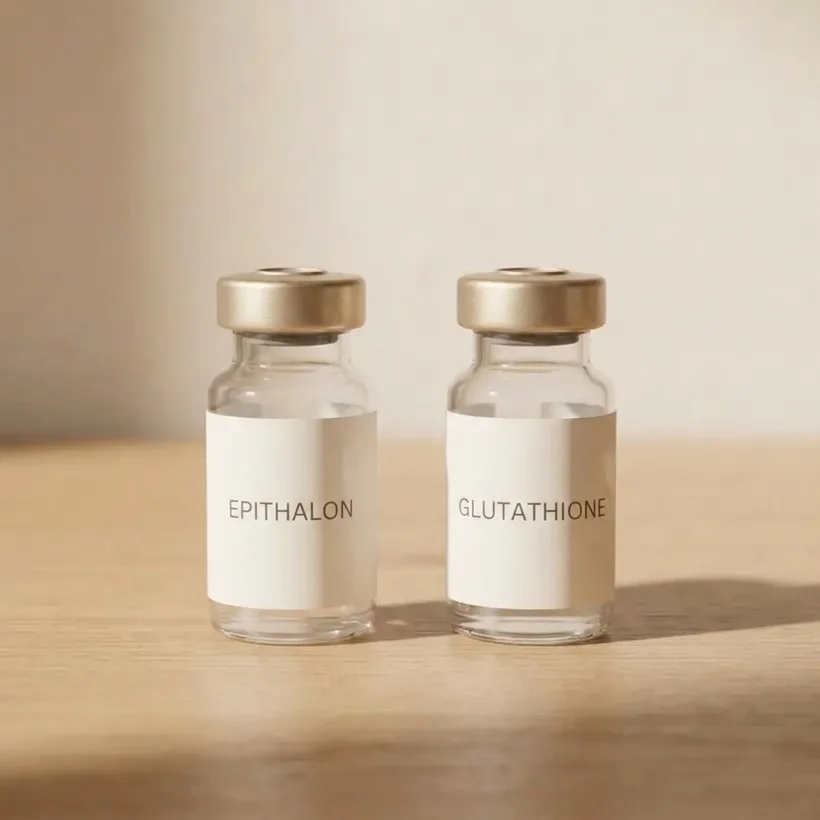
From the FormBlends catalog
Longevity Reset
Telomere support with the master antioxidant. · Bundle from $270 · provider-reviewed peptide bundle.
View Longevity Reset →Specific data points worth holding onto:
- GHK-Cu: Pickart and Margolina (2012) analyzed publicly available gene-expression databases and reported that GHK modulates expression of more than 4,000 human genes, with activity across wound healing, inflammation, and antioxidant pathways. This is a bioinformatic analysis, not a controlled dosing trial, so it describes potential, not proven clinical effects at cosmetic concentrations.
- Matrixyl (pal-KTTKS): In vitro, it stimulates collagen type I synthesis in fibroblast cultures. The lipid (palmitoyl) tail is added to increase partition into the stratum corneum lipid matrix, improving passive diffusion. Without the palmitoyl group, the KTTKS pentapeptide alone penetrates poorly. Palmitoyl pentapeptide-4 is a relatively large cosmetic peptide molecule; its molecular weight places it well above the roughly 500-dalton threshold commonly cited for passive stratum corneum penetration, which is part of why the palmitoyl conjugation strategy matters for delivery.
- Argireline: The hexapeptide sequence mimics the N-terminal fragment of SNAP-25, a protein involved in vesicular neurotransmitter release at the neuromuscular junction. By competing for this site, it aims to reduce acetylcholine release. Published in vitro work supports this competitive binding, but delivery to the dermal-epidermal junction via topical application has not been verified by human biopsy studies.
- Epitalon: Animal research from Khavinson's group has reported telomerase activation in lymphocytes and increased mean lifespan in some rodent studies. These results have not been replicated by independent groups using the same protocols.
What mechanism data does NOT prove: in vitro receptor binding or cell culture collagen production does not confirm that a topically applied cosmetic product delivers enough peptide to dermal fibroblasts in living human skin to produce a measurable structural change. The gap between mechanism and clinical effect is real and often large.
The Top Peptides for Anti Aging, Ranked by Evidence Quality
1. GHK-Cu (Copper Tripeptide-1)
The strongest breadth of biological evidence of any topical cosmetic peptide. GHK-Cu promotes wound contraction, collagen synthesis, and skin remodeling in multiple cell and animal models. Small human cosmetic studies (Abdulghani et al., 1998 and follow-on work) reported improvements in skin density and wrinkle appearance. The tripeptide is a naturally occurring fragment of human albumin; it is not a foreign molecule. Topical concentrations in published cosmetic studies range from 0.1 to 2 percent. At high concentrations, excess free copper can generate reactive oxygen species, so more is not automatically better.
2. Palmitoyl Pentapeptide-4 (Matrixyl)
The industry standard matrikine peptide. The 68% wrinkle volume improvement figure circulating widely online comes from Sederma's own commissioned study and uses specific measurement methodology (silicone replicas, 3D profilometry) that is not standardized across labs. In independent in vitro work, palmitoyl pentapeptide-4 does increase procollagen type I mRNA in fibroblast cultures. The palmitoyl conjugate is important: it lowers the molecule's effective polarity and improves partitioning into lipid-rich skin membranes. Without it, penetration is poor.
3. Argireline (Acetyl Hexapeptide-3)
A cosmetic study by Blanes-Mira et al. (2002) in International Journal of Cosmetic Science reported approximately 17% reduction in wrinkle depth after 30 days of topical application at 10% concentration in 10 subjects. That is a real, published number from a peer-reviewed journal. The limitation: 10 subjects, no blinding details disclosed, and the effect is modest. Useful for fine lines around eyes and forehead, not a substitute for neurotoxin injections.
4. SNAP-8 (Acetyl Octapeptide-3)
An 8-amino-acid version of the same SNAP-25 fragment approach. Manufacturer data reports a meaningful reduction in wrinkle depth in a 28-day cosmetic study. Independent replication is absent. Mechanism plausibility is moderate; evidence quality is low.
5. Oral Collagen Peptides (Hydrolysate)
This category deserves separation from topical peptides. Proksch et al. (2014) published a double-blind, placebo-controlled RCT (69 women, 8 weeks, 2.5 g or 5 g daily collagen hydrolysate) showing statistically significant improvement in skin elasticity at both doses. This is the highest-quality design in the peptide anti-aging space. The effect size was modest (roughly 7% improvement in elasticity by cutometry at 2.5 g dose). Oral hydrolysates provide a mix of di- and tripeptides, not a single defined peptide, which complicates mechanism attribution.
6. Epitalon
Primarily of interest for systemic longevity protocols. The evidence base comes almost entirely from Khavinson's group in St. Petersburg. One series of publications reported reduced oncogenesis and increased lifespan in aged rats and mice. Human studies have been small, non-blinded, and published in Russian-language journals with limited independent peer review. Telomerase activation in somatic cells is a biologically plausible but theoretically concerning target: sustained telomerase activity is associated with cancer biology. The risk-benefit profile in humans is genuinely unknown.
What Most Pages Get Wrong About Peptide Anti Aging
The stratum corneum is designed to exclude water-soluble molecules above roughly 500 daltons. Most cosmetic peptides, including palmitoyl pentapeptide-4, exceed this threshold before lipid modification is accounted for. Lipid conjugation (the palmitoyl group) helps shift the molecule's partition behavior toward lipid-rich membranes, but the data on how much free peptide actually reaches fibroblasts in the dermis of living human skin is largely absent from the peer-reviewed literature. What exists is mostly:
- Franz cell diffusion studies using synthetic membranes (not human skin)
- Porcine ear skin models (better but still not in-vivo human)
- Claims of "detectable peptide below the stratum corneum" in single manufacturer-funded studies
This does not mean topical peptides do not work. The cosmetic trial data showing measurable improvements suggests something is happening. It means the mechanism may include surface-level effects, receptor stimulation at the uppermost epidermis, or skin hydration changes, not necessarily deep dermal collagen remodeling at the level shown in fibroblast cultures.
The stability problem is also routinely ignored. Peptide bonds hydrolyze in aqueous solution. The rate accelerates with heat and pH extremes. A product formulated at pH 3.5 (common for vitamin C serums) will degrade peptides faster than one at pH 5.5 to 6.5. Products in clear glass jars exposed to light and warmth have shorter effective peptide lifespans than opaque airless pumps. No regulatory body requires manufacturers to prove peptide concentration at time of consumer use, only at time of manufacture.
Why You Cannot Mix GHK-Cu With High-Dose Vitamin C: The Chemistry
This matters enough to explain properly. GHK-Cu holds copper in the Cu(2+) oxidation state, which is required for it to activate lysyl oxidase. L-ascorbic acid (vitamin C) is a strong reducing agent with a standard reduction potential that readily donates electrons to Cu(2+), reducing it to Cu(1+). Cu(1+) at low pH in an aqueous matrix can participate in Fenton-like reactions with hydrogen peroxide, generating hydroxyl radicals and oxidative stress, the opposite of the intended anti-aging effect. The palmitoyl group on Matrixyl does not carry a metal center, so this specific redox problem does not apply to Matrixyl.
Practical rule with chemistry behind it: Apply GHK-Cu products at night after skin is at physiological pH (around 5.5), and use your vitamin C serum in the morning. The risk is not catastrophic skin damage; it is that you inactivate the copper-dependent activity of GHK-Cu and potentially generate localized oxidative species. Retinol is a fat-soluble antioxidant and does not carry the same redox concern with copper peptides at cosmetic concentrations.
Honest Head-to-Head: Peptides vs. Retinoids and Each Other
| Intervention | Best Evidence | Effect on Wrinkle Depth | Effect on Collagen (histological) | Irritation Risk | Where Peptide Loses |
|---|---|---|---|---|---|
| Tretinoin 0.025-0.1% | Multiple independent RCTs, FDA-approved | Significant (proven) | Biopsy-confirmed collagen increase | Moderate to High (retinoid dermatitis) | Peptides lose on depth and duration of effect |
| GHK-Cu 0.5-2% topical | Small cosmetic studies | Modest (limited data) | Plausible, no biopsy RCT | Low | Loses on independent replication, histological proof |
| Matrixyl (pal-KTTKS) 2-10% | Industry-funded cosmetic study | Moderate (single study) | In vitro only | Very Low | Loses on independent evidence |
| Argireline 10% | One small peer-reviewed cosmetic study | Modest (17% in one study) | Not collagen-based mechanism | Very Low | Loses vs. neurotoxin injections decisively |
| Botulinum toxin injection | Multiple RCTs, FDA-approved | Large (dynamic wrinkles) | Not applicable | Low (injection site risks) | N/A: peptides do not compete here |
| Oral collagen hydrolysate 2.5-10 g/day | Several small RCTs (Proksch 2014, others) | Modest (elasticity data) | Indirect (biomarker studies) | Very Low | Loses on standardization (not a single peptide) |
Bottom line: Tretinoin is still the most evidence-supported topical anti-aging intervention. Peptides are a rational complement for patients who cannot tolerate retinoids or want additional modalities. Presenting peptides as retinoid equivalents is not supported by current evidence.
How to Read a Peptide Product Label and COA
This section is what most buyers skip, and it is where most money is wasted.
Ingredient list position:Cosmetic ingredients are listed in descending order of concentration down to 1%, below which order is arbitrary. If your peptide appears after the preservative (typically phenoxyethanol or potassium sorbate), the concentration is below 1%. Most published efficacy studies used 2 to 10%. A peptide at 0.1% in a product may be present for label claims only.
What to look for on a COA (Certificate of Analysis):- Identity confirmation by HPLC or mass spectrometry, not just UV absorbance
- Purity stated as a percentage (greater than 98% is acceptable for cosmetic grade)
- Heavy metal testing if the product contains GHK-Cu (copper contamination is possible in low-quality copper chelation processes)
- Date of manufacture and retest date (peptide stability in powder form is far longer than in solution)
- For injectables: endotoxin/LAL testing result and sterility certificate
GHK-Cu products turn darker blue-green or develop a brownish tint as the copper oxidizes. Matrixyl and Argireline products in aqueous solution may develop cloudiness or a mild off-odor from microbial contamination or hydrolysis byproducts. Discard products showing any of these signs.
Reconstitution note (research peptide powders):If working with lyophilized peptide powder for research purposes, use bacteriostatic water or sterile saline. Most short-chain peptides (2 to 10 amino acids) dissolve readily at room temperature. Calculate concentration in micrograms per milliliter. A 1 mg vial dissolved in 1 mL bacteriostatic water gives 1,000 mcg/mL. Dilute from there. Use within the manufacturer's stated stability window after reconstitution.
Injectable Research Peptides for Anti Aging: Risks Not Covered Elsewhere
Epitalon, BPC-157, and similar peptides sold as "research chemicals" online occupy a regulatory grey zone. The FDA has issued guidance (and warning letters) distinguishing between compounds for legitimate laboratory research versus products intended for human administration. Key risks specific to this category:
- Purity: Third-party testing of research peptides purchased online has found meaningful variation in actual peptide content versus label claim. Independent analyses of research chemical markets have consistently identified a proportion of samples falling below stated purity values, though the exact fraction varies by study and product category.
- Endotoxin contamination: Bacterial endotoxins from synthesis byproducts cause fever and systemic inflammation. Sterile pharmaceutical manufacturing includes LAL (limulus amebocyte lysate) testing. Many research peptide suppliers do not publish these results.
- Dosing uncertainty: Effective and safe doses in humans are not established for most research peptides. Animal dosing does not scale linearly to humans by body weight for all peptide classes.
- Telomerase risk (Epitalon specific): The theoretical concern that sustained telomerase activation in somatic cells could promote cancer is real and has not been adequately studied in long-term human trials. This is a mechanism-based signal, not a proven harm, but it is a signal that justifies caution.
FAQ
What is the best peptide for anti aging with the most human evidence?
GHK-Cu and Matrixyl (palmitoyl pentapeptide-4) have the largest body of controlled cosmetic studies in human subjects, though most trials are industry-funded and not independently replicated. Neither has large-scale, independent RCT data comparable to retinoids.
Do topical anti-aging peptides actually penetrate the skin?
Most unmodified peptides above roughly 500 daltons penetrate the stratum corneum poorly. Lipid conjugation and encapsulation can improve delivery, but published skin-penetration data for most cosmetic peptides is sparse and largely from in vitro models, not human biopsies.
How does GHK-Cu work at the molecular level?
GHK-Cu (Gly-His-Lys bound to copper 2+) upregulates genes involved in collagen I and III synthesis, activates TGF-beta pathways, and has been shown in cell culture to modulate over 4,000 human genes according to a 2012 analysis by Pickart and Margolina. The copper ion is required for enzymatic activity; the tripeptide alone has weaker effects.
Is Epitalon safe and what does it actually do?
Epitalon (Ala-Glu-Asp-Gly) is a synthetic tetrapeptide studied primarily by Khavinson and colleagues for telomerase activation and immune modulation. Most evidence comes from animal studies and small, non-blinded human trials. Long-term safety in humans has not been established by independent large trials.
Can Argireline replace Botox for wrinkle reduction?
No. Argireline mimics the SNAP-25 fragment that botulinum toxin targets, but topical delivery limits its effect to the uppermost skin layers. A published cosmetic study showed roughly 17% reduction in wrinkle depth after 30 days at 10% concentration, far below the effect of injected botulinum toxin.
What is the difference between Matrixyl 3000 and original Matrixyl?
Original Matrixyl is palmitoyl pentapeptide-4 alone. Matrixyl 3000 combines palmitoyl pentapeptide-4 with palmitoyl tripeptide-1, claiming synergistic collagen stimulation. Published data on the combination specifically is limited mostly to the manufacturer Sederma's own studies.
How should anti-aging peptide serums be stored to prevent degradation?
Peptides are susceptible to hydrolysis in aqueous solution, especially at extremes of pH and elevated temperature. Store between 2 and 8 degrees Celsius when possible, avoid pH below 4 or above 8, and use products in opaque or airless packaging. Once opened, most aqueous peptide formulations should be used within 3 to 6 months.
Should I use peptides with vitamin C or retinol?
High-concentration ascorbic acid (pH around 3) can hydrolyze peptide bonds and compete redox-chemically with copper-containing peptides like GHK-Cu, potentially inactivating them. Retinol at cosmetic concentrations is generally compatible with most peptides. Separate GHK-Cu from vitamin C by at least several hours.
What are the risks of injectable peptides like Epitalon for anti-aging?
Injectable research peptides sold online are not FDA-approved drugs. Risks include unknown purity, endotoxin contamination, dosing errors, and uncharacterized long-term effects. The FDA has issued warnings about unapproved peptide injectables. These are research compounds, not consumer products.
How long does it take to see results from topical anti-aging peptides?
Most published cosmetic studies that showed measurable effects ran 4 to 12 weeks. Collagen-related changes may take 8 to 16 weeks. Any visible change before 4 weeks is more likely due to hydration or the base formulation than peptide-driven collagen remodeling.
What concentration of a peptide in a product is actually effective?
Published cosmetic trials typically used 2 to 10 percent peptide concentrations. Products listing a peptide far down an ingredient list (after preservatives) are likely below effective thresholds. A COA with percentage declaration is a meaningful quality signal; its absence is a warning sign.
Do peptides work for neck and body skin as well as the face?
The fibroblast biology is similar across body sites, so the mechanism is plausible for neck and body use. However, published trials have focused almost exclusively on facial skin. Extrapolating face-trial results to body skin is reasonable but unproven.
Sources
- Pickart L, Margolina A. Regenerative and Protective Actions of the GHK-Cu Peptide in the Light of the New Gene Data. Int J Mol Sci. 2018;19(7):1987. PMC6073405.
- Pickart L, Vasquez-Soltero JM, Margolina A. GHK Peptide as a Natural Modulator of Multiple Cellular Pathways in Skin Regeneration. Biomed Res Int. 2015;2015:648108.
- Blanes-Mira C, Clemente J, Jodas G, et al. A synthetic hexapeptide (Argireline) with antiwrinkle activity. Int J Cosmet Sci. 2002;24(5):303-310.
- Proksch E, Segger D, Degwert J, et al. Oral supplementation of specific collagen peptides has beneficial effects on human skin physiology: a double-blind, placebo-controlled study. Skin Pharmacol Physiol. 2014;27(1):47-55.
- Abdulghani AA, Sherr S, Shirin S, et al. Effects of topical creams containing vitamin C, a copper-binding peptide cream and melatonin compared with tretinoin on the ultraviolet-irradiated face. Clin Ther. 1998;20(6):1297-1305.
- Khavinson VKh, Bondarev IE, Butyugov AA. Epithalon peptide induces telomerase activity and telomere elongation in human somatic cells. Bull Exp Biol Med. 2003;135(6):590-592.
- Gorouhi F, Maibach HI. Role of topical peptides in preventing or treating aged skin. Int J Cosmet Sci. 2009;31(5):327-345.
- Lintner K, Peschard O. Biologically active peptides: from a laboratory bench curiosity to a functional skin care product. Int J Cosmet Sci. 2000;22(3):207-218.
- FDA. FDA warns consumers about illegal, unproven, and potentially dangerous health products. General guidance and warning letters on unapproved injectable compounds. Available at fda.gov.
- Katayama K, Armendariz-Borunda J, Raghow R, et al. A pentapeptide from type I procollagen promotes extracellular matrix production. J Biol Chem. 1993;268(14):9941-9944.
Footer Disclaimers
Platform: This content is published by FormBlends for educational and informational purposes only. It does not constitute medical advice, diagnosis, or treatment. Consult a licensed healthcare provider before starting any peptide protocol.
Research Compound Notice: Several peptides discussed on this page (including Epitalon, BPC-157, and others noted as "research compounds") are not approved drugs in the United States or most other jurisdictions. They are referenced here for scientific context only. FormBlends does not sell or endorse unapproved injectable compounds for human use.
Results Disclaimer: Individual results from any topical or oral peptide product vary. Effect sizes cited reflect specific study populations and measurement methods and may not apply to all individuals or all formulations.
Trademark Notice: Matrixyl is a registered trademark of Sederma SAS. Argireline is a registered trademark of Lipotec SAU. All other trademarks are property of their respective owners. FormBlends has no commercial relationship with these companies.
Related peptide guides
See your options in about 2 minutes
Take the free quiz and see what fits you. Quick, private, and no commitment to continue.
See my options →