
Trust Signals
Key Takeaways
- The strongest human evidence for anti-aging peptide therapy covers GH secretagogues like sermorelin and tesamorelin, where randomized trials show IGF-1 increases and lean-mass changes in GH-deficient adults; evidence for healthy aging is weaker.
- The FDA placed CJC-1295, ipamorelin, and BPC-157 on its Category 2 bulk substance list in 2024, restricting their use in 503A compounding; a clinic still freely offering these without mentioning regulatory status is a yellow flag.
- Clinic quality is determined more by pharmacy sourcing (FDA-registered 503A or 503B, COA available) and physician oversight than by the peptide brand name on the label.
- Consultation fees run roughly $150 to $400 and monthly compound costs roughly $100 to $350 depending on the peptide; almost no anti-aging peptide indication is covered by insurance.
- Telehealth-only clinics are legally operating in most states and can be adequate for injection-based protocols, but at least one thorough clinical evaluation is warranted before starting any GH-axis peptide.
Direct Answer: What Are the Best Peptide Therapy Clinics Near Me for Anti-Aging?
Table of Contents
- Why this page does not rank clinics by name
- What anti-aging evidence actually supports peptide therapy
- Which peptides are most commonly offered at anti-aging clinics
- What credentials and compliance should a clinic have
- What are the red flags at a peptide therapy clinic
- What most pages get wrong about peptide clinics
- How much does peptide therapy cost at a clinic
- Honest head-to-head: clinic peptide therapy vs. alternatives
- Operational and label literacy: questions to ask and COA basics
- Are telehealth peptide clinics as good as in-person
- FAQ
- Sources
- Footer Disclaimers
Why This Page Does Not Rank Clinics by Name
Every other listicle on this topic ranks 5 to 10 named clinics, usually because those clinics paid for placement or the author has no framework to evaluate quality. Clinic quality in peptide therapy is process-dependent, not brand-dependent. A high-end medspa with glossy marketing can source peptides from an unregistered foreign supplier, while a modest telehealth practice can have rigorous protocols and a licensed 503B pharmacy relationship. This page gives you the framework so you can evaluate any clinic independently.
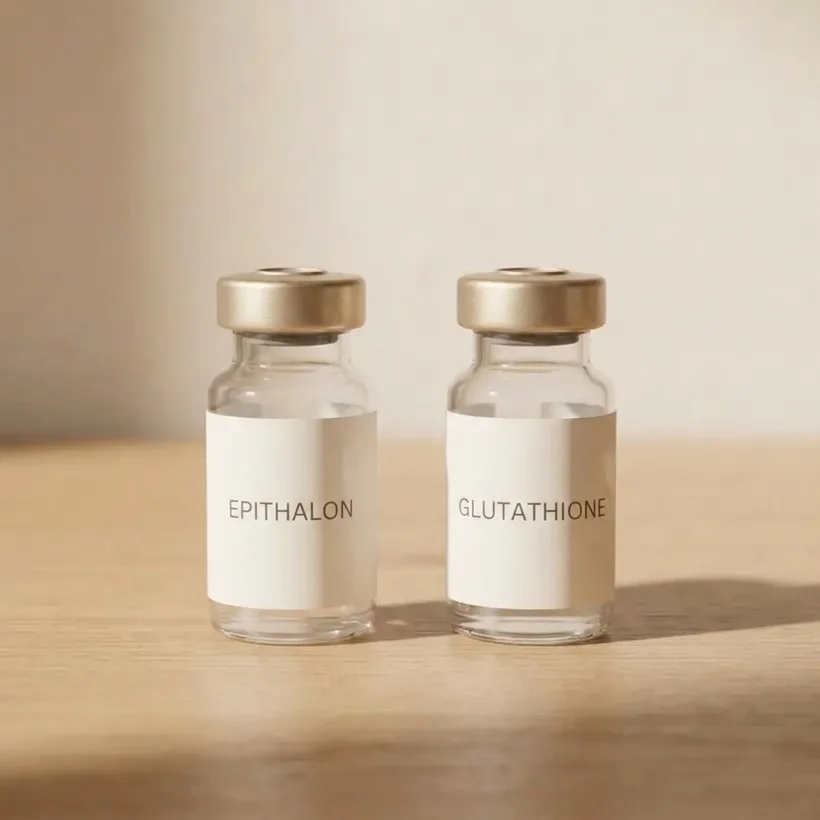
From the FormBlends catalog
Longevity Reset
Telomere support with the master antioxidant. · Bundle from $270 · provider-reviewed peptide bundle.
View Longevity Reset →What Anti-Aging Evidence Actually Supports Peptide Therapy
| Claim / Peptide | Best Evidence Type | Effect Direction | Confidence | Honest Caveat |
|---|---|---|---|---|
| Tesamorelin reduces visceral fat in HIV lipodystrophy | Human RCT (FDA-approved indication, Falutz et al.) | Positive, significant | High | Approved population is HIV patients; effect in healthy aging not directly transferable |
| Sermorelin increases IGF-1 in GH-deficient adults | Multiple small human RCTs | Positive | Moderate | Most trials are in diagnosed GHD; benefit in normal aging adults is less established |
| GH secretagogues improve lean mass or body composition in healthy older adults | Small human trials, mixed results | Modest positive lean mass; mixed on fat | Low | Effect sizes are small; long-term safety in healthy populations not established |
| BPC-157 accelerates tissue repair | Rodent studies primarily | Positive in animal models | Very Low (for humans) | No published randomized human trial as of 2025 |
| Topical Matrixyl (palmitoyl pentapeptide-4) reduces wrinkles | Small manufacturer-sponsored RCTs | Modest positive | Low | Industry-funded; independent replication limited |
| Thymosin alpha-1 modulates immune function | Human trials in specific immune-deficient populations | Positive for immune endpoints in defined conditions | Low to Moderate (context-specific) | Evidence base is in disease states, not healthy aging |
| Epitalon (epithalon) extends lifespan or telomere length | Animal and in vitro only | Positive in models | Very Low | No human RCT; mechanism unproven in humans |
The honest summary: GH-axis peptides have the most human data, but primarily in populations with diagnosed deficiency. The further a clinic's claims stray from that evidence base, the more skepticism is warranted.
Which Peptides Are Most Commonly Offered at Anti-Aging Clinics
The most commonly dispensed injectable peptides at anti-aging and longevity clinics include sermorelin, CJC-1295 with or without DAC, ipamorelin, BPC-157, thymosin alpha-1, thymosin beta-4, PT-141 (bremelanotide), and MOTS-c. Sermorelin has the longest US clinical history, having received FDA approval (later withdrawn for commercial reasons, not safety) before becoming a staple of compounding pharmacy menus.
Regulatory note: In 2024, the FDA finalized its position placing CJC-1295, ipamorelin, BPC-157, and several other peptides on the Category 2 list for 503A compounding, meaning they cannot be compounded by 503A pharmacies under federal law. Some 503B outsourcing facilities and state-specific interpretations affect real-world availability. A clinic that is still casually offering CJC-1295 or BPC-157 without explaining the regulatory complexity either has not updated its practices or is sourcing outside the regulated compounding system. Ask directly.
What Credentials and Compliance Should a Clinic Have
- Licensed prescriber on staff. An MD, DO, NP, or PA (depending on state scope of practice) must evaluate you and issue a valid prescription. "Wellness coaches" or "peptide consultants" cannot legally prescribe.
- FDA-registered compounding pharmacy. Ask for the pharmacy's name and verify it is registered with the FDA as a 503A or 503B facility. The FDA publishes a public list of registered 503B outsourcing facilities.
- Certificate of Analysis (COA) availability. Every batch of compounded peptide should have a third-party COA confirming identity, potency, sterility, and endotoxin levels. A clinic that cannot produce this is sourcing blind.
- Baseline and follow-up labs. For GH secretagogues, baseline IGF-1, fasting glucose, and a metabolic panel are the minimum. Follow-up IGF-1 at 3 to 6 months is standard of care in any responsible protocol.
- Informed consent documentation. Off-label use must be disclosed. You should sign a document acknowledging you understand the evidence limitations and that the use is not FDA-approved for your indication.
What Are the Red Flags at a Peptide Therapy Clinic
- Peptides sold without a prescription or without a consultation with a licensed prescriber
- No mention of the pharmacy source, or evasion when asked
- Refusal or inability to produce a COA for the specific batch you will receive
- Marketing CJC-1295, ipamorelin, or BPC-157 as freely available without acknowledging the 2024 FDA restrictions
- Guarantees of specific outcomes ("you will lose X pounds," "your skin will look Y years younger")
- No baseline labs required before starting a GH-axis peptide
- Pricing that is dramatically below market (may indicate foreign-sourced, non-sterile, or underdosed material)
- "Research peptides" framing applied to products being recommended for your personal use
What Most Pages Get Wrong About Peptide Clinics
Almost every listicle on this topic either names clinics that paid for the mention or focuses entirely on which peptide to take, skipping the most consequential variable: sterility and purity of what is actually in the vial.
The formulation and sterility problem. Injectable peptides must meet USP standards for sterility (USP 71), particulate matter (USP 788), and bacterial endotoxins (USP 85). Endotoxin contamination in a non-sterile injectable does not cause immediate overdose; it causes fever, chills, and inflammatory responses that can be misattributed to "detox reactions" or peptide side effects. A clinic that cannot show you a COA with passing endotoxin results is asking you to inject an unknown.
Stability after reconstitution. Lyophilized peptide powder is relatively stable when refrigerated, but once reconstituted in bacteriostatic water, most peptides begin to degrade over days to weeks at room temperature. Clinics and patients who leave reconstituted vials unrefrigerated are using progressively degraded product. There is no color or odor change that reliably signals degradation; you simply get less effect for the same dose. The practical rule: reconstituted peptides belong in the refrigerator and most practitioners recommend discarding after 28 to 30 days.
The "anti-aging" label is marketing, not a mechanism. Clinics use "anti-aging" to describe everything from wrinkle reduction (topical peptides, weak evidence) to life extension (epitalon, essentially no human evidence) to body composition optimization (sermorelin, moderate evidence in GHD). These are not the same claims. A clinic that bundles them all under one "anti-aging protocol" is collapsing very different evidence tiers into one sales pitch.
How Much Does Peptide Therapy Cost at a Clinic
| Cost Component | Typical Range (USD) | Notes |
|---|---|---|
| Initial consultation (in-person) | $200 to $400 | Higher at concierge or longevity-focused practices |
| Initial consultation (telehealth) | $100 to $250 | Varies widely; some bundled with first month supply |
| Baseline lab panel | $75 to $200 | IGF-1, metabolic panel, CBC at minimum for GH peptides |
| Sermorelin (monthly, compounded) | $150 to $350 | Widely available from 503A pharmacies |
| BPC-157 (monthly, where still dispensed) | $100 to $300 | Availability restricted post-2024 FDA list; prices vary |
| Follow-up labs and monitoring | $75 to $150 per check | Quarterly IGF-1 recommended by most responsible protocols |
| Insurance coverage | Almost none for anti-aging indications | Tesamorelin (Egrifta) covered for HIV lipodystrophy only |
Honest Head-to-Head: Clinic Peptide Therapy vs. Alternatives for Anti-Aging
| Intervention | Evidence Level (Human) | Regulatory Status | Monthly Cost Estimate | Where Peptide Wins | Where Peptide Loses |
|---|---|---|---|---|---|
| GH secretagogue peptides (sermorelin) | Moderate (GHD populations) | Compounded; off-label for aging | $150 to $350 | Stimulates endogenous GH pulse; avoids direct GH side-effect profile | Weaker evidence than direct rhGH; insurance rarely covers |
| Recombinant human growth hormone (rhGH) | High (for GHD); moderate for anti-aging | FDA-approved for GHD; off-label anti-aging use | $300 to $1,500+ | Stronger and more predictable IGF-1 elevation | Higher cost, more side effects (edema, insulin resistance, WADA prohibited) |
| Topical retinoids (tretinoin) | High (photoaging, wrinkle reduction) | FDA-approved (Rx) or OTC retinol | $20 to $80 | Far superior evidence for skin aging vs. topical peptides | Not relevant for systemic anti-aging goals |
| Lifestyle: resistance training + adequate protein | Very High (muscle mass, metabolic health, longevity markers) | N/A | Gym membership variable | Stronger evidence for lean mass and healthspan than any anti-aging peptide in healthy adults | Requires sustained adherence; not a substitute for clinical intervention in true GHD |
| Rapamycin (off-label longevity) | High in animal models; early human data | FDA-approved (transplant); off-label longevity use | $50 to $150 (generic) | Mechanistic rationale (mTOR inhibition) and animal lifespan data are strong | Immunosuppressive risk; human longevity evidence not yet established |
The key takeaway from this table: for skin aging, a $20 prescription tretinoin outperforms any clinic peptide protocol on evidence. For systemic body composition in a healthy adult, resistance training with adequate protein has stronger data than sermorelin. Peptide therapy fills the gap for specific clinical populations (diagnosed GHD, immune deficiency, certain injury contexts) where lifestyle alone is insufficient.
Operational and Label Literacy: Questions to Ask and COA Basics
Before you start any clinic-dispensed injectable peptide, request and review the Certificate of Analysis. Here is what to look for:
| COA Section | What It Should Show | Red Flag |
|---|---|---|
| Identity (HPLC or MS) | Confirms the compound is what the label claims | No identity test listed; only visual inspection |
| Potency / Assay | Measured concentration within 90 to 110% of label claim (USP standard) | Potency far outside this range or simply not tested |
| Sterility (USP 71) | "Passes" for injectable products | Missing, or listed as "not applicable" for an injectable |
| Endotoxin (USP 85) | Passes with a specific limit in EU/mL | Not tested; this is the most commonly skipped test in unregistered supply chains |
| Lot number and date | Matches the vial in your hand | Generic COA not tied to a specific lot |
Questions to ask every clinic before booking:
- What is the name and FDA registration number of your compounding pharmacy?
- Can I receive the COA for the specific batch I will be dispensed before I pay?
- What baseline labs do you require before prescribing this peptide?
- How often do you check IGF-1 (or relevant biomarker) after I start?
- What is your protocol if my IGF-1 exceeds normal range?
- What are the known risks for this specific peptide at the dose you are recommending?
- Is this peptide currently on the FDA restricted list for 503A compounding?
Are Telehealth Peptide Clinics as Good as In-Person Clinics
For most injectable peptide protocols targeting body composition or recovery, telehealth is a practical and often adequate option. Labs can be drawn at Quest or LabCorp locally, instruction on subcutaneous injection technique is achievable via video or written guide, and follow-up monitoring can happen remotely.
The cases where in-person is worth the extra effort:
- First evaluation for any GH-axis peptide, where a physician should assess for contraindications including active malignancy, pituitary disease, or uncontrolled diabetes
- Any protocol where you or the prescriber are uncertain about injection technique, especially if injecting near joints or into muscle rather than subcutaneously
- Patients with complex metabolic history where physical exam findings matter
Telehealth-only clinics that skip labs entirely and prescribe based on a symptom questionnaire alone are cutting a corner that matters. The question to ask: "Does your prescriber review my actual lab values before authorizing the prescription?"
FAQ
How do I find the best peptide therapy clinics near me for anti-aging treatments?
Search for clinics that employ a licensed prescribing physician or NP, can produce a certificate of analysis for every compound they dispense, and conduct a baseline lab panel before prescribing. Avoid any clinic that sells peptides without a consultation or ships them labeled as "research only" to individual consumers.
What credentials should a peptide therapy clinic have?
The clinic needs at minimum one licensed prescribing clinician (MD, DO, NP, or PA depending on state law), a relationship with an FDA-registered 503A or 503B compounding pharmacy, and a documented informed-consent and monitoring protocol. Board certification in anti-aging or functional medicine is a plus but not a substitute for pharmacy compliance.
Which peptides are most commonly offered at anti-aging clinics?
The most common are sermorelin, CJC-1295, ipamorelin, BPC-157, thymosin alpha-1, and PT-141. As of 2024, the FDA placed CJC-1295, ipamorelin, and BPC-157 on its Category 2 bulk substance list, restricting their use in 503A compounding, so clinic availability varies by state and regulatory interpretation.
What anti-aging outcomes does peptide therapy actually have evidence for?
The strongest human evidence is for sermorelin and tesamorelin increasing IGF-1 and lean mass in adults with growth hormone deficiency. Cosmetic peptide ingredients (Matrixyl, Argireline) have small manufacturer-sponsored trials showing wrinkle improvement. Most other anti-aging claims rest on animal or mechanistic data only.
How much does peptide therapy cost at a clinic?
Expect a consultation fee of roughly $150 to $400, plus monthly peptide costs that range widely: sermorelin injections typically run $150 to $350 per month through a compounding pharmacy, while BPC-157 protocols range from $100 to $300 per month. Telehealth-only clinics often charge less than brick-and-mortar practices.
Is peptide therapy covered by insurance?
Almost never for anti-aging indications. Tesamorelin (Egrifta) is FDA-approved and can be covered for HIV-associated lipodystrophy. Compounded sermorelin prescribed off-label for age-related GH decline is generally not covered. Patients should assume out-of-pocket costs.
What questions should I ask a clinic before starting peptide therapy?
Ask: Which FDA-registered compounding pharmacy do you use? Can I see the COA? What baseline labs do you require? How do you monitor for side effects like elevated IGF-1 or water retention? What is your protocol if I want to stop? What is the evidence for the specific peptide you are recommending for my goal?
What are the red flags at a peptide therapy clinic?
Red flags include: no licensed prescriber on staff, selling peptides directly without a prescription, using a foreign or non-registered pharmacy, no baseline or follow-up labs, guaranteeing specific outcomes, and marketing peptides currently restricted by the FDA as if they are freely available.
Are telehealth peptide clinics as good as in-person clinics?
For many peptide protocols, telehealth is sufficient because injection technique is straightforward and labs can be drawn at a local lab. The downside is that physical exam findings relevant to metabolic health are missed. For peptides involving hormone axes (GH secretagogues), at least one in-person or detailed video consultation with a physician is worth doing.
What is the difference between a 503A and 503B compounding pharmacy for peptides?
503A pharmacies compound on a per-patient prescription basis and are regulated primarily by state boards of pharmacy. 503B outsourcing facilities operate under FDA oversight, can produce larger batches, and must meet current Good Manufacturing Practice (cGMP) standards. For sterile injectables like peptides, a clinic sourcing from a 503B facility generally provides a higher purity assurance.
Can I buy peptides online without a clinic?
Research chemical vendors sell peptides labeled "not for human use" outside any regulatory framework. These products are not subject to USP sterility or endotoxin testing and have no dosing oversight. The FDA has sent warning letters to vendors supplying these channels. Purchasing this way bypasses the safeguards that clinic-based dispensing exists to provide.
Sources
- Falutz J, et al. "Metabolic effects of a growth hormone-releasing factor in patients with HIV." New England Journal of Medicine. 2007;357(23):2359-2370.
- FDA. "Bulk Drug Substances That May Be Used in Pharmacy Compounding: Category 2 List." Federal Register. 2024. Available at: federalregister.gov.
- FDA. "503B Outsourcing Facility Registration." Available at: fda.gov/drugs/human-drug-compounding/outsourcing-facility-registration.
- Sigalos JT, Pastuszak AW. "The Safety and Efficacy of Growth Hormone Secretagogues." Sexual Medicine Reviews. 2018;6(1):45-53.
- Vittone J, et al. "Effects of single nightly injections of growth hormone-releasing hormone on body composition in older adults." Metabolism. 1997;46(1):89-96.
- USP General Chapter 71: Sterility Tests. United States Pharmacopeia. Current edition.
- USP General Chapter 85: Bacterial Endotoxins Test. United States Pharmacopeia. Current edition.
- USP General Chapter 788: Particulate Matter in Injections. United States Pharmacopeia. Current edition.
- Vlodavsky I, et al. "Involvement of heparanase in atherosclerosis, angiogenesis, inflammation, and cancer." Seminars in Cancer Biology. 2020. (Cited for context on peptide-receptor specificity literature, not clinical outcomes.)
- FDA Warning Letters: Research Peptide Vendors. Various dates 2020-2024. Available at: fda.gov/inspections-compliance-enforcement-and-criminal-investigations/warning-letters.
- Oxford Centre for Evidence-Based Medicine. "Levels of Evidence." 2011. Available at: cebm.ox.ac.uk.
- Freda PU. "Growth hormone in adults." The Endocrinologist. 2002 (for sermorelin/GHRH clinical history context).
Footer Disclaimers
Platform: FormBlends is an informational publishing platform. This page does not constitute medical advice, diagnosis, or treatment. No physician-patient relationship is created by reading this content. Consult a licensed healthcare provider before starting any peptide or compounded medication protocol.
Research Compound and Compounded Medication Disclosure: Several peptides discussed on this page are available only as compounded medications through licensed pharmacies, are not FDA-approved for the indications described, or have restricted compounding status as of 2024. Regulatory status can change; verify current status with your prescriber and pharmacist.
Results: Individual outcomes vary. No outcomes mentioned in this article are guaranteed. Evidence grades reflect the current published literature and should not be interpreted as a promise of personal benefit.
Trademark: FormBlends is a registered trademark. All product names, clinic names, and drug names referenced are the property of their respective owners and are used for identification and educational purposes only.
Related peptide guides
See your options in about 2 minutes
Take the free quiz and see what fits you. Quick, private, and no commitment to continue.
See my options →