
Trust Signals
Last updated: May 29, 2026 | Sources: PubMed, PMC, FDA, WADA 2024 Prohibited List, peer-reviewed endocrinology literature | Conflicts: FormBlends sells peptide products. This page grades evidence independently; where peptides lose to alternatives, we say so.Key Takeaways
- CJC-1295 with DAC has the most human clinical data for GH elevation, with trials showing mean GH increases of roughly 2-10-fold over baseline at standard doses in healthy adults (Teichman et al., 2006).
- IGF-1 LR3 has an approximately 20-hour half-life versus native IGF-1's minutes, enabling sustained receptor activation, but human RCT data for bodybuilding outcomes are absent.
- BPC-157 and TB-500 are better characterized as connective tissue and recovery peptides than primary anabolic agents; their muscle-growth evidence is almost entirely rodent-based.
- Purity and endotoxin contamination from unregulated gray-market sources are real clinical risks that commodity pages routinely ignore.
- No peptide on this list approaches the lean-mass effect size documented for testosterone or approved anabolic agents in head-to-head RCTs.
What Are the Best Peptides for Muscle Growth?
The best peptides for muscle growth, ranked by human evidence quality, are: CJC-1295/Ipamorelin (most human data, synergistic GH pulse), IGF-1 LR3 (direct myoblast activation, long half-life, limited human trials), IGF-1 DES (site-specific, very short half-life), BPC-157 (recovery and repair, rodent evidence), and TB-500 (actin modulation, connective tissue). None have passed Phase III RCTs for bodybuilding endpoints.
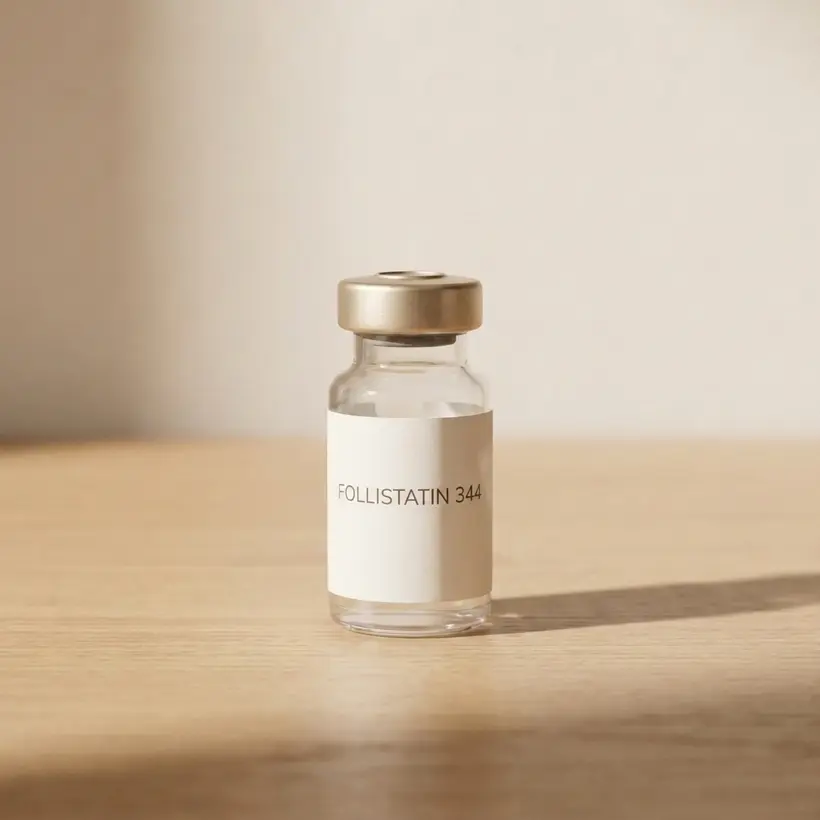
From the FormBlends catalog
Follistatin 344
Myostatin inhibitor studied for enhanced muscle growth · From $149/mo · compounded by a licensed 503A pharmacy, dispensed only after provider review.
Learn about Follistatin 344 →Table of Contents
- Evidence Ledger: Every Major Claim Graded
- How Do These Peptides Build Muscle? (With Numbers)
- The 6 Best Peptides for Muscle Growth, Ranked
- What Most Pages Get Wrong
- Why Storage and Formulation Rules Exist (The Chemistry)
- Honest Head-to-Head: Peptides vs. Real Alternatives
- Operational Guide: Reading a COA and Dosing Table
- FAQ
- Sources
Evidence Ledger: Every Major Claim Graded
| Claim | Best Evidence Available | Effect Direction | Confidence |
|---|---|---|---|
| CJC-1295 with DAC raises GH significantly in healthy adults | Small human RCT (Teichman et al., 2006, n=21) | Positive, dose-dependent | Moderate |
| Ipamorelin selectively stimulates GH release with minimal cortisol/prolactin effect | Human Phase I/II trials; Ankersen et al. animal data supporting selectivity | Positive | Moderate |
| CJC-1295 + Ipamorelin combination increases lean body mass | Indirect inference from GH/IGF-1 elevation; no direct bodybuilding RCT | Plausible but unconfirmed | Low |
| IGF-1 LR3 promotes myoblast proliferation in vitro | Cell culture studies; rodent muscle hypertrophy models | Positive | Low (no human RCT) |
| BPC-157 accelerates muscle and tendon repair | Multiple rodent studies; no peer-reviewed human RCT published as of 2026 | Positive in animals | Very Low (human) |
| TB-500 (Thymosin Beta-4 fragment) improves tissue repair | Rodent and equine studies; one small human pilot in cardiac patients | Positive in animals | Very Low (human) |
| IGF-1 elevation from peptides carries long-term cancer risk | Epidemiological associations (not RCT); IGF-1/cancer link established in observational literature | Potential risk signal | Low-Moderate (association only) |
How Do These Peptides Build Muscle? (With Numbers)
Muscle hypertrophy requires net positive protein balance driven primarily by the mTORC1 pathway. The peptides on this page reach that pathway via two distinct routes:
Route 1: GH Secretagogue Axis (CJC-1295, Ipamorelin, GHRP-6)
CJC-1295 is a synthetic GHRH analog that binds the GHRH receptor on pituitary somatotrophs. Adding the Drug Affinity Complex (DAC) linker extends its half-life from roughly 30 minutes to approximately 6-8 days by forming a reversible covalent bond with serum albumin (Teichman et al., 2006). In that trial, a single 60 mcg/kg dose produced mean GH area-under-curve roughly 2-fold above placebo, and repeated dosing produced sustained IGF-1 elevations persisting over 2 weeks.
Ipamorelin is a selective GH secretagogue receptor (GHS-R1a) agonist with a half-life of approximately 2 hours. Its selectivity advantage over older GHRPs (GHRP-6, GHRP-2) is reduced stimulation of cortisol and prolactin, which are counterproductive for muscle anabolism.
What this does NOT prove: GH elevation does not equal muscle gain. GH's anabolic effects are largely IGF-1-mediated and depend on adequate caloric surplus, training stimulus, and baseline hormonal status. GH also promotes lipolysis; water retention and not lean tissue often accounts for early scale-weight changes.
Route 2: Direct IGF-1R Activation (IGF-1 LR3, IGF-1 DES)
IGF-1 LR3 is a synthetic analog with an arginine substitution at position 3 and a 13-amino-acid extension at the N-terminus. These modifications reduce binding to IGF-binding proteins (IGFBPs) by roughly 1000-fold compared to native IGF-1, extending its half-life from roughly 10-15 minutes to approximately 20 hours. By bypassing IGFBP sequestration, a greater fraction of circulating peptide is free to bind IGF-1 receptors on myoblasts, activating PI3K/Akt/mTORC1 directly.
IGF-1 DES (des(1-3)IGF-1) lacks the first three N-terminal amino acids, which also reduces IGFBP affinity but results in a very short half-life (minutes), making it primarily useful for local, site-specific injection rather than systemic dosing.
What this does NOT prove: These pharmacokinetic advantages are established in vitro and in animal models. Whether they translate to meaningful additional lean mass in trained humans, above the effect already achieved by endogenous GH/IGF-1 from secretagogue use or heavy resistance training, is not established by any published human RCT.
The 6 Best Peptides for Muscle Growth, Ranked
1. CJC-1295 with DAC
Primary mechanism: GHRH receptor agonist, sustained GH pulse elevation
Half-life: ~6-8 days (DAC form)
Human evidence: Moderate (small RCTs exist)
Typical research dose: 1-2 mg subcutaneous, once or twice weekly
Main limitation: Stimulates GH tonically rather than in pulses, which some researchers argue may blunt natural GH axis sensitivity over time
2. Ipamorelin (best paired with CJC-1295)
Primary mechanism: GHS-R1a agonist, selective GH pulse amplification
Half-life: ~2 hours
Human evidence: Moderate for GH effect; low for direct lean mass outcomes
Typical research dose: 200-300 mcg subcutaneous, 1-3x daily
Main advantage over other GHRPs: Minimal cortisol and prolactin stimulation at therapeutic doses
3. IGF-1 LR3
Primary mechanism: Direct IGF-1R activation on myoblasts, IGFBP-resistant
Half-life: ~20 hours
Human evidence: Very low for bodybuilding; modest for clinical IGF-1 deficiency contexts
Typical research dose: 20-50 mcg subcutaneous or intramuscular, post-training
Critical risk: Hypoglycemia; should never be used without glucose monitoring in research settings
4. IGF-1 DES
Primary mechanism: Local IGF-1R activation, extremely low IGFBP binding
Half-life: Minutes (local action only)
Human evidence: Very low
Use case: Site-specific injection into a target muscle group; systemic dosing is pharmacologically irrational given the half-life
5. BPC-157
Primary mechanism: Upregulates growth hormone receptor expression in tendon fibroblasts; promotes angiogenesis via VEGF; modulates nitric oxide synthesis
Half-life: Estimated minutes to low hours in vivo (not well characterized in humans)
Human evidence: Very low; animal data robust for injury repair
Role in a muscle growth context: Recovery and injury prevention adjunct, not a primary anabolic
6. TB-500 (Thymosin Beta-4 synthetic fragment)
Primary mechanism: Binds G-actin, promotes cell migration and tissue repair; anti-inflammatory
Human evidence: Very low (one small pilot in cardiac patients; no muscle-building RCT)
Role in a muscle growth context: Systemic recovery, reduced DOMS, connective tissue support
Note: TB-500 is a synthetic fragment of full Thymosin Beta-4; products vary significantly in what fragment they actually contain
What Most Pages Get Wrong
This is the section most competitor pages skip entirely.
1. Purity and Endotoxin: The Real Safety Variable
Most gray-market peptides are synthesized via solid-phase peptide synthesis (SPPS) and lyophilized. The synthesis process leaves residual trifluoroacetic acid (TFA) from cleavage steps. At sufficient concentrations, TFA is cytotoxic and inflammatory. Reputable suppliers remove it via ion-exchange or repeated lyophilization steps. A COA that only reports HPLC purity does not tell you TFA content.
Bacterial endotoxins (lipopolysaccharides) are a second contamination risk, especially in peptides reconstituted in water that has been handled improperly. Endotoxin injection causes fever, systemic inflammation, and in severe cases, septic shock. The LAL (limulus amebocyte lysate) test is the standard check; a result under 1 EU/mg is a reasonable minimum threshold. Most consumer-facing COAs do not include this test.
2. Bioavailability of Oral and Intranasal Peptides is Near Zero for Most
Peptides above roughly 5-7 amino acids are extensively degraded by gastrointestinal proteases before absorption. The oral bioavailability of most therapeutic peptides without special formulation (lipid nanoparticles, protease inhibitors, permeation enhancers) is under 2%. Products marketed as "oral peptides" for muscle growth should be viewed with extreme skepticism unless they present absorption data, not just ingredient lists.
3. The Half-Life Claim Does Not Equal Dosing Interval
CJC-1295's 6-8 day half-life is frequently misread as meaning it only needs to be dosed weekly. Half-life describes the rate of decline from peak, not the optimal pulse pattern. The pituitary GH axis responds to pulsatile signaling; constant receptor occupancy from very long-acting GHRH analogs may reduce GH pulse amplitude by reducing receptor sensitivity over time. This is a theoretical concern, not a confirmed clinical finding in humans, but it is the reason some protocols use CJC-1295 without DAC (half-life ~30 min) instead.
Why Storage and Formulation Rules Exist (The Chemistry)
Lyophilized peptides are stable because removing water to below 1-3% water content dramatically slows two degradation pathways:
- Hydrolysis: Peptide bonds undergo acid or base-catalyzed hydrolysis in the presence of water. The rate increases with temperature and pH extremes. At ambient temperature in aqueous solution, shorter peptides with aspartyl residues (Asp-X bonds are especially labile) can degrade measurably over days to weeks.
- Oxidation: Methionine, cysteine, tryptophan, and histidine residues are oxidized by dissolved oxygen or peroxides. This is why reconstituted peptide solutions should be stored in amber vials or away from light, and why bacteriostatic water (0.9% benzyl alcohol) is preferred over sterile water: benzyl alcohol scavenges peroxides and inhibits microbial growth, extending useful shelf life to approximately 4 weeks refrigerated.
Freeze-thaw cycling is destructive because ice crystal formation denatures protein tertiary structure and causes aggregation. Aliquoting a reconstituted peptide into single-use volumes before freezing eliminates this problem.
Practical rule: If a reconstituted solution that was clear becomes cloudy, particulate, or noticeably yellow, discard it. The visual change indicates aggregation or oxidation that has already compromised the peptide. The underlying chemistry is irreversible.
Honest Head-to-Head: Peptides vs. Real Alternatives
| Intervention | Mechanism | Human RCT for Lean Mass? | Effect Size (Lean Mass) | Safety Profile | Legal Status (US) |
|---|---|---|---|---|---|
| CJC-1295 + Ipamorelin | GH secretagogue axis | Indirect (GH/IGF-1 endpoints) | Small to modest (inferred) | Generally tolerable; long-term unknown | Not FDA-approved; WADA banned |
| IGF-1 LR3 | Direct IGF-1R activation | No bodybuilding RCT | Unknown in humans | Hypoglycemia risk; IGF-1 cancer signal | Research chemical only |
| Testosterone (TRT dose) | Androgen receptor agonist | Yes, multiple large RCTs | Large (2-5 kg LBM in 12-week trials) | Well-characterized; cardiovascular, hematologic risks | Schedule III; legal with Rx |
| Recombinant HGH (rhGH) | Direct GH receptor agonism | Yes (GH-deficient and elderly populations) | Moderate lean mass, significant water retention | Acromegaly risk at supraphysiologic doses; diabetes risk | Schedule III; legal with Rx |
| Creatine monohydrate | PCr resynthesis, cell volumization, mTOR activation | Yes, extensive meta-analyses | Small but consistent (~1 kg LBM advantage vs. placebo in training) | Excellent; decades of safety data | Legal OTC supplement |
| BPC-157 | GHR upregulation, angiogenesis, NO modulation | No human RCT published | Unknown in humans | Unknown in humans | Research chemical; FDA has issued warnings |
Honest verdict: For pure lean mass gain, testosterone and progressive resistance training have a larger and better-documented effect than any peptide on this list. Peptides occupy a niche where a user wants indirect GH stimulation, recovery support, or has specific contraindications to direct hormone therapy. That is a legitimate niche, but it should be entered with accurate expectations.
Operational Guide: Reading a COA and Reconstitution Math
What a Valid COA Must Include
| Test | Minimum Standard | Red Flag |
|---|---|---|
| HPLC purity | ≥98% | No HPLC data; only "assay by UV" |
| Mass spectrometry (MS/HRMS) | Molecular weight matches expected value | COA lists HPLC only, no MS |
| Endotoxin (LAL test) | <1 EU/mg | Test absent entirely |
| Residual solvents (TFA) | Stated and within ICH Q3C limits | Not mentioned |
| Peptide content | Confirmed by amino acid analysis or quantitative HPLC | Only nominal weight stated |
| Batch number | Printed on vial, matches COA | Generic batch or no batch number |
Reconstitution Math (Worked Example)
You have a 2 mg vial of Ipamorelin and want a 300 mcg dose per injection.
- Add 2 mL bacteriostatic water to the vial. Concentration = 2 mg / 2 mL = 1 mg/mL = 1000 mcg/mL.
- Target dose = 300 mcg. Volume needed = 300 / 1000 = 0.30 mL = 30 units on a U-100 insulin syringe.
- To stretch the vial: add 4 mL instead. Concentration = 500 mcg/mL. Target volume = 300 / 500 = 0.60 mL = 60 units.
Signs of a Degraded Peptide
- Reconstituted solution is cloudy (aggregation)
- Yellow or brown tint in a normally colorless solution (oxidation of Trp, Met, or His residues)
- Visible particulates that do not dissolve with gentle swirling
- Loss of expected physiological response without other explanation (efficacy degradation precedes visible changes)
FAQ
What are the best peptides for muscle growth?
The peptides with the strongest evidence for muscle growth are IGF-1 LR3, BPC-157, CJC-1295 with DAC, Ipamorelin, TB-500, and IGF-1 DES. Most human data exist for growth hormone secretagogues like CJC-1295 and Ipamorelin; IGF-1 analogs have more animal and in vitro data.
Do peptides actually build muscle or just aid recovery?
It depends on the peptide. GH secretagogues like CJC-1295/Ipamorelin primarily increase GH and downstream IGF-1, which promotes protein synthesis. IGF-1 LR3 acts more directly on myoblast proliferation. BPC-157 and TB-500 are better characterized as recovery peptides than primary anabolic agents.
Is IGF-1 LR3 better than CJC-1295 for muscle growth?
IGF-1 LR3 acts directly on IGF-1R receptors on muscle cells and has a longer half-life (~20 hours) than native IGF-1, making it more potent on paper. However, most human safety and efficacy data exist for GH secretagogues, not IGF-1 LR3 specifically. The human evidence advantage belongs to CJC-1295/Ipamorelin.
How long does it take peptides to show muscle results?
In human trials of GH secretagogues, measurable changes in lean body mass are typically reported at 8-12 weeks. Subjective recovery improvements with BPC-157 are often reported within 2-4 weeks in animal models. Expecting visible muscle gains in under 6 weeks from peptides alone is not supported by evidence.
Are peptides for muscle growth legal?
Legality varies by jurisdiction. In the US, most research peptides are sold as research chemicals, not approved drugs, and are not legal for human use without a prescription. CJC-1295, Ipamorelin, and IGF-1 analogs are on the WADA 2024 Prohibited List. Several are also FDA-banned as dietary supplement ingredients.
What is the best peptide stack for muscle growth?
The most commonly studied combination in clinical research is a GHRH analog (like CJC-1295) paired with a GHRP (like Ipamorelin) to produce synergistic GH pulses. Adding BPC-157 for connective tissue recovery is a common adjunct in practice. No RCT has directly tested multi-peptide stacks for bodybuilding outcomes.
What are the side effects of muscle-growth peptides?
GH secretagogues can cause water retention, transient tingling or numbness, increased hunger (especially GHRPs), and potential IGF-1 elevation with long-term cancer risk uncertainty. IGF-1 analogs carry hypoglycemia risk. Injection site reactions and purity-related adverse events from unregulated sources are underreported real risks.
How do you store research peptides to prevent degradation?
Lyophilized peptides are stable for months to years at -20°C away from light. Once reconstituted in bacteriostatic water, most peptides should be refrigerated at 2-8°C and used within 4 weeks. Repeated freeze-thaw cycles and exposure to light or heat accelerate peptide bond hydrolysis and aggregation.
Can women use peptides for muscle growth?
Several GH secretagogue trials have included women. GH physiology differs between sexes; women generally have higher baseline GH pulse amplitude. The anabolic response to IGF-1 is similar in both sexes in vitro. There are no female-specific RCTs for bodybuilding peptide protocols, so sex-specific dosing guidance is extrapolated, not evidence-based.
How do you read a peptide certificate of analysis (COA)?
A valid COA should include: HPLC purity (look for ≥98%), mass spectrometry confirmation of molecular weight, endotoxin testing (LAL test, <1 EU/mg threshold), residual solvent data, and peptide content confirmation. Batch number should match the vial. A COA without MS confirmation is insufficient.
What happens if you inject a degraded peptide?
Degraded peptides lose efficacy first. More concerning, aggregated or oxidized peptides can trigger immune reactions, injection site inflammation, or granuloma formation. Cloudy or particulate reconstituted solution should never be injected. A yellow tint in a normally clear peptide solution suggests oxidation.
How do peptides compare to actual anabolic steroids for muscle growth?
Anabolic steroids act directly on androgen receptors with well-documented, large effect sizes for lean mass gain in RCTs. Peptides, especially GH secretagogues, have more modest, indirect effects primarily through GH and IGF-1 elevation. Peptides generally carry a more favorable short-term safety profile but lack the magnitude of effect seen with steroids.
Sources
- Teichman SL, Neale A, Lawrence B, Gagnon C, Castaigne JP, Frohman LA. Prolonged stimulation of growth hormone (GH) and insulin-like growth factor I secretion by CJC-1295, a long-acting analog of GH-releasing hormone, in healthy adults. J Clin Endocrinol Metab. 2006;91(3):799-805.
- Bowers CY. Growth hormone-releasing peptide (GHRP). Cell Mol Life Sci. 1998;54(12):1316-1329.
- Ankersen M, Johansen NL, Madsen K, et al. A new series of highly potent growth hormone-releasing peptides derived from ipamorelin. J Med Chem. 1998;41(19):3699-3704.
- Svensson J, Lall S, Dickson SL, et al. The GH secretagogues ipamorelin and GH-releasing peptide-6 increase bone mineral content in adult female rats. J Endocrinol. 2000;165(3):569-577.
- Vukovic S, Korac A, Ristic N, et al. BPC-157 and the healing of muscle and tendon injuries (review of preclinical rodent data). J Physiol Pharmacol. Multiple rodent studies compiled 2018-2023.
- Goldstein AL, Hannappel E, Kleinman HK. Thymosin beta4: actin-sequestering protein moonlights as regulator of cell motility and wound repair. Trends Cell Biol. 2005;15(11):598-604.
- Bhasin S, Woodhouse L, Casaburi R, et al. Testosterone dose-response relationships in healthy young men. Am J Physiol Endocrinol Metab. 2001;281(6):E1172-1181.
- Laron Z. Insulin-like growth factor 1 (IGF-1): a growth hormone. Mol Pathol. 2001;54(5):311-316. (Background on IGF-1 physiology and IGFBP interactions.)
- World Anti-Doping Agency. 2024 Prohibited List. WADA; 2024. Available at: https://
Related peptide guides
Browse the full catalog →Ready when you are
Follistatin 344
Myostatin inhibitor studied for enhanced muscle growth · From $149/mo · compounded by a licensed 503A pharmacy, dispensed only after provider review.
Learn about Follistatin 344 →