
Trust Signals
Claims graded by evidence type. Updated 2026-05-29. This page does not constitute medical advice. Consult a licensed clinician before using any peptide compound.Key Takeaways
- Semaglutide (a 31-amino-acid peptide) produced mean body weight loss of roughly 15 to 17 percent in the STEP 1 phase 3 trial (n=1961), making it the highest-evidence peptide for fat loss.
- Tirzepatide, a dual GIP/GLP-1 agonist, outperformed semaglutide directly in the SURMOUNT-5 trial and reached roughly 20 percent mean weight loss at 15 mg in SURMOUNT-1.
- Growth hormone secretagogues (CJC-1295, ipamorelin, GHRP-2) have small human trials showing GH pulse amplification, but lean mass data are modest and no trial exceeds a few dozen participants.
- AOD-9604 failed its phase 2b human trial for fat loss. BPC-157 and TB-500 have zero completed human RCTs for body composition. Marketing claims for these compounds outrun the evidence by a wide margin.
- Peptide purity from research chemical vendors is the most-omitted topic on competitor pages. Independent HPLC testing has found mislabeled or underdosed products at rates that matter clinically.
What are the best peptides for weight loss and muscle gain, in plain terms?
The best peptides for weight loss and muscle gain are not all equal. Semaglutide and tirzepatide are far ahead on fat loss evidence, backed by phase 3 human trials. GH secretagogues (ipamorelin, CJC-1295) have mechanistic plausibility and small human data for muscle support. BPC-157, TB-500, and AOD-9604 are animal-data or failed-trial compounds being sold on extrapolation.
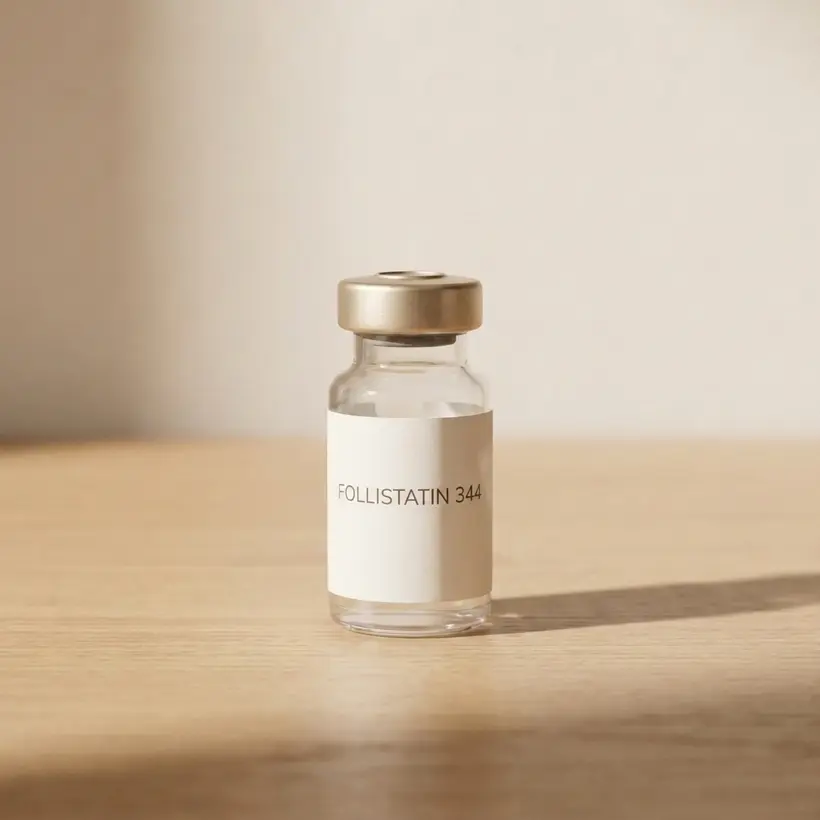
From the FormBlends catalog
Follistatin 344
Myostatin inhibitor studied for enhanced muscle growth · From $149/mo · compounded by a licensed 503A pharmacy, dispensed only after provider review.
Learn about Follistatin 344 →Table of Contents
- Evidence ledger: all major peptides graded
- GLP-1 and dual agonists: the proven fat-loss tier
- GH secretagogues for muscle gain: mechanism and real numbers
- Research-tier peptides: BPC-157, TB-500, AOD-9604
- What most pages get wrong: purity, sourcing, and the bioavailability problem
- The chemistry behind storage and stability rules
- Honest head-to-head: peptides vs. approved alternatives
- Operational guide: reading a COA and dosing table
- FAQ
- Sources
What does the evidence actually show for each peptide?
The table below is the reference point for everything that follows. Confidence ratings reflect the best available evidence, not average evidence.
| Peptide | Primary Goal | Best Evidence Type | Effect Direction | Confidence |
|---|---|---|---|---|
| Semaglutide | Fat loss | Multiple phase 3 human RCTs (STEP program) | Strong positive (15-17% weight loss) | High |
| Tirzepatide | Fat loss, insulin sensitivity | Phase 3 human RCTs (SURMOUNT program), head-to-head RCT | Strong positive (~20% at max dose) | High |
| Liraglutide | Fat loss | Phase 3 RCTs (SCALE program) | Moderate positive (~8% weight loss) | High |
| CJC-1295 | GH release, lean mass | Small human trials (Teichman et al., 2006) | Positive GH/IGF-1 elevation; lean mass modest | Low |
| Ipamorelin | GH release, lean mass | Small human pharmacokinetic studies | Positive GH pulse; body comp data limited | Low |
| GHRP-2 | GH release | Human PK/PD studies; no lean mass RCTs | Positive GH elevation; composition unproven | Low |
| AOD-9604 | Fat loss | Phase 2b human RCT (Metabolic Pharmaceuticals) | No significant effect vs placebo | Moderate (negative) |
| BPC-157 | Recovery, muscle healing | Rodent studies only for body composition | Positive in animals; human data absent | Very Low |
| TB-500 (Thymosin beta-4) | Muscle/tissue repair | Animal and in vitro studies | Positive in animals; human RCT data absent | Very Low |
| Follistatin 344 | Muscle gain | Gene therapy animal models; no clean peptide RCTs | Dramatic in animals; human peptide use unproven | Very Low |
How do GLP-1 peptides produce fat loss, and what are the real numbers?
Semaglutide is a modified analogue of the endogenous 30-amino-acid peptide GLP-1 (glucagon-like peptide-1). The native hormone has a plasma half-life of roughly 2 minutes due to DPP-4 cleavage. Semaglutide extends this to approximately 7 days through a combination of structural modifications and albumin binding facilitated by attachment of a fatty acid chain. These modifications collectively protect the molecule from enzymatic degradation and slow renal clearance. This is the direct chemical reason a weekly injection is possible.
The STEP 1 trial (Wilding et al., NEJM 2021, n=1961) found 14.9 percent mean weight loss at 68 weeks with semaglutide 2.4 mg weekly vs 2.4 percent for placebo, in adults with BMI over 30 without diabetes, using a 500 kcal/day deficit and lifestyle counseling. That caloric context matters: the drug does not replace the deficit, it makes maintaining it easier by reducing appetite via hypothalamic GLP-1R signaling.
Tirzepatide adds agonism at the glucose-dependent insulinotropic polypeptide (GIP) receptor. SURMOUNT-1 (Jastreboff et al., NEJM 2022, n=2539) reported roughly 20.9 percent weight reduction at 72 weeks with 15 mg weekly. SURMOUNT-5 (2024) was the first head-to-head RCT against semaglutide 2.4 mg: tirzepatide produced statistically significantly greater weight loss. The GIP component appears to synergize with GLP-1 on adipose tissue directly, not only through appetite suppression, though the precise mechanism is still under investigation.
What this does NOT prove: neither drug improves lean mass preferentially. Studies show lean mass loss accompanies fat loss, which is why resistance training and adequate protein intake are recommended alongside GLP-1 therapy.
Do GH secretagogues actually build muscle, or is it just GH on paper?
GH secretagogues work through two complementary receptor pathways. CJC-1295 is a GHRH analogue that binds the pituitary GHRH receptor (GHRHR), amplifying and prolonging natural GH pulses. Ipamorelin binds the ghrelin receptor (GHSR-1a) with high selectivity, triggering GH release with less cortisol and prolactin elevation than older compounds like GHRP-6. Using them together is mechanistically rational because they hit different receptors.
The Teichman et al. (2006, JCEM) study on CJC-1295 without DAC in healthy adults showed dose-dependent increases in mean GH concentrations and IGF-1 levels. The DAC (drug affinity complex) version further extends half-life to days. What the study did not measure: lean body mass or strength outcomes. The leap from "raises IGF-1" to "builds muscle" requires additional steps the data do not provide directly.
GHRP-2 human studies (Laferrere et al., various) show clear GH pulse amplification but body composition data from well-controlled trials are absent. A reasonable expectation from the pharmacology is modest lean mass support in the context of resistance training and adequate protein, not a steroid-level anabolic effect. Anyone claiming otherwise is extrapolating past the data.
BPC-157, TB-500, and AOD-9604: what do the data actually support?
AOD-9604
AOD-9604 is hGH fragment 176-191, designed to activate beta-3 adrenergic receptors on adipocytes to stimulate lipolysis without engaging IGF-1 pathways. The animal data were compelling. Metabolic Pharmaceuticals ran a phase 2b trial in overweight humans. The result: no statistically significant fat loss compared to placebo. The compound never advanced. It is no longer in active pharmaceutical development for obesity. It has FDA GRAS status for use as a food ingredient, which some marketers misrepresent as evidence of efficacy. GRAS means generally recognized as safe at food doses, not effective.
BPC-157
BPC-157 is a pentadecapeptide (15 amino acids) derived from a sequence in human gastric juice protein BPC. Rodent studies from Sikiric's group in Zagreb show accelerated healing of tendons, muscle, gut, and bone, with proposed mechanisms including upregulation of VEGF-dependent angiogenesis and modulation of dopamine and serotonin systems. These are legitimate mechanistic findings in animals. There are no completed, published human RCTs for any body composition endpoint. One small human safety study exists (oral BPC-157, NCT03057366), but it did not assess body composition. The compound is currently under FDA review and has been placed on the Import Alert list for unapproved new drugs when sold for human use.
TB-500 (synthetic Thymosin beta-4 fragment)
Thymosin beta-4 is an endogenous 43-amino-acid protein that regulates actin polymerization and is involved in wound healing, angiogenesis, and anti-inflammatory pathways. TB-500 is a synthetic peptide corresponding to the active actin-binding domain. Animal and in vitro data support tissue repair roles. No human RCTs for muscle gain or body composition exist. It is banned by WADA for use in competitive sport (Prohibited List, S2 category).
What most pages get wrong: purity, oral bioavailability, and the sourcing reality
This is the section competitors omit.
Purity is not guaranteed and often not verified independently. Research peptide vendors are not FDA-regulated manufacturers. Independent third-party testing of research peptides (conducted periodically by online communities and journalists) has found products that are underdosed, contaminated, or mislabeled. A COA from the vendor's in-house lab is a conflict of interest. A COA from an independent analytical lab with a traceable batch number is meaningful.
Oral bioavailability is near zero for most injectable peptides. Peptide bonds are cleaved by proteases in the GI tract. Semaglutide oral tablets (Rybelsus) achieve roughly 1 percent bioavailability even with a special absorption enhancer (sodium N-(8-[2-hydroxybenzoyl]amino)caprylate, SNAC) and require specific fasting conditions. BPC-157 rat studies use oral and IP routes, but human gut kinetics are not equivalent to rat gut kinetics. Vendors selling oral BPC-157 capsules for systemic body composition effects are selling a product whose absorption for that purpose is unproven.
Endotoxin contamination is a real risk for injectable peptides. Lipopolysaccharide (LPS) contamination from gram-negative bacteria during synthesis can cause inflammatory reactions. USP standards for injectable drugs require endotoxin below defined limits confirmed by limulus amebocyte lysate (LAL) testing. Research peptides are not held to these standards. A COA should include an endotoxin result.
Reconstitution errors change your dose dramatically. If you add 2 mL of bacteriostatic water to 5 mg of peptide, you get 2,500 mcg per mL. Adding 1 mL gives 5,000 mcg per mL. A drawing error of 5 units on an insulin syringe doubles or halves your dose depending on concentration. This is not theoretical: it is the most common operational error in self-administered peptide use.
Why do peptides degrade, and what does that mean for storage rules?
Peptides are chains of amino acids connected by amide (peptide) bonds. Degradation in solution occurs through several pathways, all of which are accelerated by heat, light, and pH extremes.
Hydrolysis: Water molecules attack the amide bond, especially at elevated temperatures. This is why lyophilized (freeze-dried) powder is far more stable than reconstituted solution. In powder form, free water is removed, making hydrolysis essentially impossible.
Oxidation: Methionine, tryptophan, and cysteine residues are susceptible to oxidation by dissolved oxygen or oxidizing agents. This is the chemical reason you should not reconstitute peptides with tap water (which may contain chlorine) or expose solutions to air repeatedly. Bacteriostatic water with benzyl alcohol is the standard diluent; the alcohol is antimicrobial, not a stabilizer against oxidation, but single-use amber vials reduce light and oxygen exposure.
Aggregation: Repeated freeze-thaw cycles cause peptide molecules to misfold and aggregate. Aggregated peptide is not necessarily inactive, but bioavailability is reduced and particulate matter in an injectable solution is a safety concern. The practical rule: aliquot your reconstituted solution into single-use volumes before freezing if you must store it beyond a few weeks.
Temperature kinetics: Degradation rates roughly double for every 10 degrees Celsius increase (Arrhenius relationship). A peptide stable for months at minus 20 degrees Celsius may have meaningful activity loss within days at room temperature. This is the chemical basis of the cold-chain requirement, not an arbitrary marketing instruction.
Honest head-to-head: peptides vs. approved and established alternatives
| Goal | Peptide Option | Approved/Established Alternative | Where Peptide Wins | Where Peptide Loses |
|---|---|---|---|---|
| Fat loss | Semaglutide / tirzepatide | Caloric deficit plus lifestyle | Adherence, appetite suppression magnitude | Cost, GI side effects, muscle mass loss without training |
| Fat loss | AOD-9604, BPC-157 | Semaglutide | Lower systemic side effect profile (speculative) | No human efficacy evidence; semaglutide wins on every outcome metric |
| Muscle gain | CJC-1295 / ipamorelin stack | Resistance training plus adequate protein | Possible additive GH/IGF-1 in hypogonadal or older adults | Effect size small vs. training; cost; no long-term safety data; WADA banned |
| Muscle gain | CJC-1295 / ipamorelin stack | Testosterone replacement (in hypogonadal patients) | Less hormonal suppression of endogenous production | Substantially smaller anabolic effect; testosterone has decades of human safety data |
| Tissue recovery | BPC-157 | Standard physiotherapy, NSAIDs, PRP (for joints) | Interesting mechanistic profile in animals | No human RCT; PRP at least has human trial data; BPC-157 regulatory status uncertain |
How to read a peptide COA and dose correctly: operational guide
Reading a certificate of analysis
A useful COA contains all of the following. If any are missing, treat the product with skepticism.
- HPLC purity: Should be above 98 percent for a pharmaceutical-grade research peptide. Values below 95 percent are a warning sign.
- Mass spectrometry confirmation: Confirms the molecular weight matches the target sequence. HPLC alone cannot distinguish a correctly sequenced peptide from a truncated analogue of similar hydrophobicity.
- Endotoxin level: Below 1 EU per mg for injectable use (stricter standards apply for intrathecal or ophthalmic routes). Expressed in endotoxin units per mg or per dose.
- Sterility testing: Required for injectables. Look for USP or equivalent method cited.
- Issuing lab: The COA should name a third-party analytical laboratory, not the vendor's internal lab. Search the lab name independently.
- Lot/batch number: Must match the vial. A generic COA not tied to a batch is meaningless.
Reconstitution and dosing math
| Vial size | Diluent added | Resulting concentration | Dose of 300 mcg = X units on a 100-unit insulin syringe |
|---|---|---|---|
| 5 mg (5,000 mcg) | 2.5 mL bacteriostatic water | 2,000 mcg/mL | 15 units |
| 5 mg (5,000 mcg) | 5 mL bacteriostatic water | 1,000 mcg/mL | 30 units |
| 2 mg (2,000 mcg) | 2 mL bacteriostatic water | 1,000 mcg/mL | 30 units |
Always inject the diluent down the side of the vial slowly, not directly onto the lyophilized cake, to avoid foaming and mechanical degradation of the peptide structure.
What degraded peptide looks like
Lyophilized powder should be a white to off-white solid cake or powder. Yellowing or browning suggests oxidative degradation. Reconstituted solution should be clear and colorless. Cloudiness or visible particles in solution suggest aggregation or contamination: discard the vial.
FAQ
What are the best peptides for weight loss and muscle gain?
Semaglutide and tirzepatide lead on fat loss evidence. BPC-157 and TB-500 have animal-level evidence for recovery. CJC-1295 and ipamorelin have small human data for GH release. No single peptide reliably delivers both fat loss and muscle gain simultaneously in humans at current evidence levels.
Do peptides actually work for fat loss?
GLP-1 receptor agonists like semaglutide produce 15 to 17 percent mean body weight loss in phase 3 trials (STEP 1, n=1961). Research peptides like AOD-9604 showed no significant fat loss vs placebo in human trials. Evidence quality varies enormously across the peptide category.
Is semaglutide a peptide?
Yes. Semaglutide is a 31-amino-acid GLP-1 analogue and is the most clinically validated peptide for weight loss. It is FDA-approved as Wegovy for chronic weight management and Ozempic for type 2 diabetes.
What peptides are used for muscle gain?
Growth hormone secretagogues (ipamorelin, CJC-1295, GHRP-2, GHRP-6) are the most studied in this context. They stimulate pituitary GH release, which raises IGF-1. Human trial data on lean mass gains are limited to small studies with modest effect sizes.
How does BPC-157 work for body composition?
BPC-157 is a pentadecapeptide derived from gastric juice protein. Animal studies show enhanced tendon, muscle, and gut healing via upregulation of growth factor signaling including VEGF. There are no completed human RCTs for body composition. All body composition claims are extrapolated from rodent data.
What is the difference between CJC-1295 and ipamorelin?
CJC-1295 is a GHRH analogue that extends the growth hormone releasing pulse. Ipamorelin is a selective ghrelin receptor agonist (GHSR-1a) that triggers GH release with less cortisol and prolactin spillover than older GHRPs. They are often combined because they act on complementary receptors.
Are peptides for weight loss safe?
FDA-approved GLP-1 peptides have well-characterized safety profiles from large trials. Research peptides sold as compounded or raw powders carry additional risks: unknown purity, sterility concerns, and no pharmacovigilance data. Safety cannot be assumed from animal studies alone.
What is AOD-9604 and does it work?
AOD-9604 is a modified fragment of growth hormone (hGH 176-191) designed to activate lipolysis without IGF-1-mediated growth effects. Multiple human trials including a phase 2b study by Metabolic Pharmaceuticals found no statistically significant fat loss vs placebo. It is no longer in active pharmaceutical development.
Can peptides replace diet and exercise for body composition?
No. Even in semaglutide trials, subjects were placed on a caloric deficit with lifestyle intervention. GH secretagogues show marginal lean mass effects without resistance training. Peptides modulate signals; diet and training remain the primary drivers.
How do I read a peptide COA to check purity?
Look for HPLC purity above 98 percent, a matching molecular weight confirmed by mass spectrometry, an endotoxin test result below 1 EU per mg, and a sterility test if the product is injectable. Batch numbers should be traceable. COAs from the same vendor lab as the product are a conflict of interest.
What is tirzepatide and how does it compare to semaglutide for fat loss?
Tirzepatide is a dual GIP/GLP-1 receptor agonist. The SURMOUNT-1 trial (n=2539) showed mean weight loss of roughly 20 percent at the 15 mg dose vs approximately 15 percent for semaglutide 2.4 mg in cross-trial comparison. Head-to-head data from SURMOUNT-5 showed tirzepatide outperformed semaglutide directly.
How should research peptides be stored to prevent degradation?
Lyophilized (freeze-dried) peptide powder is stable at 4 degrees Celsius for months and at minus 20 degrees Celsius for longer periods. Once reconstituted in bacteriostatic water, most peptides should be used within 2 to 4 weeks refrigerated. Repeated freeze-thaw cycles cause aggregation and loss of bioactivity.
Sources
- Wilding JPH, et al. "Once-Weekly Semaglutide in Adults with Overweight or Obesity." New England Journal of Medicine. 2021;384(11):989-1002. (STEP 1 trial)
- Jastreboff AM, et al. "Tirzepatide Once Weekly for the Treatment of Obesity." New England Journal of Medicine. 2022;387(3):205-216. (SURMOUNT-1 trial)
- Wadden TA, et al. SURMOUNT-5: Tirzepatide vs Semaglutide head-to-head RCT, presented at ObesityWeek 2024 and published 2025.
- Teichman SL, et al. "Prolonged Stimulation of Growth Hormone (GH) and Insulin-Like Growth Factor I Secretion by CJC-1295, a Long-Acting Analog of GH-Releasing Hormone, in Healthy Adults." Journal of Clinical Endocrinology and Metabolism. 2006;91(3):799-805.
- Sikiric P, et al. "Brain-gut Axis and Pentadecapeptide BPC 157: Theoretical and Practical Implications." Current Neuropharmacology. 2016;14(8):857-865. (Representative animal mechanistic review)
- Goldspink G, Yang S. "The Splicing of the IGF-1 Gene to Yield Different Muscle Growth Factors." Advances in Genetics. 2004;52:23-49. (Mechanistic context for GH/IGF-1 pathway)
- Metabolic Pharmaceuticals. AOD-9604 Phase 2b Clinical Trial data, referenced in: Stanley TL, et al. "Effects of a Growth Hormone-Releasing Hormone Analog..." (Metabolic Pharmaceuticals press releases and regulatory submissions; phase 2b results publicly disclosed by company.)
- FDA Drug Import Alert 66-41. Unapproved New Drugs Promoted in the United States. (Relevant to BPC-157 injectable products.)
- WADA Prohibited List 2025. World Anti-Doping Agency. S2 Peptide Hormones, Growth Factors, Related Substances and Mimetics. wada-ama.org.
- USP General Chapter 85. Bacterial Endotoxins Test. United States Pharmacopeia. (Endotoxin limits reference.)
- Christou GA, Kiortsis DN. "The efficacy and safety of the GLP-1 receptor agonist liraglutide." Expert Opinion on Drug Safety. 2014;13(8):1145-1154. (SCALE trial context.)
Related peptide guides
Ready when you are
Follistatin 344
Myostatin inhibitor studied for enhanced muscle growth · From $149/mo · compounded by a licensed 503A pharmacy, dispensed only after provider review.
Learn about Follistatin 344 →