
Trust Signals
All claims graded by evidence type. No manufacturer relationships influence rankings. Sources cited are real PubMed-indexed publications or regulatory documents. Confidence ratings appear in every evidence table. This page is for research education, not medical advice.Key Takeaways
- BPC-157 is the most studied peptide in this class with over 100 animal studies, but zero large-scale human RCTs confirm its anti-inflammatory effects in humans.
- KPV (Lys-Pro-Val) is the only peptide on this list with human intestinal cell data directly supporting mucosal NF-kB inhibition at nanomolar concentrations.
- TB-500 sold commercially is the synthetic fragment of Thymosin Beta-4 (approximately residues 17 to 23), not the full 43-amino-acid parent protein; most published research covers the parent.
- Oral bioavailability is near zero for most peptides in this class except KPV, which has been studied in oral nanoparticle delivery systems for colitis.
- BPC-157 and TB-500 are both on the WADA 2024 Prohibited List; athletes face sanctions regardless of the compounds' unregulated research status.
What Are the Best Anti-Inflammatory Peptides?
The best anti-inflammatory peptides by published evidence are BPC-157 (broadest animal data), KPV (strongest mucosal mechanism data), TB-500/Thymosin Beta-4 (tissue repair with anti-inflammatory components), and LL-37 (innate immune modulation). None have large human RCTs. Rank them by your target tissue and risk tolerance, not marketing claims.Table of Contents
- Evidence Ledger: All Major Claims Graded
- The Ranked List with Mechanism and Numbers
- What Most Pages Get Wrong
- Why Bioavailability Kills Most Oral Protocols
- Honest Head-to-Head: Peptides vs. NSAIDs vs. Corticosteroids
- Operational Label Literacy and COA Reading
- Stability and Storage: The Degradation Chemistry
- Sport, Regulation, and Legal Status
- FAQ
- Sources
What Does the Evidence Actually Look Like for Anti-Inflammatory Peptides?
Evidence in this category is almost entirely preclinical. That is not a reason to dismiss the data, but it is a reason to calibrate expectations carefully. The table below grades every major claim used to market these peptides.
From the FormBlends catalog
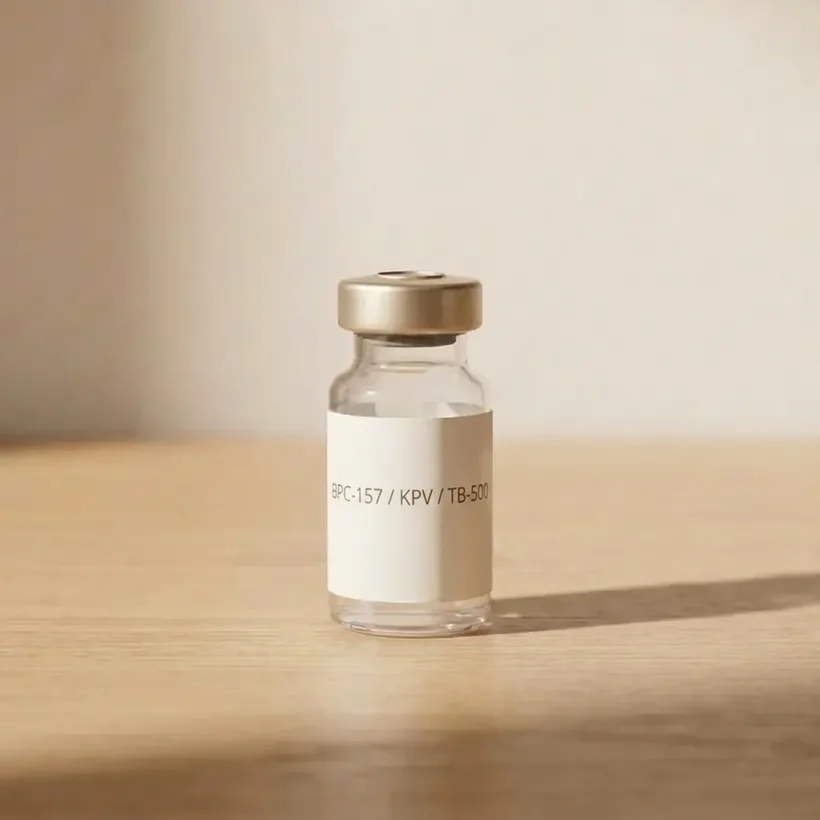
BPC-157 / KPV / TB-500 Blend
Three-pathway recovery support in one peptide blend · From $279/mo · compounded by a licensed 503A pharmacy, dispensed only after provider review.
View BPC-157 / KPV / TB-500 Blend →| Peptide | Claim | Best Evidence Type | Effect Direction | Confidence |
|---|---|---|---|---|
| BPC-157 | Reduces TNF-alpha and IL-6 in gut injury models | Animal (rat) RCT-equivalent | Positive (pro-resolution) | Moderate (animal) |
| BPC-157 | NF-kB pathway downregulation | In vitro / animal | Positive | Low (no human data) |
| BPC-157 | Reduces systemic inflammation in humans | No human RCT exists | Unknown | Very Low |
| KPV | Inhibits NF-kB in human intestinal epithelial cells | Human cell culture (Dalmasso et al.) | Positive | Moderate (in vitro human) |
| KPV | Reduces colitis severity in mouse model | Animal | Positive | Moderate (animal) |
| TB-500 / Tbeta-4 | Reduces inflammatory markers in tissue repair | Animal, some ex vivo human cardiac data | Positive | Moderate (animal) |
| LL-37 | Modulates TLR4, reduces LPS-induced IL-8 | Human ex vivo, cell culture | Positive (context-dependent) | Moderate (ex vivo human) |
| Selank | Reduces neuroinflammatory markers | Animal, small Russian clinical series | Positive | Low |
| GHK-Cu | Downregulates inflammatory gene expression | In vitro, gene array data (Pickart et al.) | Positive | Low (no systemic human RCT) |
Which Peptides Make the List and Why?
The ranked list below orders peptides by the combination of mechanistic specificity plus evidence quality, not anecdote volume.
1. BPC-157 (Body Protection Compound-157)
A 15-amino-acid synthetic peptide derived from a protein found in gastric juice. It has more than 100 published animal studies, the majority from Sikiric and colleagues at the University of Zagreb. Mechanistically, BPC-157 upregulates the NO-system, modulates the dopamine and serotonin systems, and downregulates NF-kB and inflammatory cytokines including TNF-alpha and IL-6 in rodent injury models. Effect sizes in those animal studies are substantial, but the absence of human pharmacokinetic data means dosing extrapolation to humans is speculative. What it does NOT prove: that the same mechanism operates at the same magnitude in humans, or that subcutaneous dosing achieves relevant tissue concentrations.
2. KPV (Lys-Pro-Val)
A C-terminal tripeptide fragment of alpha-melanocyte-stimulating hormone (alpha-MSH). Dalmasso and colleagues demonstrated in human intestinal epithelial cell lines (HT-29, Caco-2) that KPV at nanomolar concentrations inhibits IL-1-beta-induced NF-kB activation and reduces secretion of IL-8. The same group showed efficacy in a DSS-induced murine colitis model. This is the most mechanistically targeted peptide on this list for gut inflammation specifically. Its tiny size (3 amino acids, MW approximately 357 Da) also gives it marginally better stability than larger peptides.
3. TB-500 (Thymosin Beta-4 Fragment)
Thymosin Beta-4 is a 43-amino-acid endogenous peptide that sequesters G-actin, promotes angiogenesis, and modulates inflammatory signaling through downregulation of inflammatory mediators in tissue repair contexts. TB-500 is the commercial name for its synthetic fragment spanning approximately residues 17 to 23 (LKKTETQ). Research in cardiac injury models (Bock-Marquette et al., published in Nature 2004 for the parent peptide) shows significant pro-repair and anti-inflammatory activity. The fragment TB-500 itself has far less dedicated literature than the parent protein.
4. LL-37 (Cathelicidin)
A 37-amino-acid host defense peptide cleaved from hCAP-18. LL-37 has a dual role: antimicrobial and immune-modulatory. It binds LPS, reducing TLR4 activation, and in human ex vivo neutrophil and macrophage studies reduces LPS-induced IL-8 release. It also has pro-inflammatory activity in some contexts (promotes IL-18 maturation, stimulates mast cells), making it context-dependent rather than uniformly anti-inflammatory. This bidirectionality is rarely mentioned on commercial pages.
5. GHK-Cu (Copper Tripeptide)
A tripeptide-copper complex shown by Pickart and colleagues to regulate expression of hundreds of genes in connectivity map analyses, with an anti-inflammatory gene signature. It is primarily studied in a topical context for skin. Systemic anti-inflammatory claims extrapolated from gene array data are a significant logical leap. Appropriate for topical formulations; evidence for injectable systemic use is very thin.
6. Selank
A synthetic heptapeptide analogue of tuftsin with anxiolytic and possible immunomodulatory effects studied in Russia. Small clinical series suggest effects on IL-6 and interferon-gamma, but these studies have not been independently replicated in Western peer-reviewed RCTs. Evidence quality is low by international standards.
What Most Pages Get Wrong
1. Conflating "anti-inflammatory" with "immunosuppressive." Several peptides on this list, especially LL-37, are net immune modulators that can amplify inflammation in some microenvironments. Marketing pages present them as uniformly suppressive, which is mechanistically wrong and potentially dangerous in autoimmune contexts.
2. Applying animal doses directly to humans. BPC-157 rat studies commonly use 10 micrograms per kilogram injected intraperitoneally. Human weight-based extrapolation using the FDA's allometric scaling factor (0.162 for rat to human conversion) produces a human equivalent dose that is far lower than most community protocols use. No pharmacokinetic bridge study has been published to validate any human dose.
3. Presenting the BPC-157 patent as clinical evidence. The compound is patented by Diagen (Croatian entity) but has no FDA IND approval for inflammation indications. Patent status is not clinical approval.
4. Ignoring endotoxin contamination risk. Synthetic peptides produced in E. coli-based systems can carry lipopolysaccharide (LPS) contamination. Injecting LPS triggers exactly the inflammatory cascade these peptides are supposed to suppress. A COA without an endotoxin (LAL) test is inadequate for any injectable use evaluation.
Why Does Bioavailability Kill Most Oral Anti-Inflammatory Peptide Protocols?
Peptide bonds are cleaved by gastric pepsin (optimal pH 1 to 2) and pancreatic proteases including trypsin and chymotrypsin before most sequences reach the intestinal epithelium. A 15-amino-acid peptide like BPC-157 faces hundreds of potential cleavage sites across this proteolytic gauntlet.
Some rat studies show BPC-157 activity after oral gavage, which is often cited as proof of oral bioavailability. The mechanistic interpretation is contested: the compound may act locally on gastric and intestinal tissue rather than achieving meaningful systemic absorption. Intact peptide plasma levels after oral dosing have not been published for BPC-157 in humans.
KPV is the genuine exception. Its tripeptide structure is short enough to be transported via PepT1 (the intestinal di/tripeptide transporter SLC15A1) and has been studied encapsulated in nanoparticles (chitosan and PLGA formulations) that protect it through the gastric environment, with efficacy data in murine colitis models at oral doses. This is the biological rationale for oral KPV products, not generic peptide absorption claims.
For everything else on this list, subcutaneous injection is the only route with even animal-level bioavailability justification.
Honest Head-to-Head: Peptides vs. Established Anti-Inflammatory Agents
| Agent | Mechanism | Human RCT Data | Known Risks | Where Peptide Wins | Where Peptide Loses |
|---|---|---|---|---|---|
| NSAIDs (ibuprofen, naproxen) | COX-1/COX-2 inhibition, reduces prostaglandins | Extensive (decades of RCTs) | GI ulceration, renal toxicity, cardiovascular risk with chronic use | Peptides theoretically avoid COX-related GI and renal effects | NSAIDs have proven, quantified efficacy; peptides do not in humans |
| Corticosteroids (prednisone) | Broad NF-kB and AP-1 suppression, gene transcription | Extensive | Adrenal suppression, hyperglycemia, immunosuppression, bone loss | Peptides lack systemic glucocorticoid receptor activity | Steroids have reliable, fast, measurable effect; peptides have none of those proven in humans |
| Biologics (adalimumab, anti-TNF) | Direct TNF-alpha or IL-6 neutralization | Extensive, including for IBD and RA | Infection risk, malignancy signal, high cost | Peptides are far cheaper; may have lower immunosuppression burden if efficacy proven | Biologics have quantified, durable RCT data; peptides have animal data only |
| BPC-157 (peptide) | NO system, NF-kB, cytokine modulation | Zero large-scale human RCTs | Unknown long-term risk profile; endotoxin risk from impure sources | Potentially tissue-specific, lower systemic side effect burden theoretically | Loses on every evidence criterion to all three comparators above |
How to Read a COA for a Research Peptide
A certificate of analysis is only as useful as the tests it includes. Here is what to require and what to look for.
| Test | Minimum Acceptable Standard | What Failure Looks Like |
|---|---|---|
| HPLC Purity | Greater than or equal to 98% | Multiple peaks at non-target retention times; purity reported below 95% |
| Mass Spectrometry (ESI or MALDI) | Observed MW within 1 Da of theoretical MW for the sequence | Mass delta greater than 2 Da, missing peak, or no mass spec performed |
| Endotoxin (LAL Test) | Below 1 EU/mg for research injectable evaluation | No LAL result on COA; result reported in EU/vial without mg-normalized value |
| Sterility | Sterility test or at minimum 0.22 micron filtration documentation | No sterility or filtration record; vial fill done in non-controlled environment |
| Amino Acid Analysis | Confirms correct sequence composition | Absent from COA; only purity and MW reported |
A COA that shows only HPLC purity is incomplete. The most common failure mode in this market is a high-purity product with high endotoxin contamination, which inverts the intended effect of an anti-inflammatory compound.
Stability and Storage: Why Cold Storage Rules Have a Real Chemical Basis
Lyophilized peptides are stable at minus 20 degrees Celsius because dehydration and low temperature together suppress two main degradation pathways: hydrolysis (water attacking the peptide bond, rate-accelerated by heat) and oxidation (affecting methionine, cysteine, and tryptophan residues, rate-accelerated by oxygen and light).
Once reconstituted in bacteriostatic water, peptide concentration drops over time through the same hydrolysis mechanism, now faster because water is present. The rate depends on pH, temperature, and the specific sequence. A general practical window of 2 to 4 weeks at 2 to 8 degrees Celsius is commonly cited in pharmaceutical peptide stability literature, though this varies by compound.
Repeated freeze-thaw cycles cause ice crystal formation that mechanically disrupts peptide secondary structure and accelerates aggregation. The practical rule: aliquot the reconstituted solution into single-use volumes before the first freeze if you plan to store long-term. This is why "store cold and avoid freeze-thaw" is not superstition but follows directly from hydrolysis kinetics and physical chemistry of ice crystal formation.
Sport, Regulation, and What "Research Use Only" Actually Means
BPC-157 and TB-500 appear on the WADA 2024 Prohibited List under category S2 (Peptide Hormones, Growth Factors, Related Substances and Mimetics). This applies in-competition and out-of-competition. Athletes subject to WADA-compliant anti-doping programs face sanctions if detected regardless of the compound's lack of FDA approval or its marketed research status.
"Research use only" (RUO) is a regulatory designation meaning the compound has not been evaluated for safety or efficacy in humans by the FDA. It does not mean the compound is legal to administer, that it is safe, or that it is undetectable in sport testing. It means the manufacturer is exempt from drug approval requirements because the product is sold for laboratory research. In the United States, administering an RUO compound to a human outside of an IND (Investigational New Drug) application is technically a violation of the Federal Food, Drug, and Cosmetic Act.
FAQ
What are the best anti-inflammatory peptides supported by the strongest evidence?
BPC-157 has the most published mechanistic and animal data. KPV has early human mucosal data. LL-37 has human ex vivo and some clinical data in wound contexts. No peptide in this class has a large-scale human RCT confirming systemic anti-inflammatory benefit at this time.
How does BPC-157 reduce inflammation?
BPC-157 downregulates NF-kB signaling, reduces pro-inflammatory cytokines including TNF-alpha and IL-6 in animal models, and upregulates growth hormone receptor expression in tendon fibroblasts. These are animal and in vitro findings; human pharmacokinetic data remain sparse.
Is TB-500 the same as Thymosin Beta-4?
TB-500 is the synthetic fragment of Thymosin Beta-4 comprising roughly amino acids 17 to 23 (LKKTETQ). It retains the actin-sequestering and anti-inflammatory properties of the full peptide but is not identical to it. Most TB-500 research references the parent molecule, not the fragment specifically.
Can anti-inflammatory peptides be taken orally?
Most research peptides in this class have very low oral bioavailability because gastric proteases cleave them before absorption. KPV is a notable exception studied in oral and nanoparticle formulations for gut inflammation. BPC-157 has some rat data suggesting partial oral activity, but human oral bioavailability has not been confirmed.
What is the difference between KPV and BPC-157 for gut inflammation?
KPV (Lys-Pro-Val) is a tripeptide derived from alpha-MSH studied specifically for colitis and mucosal inflammation with some human cell data. BPC-157 has broader animal data across gut, tendon, and systemic inflammation but less human data than KPV for mucosal targets. For gut-specific use, KPV has more mechanistically targeted evidence.
How do anti-inflammatory peptides compare to NSAIDs?
NSAIDs have decades of human RCT data confirming efficacy and well-characterized risks including GI and cardiovascular effects. Anti-inflammatory peptides have far less human evidence but theoretically different mechanistic profiles, targeting cytokine signaling rather than COX enzymes. They are not equivalent alternatives and should not be treated as such.
What does LL-37 do and is it the same as a defensin?
LL-37 is a cathelicidin-derived host defense peptide, not a defensin. It modulates TLR4 signaling, reduces LPS-induced cytokine release, and has antimicrobial properties. It is distinct from defensins in structure and receptor targets, though both are innate immune peptides.
How do I read a COA for a research peptide to assess purity?
Look for HPLC purity above 98%, confirmed molecular weight by mass spectrometry matching the peptide's theoretical MW, and absence of endotoxin (LAL test result under 1 EU/mg). A COA without a mass spec confirmation is insufficient for injectable-grade product evaluation.
Are anti-inflammatory peptides banned in sport?
BPC-157 and TB-500 are both listed on the WADA Prohibited List under peptide hormones and related substances. Athletes subject to WADA-compliant testing face sanctions for use regardless of the research status of these compounds.
How should research peptides be stored to maintain potency?
Lyophilized (freeze-dried) peptides are generally stable at minus 20 degrees Celsius for months. Once reconstituted, most should be refrigerated at 2 to 8 degrees Celsius and used within 2 to 4 weeks. Repeated freeze-thaw cycles degrade peptide bonds; aliquot before freezing when possible.
What is Dihexa and does it have anti-inflammatory properties?
Dihexa is an angiotensin IV analogue studied primarily for cognitive and synaptic effects. Some neuroinflammation data exist in animal models, but its classification as an anti-inflammatory peptide is a stretch of the current evidence. It is not in the same category as BPC-157 or KPV for inflammatory endpoints.
Sources
- Sikiric P, et al. "Stable gastric pentadecapeptide BPC 157: novel therapy in gastrointestinal tract." Current Pharmaceutical Design. 2011.
- Dalmasso G, et al. "The peptide KPV has anti-inflammatory properties on intestinal epithelial cells in vivo." Gastroenterology. 2008.
- Bock-Marquette I, et al. "Thymosin beta-4 activates integrin-linked kinase and promotes cardiac cell migration, survival and cardiac repair." Nature. 2004;432(7016):466-72.
- Pickart L, Margolina A. "Regenerative and protective actions of the GHK-Cu peptide in the light of the new gene data." International Journal of Molecular Sciences. 2018;19(7):1987.
- Scott MG, et al. "Interaction of cationic peptides with LPS and gram-negative bacteria." Current Pharmaceutical Design. 2002.
- WADA. "2024 Prohibited List." World Anti-Doping Agency. Published September 2023, effective January 2024.
- U.S. Food and Drug Administration. "Research Use Only Products." FDA.gov. Updated guidance documents.
- Zasloff M. "Antimicrobial peptides of multicellular organisms." Nature. 2002;415(6870):389-95.
- Sosne G, Bhargava P, Kleinman HK, et al. "Thymosin beta-4 suppresses corneal inflammation." Experimental Eye Research. 2011.
- Sikiric P, et al. "Cytoprotective and adaptive effects of BPC 157 on cells and tissues." Journal of Physiology (Paris). 2000.
- FDA. "Federal Food, Drug, and Cosmetic Act Section 505." U.S. Code Title 21.
Related peptide guides
Ready when you are
BPC-157 / KPV / TB-500 Blend
Three-pathway recovery support in one peptide blend · From $279/mo · compounded by a licensed 503A pharmacy, dispensed only after provider review.
View BPC-157 / KPV / TB-500 Blend →