
Trust Signals
- No supplier pays for placement on this page. Criteria are based on published peptide chemistry and regulatory standards, not commercial relationships.
- Every claim is graded for evidence quality in the ledger below. Speculative claims are explicitly labeled.
- Last reviewed and updated: May 29, 2026.
Key Takeaways
- IGF-1 LR3 is an 83-amino-acid analog with roughly 1000-fold lower IGF-binding-protein affinity than native IGF-1, extending estimated half-life from minutes to approximately 20 to 30 hours in vitro.
- The minimum credible COA shows a lot-specific HPLC purity of 98% or above, mass spec confirmation near 9,111 Da, and an endotoxin result below 1 EU/mg.
- No supplier of IGF-1 LR3 is FDA-approved for human use. All legitimate sales are for research purposes only, and U.S. law prohibits human administration.
- WADA bans IGF-1 LR3 under the S2 category; athletes subject to anti-doping rules face sanctions regardless of how a supplier labels the product.
- Direct human RCT evidence for IGF-1 LR3 specifically is essentially absent. Safety and efficacy inferences are extrapolated from native rhIGF-1 clinical data, which involved disease populations, not healthy adults.
What Makes an IGF-1 LR3 Supplier Worth Trusting?
The best IGF-1 LR3 suppliers provide a lot-specific COA with HPLC purity above 98%, mass spectrometry sequence verification confirming the molecular weight near 9,111 Da, and endotoxin testing below 1 EU/mg from a named independent lab. Pricing, branding, and claimed bioactivity are less reliable signals than those three documents.
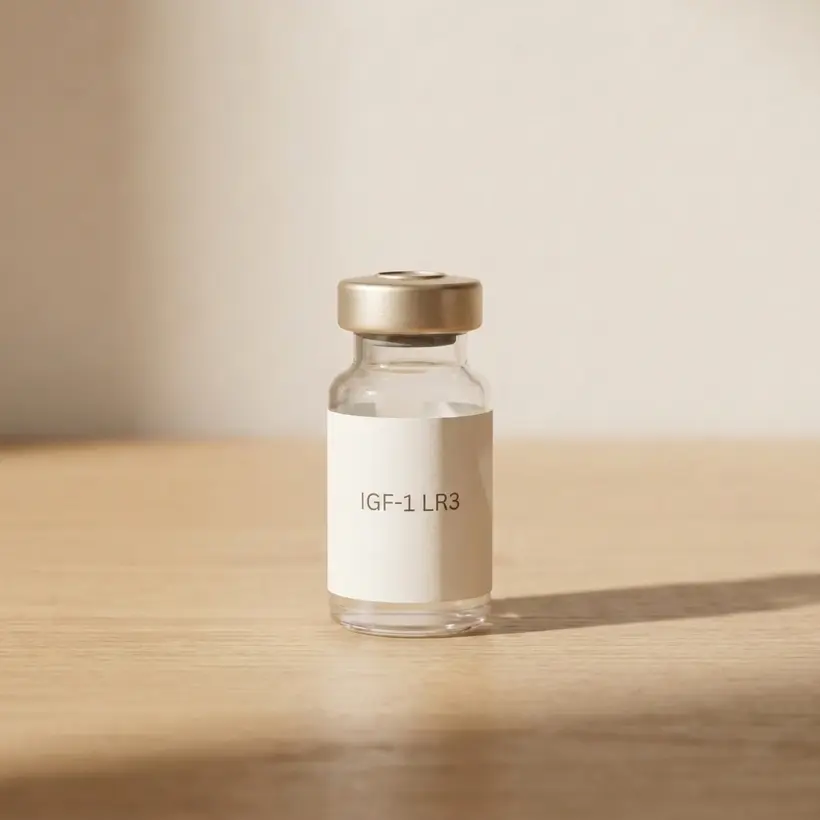
From the FormBlends catalog
IGF-1 LR3
Extended-action insulin-like growth factor for muscle growth · From $119/mo · compounded by a licensed 503A pharmacy, dispensed only after provider review.
Learn about IGF-1 LR3 →Table of Contents
- What exactly is IGF-1 LR3 and how does it differ from native IGF-1?
- What does the evidence actually show? (Evidence Ledger)
- What criteria separate a credible supplier from a low-quality one?
- How do I read an IGF-1 LR3 certificate of analysis?
- What most pages get wrong: stability, degradation, and the reconstitution trap
- Is it legal and what are the regulatory risks?
- How does IGF-1 LR3 compare to upstream GH-axis peptides?
- What are the real safety risks based on existing pharmacology?
- Frequently Asked Questions
- Sources
- Disclaimers
What Exactly Is IGF-1 LR3 and How Does It Differ From Native IGF-1?
Native IGF-1 (insulin-like growth factor 1) is a 70-amino-acid peptide produced primarily in the liver in response to growth hormone signaling. It acts at the IGF-1 receptor (IGF1R), a tyrosine kinase receptor, driving downstream PI3K/AKT and MAPK/ERK pathways that regulate cell proliferation, differentiation, and survival.
IGF-1 LR3 (Long R3 IGF-1) is a synthetic analog constructed by adding a 13-amino-acid N-terminal extension and substituting arginine for glutamic acid at position 3 of the mature IGF-1 sequence. The resulting 83-amino-acid peptide has a calculated molecular weight near 9,111 Da.
The structural rationale for these changes is well-established in peptide biochemistry literature (Francis et al., 1992, Protein Expression and Purification): the modifications reduce binding affinity to IGF-binding proteins (IGFBPs 1 through 6) by approximately 1000-fold compared to native IGF-1, while retaining binding to IGF1R. Because IGFBPs sequester native IGF-1 in circulation and limit its half-life to a few minutes, reducing IGFBP affinity dramatically extends the time the peptide remains free and active. In-vitro half-life estimates are commonly cited as 20 to 30 hours, though in-vivo human pharmacokinetic data for IGF-1 LR3 specifically does not exist in the published literature.
What Does the Evidence Actually Show? (Evidence Ledger)
| Claim | Best Evidence Type | Direction | Confidence | Key Caveat |
|---|---|---|---|---|
| IGF-1 LR3 has roughly 1000-fold lower IGFBP binding than native IGF-1 | In-vitro binding assays (Francis et al., 1992) | Confirmed | High | Measured in cell culture; plasma IGFBP dynamics differ |
| IGF-1 LR3 binds and activates IGF1R | In-vitro receptor binding (Francis et al., 1992) | Confirmed | High | Does not confirm in-vivo anabolic effect in healthy humans |
| Native rhIGF-1 increases lean mass and reduces fat mass in GH insensitivity syndrome | Human RCT (Ranke et al., multiple trials in Laron syndrome) | Positive in disease | Moderate | Disease population; not healthy adults; native IGF-1 not LR3 |
| IGF-1 LR3 increases muscle cell hypertrophy in culture | Cell-culture studies | Positive | Low | Cell culture cannot model systemic metabolism or feedback |
| IGF-1 LR3 increases lean mass or performance in healthy humans | No published human RCT identified | Unknown | Very Low | Claims on forums and supplier sites are not evidence |
| IGF-1 class compounds promote growth of existing neoplastic cells | Human observational data, mechanistic studies | Risk signal present | Moderate | Does not prove IGF-1 LR3 causes cancer initiation; promotion risk is context-dependent |
| Hypoglycemia is a plausible risk from IGF-1 receptor activation | Mechanistic and native IGF-1 clinical data | Risk confirmed in class | Moderate | Dose-dependency and LR3-specific risk magnitude unknown |
What Criteria Separate a Credible Supplier From a Low-Quality One?
Because IGF-1 LR3 is a research compound sold outside pharmaceutical regulatory channels in most markets, buyers cannot rely on government batch-release testing. The only meaningful quality signals come from the documentation a supplier publishes and whether that documentation is lot-specific and independently generated.
Minimum credible documentation checklist
- Lot-specific HPLC chromatogram showing purity of 98% or above with retention time visible. A blanket "greater than 98%" statement without a chromatogram is marketing, not quality data.
- Mass spectrometry result confirming the observed molecular weight matches the theoretical near 9,111 Da. Sequence errors in synthesis (mis-coupling, truncation) produce a detectable mass shift.
- Endotoxin test result (LAL or equivalent) below 1 EU/mg. Endotoxin contamination is the most common serious quality failure in peptide synthesis and causes inflammatory reactions in research settings.
- Named third-party testing laboratory on the COA. In-house testing that cannot be independently verified carries less weight.
- Moisture or water content figure (Karl Fischer or equivalent). High residual moisture indicates poor lyophilization and affects actual peptide mass per vial.
Red flags that disqualify a supplier
- No downloadable, lot-specific COA
- Purity expressed as a range (e.g., "98 to 99%") without a measured chromatogram
- Website language implying or promoting human use
- Pricing substantially below the synthesis cost for a complex 83-amino-acid peptide. As a rough benchmark, if pricing appears suspiciously far below the market rate for verified research peptides of this complexity, that should prompt scrutiny.
- No stated testing method for endotoxins
- Customer reviews that describe results rather than quality documentation (bioactivity cannot be verified by the buyer)
How Do I Read an IGF-1 LR3 Certificate of Analysis?
A COA is only as reliable as the testing method and independence of the lab that produced it. Here is what each field means in practice:
| COA Field | What to Look For | Why It Matters |
|---|---|---|
| Lot / Batch Number | Must match the number printed on the vial | Generic COAs copied across all stock prove nothing about your specific vial |
| HPLC Purity (%) | 98% or above with chromatogram shown | Quantifies the fraction of the sample that elutes at the expected retention time for the target peptide |
| Mass Spec (observed MW) | Near 9,111 Da (match within 1 to 2 Da for ESI-MS) | Confirms the correct primary sequence was synthesized; HPLC alone cannot distinguish a correctly sequenced peptide from a similarly-sized impurity |
| Endotoxin (EU/mg) | Below 1 EU/mg, ideally below 0.1 EU/mg for in-vivo research | Lipopolysaccharide contamination from bacterial hosts (E. coli is common for recombinant IGF-1 LR3) causes fever and inflammatory response |
| Water Content (%) | Below 10% for well-lyophilized peptide | High moisture means less actual peptide per stated mass and faster degradation |
| Testing Lab Name | Should be a named, verifiable lab external to the supplier | Self-testing is unverifiable; third-party testing is independently reproducible in principle |
What Most Pages Get Wrong: Stability, Degradation, and the Reconstitution Trap
This is the section competitor pages omit. IGF-1 LR3 is a 83-amino-acid peptide with multiple degradation pathways, and most handling errors are invisible to the user because a degraded product looks identical to an intact one.
The chemistry behind the rules
Oxidation of methionine residues. IGF-1 LR3 contains methionine, and exposure to dissolved oxygen converts methionine sulfide to methionine sulfoxide. This changes the molecular weight detectably (plus 16 Da per oxidation event) and can alter receptor binding. This is why lyophilized (freeze-dried) storage under inert conditions outperforms liquid storage, and why headspace matters when storing reconstituted solution. Avoid vortex mixing that entrains air bubbles.
Deamidation of asparagine and glutamine. Under neutral to alkaline pH, asparagine undergoes non-enzymatic deamidation to aspartate, altering the local charge and potentially disrupting the receptor-binding domain. Acetic acid reconstitution (0.1 to 1% glacial acetic acid) lowers pH and slows this reaction, which is the chemistry behind the recommendation, not just convention.
Aggregation. IGF-1 LR3 is prone to non-covalent aggregation, especially at higher concentrations and above room temperature. Aggregated peptide retains apparent mass on HPLC but has reduced bioavailability because the oligomers do not bind receptors efficiently at the monomer level. Opalescent or turbid reconstituted solution is a visual signal of aggregation, though mild aggregation is invisible.
Freeze-thaw cycling. Each freeze-thaw cycle promotes aggregation and ice-crystal-mediated shear degradation. Aliquot reconstituted solutions into single-use volumes before freezing if the full vial will not be used within a single session.
Practical stability summary
| Form | Storage Condition | Estimated Usable Window | Key Risk |
|---|---|---|---|
| Lyophilized, sealed | Minus 20 degrees C, dark | 12 months or longer (manufacturer-dependent) | Moisture ingress if seal is compromised |
| Reconstituted in bacteriostatic water | 2 to 8 degrees C, dark | Approximately 3 to 4 weeks | Oxidation, deamidation, microbial growth |
| Reconstituted, frozen aliquots | Minus 20 degrees C | Several months if freeze-thaw limited | Aggregation on repeated thaw |
Is It Legal and What Are the Regulatory Risks?
In the United States, IGF-1 LR3 is not approved by the FDA as a drug, biologic, or dietary supplement ingredient. Under 21 CFR, it cannot be legally sold for human consumption. Legitimate domestic suppliers sell it explicitly as a research chemical for laboratory or in-vitro use, which is a narrow legal category that does not extend to personal administration.
Under the WADA 2024 Prohibited List (Section S2: Peptide Hormones, Growth Factors, Related Substances and Mimetics), IGF-1 and its analogs, including IGF-1 LR3, are prohibited in-competition and out-of-competition. Athletes governed by WADA-compliant bodies face sanctions regardless of how a supplier labels the compound or where it was purchased.
Regulatory status outside the U.S. varies. Some countries classify IGF-1 analogs as prescription biologics; others have no specific scheduling. Buyers should verify their local jurisdiction independently before purchasing.
How Does IGF-1 LR3 Compare to Upstream GH-Axis Peptides?
| Feature | IGF-1 LR3 | CJC-1295 (GHRH analog) | MK-677 (Ibutamoren, GHSR agonist) | Native rhIGF-1 (Mecasermin, FDA-approved) |
|---|---|---|---|---|
| Mechanism | Direct IGF1R agonist, bypasses GH axis | Stimulates pituitary GH release, raises endogenous IGF-1 | Stimulates pituitary GH release via ghrelin receptor, raises endogenous IGF-1 | Direct IGF1R agonist, native sequence |
| Human RCT evidence | Essentially none for LR3 specifically | Limited (small trials, compounded formulations) | Multiple published RCTs (Nass et al., 2008; Svensson et al., 1998) | Multiple RCTs in Laron syndrome and GH insensitivity |
| Regulatory status (US) | Not approved; research only | Not approved; research or compounded | Not approved; investigational | FDA-approved (Increlex) for specific pediatric indications |
| Estimated half-life (in vitro / clinical) | ~20 to 30 hours in vitro; human data absent | Several days (DAC-conjugated form) | ~24 hours in humans (Nass et al., 2008) | ~12 to 15 hours in clinical use |
| Hypoglycemia risk | Plausible (IGF1R mechanism), magnitude unknown | Low (indirect, physiological GH pulse) | Low to moderate (water retention, mild GH elevation) | Documented in clinical use; product labeling includes warning |
| Where IGF-1 LR3 loses | No human safety or efficacy RCT data; no regulatory oversight; stability challenges | Wins on regulatory transparency | Wins clearly on human evidence base | Wins on every evidence and regulatory dimension |
Honest assessment: For anyone seeking documented human pharmacokinetics and a published safety profile, MK-677 and native rhIGF-1 (in approved clinical contexts) have substantially stronger data. IGF-1 LR3's theoretical advantage (direct receptor action, long in-vitro half-life, IGFBP bypass) is mechanistically interesting but unvalidated in human subjects.
What Are the Real Safety Risks Based on Existing Pharmacology?
Because no human safety trial for IGF-1 LR3 exists, risk assessment must be extrapolated from the pharmacology of native IGF-1 and from the mechanism of IGF1R activation. These are plausible risk signals, not confirmed IGF-1 LR3-specific findings.
- Hypoglycemia: IGF-1 receptors are structurally homologous to insulin receptors and share downstream signaling through PI3K/AKT. Activation reduces blood glucose. Native rhIGF-1 (Mecasermin) carries an FDA-required hypoglycemia warning. The same mechanism is active with IGF-1 LR3.
- Edema and soft-tissue swelling: Reported with native rhIGF-1 in clinical trials, attributed to sodium retention and fluid shifts.
- Neoplastic risk: Elevated endogenous IGF-1 is associated epidemiologically with increased risk of certain cancers (colorectal, prostate, breast) in observational data. This does not prove causation or that exogenous IGF-1 LR3 initiates cancer, but it is consistent with a cell-growth-promoting mechanism that would be expected to accelerate growth of existing pre-malignant cells.
- Jaw and organ growth: Sustained supraphysiologic IGF1R activation can stimulate growth of soft tissue and bone, producing acromegalic features with chronic high-dose use. Dose and duration thresholds in humans are undefined for LR3.
- Injection-site and sourcing risks: Contaminated or endotoxin-laden preparations carry direct inflammatory and septic risk independent of the peptide itself, reinforcing the importance of COA-verified sourcing.
Frequently Asked Questions
What makes an IGF-1 LR3 supplier trustworthy?
Third-party HPLC purity above 98%, mass spectrometry sequence confirmation, endotoxin testing below 1 EU/mg, and a downloadable lot-specific COA are the minimum credibility signals. Suppliers who provide only a generic spec sheet without lot numbers are a red flag.
Is IGF-1 LR3 legal to buy?
In the United States, IGF-1 LR3 is not FDA-approved as a drug and is not legal for human use or sale as a dietary supplement. It is sold as a research compound for in-vitro or laboratory use only. Regulations differ by country; buyers should verify local law before purchasing.
What purity level should I expect from a legitimate supplier?
Reputable peptide research suppliers typically report HPLC purity of 98% or greater for IGF-1 LR3. Below 95% should prompt questions. The COA should show the specific lot purity, not a blanket greater-than-98% claim without supporting chromatogram data.
How does IGF-1 LR3 differ from standard IGF-1?
IGF-1 LR3 is an 83-amino-acid analog of native IGF-1 (70 amino acids) with a 13-amino-acid N-terminal extension and a glutamic-acid-to-arginine substitution at position 3. These changes reduce binding affinity to IGF-binding proteins by roughly 1000-fold compared to native IGF-1, extending its half-life from minutes to approximately 20 to 30 hours in vitro.
What are the main stability risks with IGF-1 LR3?
IGF-1 LR3 is susceptible to aggregation, oxidation of methionine residues, and deamidation of asparagine and glutamine under warm or freeze-thaw conditions. Lyophilized vials stored at minus 20 degrees Celsius are stable for months; once reconstituted in bacteriostatic water they should be refrigerated and used within roughly 3 to 4 weeks.
What solvent should be used to reconstitute IGF-1 LR3?
Bacteriostatic water (0.9% benzyl alcohol) is standard for multi-use vials. Acetic acid at 0.1% to 1% concentration is sometimes used to improve initial dissolution because IGF-1 LR3 is more soluble at acidic pH, but the final solution should be diluted with PBS or bacteriostatic water before use. Avoid plain sterile water for multi-day storage.
How do I read an IGF-1 LR3 certificate of analysis?
A valid COA should show: lot number matching the vial, HPLC retention time and purity percentage with a visible chromatogram, mass spectrometry confirming the molecular weight near 9,111 Da, LAL or equivalent endotoxin result, and a moisture or water content figure. Generic PDFs without lot-specific data are not true COAs.
Is IGF-1 LR3 banned in sport?
Yes. WADA prohibits IGF-1 and its analogs, including IGF-1 LR3, under Section S2 (Peptide Hormones, Growth Factors, Related Substances and Mimetics) of the Prohibited List. Athletes subject to testing face sanctions if it is detected.
What does the human evidence on IGF-1 LR3 actually show?
Direct human RCT evidence on IGF-1 LR3 specifically is very limited. Most clinical data involves native rhIGF-1 or IGF-1/IGFBP-3 complexes in disease states such as growth hormone insensitivity syndrome. Extrapolating those results to IGF-1 LR3 in healthy individuals requires several unsupported assumptions and carries Low to Very Low confidence.
What are the known safety risks of IGF-1 LR3?
Based on the pharmacology of IGF-1 class compounds, risks include hypoglycemia, edema from fluid retention, potential promotion of existing neoplastic cells, and acromegalic features with long-term high-dose use. These risks are extrapolated from native IGF-1 clinical data; LR3-specific human safety data is essentially absent.
How does IGF-1 LR3 compare to peptides like CJC-1295 or MK-677 for GH axis stimulation?
CJC-1295 and MK-677 act upstream by stimulating GH release, which then drives endogenous IGF-1 production; they have more human safety data. IGF-1 LR3 acts directly at the IGF-1 receptor, bypassing the GH axis entirely. Upstream compounds have a substantially better-characterized human safety and pharmacokinetic profile.
What red flags indicate a low-quality IGF-1 LR3 supplier?
Red flags include: no lot-specific COA available, purity stated as a range rather than a measured value, no endotoxin or bioburden testing, website health claims implying human use, no verifiable third-party testing lab named on the COA, and pricing far below the synthesis cost for a complex 83-amino-acid peptide.
Sources
- Francis GL, Ross M, Ballard FJ, et al. Novel recombinant fusion protein analogues of insulin-like growth factor (IGF)-I indicate the importance of the N-terminus and C-terminus for IGF-I receptor binding. Journal of Molecular Endocrinology. 1992;8(3):213-223.
- Ranke MB, Savage MO, Chatelain PG, et al. Long-term treatment of growth hormone insensitivity syndrome with IGF-I. Hormone Research. 1999;51(3):128-134.
- Nass R, Pezzoli SS, Oliveri MC, et al. Effects of an oral ghrelin mimetic on body composition and clinical outcomes in healthy older adults. Annals of Internal Medicine. 2008;149(9):601-611.
- Svensson J, Lönn L, Jansson JO, et al. Two-month treatment of obese subjects with the oral growth hormone (GH) secretagogue MK-677 increases GH secretion, fat-free mass, and energy expenditure. Journal of Clinical Endocrinology and Metabolism. 1998;83(2):362-369.
- World Anti-Doping Agency. WADA Prohibited List 2024. S2: Peptide Hormones, Growth Factors, Related Substances and Mimetics. Available at: wada-ama.org.
- U.S. Food and Drug Administration. Increlex (mecasermin) Prescribing Information. FDA.gov. Accessed May 2026.
- Pollak M. The insulin and insulin-like growth factor receptor family in neoplasia: an update. Nature Reviews Cancer. 2012;12(3):159-169.
- Chan JM, Stampfer MJ, Giovannucci E, et al. Plasma insulin-like growth factor-I and prostate cancer risk: a prospective study. Science. 1998;279(5350):563-566.
- Manning BD, Toker A. AKT/PKB sign
Related peptide guides
Browse the full catalog →Ready when you are
IGF-1 LR3
Extended-action insulin-like growth factor for muscle growth · From $119/mo · compounded by a licensed 503A pharmacy, dispensed only after provider review.
Learn about IGF-1 LR3 →