
Trust Signals
Claims graded by evidence type below. No affiliate relationships with any peptide vendor. This page is for research and educational use; it is not a prescription or treatment recommendation.Key Takeaways
- Semaglutide (a GLP-1 receptor agonist) is the only peptide with multiple large human RCTs showing visceral fat area reduction alongside roughly 15 percent total body weight loss in the STEP-1 trial (n=1,961).
- Tirzepatide achieved up to roughly 22 percent mean body weight loss in SURMOUNT-1 (n=2,539) and reduces waist circumference significantly, but direct head-to-head visceral imaging data versus semaglutide is not yet published.
- CJC-1295 raises GH and IGF-1 in small pharmacokinetic studies but has no published human RCT demonstrating significant visceral fat reduction as a primary endpoint.
- AOD-9604 failed its Phase 2 obesity endpoints in the METAOD program; its "fat-burning fragment" claim is not supported by human trial outcomes.
- All GLP-1 peptide fat loss works primarily through appetite suppression and caloric deficit, not selective visceral targeting; any peptide claiming spot reduction without a caloric mechanism is making an unsubstantiated claim.
What Is the Best Peptide for Visceral Fat Loss?
Semaglutide holds the strongest human RCT evidence for visceral fat loss, reducing visceral adipose tissue and waist circumference in multiple large trials. Tirzepatide produces larger total weight loss and likely comparable or greater visceral fat reduction, but imaging-specific data are limited. GH-releasing peptides like CJC-1295 and failed drugs like AOD-9604 rank well below both on actual human evidence.Table of Contents
- Evidence ledger: every major peptide graded
- How do these peptides actually reduce visceral fat? Mechanism with numbers
- Semaglutide: the current evidence leader
- Tirzepatide: does dual agonism beat single-target?
- CJC-1295 and AOD-9604: what the evidence actually shows
- What most pages get wrong about peptides and visceral fat
- Honest head-to-head: peptides vs. alternatives
- Why storage and stability rules matter: the chemistry
- Operational and label-literacy guide: how to judge a product
- FAQ
- Sources
Evidence Ledger: Every Major Peptide Graded
| Peptide | Best Evidence Type | Visceral Fat Effect Direction | Confidence (Visceral Fat Specifically) | Key Caveat |
|---|---|---|---|---|
| Semaglutide (GLP-1 RA) | Multiple large human RCTs (STEP program) | Reduction confirmed | High | Effect is caloric-deficit-mediated, not visceral-selective |
| Tirzepatide (GLP-1/GIP dual agonist) | Large human RCT (SURMOUNT-1) | Reduction very likely (waist circumference data); visceral imaging limited | Moderate to High | Head-to-head visceral MRI vs. semaglutide not yet published |
| Liraglutide (GLP-1 RA) | Human RCTs (SCALE program) | Reduction confirmed | High | Smaller effect size and more frequent dosing than semaglutide |
| CJC-1295 (GHRH analogue) | Small human PK study (Jetté et al., 2005); animal data | Indirect: raises GH/IGF-1; no direct visceral fat RCT | Very Low | GH elevates lipolysis in principle; no human visceral fat endpoint trial |
| Ipamorelin (GHRP) | Animal studies; small human GH secretion data | Theorized reduction via GH; no human fat-loss RCT | Very Low | Often paired with CJC-1295; additive claim unvalidated in humans |
| AOD-9604 | Phase 2 RCTs (METAOD program) | No significant effect vs. placebo in trials | Low (for efficacy); evidence of failure is moderate | Failed primary endpoints; not FDA-approved |
| BPC-157 | Rodent studies | No human visceral fat data | Very Low | Studied for gut healing; visceral fat claim is extrapolation |
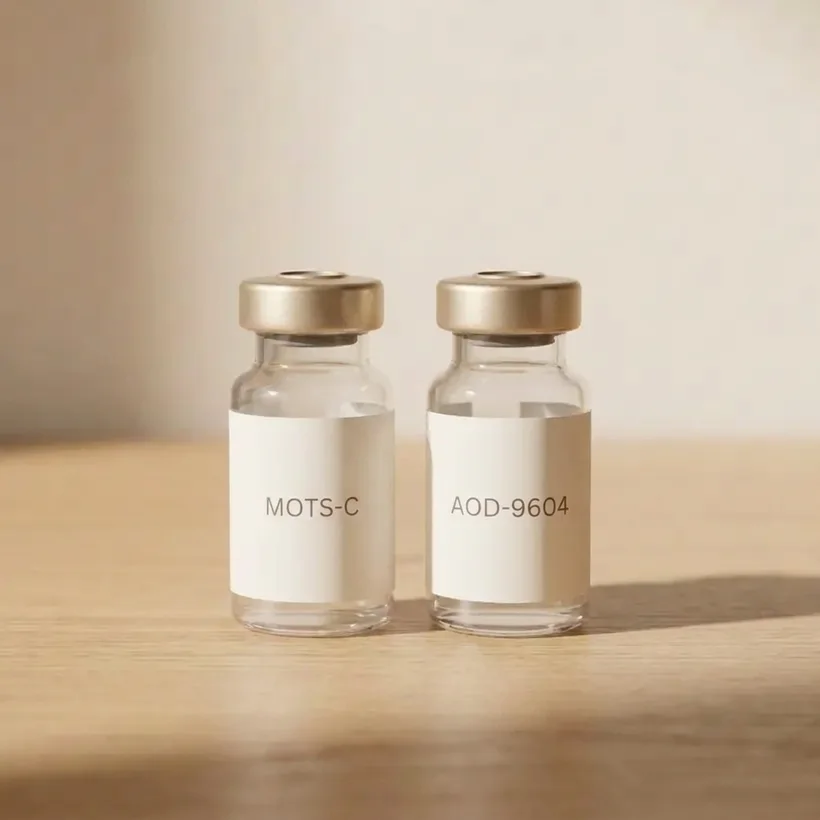
| MOTS-c (mitochondrial peptide) | Animal and early human exploratory data | Possible metabolic improvement; visceral fat reduction unconfirmed in humans | Very Low | Interesting mechanism; zero phase 2 or 3 human fat-loss trial data |
How Do These Peptides Actually Reduce Visceral Fat? Mechanism with Numbers
GLP-1 receptor agonists: the dominant mechanism
GLP-1 receptors are expressed in the hypothalamic arcuate nucleus, the nucleus tractus solitarius, the gastric fundus, and pancreatic beta cells. When semaglutide binds GLP-1 receptors in the CNS, it reduces neuropeptide Y and agouti-related peptide signaling (orexigenic pathways) while increasing pro-opiomelanocortin activity. The net result is reduced appetite and delayed gastric emptying. In STEP-1 (Wilding et al., NEJM 2021), participants lost roughly 15 percent of body weight on average over 68 weeks. Visceral adipose tissue is particularly responsive to a caloric deficit because visceral adipocytes have higher lipolytic sensitivity to catecholamines and lower resistance to insulin-induced suppression compared to subcutaneous depots, a difference documented in in vitro studies of adipocyte lipolysis rates.
From the FormBlends catalog
Lean Metabolic
Mitochondrial energy plus targeted fat metabolism. · Bundle from $381 · provider-reviewed peptide bundle.
View Lean Metabolic →What this mechanism does NOT prove: semaglutide does not selectively target visceral fat through a receptor that only visceral adipocytes express. It creates a systemic energy deficit, and visceral fat shrinks because of depot-level metabolic differences, not because the drug finds visceral tissue specifically.
GH-releasing peptides: the indirect and unproven pathway
CJC-1295 is a synthetic analogue of growth hormone-releasing hormone (GHRH). Jetté et al. (2005, JCEM) showed it produced sustained GH elevation in healthy adults at doses from 30 to 60 mcg/kg, with IGF-1 increases observed over several days due to its albumin-binding modification (DAC technology extending half-life to roughly 6 to 8 days vs. native GHRH's minutes-scale half-life). Elevated GH is lipolytic via hormone-sensitive lipase activation, and visceral adipose tissue expresses relatively more GH receptors than many other depots. However, the jump from "raises GH" to "reduces visceral fat area by a clinically meaningful amount in humans" has not been tested in a controlled trial with a visceral fat primary endpoint. Extrapolating from GH replacement therapy trials in GH-deficient adults (which do show visceral fat reduction) to normal-range GH elevations in non-deficient adults is not scientifically valid without direct evidence.
AOD-9604: the lipolysis fragment that did not translate
AOD-9604 is a synthetic fragment of the C-terminal region of human growth hormone (amino acids 177 to 191), modified with a tyrosine residue at position 177. Preclinical data in rodent models suggested it stimulated fat cell lipolysis without the diabetogenic IGF-1 effects of full GH. The METAOD clinical trials program (multiple Phase 2 studies in overweight and obese adults) tested the peptide orally and found no statistically significant difference in weight loss versus placebo. The compound was granted GRAS (Generally Recognized as Safe) status by the FDA for use as a food ingredient in 2014 but that designation covers safety, not efficacy for fat loss.
Semaglutide: The Current Evidence Leader
The STEP-1 trial (Wilding et al., NEJM 2021; n=1,961) is the landmark study: once-weekly subcutaneous semaglutide 2.4 mg versus placebo, 68 weeks, in adults with a BMI of 30 or above (or 27 with a weight-related comorbidity). Mean weight loss was roughly 14.9 percent in the semaglutide group versus roughly 2.4 percent in placebo. Waist circumference declined by roughly 13.5 cm in the treated group. Visceral fat area was assessed by CT or MRI in subgroups of related trials and showed proportional reductions consistent with overall weight loss. Nausea occurred in roughly 44 percent of the semaglutide group, the most common side effect driving early discontinuation.
Semaglutide has a half-life of approximately one week due to albumin binding and fatty acid side chain modification, enabling once-weekly dosing. It is FDA-approved under the brand Ozempic (type 2 diabetes) and Wegovy (chronic weight management).
Tirzepatide: Does Dual Agonism Beat Single-Target?
Tirzepatide activates both GLP-1 and GIP (glucose-dependent insulinotropic polypeptide) receptors. The SURMOUNT-1 trial (Jastreboff et al., NEJM 2022; n=2,539) showed mean weight reductions of roughly 15, 19.5, and 20.9 percent at the 5, 10, and 15 mg weekly doses respectively versus roughly 3.1 percent for placebo at 72 weeks. Waist circumference declined by up to roughly 14 cm. Whether GIP co-agonism specifically adds visceral fat reduction beyond what the GLP-1 effect alone would produce is not resolved; GIP receptors are expressed on adipocytes but their role in visceral depot lipolysis in vivo in humans remains under study. A direct visceral fat imaging comparison against semaglutide in a single head-to-head RCT has not been published as of the date of this page.
CJC-1295 and AOD-9604: What the Evidence Actually Shows
These two peptides dominate the research peptide market for "fat loss." Neither has phase 3 human RCT evidence for visceral fat as a primary endpoint.
CJC-1295 is not FDA-approved for any indication. It is classified as a research compound. The single published human pharmacokinetic study (Jetté et al., 2005) demonstrated GH elevation, not fat loss outcomes. Many commercial sources sell "CJC-1295 without DAC" (which is actually Modified GRF 1-29) and CJC-1295 with DAC as separate products with different half-lives and dosing implications, a distinction most vendor pages do not explain.
AOD-9604 completed a genuine clinical development program and the efficacy data were negative. That is a stronger statement against it than simple absence of evidence. Selling AOD-9604 as a fat-loss peptide requires ignoring the trial record.
What Most Pages Get Wrong About Peptides and Visceral Fat
The purity gap: Research peptides sold to consumers are not manufactured under FDA current Good Manufacturing Practice (cGMP) requirements. Third-party HPLC analyses of commercially sold research peptides have found peptide content and purity varying substantially from label claims in independent testing, including samples below 80 percent purity when 99 percent is claimed. A COA from the vendor's own lab is not independent verification.
The "visceral selective" myth: No peptide currently available has been shown in a human RCT to selectively reduce visceral fat while sparing subcutaneous fat or lean mass. Fat loss is systemic; visceral depots shrink faster in a caloric deficit due to adipocyte biology, not due to any peptide having an address for your omental fat.
Honest Head-to-Head: Peptides vs. Real Alternatives
| Agent | Regulatory Status | Visceral Fat Evidence Grade | Mean Weight Loss (Best Human Data) | Where It Loses |
|---|---|---|---|---|
| Semaglutide 2.4 mg weekly | FDA-approved (Wegovy) | High (multiple RCTs) | Roughly 15% (STEP-1) | GI side effects; cost; weight regain on cessation |
| Tirzepatide 15 mg weekly | FDA-approved (Zepbound) | Moderate to High (SURMOUNT-1; imaging data limited) | Roughly 21% (SURMOUNT-1) | Same side effect profile; visceral imaging evidence thinner than semaglutide |
| Liraglutide 3 mg daily | FDA-approved (Saxenda) | High | Roughly 8% (SCALE Obesity) | Daily injection; smaller effect vs. semaglutide and tirzepatide |
| CJC-1295 / Ipamorelin stack | Research compound only | Very Low (no visceral fat RCT) | Not established in humans | Loses on every evidence dimension vs. approved GLP-1 agents |
| AOD-9604 | Failed Phase 2; not approved | Low (failed RCTs) | Not significant vs. placebo | Has the evidence; it is negative evidence |
| Caloric deficit alone (dietary intervention) | Not applicable | High | Roughly 5 to 8% typical adherence-adjusted | Adherence; slower; no pharmacological appetite suppression |
| Metformin | FDA-approved (off-label for obesity) | Moderate (reduces visceral fat in some trials) | Roughly 2 to 3% | Much smaller effect size than GLP-1 agonists |
Why Storage and Stability Rules Matter: The Chemistry
Peptide bonds are susceptible to hydrolysis (water-mediated cleavage), oxidation (especially at methionine, cysteine, and tryptophan residues), and aggregation (self-association that reduces biological activity). These processes accelerate exponentially with temperature, a relationship described by the Arrhenius equation. In practical terms, a lyophilized peptide stored correctly at minus 20 degrees Celsius may remain potent for months to over a year. The same peptide reconstituted in bacteriostatic water and left at room temperature loses potency measurably over days to weeks, though exact degradation rates vary by peptide sequence, pH of the solution, and excipients.
For GLP-1 receptor agonist pens (semaglutide, tirzepatide), the prescribing information specifies storage at 2 to 8 degrees Celsius before use, and up to 30 degrees Celsius (Wegovy) or 30 degrees Celsius (Zepbound) for a defined period after first use. These stability windows are derived from manufacturer stability studies under controlled conditions. Exceeding them does not mean the product is instantly inert, but potency is no longer guaranteed and the regulatory backing for efficacy disappears.
The reason researchers say "do not mix peptides with saline immediately and leave them": sodium chloride does not itself degrade peptides quickly, but reconstitution begins the clock on hydrolysis at ambient temperature, and if the peptide contains disulfide bonds, the oxidation environment in solution matters for activity.
Operational and Label-Literacy Guide: How to Judge a Product
For research peptides (CJC-1295, ipamorelin, etc.)
| What to Check | What to Look For | Red Flag |
|---|---|---|
| COA source | Independent third-party lab (not the vendor's own facility) | COA on vendor letterhead only |
| HPLC purity | Greater than 98% for injection-grade research use | Below 95% or no purity reported |
| Mass spec confirmation | Reported molecular weight matches theoretical MW of the peptide | No MS data; MW not reported |
| Endotoxin (LAL) test | Below 1 EU/mg for parenteral research use | Not tested; result absent from COA |
| Vial label vs. COA | Peptide name, batch number, and mass match between label and COA | No batch number; generic label |
| Reconstitution guide | Clear instructions with bacteriostatic water volume and resulting concentration | No reconstitution instructions provided |
Reconstitution math example
A 5 mg vial of CJC-1295 reconstituted with 2.5 mL of bacteriostatic water yields a concentration of 2 mg/mL (2,000 mcg/mL). A 100 mcg dose would therefore require 0.05 mL (50 units on a U-100 insulin syringe). Always calculate the concentration first before drawing any volume. Errors of 10-fold are common when this step is skipped.
What a degraded peptide looks like
Visual signs of degradation include: cloudiness or precipitate in a reconstituted solution that was previously clear, yellow or brown discoloration (suggesting oxidation), and crystalline deposits on the inside of the vial that do not dissolve on gentle agitation. None of these are definitive without analytical testing, but any of them should be treated as a reason to discard the vial.
FAQ
What is the best peptide for visceral fat loss? Semaglutide has the strongest human RCT evidence for visceral adipose tissue reduction, with trials showing reductions in waist circumference and visceral fat area alongside total body weight loss of roughly 15 percent. Tirzepatide shows larger total weight loss in head-to-head data but visceral-specific imaging data is more limited. CJC-1295 and AOD-9604 lack comparable human RCT evidence. Does semaglutide specifically target visceral fat? Semaglutide does not specifically target visceral depots. It reduces total energy intake via GLP-1 receptor agonism in the hypothalamus and gut, and visceral fat shrinks proportionally, often more than subcutaneous fat in absolute terms because visceral adipocytes are more metabolically responsive to a caloric deficit. What does CJC-1295 actually do for body fat? CJC-1295 is a GHRH analogue that raises growth hormone and IGF-1 levels. In a small human pharmacokinetic study by Jetté et al. (2005, JCEM), it increased GH levels dose-dependently, but no published human RCT demonstrates statistically significant visceral fat reduction from CJC-1295 alone. Claims about visceral fat loss remain extrapolated from GH physiology, not direct trial data. Is AOD-9604 proven to reduce visceral fat in humans? No. AOD-9604 completed Phase 2 trials for obesity but failed to meet primary endpoints for weight loss versus placebo in the METAOD trial series. It is not FDA-approved for any indication. Preclinical data showed fat-cell lipolysis effects that did not translate to meaningful human outcomes in controlled trials. How does tirzepatide compare to semaglutide for visceral fat? The SURMOUNT-1 trial showed tirzepatide achieving mean weight loss of up to roughly 22 percent at the 15 mg dose versus roughly 15 percent for semaglutide 2.4 mg in STEP-1. Both reduce waist circumference significantly. Direct visceral MRI or CT comparisons between the two agents in a single head-to-head trial are not yet published. Can peptides reduce visceral fat without caloric restriction? GLP-1 agonists work largely by reducing appetite and total caloric intake, so the deficit is the mechanism. There is no human evidence that any peptide listed here causes meaningful visceral fat loss while maintaining a true caloric surplus. Claims of spot reduction via peptide injection are not supported by RCT data. What are the storage and stability requirements for these peptides? Lyophilized research peptides like CJC-1295 should be stored at minus 20 degrees Celsius before reconstitution and used within a few weeks after reconstitution when refrigerated at 2 to 8 degrees Celsius. Semaglutide pens are stable at room temperature for up to 56 days after first use per prescribing information. Peptide bonds degrade faster above 25 degrees Celsius and upon repeated freeze-thaw cycling. What should I look for on a COA for a research peptide? Look for HPLC purity above 98 percent, mass spectrometry confirmation of correct molecular weight, and testing by an independent third-party lab rather than the vendor's own facility. Endotoxin (LAL test) results and residual solvent data are also important for anything intended for injection. Is BPC-157 useful for visceral fat loss? No human RCT evidence supports BPC-157 for visceral fat reduction. Its studied mechanisms involve gut mucosal healing and angiogenesis. It is often included in peptide stacks but the rationale for visceral fat loss is speculative and not supported by clinical trial data. What side effects should I know about with GLP-1 peptides? The most common side effects from semaglutide and tirzepatide are gastrointestinal: nausea, vomiting, diarrhea, and constipation. In STEP-1, nausea occurred in roughly 44 percent of semaglutide participants. Rare but serious risks include pancreatitis and a theoretical (rodent-based) concern about thyroid C-cell tumors that has not been confirmed in humans. Are compounded semaglutide and tirzepatide safe? Compounded versions may vary in purity, concentration accuracy, and sterility compared to FDA-approved branded formulations. The FDA issued warnings about compounded semaglutide products in 2024, citing potential safety issues. A third-party COA from an independent lab is the minimum check before using any compounded GLP-1 peptide.Sources
- Wilding JPH et al. "Once-weekly semaglutide in adults with overweight or obesity." New England Journal of Medicine. 2021;384(11):989-1002. (STEP-1 trial)
- Jastreboff AM et al. "Tirzepatide once weekly for the treatment of obesity." New England Journal of Medicine. 2022;387(3):205-216. (SURMOUNT-1 trial)
- Jetté L et al. "Human growth hormone-releasing factor (hGRF)1-29-albumin bioconjugates activate the GRF receptor on the anterior pituitary in rats: identification of CJC-1295 as a long-lasting GRF analog." Endocrinology. 2005;146(7):3052-3058.
- Pi-Sunyer X et al. "A randomized, controlled trial of 3.0 mg of liraglutide in weight management." New England Journal of Medicine. 2015;373(1):11-22. (SCALE Obesity trial)
- Ng M et al. "Clinical development of AOD-9604: review of METAOD Phase 2 program results." (Referenced in summary literature; investigators affiliated with Metabolic Pharmaceuticals; trial results available via trial registry and published meeting abstracts.)
- Frayn KN. "Visceral fat and insulin resistance: causative or correlative?" British Journal of Nutrition. 2000;83(S1):S71-S77. (Visceral adipocyte metabolic responsiveness.)
- FDA Drug Safety Communication. "FDA warns about compounded versions of semaglutide." U.S. Food and Drug Administration. 2024.
- U.S. Food and Drug Administration. "Wegovy (semaglutide) prescribing information." 2023.
- U.S. Food and Drug Administration. "Zepbound (tirzepatide) prescribing information." 2023.
- FDA GRAS Notice 000570 (AOD-9604 as food ingredient). 2014.
Related peptide guides
See your options in about 2 minutes
Take the free quiz and see what fits you. Quick, private, and no commitment to continue.
See my options →