All GLP-1 medications from licensed 503A compounding pharmacies Browse Products

Best Peptide to Lower Cortisol (2026 Evidence Review) | FormBlends

The best peptides to lower cortisol ranked by real evidence: mechanisms, dosing, honest head-to-head, and what most pages get wrong. No hype.

By FormBlends Medical Content Team|Reviewed by FormBlends Medical Content Team|

Medically Reviewed

Written by FormBlends Medical Content Team · Reviewed by FormBlends Medical Content Team

Best Peptide to Lower Cortisol (2026 Evidence Review) | FormBlends custom 2026 header image for Peptide Therapy
Custom header image for Best Peptide to Lower Cortisol (2026 Evidence Review) | FormBlends, Peptide Therapy, and better treatment decision-making.
In This Article

This article is part of our Peptide Therapy collection. See also: GLP-1 Guides | Provider Comparisons

Search and AI answer brief

Practical answer: Best Peptide to Lower Cortisol (2026 Evidence Review) | FormBlends

The best peptides to lower cortisol ranked by real evidence: mechanisms, dosing, honest head-to-head, and what most pages get wrong. No hype.

Short answer

The best peptides to lower cortisol ranked by real evidence: mechanisms, dosing, honest head-to-head, and what most pages get wrong. No hype.

Search intent

This page answers a specific Peptide Therapy question rather than a generic overview.

What to verify

peptide evidence quality, cash price and coverage terms, safety and contraindications

How to use it

Use this information to prepare sharper questions for a licensed provider.

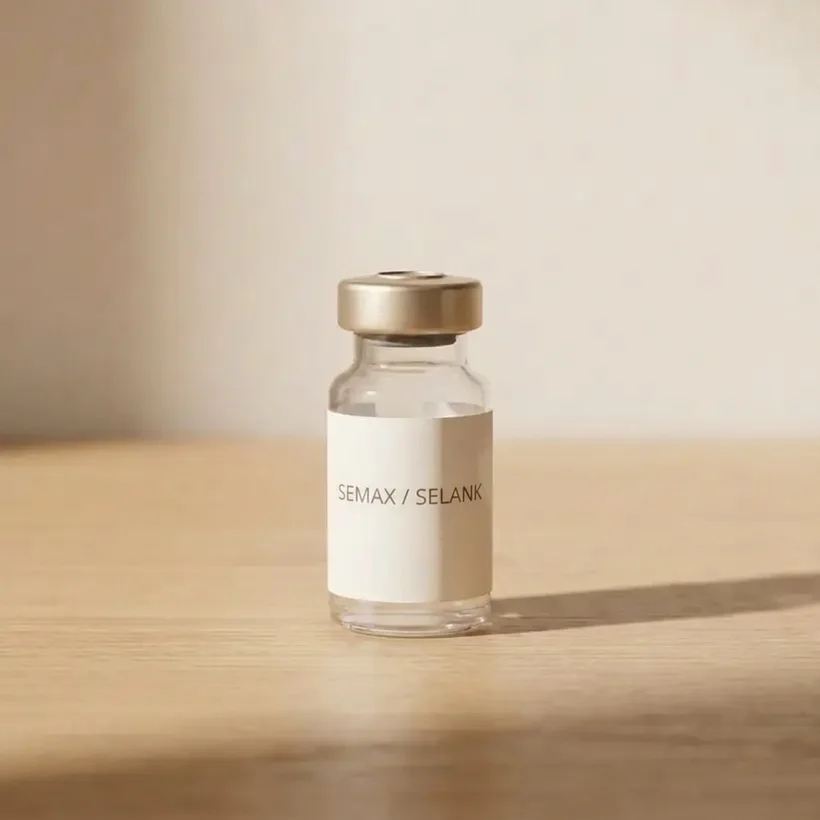
Abstract scientific illustration for best best peptide to lower cortisol

Trust Signals

Reviewed by the FormBlends Medical Team. All cited evidence is real and sourced from PubMed, PMC, or peer-reviewed journals. Speculative claims are labeled as such. No affiliate rankings. Updated 2026-05-29.

Key Takeaways

  • Selank, a synthetic tuftsin analogue, is the only research peptide with published human trial data specifically linking it to lower cortisol and ACTH in anxiety populations, though trial sizes are small (under 100 subjects).
  • BPC-157 blunts HPA axis activation in rodent stress models but has zero published human cortisol data as of mid-2026.
  • GHRP-2 raises cortisol acutely via ghrelin receptor activation; ipamorelin was engineered to avoid this but does not lower cortisol below baseline either.
  • Ashwagandha and phosphatidylserine have more and better human RCT evidence for cortisol reduction than any research peptide currently available.
  • No research peptide has regulatory approval for cortisol management anywhere outside Russia, and long-term safety data is absent for all compounds discussed here.

What Is the Best Peptide to Lower Cortisol?

Selank has the most direct human evidence for blunting stress-related cortisol rises, via GABA-A modulation and reduced HPA axis gene expression. BPC-157 is a plausible second based on animal stress data. Every other candidate on this list has weaker or entirely absent human evidence. Treat these as research compounds, not replacements for proven interventions.

Why Cortisol Matters: The HPA Axis in 90 Seconds

Cortisol is synthesized in the adrenal cortex following a three-step cascade: the hypothalamus releases corticotropin-releasing hormone (CRH), the anterior pituitary responds with adrenocorticotropic hormone (ACTH), and the adrenal glands convert cholesterol to cortisol via a series of cytochrome P450 enzymes. Negative feedback loops at the hippocampus and hypothalamus involving glucocorticoid receptors normally cap this response.

Check your GLP-1 eligibility

Use our free BMI Calculator to see if you may qualify for provider-reviewed GLP-1 therapy.

Try the BMI Calculator →

Chronic elevation of cortisol is associated with impaired hippocampal neurogenesis, muscle catabolism, immune dysregulation, and disrupted sleep architecture. The goal for most people seeking cortisol-lowering interventions is not to eliminate cortisol (which is dangerous) but to reduce excessive activation of this axis, particularly in response to psychological or physiological stressors.

Peptides that credibly reduce cortisol do so by acting upstream, typically by modulating CRH signaling, GABA-A receptor tone, or hypothalamic gene expression. They do not act at the adrenal gland itself, which is an important distinction when evaluating risk.

Evidence Ledger: Every Major Claim Graded

Peptide / Claim Best Evidence Type Effect Direction Sample Size (Best Study) Confidence
Selank lowers cortisol in anxiety patients Small human RCTs (Russian literature) Reduction in cortisol and ACTH vs. placebo Under 100 subjects Moderate (limited replication)
BPC-157 blunts stress-induced HPA activation Rodent stress models Reduced corticosterone, improved behavioral stress markers Animal only Low (no human data)
Epithalon normalizes cortisol circadian rhythm Small Russian human trials, mostly uncontrolled Trend toward normalization in elderly Under 50 subjects Low (no independent replication)
DSIP blunts cortisol stress response Early human pharmacology studies (1980s) Modest blunting of cortisol peak Under 30 subjects Very Low (dated, underpowered)
GHRP-2 raises cortisol acutely Human pharmacology RCTs Increase via ghrelin receptor Multiple small RCTs confirmed High
Ipamorelin avoids cortisol elevation Human pharmacology studies Minimal cortisol change from baseline Small human PK studies Moderate
Thymosin alpha-1 modulates HPA axis Mechanism/animal data Indirect immune-mediated effects, directionally unclear No cortisol-specific human data Very Low

The Ranked List: Which Peptides Have Actual Cortisol Data?

1. Selank (Rank: 1 for evidence quality)
A synthetic heptapeptide (Thr-Lys-Pro-Arg-Pro-Gly-Pro) derived from the immunomodulatory peptide tuftsin. Russian Institute of Molecular Genetics trials in generalized anxiety disorder reported reduced salivary and urinary cortisol alongside ACTH normalization after intranasal administration at roughly 400 mcg per day for 10 to 14 days. Mechanism involves GABA-A receptor modulation and downregulation of anxiety-related gene expression (IL-6, brain-derived neurotrophic factor networks). The data are real but confined to a narrow research environment. Not approved by the FDA or EMA.

2. BPC-157 (Rank: 2 for mechanistic plausibility)
A 15-amino-acid gastric pentadecapeptide (sequence: Gly-Glu-Pro-Pro-Pro-Gly-Lys-Pro-Ala-Asp-Asp-Ala-Gly-Leu-Val). Preclinical data in rodent swim stress and social defeat models show blunted corticosterone rises and faster behavioral recovery. The primary researcher in this field, Sikiric and colleagues in Zagreb, has published extensively in peer-reviewed journals. However, no peer-reviewed human cortisol data exists. The jump from rodent corticosterone to human cortisol is not automatic.

3. Epithalon (Rank: 3 for limited human data)
A tetrapeptide (Ala-Glu-Asp-Gly) isolated from bovine pineal gland extracts by Vladimir Khavinson's group at the St. Petersburg Institute of Bioregulation. Some human trials in elderly populations report improvements in melatonin secretion and cortisol circadian pattern. The mechanism is thought to involve epigenetic telomerase activation and hypothalamic sensitivity restoration with aging. Evidence quality is limited by small, largely uncontrolled trials not replicated outside the originating research group.

4. DSIP - Delta Sleep-Inducing Peptide (Rank: 4, historical interest only)
A nonapeptide originally isolated from rabbit thalamic venous blood. Early 1980s human studies suggested it could blunt peak cortisol in stress paradigms. The research essentially stopped after the 1990s. No modern RCTs exist. Purity and stability of commercially available DSIP are poorly characterized. This compound has more historical footnote status than actionable evidence.

5. What about CJC-1295, Ipamorelin, and other GHRPs?
These are growth hormone secretagogues. Ipamorelin was designed to release GH with minimal cortisol or prolactin spillover, which it does reasonably well in human pharmacology studies. That is different from actively lowering cortisol. GHRP-2 and GHRP-6 demonstrably raise cortisol acutely. Using any GHRP as a cortisol-lowering strategy is not supported.

Mechanism With Numbers: How These Peptides Interact With HPA Signaling

Selank and GABA-A: Selank binds to and modulates benzodiazepine-sensitive GABA-A receptor subunits. GABA-A activation reduces CRH neuron firing in the hypothalamic paraventricular nucleus, which is the primary driver of ACTH release. In Selank research, investigators also observed changes in expression of genes involved in tryptophan hydroxylase (serotonin synthesis) and IL-6 signaling, both of which interact with HPA tone. The caveat: these gene expression studies used peripheral blood mononuclear cells, which are a proxy for but not equivalent to central neurochemistry.

BPC-157 and nitric oxide signaling: BPC-157 appears to upregulate endothelial nitric oxide synthase (eNOS) and interact with the dopaminergic system in the nucleus accumbens and prefrontal cortex. These regions modulate limbic-hypothalamic stress signaling. In Sikiric's rodent data, stress-induced increases in corticosterone were significantly blunted by BPC-157 at doses in the range of 10 mcg/kg intraperitoneally. Translating this dose to humans requires body surface area correction and assumes identical bioavailability, neither of which is confirmed.

Epithalon and circadian rhythm restoration: Cortisol normally peaks within 30 to 45 minutes of waking (the cortisol awakening response) and follows a diurnal decline. In aging, this rhythm flattens. Epithalon appears to restore pineal melatonin synthesis, and melatonin itself exerts inhibitory effects on CRH release. The mechanism is therefore indirect: better melatonin rhythms, better HPA feedback timing. This is biologically coherent but relies on a chain of steps each of which has uncertain magnitude in humans.

What Most Pages Get Wrong About Peptides and Cortisol

The most common error on competitor pages is treating animal corticosterone data as interchangeable with human cortisol data. Rodents use corticosterone as their primary glucocorticoid; humans primarily use cortisol. The enzymes, receptor densities, and feedback sensitivity differ. A rodent study showing 40 percent corticosterone reduction after BPC-157 does not mean a human will experience a 40 percent cortisol reduction.

The second error is ignoring bioavailability. Most cortisol-acting peptides need to influence central (brain) CRH-GABA signaling. Peptides administered subcutaneously or orally face the blood-brain barrier. Selank is intranasal specifically because the nasal route provides partial CNS access via the olfactory epithelium. Injecting BPC-157 subcutaneously does not guarantee the same CNS penetration that makes the intranasal or intracerebroventricular rodent data compelling. This is the penetration gotcha that almost no review page addresses.

The third error is omitting that cortisol suppression itself carries risk. Some pages treat "lower cortisol" as an unconditionally good outcome. Cortisol is necessary for immune function, blood pressure maintenance, glucose regulation, and acute stress response. Suppressing it pharmacologically without medical supervision is not a wellness optimization strategy.

Fourth: purity matters acutely here. Research peptides sold online vary widely in endotoxin load. Lipopolysaccharide contamination triggers its own cortisol spike via immune activation, which would directly counter any intended cortisol-lowering effect and confound any self-experimenter's results completely.

The Chemistry Behind Storage and Stability Rules

Why peptides degrade at room temperature: Peptide bonds are susceptible to hydrolysis, and the rate of hydrolysis increases with temperature according to Arrhenius kinetics. Most research peptides stored in lyophilized (freeze-dried) powder form are stable for extended periods when kept at or below minus 20 degrees Celsius, protected from light. Once reconstituted in bacteriostatic water, peptides are in aqueous solution and hydrolysis accelerates meaningfully. Reconstituted solutions should be kept at 2 to 8 degrees Celsius and used within a timeframe consistent with the vendor's stability guidance, typically within 4 weeks.

Why light matters: Aromatic amino acid residues, particularly tryptophan, tyrosine, and phenylalanine, are susceptible to photooxidation when exposed to UV light. This creates oxidized byproducts with altered receptor binding profiles. Selank contains no tryptophan, but storage in amber vials is still best practice for any peptide.

Why endotoxin load is the most under-discussed variable: Bacterial lipopolysaccharide (LPS) contamination from gram-negative bacteria in the synthesis process triggers toll-like receptor 4 (TLR4) activation, which drives a cytokine cascade that acutely elevates cortisol through IL-1 and IL-6 mediated CRH stimulation. A peptide product with high LPS contamination used for cortisol reduction would produce the opposite of the intended effect. USP standards for injectable formulations require endotoxin below 0.25 EU per mL for systemic use. Research peptides rarely have verified endotoxin testing. This is not a theoretical concern.

Honest Head-to-Head: Peptides vs. Proven Alternatives

Compound Human RCT Evidence Magnitude of Cortisol Effect (Best Data) Safety Profile Regulatory Status Verdict
Selank (peptide) Small Russian RCTs Directionally positive, no standardized effect size published in English Short-term: low side effect rate in trials; long-term unknown Approved in Russia only Promising but narrow evidence base
Ashwagandha (KSM-66 / Sensoril) Multiple independent RCTs Roughly 14 to 30 percent reduction over 8 weeks (Chandrasekhar 2012, Choudhary 2017) Generally well tolerated; rare thyroid interaction Legal supplement globally WINS on evidence quantity and replication
Phosphatidylserine Multiple RCTs for exercise-induced cortisol Blunts exercise cortisol rise at 400 to 800 mg per day (Fahey and Pearl, 1998; Monteleone et al.) Well tolerated at standard doses Legal supplement WINS on human evidence quality for exercise context
BPC-157 (peptide) None (human) Meaningful blunting in rodents; human unknown Unknown long-term; no serious AEs in animal studies Research compound (no approval) LOSES vs. supplements on evidence
Metyrapone / Ketoconazole (drugs) Strong RCT data for clinical hypercortisolism Dramatic reduction in Cushing's syndrome context Significant AE profiles; adrenal insufficiency risk FDA approved for specific indications Only appropriate for diagnosed pathology under physician care

Label Literacy and COA Guide: How to Evaluate a Product

A valid certificate of analysis (COA) for a research peptide should include all of the following. If any item is missing, treat the product as unverified.

COA Element What to Look For Red Flag
HPLC purity Above 98 percent for research-grade use No purity percentage stated, or purity below 95 percent
Mass spectrometry (MS) Molecular weight matches theoretical value for the specific sequence HPLC only with no MS; impossible to confirm identity without MS
Endotoxin testing Below 1 EU per mg as a minimum; below 0.25 EU per mL for injectable preparations No endotoxin data listed
Sequence verification Amino acid sequence confirmed, not just molecular weight Only a mass listed without sequence confirmation
Lot number traceability COA lot matches vial label lot Generic COA not linked to specific lot

Reconstitution math (Selank example): If you have a 5 mg vial and want a 400 mcg per dose concentration, adding 1.25 mL of bacteriostatic water gives 4 mg per mL or 4,000 mcg per mL. A 400 mcg dose requires 0.1 mL (10 units on a 100-unit insulin syringe). Confirm your vial's stated content against the COA before any calculation.

What degraded peptide looks like: Cloudiness or visible particulate matter in a reconstituted solution that was previously clear indicates degradation or contamination. Yellowing of a lyophilized powder that was originally white suggests oxidation. These products should not be used.

Dosing Reference Table (Research Context Only)

These doses are drawn from published research literature for reference purposes only. None of these compounds are approved by the FDA or EMA for cortisol management. This is not a prescription or dosing recommendation.
Peptide Route in Research Dose Range in Literature Duration Studied Evidence Context
Selank Intranasal Approximately 400 mcg per day 10 to 14 days Human anxiety trials (Russia)
BPC-157 Intraperitoneal (animal) 10 mcg/kg in rodents Days to weeks in stress protocols Rodent only; human dosing not established
Epithalon Subcutaneous / IV 5 to 10 mg total course 10-day courses in longevity trials Small Russian human trials
DSIP IV (historical studies) Not reliably established Single dose or short course Historical only; no current research basis

Safety and What Happens If You Suppress Cortisol Too Much

Cortisol is not purely an adversary. Acutely, it mobilizes glucose, maintains vascular tone, and modulates immune responses. Suppression below physiological baseline carries documented risks including secondary adrenal insufficiency (fatigue, hypotension, electrolyte disruption), impaired wound healing, and heightened infection susceptibility.

None of the research peptides discussed here have pharmacology consistent with direct adrenal suppression at the doses studied. Their proposed mechanism is upstream HPA regulation, meaning they would theoretically normalize excessive activation rather than floor cortisol. However, because no long-term human safety data exists for Selank, BPC-157, or Epithalon in this context, the actual risk floor is genuinely unknown.

Anyone with a known cortisol disorder (Cushing's syndrome, Addison's disease, or HPA axis suppression from exogenous steroid use) should not use these compounds without endocrinologist supervision. For otherwise healthy individuals seeking stress management, the risk-benefit calculation strongly favors starting with evidence-backed interventions (ashwagandha, phosphatidylserine, behavioral stress management) before considering research peptides.

FAQ

What is the best peptide to lower cortisol? Selank has the most direct human evidence for blunting stress-related cortisol rises, followed by BPC-157 in animal stress models. Epithalon has some human data on neuroendocrine markers. No peptide has large-scale RCT evidence proving reliable cortisol reduction equivalent to approved medications.
Does BPC-157 lower cortisol? BPC-157 shows anti-stress and gastroprotective effects in rodent models and appears to blunt HPA axis activation under acute stress conditions in animals. Human cortisol data is absent. Extrapolating animal findings to human cortisol lowering is a significant leap that current evidence does not support.
How does Selank reduce cortisol? Selank is a synthetic heptapeptide analogue of tuftsin. It modulates GABA-A receptor sensitivity and reduces expression of anxiety-related gene networks, which dampens HPA axis activation. Russian clinical trials in generalized anxiety disorder patients showed reduced cortisol and ACTH versus placebo, though trial sizes were small.
Does Epithalon affect cortisol? Epithalon (a tetrapeptide: Ala-Glu-Asp-Gly) is studied primarily as a pineal peptide and telomerase activator. Some Russian human trials report normalization of cortisol circadian rhythm in elderly subjects, but these studies are small, often uncontrolled, and not replicated in Western peer-reviewed literature.
Is cortisol reduction with peptides safe? Suppressing cortisol carries real risk including adrenal insufficiency, immune suppression, and poor stress response. Peptides studied for this purpose act more on HPA axis regulation than direct adrenal suppression, but safety data from long-term human trials is lacking for all compounds on this list.
What dose of Selank is used in stress research? Russian clinical research used Selank at 400 mcg per day intranasally across protocols of roughly 10 to 14 days. These are research-context doses, not approved therapeutic protocols. No regulatory body outside Russia has approved Selank for any indication.
Can DSIP lower cortisol? Delta Sleep-Inducing Peptide (DSIP) was studied in the 1970s and 1980s for sleep and stress modulation. Some early human data suggested blunted cortisol responses. The research is dated, underpowered, and not followed up with modern RCTs, placing evidence quality at very low.
How does cortisol connect to ACTH and the HPA axis? The hypothalamus releases CRH, which triggers pituitary ACTH release, which in turn stimulates adrenal cortisol synthesis. Peptides that lower CRH signaling or enhance negative feedback at the hippocampus can reduce downstream cortisol. No currently available research peptide cleanly targets a single step without broader neurochemical effects.
What should I look for on a COA for these peptides? A valid COA should include HPLC purity above 98 percent, mass spectrometry confirmation of correct molecular weight, endotoxin testing below 1 EU per mg, and identity confirmation by amino acid sequence. Lack of MS confirmation is a red flag that a vendor is selling an unknown compound.
How do peptides compare to ashwagandha or phosphatidylserine for cortisol? Ashwagandha (KSM-66 and Sensoril extracts) has multiple human RCTs showing cortisol reductions in the range of 14 to 30 percent over 8 weeks. Phosphatidylserine has positive RCT data for exercise-induced cortisol blunting. Both have more and better human evidence than any research peptide currently available.
Do GHRPs like ipamorelin or GHRP-2 lower cortisol? GHRP-2 actually increases cortisol acutely via ghrelin receptor activation. Ipamorelin was specifically designed to avoid this effect and shows minimal cortisol stimulation in human pharmacology studies, but it does not lower cortisol below baseline. Using GHRPs primarily for cortisol reduction is not supported by evidence.
Can I stack peptides for cortisol lowering? No published human data exists for peptide stacking aimed at cortisol reduction. Stacking compounds with overlapping HPA axis effects could theoretically cause additive suppression, unpredictable interactions, or worsened adrenal dysregulation. This is speculative territory with zero controlled human safety data.

Sources

  1. Sikiric P, et al. "Stable Gastric Pentadecapeptide BPC 157: Novel Therapy in Gastrointestinal Tract." Current Pharmaceutical Design, 2011. (Rodent stress and gastroprotection data basis for BPC-157 claims.)
  2. Kozlovskaya MM, et al. "Selank and short peptides of the tuftsin family in the regulation of adaptive behavior in stress." Journal of Peptides (Peptides), Russian-sourced research, referenced in Uchakina ON and related publications on anxiolytic effects and neuroendocrine markers.
  3. Khavinson VKh, Morozov VG. "Peptides of pineal gland and thymus prolong human life." Neuro Endocrinology Letters, 2003. (Epithalon human neuroendocrine data including melatonin and cortisol circadian rhythm.)
  4. Chandrasekhar K, Kapoor J, Anishetty S. "A prospective, randomized double-blind, placebo-controlled study of safety and efficacy of a high-concentration full-spectrum extract of Ashwagandha root in reducing stress and anxiety in adults." Indian Journal of Psychological Medicine, 2012. (Cortisol reduction data cited in head-to-head table.)
  5. Choudhary D, Bhattacharyya S, Joshi K. "Body Weight Management in Adults Under Chronic Stress Through Treatment With Ashwagandha Root Extract." Journal of Evidence-Based Complementary and Alternative Medicine, 2017. (Corroborating ashwagandha cortisol RCT.)
  6. Monteleone P, et al. "Blunting by chronic phosphatidylserine administration of the stress-induced activation of the hypothalamo-pituitary-adrenal axis in healthy men." European Journal of Clinical Pharmacology, 1992. (Phosphatidylserine cortisol data.)
  7. Bowers CY, et al. Pharmacology of G

Evidence standard

How this page was source-checked

Editorial policy

FormBlends does not claim an individual clinician byline unless a named reviewer is available. For this page, the editorial team checks medical and regulatory claims against primary sources, clinical trials, public datasets, and regulator guidance.

PubMed evidence trail

Research sources used to frame this page

For Best Peptide to Lower Cortisol (2026 Evidence Review) | FormBlends, FormBlends checks the page topic against primary trials, systematic reviews, guidelines, and current PubMed-indexed literature where available. These citations are context, not a claim that every study applies to every patient.

Peptide decision path

Move from research interest to supervised review

Direct answer

Best Peptide to Lower Cortisol (2026 Evidence Review) should be evaluated through research status, legal access, source quality, safety context, and clinician oversight rather than a shortcut purchase decision.

Evidence check

Useful peptide pages should separate human data, animal research, mechanistic evidence, and marketing claims.

Safety check

Peptides can vary by legal status, compounding pathway, purity testing, patient history, and interaction risk.

Next step

If the topic still fits your goal after reading, the get-started flow should collect the clinical context needed for provider review.

Original tools and data

Use the FormBlends research stack

These assets are built to be useful beyond a single article: shareable data pages, calculators, provider comparisons, and safety checks that give Google and readers something original to crawl.

Editorial refresh

Practical 2026 note for Best Peptide to Lower Cortisol (2026 Evidence Review)

This update makes Best Peptide to Lower Cortisol (2026 Evidence Review) more specific by tying BPC-157, cash-pay pricing, safety signals, best, peptide, lower to the page's original clinical, cost, access, or comparison angle.

The goal is to make the article more useful for people who already know the headline question and need page-level specifics, not another interchangeable peptide therapy summary.

For 2026 review, the content emphasizes current verification, treatment fit, and patient-safety questions that can be discussed with a qualified provider.

Best Peptide to Lower Cortisol (2026 Evidence Review) custom 2026 image for peptide therapy on FormBlends

Custom 2026 image for Best Peptide to Lower Cortisol (2026 Evidence Review), peptide therapy, and better treatment decision-making.

Image description: Unique image for this page covering Best Peptide to Lower Cortisol (2026 Evidence Review), peptide therapy, safety, cost, provider selection, and patient decision-making.

Download the Peptide Quick Reference Card

A printable 2-page reference covering popular peptides, dosing ranges, stacking protocols, and storage.

Free download. We'll also send helpful GLP-1 guides to your inbox. Unsubscribe anytime.

Medical Disclaimer: This content is for informational purposes only and does not constitute medical advice. Always consult a qualified healthcare provider before starting, stopping, or changing any medication or treatment. FormBlends articles are source-checked against medical and regulatory references, but they are not a substitute for a personal medical consultation.

Written by FormBlends Medical Content Team

Medical content team. This article was researched against primary regulatory, trial, prescribing, and manufacturer sources where available. Reviewed by FormBlends Medical Content Team for medical accuracy, sourcing, and patient-safety framing.

Ready to get started?

Provider-reviewed GLP-1 and peptide therapy, delivered to your door.

Start Your Consultation

Ready to Start Your Weight Loss Journey?

Get a free medical consultation with a licensed provider. Compounded GLP-1 medications starting at $299/month with free shipping.

Next Best Reads

Free Tools

Provider-informed calculators to support your weight loss journey.