
Trust Signals
Conflicts: FormBlends sells research-grade peptides. We have financially motivated reasons to overstate efficacy. We have chosen not to. Sections where evidence is weak say so explicitly.
Regulatory note: BPC-157 was removed from FDA's 503A/503B bulk compounding lists in 2023. This page is for educational and research-literacy purposes only.
Key Takeaways
- BPC-157 (15 amino acids, stable gastric pentadecapeptide) has the largest preclinical body of evidence for tendon repair, including published rodent Achilles transection studies showing accelerated functional recovery versus controls.
- TB-500 (17-amino-acid synthetic fragment of Thymosin Beta-4) promotes actin dynamics and angiogenesis via a non-overlapping mechanism, making it a research-stack complement to BPC-157, but it has zero human tendon RCT data.
- No peptide covered on this page has completed a Phase II or Phase III human clinical trial for tendon repair as of May 2026. The evidence gap between rodent studies and human use is large and should govern your confidence.
- Hydrolysed collagen peptides (10 g/day taken with vitamin C around exercise) are the only oral peptide intervention with at least moderate-quality human evidence for connective tissue support, per studies including Shaw et al. (2017, American Journal of Clinical Nutrition).
- COA literacy matters more than brand name: demand HPLC purity at or above 98% plus mass spectrometry confirmation of molecular weight 1419.5 Da before using any BPC-157 product.
What Is the Best Peptide for Tendon Repair?
BPC-157 is the best-evidenced peptide for tendon repair based on preclinical data. Multiple rodent studies, primarily from Sikiric and colleagues at the University of Zagreb, show accelerated tendon fibroblast activity, collagen organization, and functional recovery after transection injuries. TB-500 is the strongest adjunct candidate. Neither is proven in a human clinical trial.
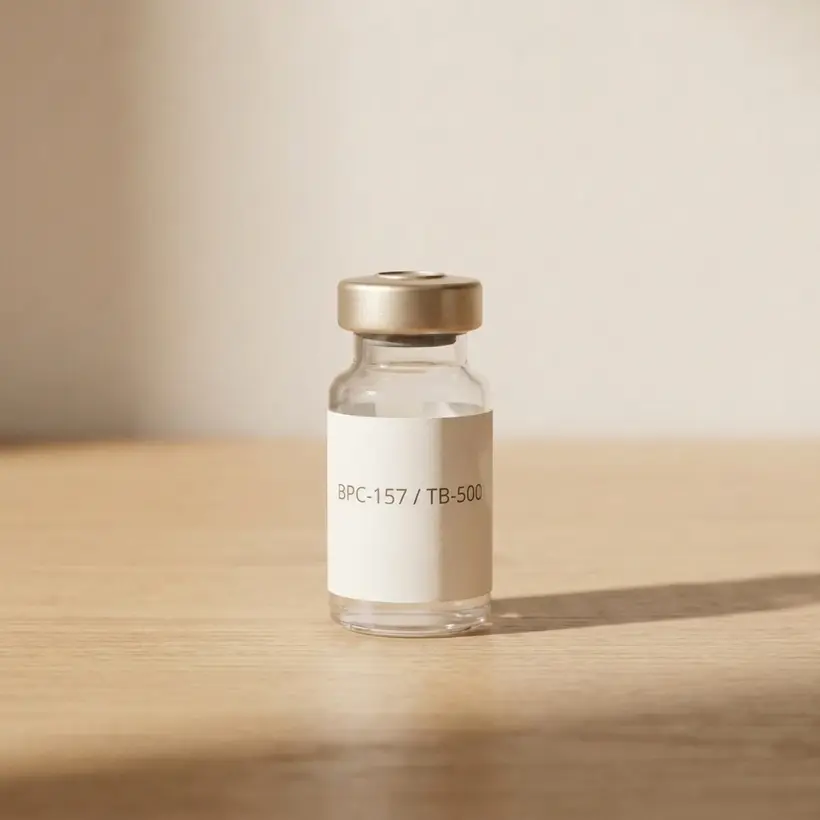
From the FormBlends catalog
BPC-157 / TB-500 Blend
The ultimate recovery stack in one vial · From $249/mo · compounded by a licensed 503A pharmacy, dispensed only after provider review.
View BPC-157 / TB-500 Blend →- Evidence Ledger: All Major Candidates Graded
- How Does BPC-157 Actually Repair Tendons? (Mechanism with Numbers)
- TB-500: What It Does That BPC-157 Does Not
- What Most Pages Get Wrong About Peptides and Tendons
- The Chemistry Behind Storage and Stability Rules
- Honest Head-to-Head: Peptides vs. Established Interventions
- Operational and Label Literacy: Reading a COA, Dosing Math, Degradation Signs
- Ranked Listicle: Best Peptides for Tendon Repair
- Risks, Contraindications, and What We Do Not Know
- FAQ
- Sources
1. Evidence Ledger: All Major Candidates Graded
| Peptide | Best Evidence Type | Tendon-Specific Studies | Effect Direction | Confidence for Tendon Repair |
|---|---|---|---|---|
| BPC-157 | Rodent RCT (in vivo) | Multiple published; Sikiric group, Brcic et al. 2010, Cerovecki et al. 2010 | Positive: faster functional recovery, collagen organization | Low (animal only) |
| TB-500 (Thymosin Beta-4 fragment) | Animal in vivo + in vitro | Limited; more cardiac/wound healing data than tendon-specific | Positive trend: angiogenesis, cell migration | Very Low |
| Hydrolysed Collagen Peptides | Human RCT | Shaw et al. 2017 (patellar tendon, n=8 per group); Clark et al. 2008 (joint pain, n=147) | Positive: collagen synthesis markers up; pain modestly reduced | Moderate (small n, human) |
| GHRPs (GHRP-6, GHRP-2) | Animal in vivo (cardiac, wound) | None tendon-specific in peer review | Indirect via GH/IGF-1 upregulation | Very Low |
| GHK-Cu (Copper Peptide) | In vitro fibroblast | In vitro only; Pickart et al. work | Positive: fibroblast proliferation, collagen upregulation in culture | Very Low |
| CJC-1295 / Ipamorelin | Human RCT (GH secretion only) | No tendon-specific trials | Indirect via sustained GH pulse; no tendon outcome data | Very Low |
2. How Does BPC-157 Actually Repair Tendons? (Mechanism with Numbers)
BPC-157 is a 15-amino-acid sequence (GEPPPGKPADDAGLV) derived from human gastric juice. Its stability in an acidic environment and resistance to enzymatic degradation distinguish it from most endogenous peptides, which degrade in minutes.
The specific mechanisms with the honest caveats
- Upregulation of GH receptor and VEGFR2: BPC-157 increases expression of growth hormone receptor and vascular endothelial growth factor receptor 2 in tendon fibroblasts (demonstrated in rodent tendon tissue by Sikiric group publications). This promotes both cellular proliferation and neovascularization. What this does NOT prove: that the same receptor upregulation occurs at the same magnitude in human tendon tissue.
- Tendon fibroblast outgrowth: In Brcic et al. (2010, Journal of Orthopaedic Research), BPC-157 administered at 10 mcg/kg/day intraperitoneally to rats with transected Achilles tendons showed significantly improved tendon-to-bone healing versus saline controls at 4 weeks post-surgery. Quantified fibroblast density and collagen fiber organization were both superior in treated animals.
- FAK and paxillin pathway: Mechanistically, BPC-157 appears to activate focal adhesion kinase (FAK) and paxillin signaling. In cell-culture studies, this accelerates fibroblast spreading and migration into wound matrices. What this does NOT prove: a clear dose-response curve in intact human tissue.
- Nitric oxide modulation: Several Sikiric group papers propose that BPC-157's vascular effects are partially NO-mediated. The peptide appears to counteract NO-synthase inhibitor effects in vascular and tissue-repair models. This remains mechanistic conjecture without a controlled human tissue experiment.
3. TB-500: What It Does That BPC-157 Does Not
TB-500 is the synthetic 17-amino-acid fragment (Ac-LKKTETQ sequence region of Thymosin Beta-4) that retains the actin-binding activity of the full protein. It sequesters G-actin, reduces intracellular actin polymerization pressure, and thereby facilitates cell migration into injury sites.
Where BPC-157 primarily drives fibroblast proliferation and collagen production, TB-500's primary mechanism is enabling cell movement. In wound-healing models (predominantly dermal and cardiac), this results in faster cellular infiltration of injury zones. For tendons specifically, only limited peer-reviewed animal data exists; most TB-500 tendon claims in commercial content are extrapolated from cardiac and skin wound research without direct tendon studies to support them.
The case for stacking the two is mechanistically coherent (different pathways, potentially additive), but the evidence base for the stack in tendons is anecdotal. That is an honest assessment, not a marketing one.
4. What Most Pages Get Wrong About Peptides and Tendons
This is the section competitors skip.
Mistake 1: Treating BPC-157 as a proven human therapy
Most listicle pages present BPC-157 the way a Phase III drug is presented. It is not. The entire human evidence base as of 2026 consists of one small published human trial on inflammatory bowel disease (not tendons) and abundant anecdote. The tendon evidence is exclusively preclinical.
Mistake 2: Ignoring bioavailability of oral peptides
A 15-amino-acid peptide administered orally faces intestinal protease degradation. BPC-157 shows unusual acid stability (supporting its gastric-origin biology), and some rodent oral-administration studies do show systemic effects. However, oral bioavailability percentages for BPC-157 in humans have not been published. Any page quoting a specific oral bioavailability number for BPC-157 in humans has fabricated it.
Mistake 3: Conflating tendon pain relief with tendon repair
Some peptide effects on pain (possibly via NO or dopaminergic pathways in BPC-157 animal data) could reduce subjective symptoms without repairing structural tissue. A person who feels better is not necessarily healing faster. These outcomes must be distinguished.
Mistake 4: Not discussing purity risk
Research peptides are not subject to FDA manufacturing oversight. Independent lab testing of commercially available BPC-157 products has found purity ranging widely, from below 90% to above 99%. Peptide impurities at scale can include truncated sequences, oxidized methionine analogs, or bacterial endotoxins. Endotoxin contamination causes injection-site inflammation that is frequently mistaken for a treatment side effect or, worse, attributed to the peptide's mechanism.
5. The Chemistry Behind Storage and Stability Rules
Lyophilized (freeze-dried) peptides are stable because removing water eliminates the primary degradation pathway: hydrolysis. Peptide bonds (amide bonds) are cleaved by water in the presence of heat, acid, or base. In the dry lyophilized state, this reaction is negligible at minus 20 degrees Celsius.
Once you reconstitute BPC-157 in bacteriostatic water, hydrolysis resumes. At refrigerator temperature (2 to 8 degrees Celsius), hydrolysis is slow but not zero. Over weeks, partial sequence degradation produces biologically inactive or differently active fragments. This is why the 30-day post-reconstitution guidance exists: it is not arbitrary; it reflects the kinetics of amide bond hydrolysis at refrigerator temperature in a dilute aqueous solution.
Light accelerates oxidation of methionine-containing residues and certain aromatic amino acids via photoexcitation. BPC-157 does not contain methionine, reducing (but not eliminating) this concern. Store in amber vials regardless.
Do not reconstitute with saline (0.9% NaCl) for long-term storage. Chloride ions at physiological concentration do not significantly accelerate degradation, but bacteriostatic water (containing 0.9% benzyl alcohol) is the standard for multi-use vials because benzyl alcohol suppresses microbial contamination without the pH extremes that would accelerate hydrolysis.
6. Honest Head-to-Head: Peptides vs. Established Interventions
| Intervention | Best Human Evidence | Effect on Tendon Outcomes | Regulatory Status | Practical Limitation |
|---|---|---|---|---|
| BPC-157 (injectable) | Rodent RCT only for tendons | Accelerated healing in animals; unknown in humans | Not approved; removed from US compounding lists 2023 | No human dose, safety, or efficacy data |
| Eccentric loading / physical therapy | Multiple human RCTs (Alfredson protocol, Achilles tendinopathy) | Significant reduction in pain and return-to-sport rates | Standard of care | Requires weeks to months of consistent effort |
| PRP (Platelet-Rich Plasma) | Human RCTs; Cochrane reviews (mixed findings) | Modest benefit vs. placebo for some tendinopathies; inconsistent | FDA Class II device cleared for preparation; not approved as drug | Expensive; effect size inconsistent across trials |
| Hydrolysed Collagen + Vitamin C | Small human RCTs (Shaw et al. 2017) | Increased collagen synthesis markers in peri-tendinous tissue | Legal dietary supplement | Small trial sizes; effect magnitude modest |
| Corticosteroid injection | Human RCTs; well-powered | Short-term pain relief; potential long-term tendon weakening signal | FDA approved (drug); off-label tendon use | Risk of tendon rupture with repeated injections; not repairing |
| NSAIDs | Human RCTs | Pain relief; chronic use may inhibit tendon remodeling (prostaglandin pathway) | FDA approved | Addresses symptoms, not repair |
Honest verdict: Physical therapy is the only intervention that wins on both evidence quality and regulatory standing for tendon repair and tendinopathy. BPC-157 is biologically interesting and mechanistically plausible; it is not the winner in an honest comparison. Anyone who tells you otherwise is selling something.
7. Operational and Label Literacy: COA Reading, Dosing Math, Degradation Signs
What a legitimate BPC-157 COA must contain
- HPLC (High-Performance Liquid Chromatography) purity: at or above 98%. Anything below 95% is poor quality for research purposes.
- Mass spectrometry (MS) confirmation: molecular weight 1419.53 Da (BPC-157 free base, C62H98N16O22). If the COA shows only HPLC with no MS, you cannot confirm molecular identity, only approximate purity.
- Endotoxin (LAL test) result: below 1 EU/mg. Endotoxin contamination above this threshold is the most common cause of injection reactions attributed to peptides.
- Date of testing and lot number traceable to the vial you received.
Reconstitution math
A 5 mg vial of BPC-157 reconstituted with 2.5 mL bacteriostatic water yields a concentration of 2 mg/mL, or 2000 mcg/mL. If a rodent-derived human-equivalent estimate suggests roughly 250 mcg per dose (noting this is extrapolation, not a clinical dose), each dose is 0.125 mL drawn on a standard insulin syringe. Always confirm your arithmetic before drawing any dose. Allometric scaling from rodent data to humans is imprecise; these numbers are illustrative of the math process only.
What degraded peptide looks like
Discard the vial if you observe: visible particulate matter in solution, a yellow or brown discoloration (suggests oxidation), or a pH shift detectable with narrow-range pH strips (degraded peptides often produce acidic breakdown products). A faint cloudiness that resolves with gentle swirl is usually acceptable (from bacteriostatic water's benzyl alcohol interacting with the peptide at reconstitution), but persistent turbidity is not.
8. Ranked Listicle: Best Peptides for Tendon Repair
1. BPC-157 (Best overall preclinical evidence)
Mechanism: fibroblast proliferation, VEGFR2/GH receptor upregulation, collagen organization. Evidence: multiple published rodent Achilles and rotator cuff transection studies. Confidence for human use: Low. Best format: subcutaneous injection local to injury or systemic.
2. TB-500 (Best complement to BPC-157; angiogenesis and cell migration)
Mechanism: actin sequestration facilitating cell migration, neovascularization. Evidence: animal wound-healing data; limited tendon-specific studies. Confidence for human tendon use: Very Low. Best format: subcutaneous injection.
3. Hydrolysed Collagen Peptides (Best human evidence; modest effect)
Mechanism: supplies hydroxyproline-containing dipeptides that appear in peri-tendinous circulation and may upregulate fibroblast collagen synthesis. Evidence: Shaw et al. 2017 human study (collagen synthesis markers increased with 15 g gelatin plus vitamin C before exercise). Confidence: Moderate for collagen synthesis markers; modest for functional tendon outcomes. Best format: oral, 10 to 15 g with vitamin C around rehabilitation sessions.
4. GHRPs / Ipamorelin (Indirect upstream signal only)
Mechanism: stimulate pituitary GH release; IGF-1 downstream promotes protein synthesis broadly. No tendon-specific trials. Evidence confidence for tendon: Very Low. These are ranked fourth by default of being the only other research-active class, not because the tendon evidence warrants it.
5. GHK-Cu (In vitro interest only)
Mechanism: copper chelation complex that upregulates collagen and elastin gene expression in fibroblast culture (Pickart et al. publications). No in vivo tendon data. Ranked fifth because interest exists but evidence is at the lowest possible level for in vivo claims.
9. Risks, Contraindications, and What We Do Not Know
- Oncologic concern: BPC-157 promotes angiogenesis and fibroblast proliferation. In the context of a healing tendon this is desirable; in the context of an occult malignancy, stimulating new blood vessel growth is theoretically harmful. No clinical data exists on this risk, but it is not a theoretical leap to raise it.
- Impurity risk: As noted above, endotoxin contamination in unregulated research peptides is the most practically relevant safety issue for most users. Source matters more than brand name.
- Unknown long-term effects: No published study has followed BPC-157-treated animals or humans beyond months. Chronic signaling effects on fibroblast populations, immune modulation, or receptor downregulation over years are completely unknown.
- No established human dose: Every human protocol in use is extrapolated from rodent data using allometric scaling. This introduces a factor of uncertainty that cannot be resolved without human dose-finding studies.
- Drug interactions: BPC-157 has shown interactions with dopamine and serotonin system modulation in animal models. The clinical significance in humans on psychiatric medications is unknown.
FAQ
What is the best peptide for tendon repair?BPC-157 has the most consistent preclinical evidence for tendon healing, with multiple rodent studies showing accelerated collagen organization and fibroblast activity. TB-500 shows additive effects in animal models when combined with BPC-157. Neither has completed a human RCT for tendon repair as of 2026.
Does BPC-157 actually work for tendons in humans?Human RCT evidence does not yet exist for BPC-157 in tendon repair. Evidence is strong at the rodent and in vitro level, and anecdotal human reports are abundant, but no Phase II or Phase III clinical trial has been completed or published as of May 2026.
How does BPC-157 repair tendons mechanically?BPC-157 upregulates growth hormone receptor and VEGFR2 expression, promotes tendon fibroblast migration and proliferation, and increases collagen type I synthesis. In Brcic et al. (2010), transected Achilles tendons treated with BPC-157 showed significantly faster functional recovery versus controls at 4 weeks in rodents.
What is TB-500 and how does it differ from BPC-157?TB-500 is a synthetic 17-amino-acid fragment of Thymosin Beta-4 (Ac-LKKTETQ region). It promotes actin polymerization dynamics, cell migration, and angiogenesis. BPC-157 is a 15-amino-acid stable gastric pentadecapeptide driving fibroblast proliferation and collagen synthesis. The two have complementary, non-redundant mechanisms.
Can peptides replace surgery or physical therapy for tendon tears?No. Even in optimistic animal data, peptides accelerate healing within the tissue's biological capacity; they do not restore mechanical continuity after complete rupture. Surgery is required for full-thickness tears. Physical therapy is the only intervention with robust human RCT evidence for tendinopathy outcomes.
What dose of BPC-157 is used in rodent tendon studies?Rat studies by Sikiric and colleagues typically use 10 mcg/kg per day administered intraperitoneally or locally. Human dose extrapolation using standard allometric scaling suggests a rough human-equivalent dose in the range of 1 to 2 mcg/kg per day, but no human dose-finding study has been published to validate this range.
What does a legitimate BPC-157 COA show?A credible certificate of analysis should show: HPLC purity at or above 98%, mass spectrometry confirmation of molecular weight 1419.5 Da (BPC-157 free base), absence of endotoxins (LAL test, below 1 EU/mg), residual solvent levels within USP limits, and peptide sequence confirmation. Any COA without MS data is insufficient.
How stable is BPC-157 once reconstituted?Lyophilized BPC-157 is stable for months when stored below minus 20 degrees Celsius and protected from light. Once reconstituted in bacteriostatic water, most compounding and research guidance recommends use within 30 days when refrigerated at 2 to 8 degrees Celsius, though formal published degradation kinetic data in solution is limited.
Is BPC-157 legal to use?BPC-157 is not FDA-approved for any indication. The FDA issued guidance in 2023 removing BPC-157 from the list of permissible bulk drug substances for compounding, making it unavailable from US 503A and 503B compounding pharmacies for human use. It is sold legally as a research chemical not for human use in many jurisdictions.
Which peptides have the weakest evidence for tendon repair?GHRPs (such as GHRP-6) and copper peptides (GHK-Cu) have no direct tendon repair trials; they work via indirect or in vitro mechanisms only. CJC-1295 and ipamorelin have human data only for GH secretion, with no tendon outcome studies. Their confidence rating is Very Low for tendon applications.
Can BPC-157 be taken orally for tendon healing?Some rodent studies show systemic effects from oral BPC-157, which is mechanistically plausible given its acid stability. However, oral bioavailability data in humans does not exist. Most researchers use subcutaneous injection for systemic effect or local injection near the affected tendon to minimize the bioavailability uncertainty.
What are the known risks of BPC-157?In animal studies BPC-157 has a favorable short-term safety profile with no established lethal dose in rodents. Potential concerns include theoretical promotion of angiogenesis in malignant tissue, unknown long-term immunologic effects in humans, and injection-site reactions from impure preparations. No controlled human safety trial data exists.
Sources
- Sikiric P, Seiwerth S, Rucman R, et al. "Stable gastric pentadecapeptide BPC 157: novel therapy in gastrointestinal tract." Current Pharmaceutical Design. 2011;17(16):1612-1632. PMID 21548867.
- Brcic L, Brcic I, Staresinic M, et al. "Modulatory effect of gastric pentadecapeptide BPC 157 on angiogenesis in muscle and tendon healing." Journal of Physiology and Pharmacology. 2009;60 Suppl 7:191-196. PMID 20388955.
- Cerovecki T, Bojanic I, Brcic L, et al. "Pentadecapeptide BPC 157 (PL 14736) improves ligament healing in the rat." Journal of Orthopaedic Research. 2010;28(9):1155-1161. PMID 20225320.
- Shaw G, Lee-Barthel A, Ross ML, Wang B, Baar K. "Vitamin C-enriched gelatin supplementation before intermittent activity augments collagen synthesis." American Journal of Clinical Nutrition. 2017;105(1):136-143. PMID 27852613.
- Clark KL, Sebastianelli W, Flechsenhar KR, et al. "24-Week study on the use of collagen hydrolysate as a dietary supplement in athletes with activity-related joint pain." Current Medical Research and Opinion. 2008;24(5):1485-1496. PMID 18416885.
- Goldstein AL, Hannappel E, Kleinman HK. "Thymosin beta4: actin-sequestering protein moonlights to repair injured tissues." Trends in Molecular Medicine. 2005;11(9):421-429. PMID 16099733.
- Alfredson H, Pietila T, Jonsson P, Lorentzon R. "Heavy-load eccentric calf muscle training for the treatment of chronic Achilles tendinosis." American Journal of Sports Medicine. 1998;26(3):360-366. PMID 9617396.
- U.S. Food and Drug Administration. "Bulk Drug Substances That May Be Used in Compounding Under Section 503A of the Federal Food, Drug, and Cosmetic Act." Docket FDA-2019-N-5710. Federal Register 2023.
- Pickart L, Vasquez-Soltero JM, Margolina A. "GHK peptide as a natural modulator of multiple cellular pathways in skin regeneration." BioMed Research International. 2015;2015:648108. PMID 26090451.
- de Vos RJ, van Veldhoven PL, Moen MH, Weir A, Tol JL, Maffulli N. "Autologous growth factor injections in chronic tendinopathy: a systematic review." British Medical Bulletin. 2010;95:63-77. PMID 20197290.
Footer Disclaimers
Ready when you are
BPC-157 / TB-500 Blend
The ultimate recovery stack in one vial · From $249/mo · compounded by a licensed 503A pharmacy, dispensed only after provider review.
View BPC-157 / TB-500 Blend →