Key Takeaway
Can Cerebrolysin help tendon repair? Why neurotrophic peptides aren't designed for connective tissue and what works better.
Quick Answer: Cerebrolysin for tendon repair isn't a relevant application. Cerebrolysin is a neurotrophic peptide preparation that supports neurons, not tendons or connective tissue. Tendon repair requires tenocyte proliferation, collagen I synthesis, and controlled inflammatory resolution, none of which Cerebrolysin addresses. For tendon injuries, BPC-157 for tendon repair and TB-4 for tendon repair have direct evidence in tendon healing models, along with growth hormone peptides that support collagen production .
Why Cerebrolysin Does Not Help Tendons
- Tendons are composed primarily of Type I collagen produced by tenocytes. Cerebrolysin has no effect on collagen synthesis
- Tendon healing requires growth factors like TGF-beta, IGF-1, and VEGF. Cerebrolysin's BDNF-like factors are neuron-specific
- No preclinical or clinical research has examined Cerebrolysin for any musculoskeletal soft tissue condition
Effective Tendon Repair Options
| Compound | Tendon Mechanism | Evidence |
|---|---|---|
| BPC-157 | Growth factor cascade, angiogenesis, tenocyte proliferation | Preclinical tendon models (Achilles, rotator cuff) |
| TB-4 | Cell migration, anti-inflammatory, tissue remodeling | Preclinical tendon data |
| CJC-1295/Ipamorelin | GH/IGF-1 collagen synthesis | Clinical GH/connective tissue data |
| PPS | Enzyme inhibition (adjacent tissue protection) | Indirect, veterinary joint data |
| Cerebrolysin | None for tendons | No tendon evidence |
Frequently Asked Questions
What is the best peptide for tendon injuries?
BPC-157 has the most direct evidence for tendon repair, with multiple preclinical studies showing accelerated healing in Achilles tendon, rotator cuff, and patellar tendon models. Combining BPC-157 with TB-4 provides complementary repair mechanisms.
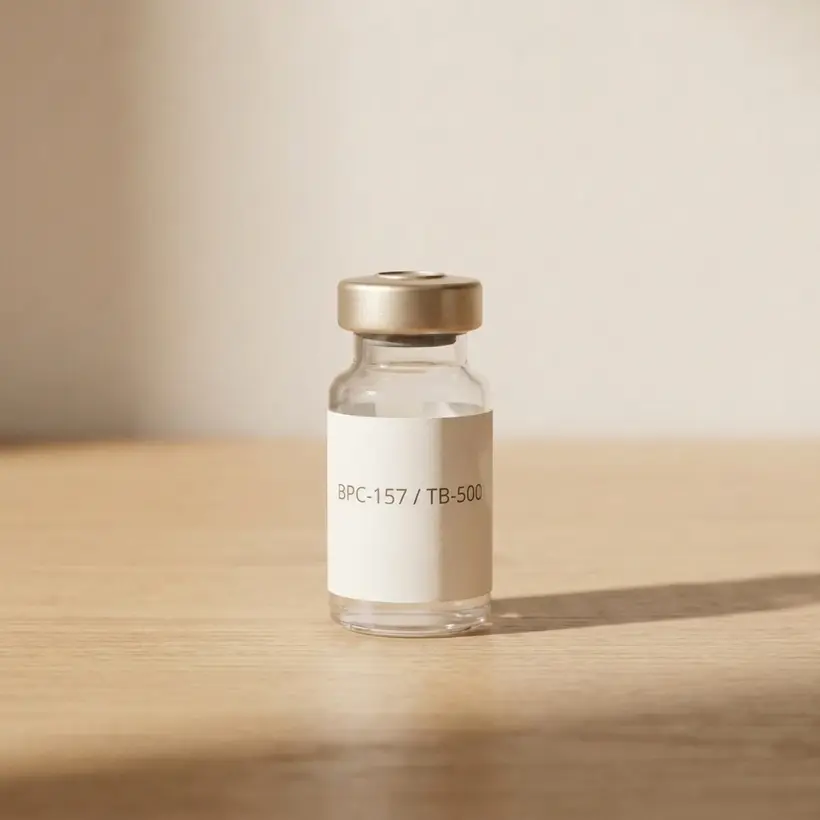
From the FormBlends catalog
BPC-157 / TB-500 Blend
The ultimate recovery stack in one vial · From $249/mo · compounded by a licensed 503A pharmacy, dispensed only after provider review.
View BPC-157 / TB-500 Blend →
Could Cerebrolysin help with nerve-related tendon pain?
Some tendon conditions involve nerve entrapment or neuropathic pain components. In these cases, addressing the nerve component with Cerebrolysin could be considered alongside tendon-specific treatments. But the primary approach should target the tendon itself.
Repair Tendons with Targeted Peptides
At FormBlends, our physicians design tendon-specific recovery protocols using compounds with proven connective tissue healing evidence.
Disclaimer: This article is for informational purposes only and doesn't constitute medical advice. Always consult with a licensed healthcare provider. Individual results may vary.
Ready when you are
BPC-157 / TB-500 Blend
The ultimate recovery stack in one vial · From $249/mo · compounded by a licensed 503A pharmacy, dispensed only after provider review.
View BPC-157 / TB-500 Blend →