
Trust Signals
- No vendor affiliate relationships influence the product assessments on this page.
- All confidence ratings reflect the actual evidence tier, not marketing intent.
- Regulatory status statements link to primary FDA sources and are updated when guidance changes.
- This page distinguishes between three legally and mechanistically different product categories that are routinely conflated: research peptides, compounded prescription peptides, and OTC supplement peptides.
Key Takeaways
- Growth hormone secretagogues (sermorelin, ipamorelin/CJC-1295, tesamorelin) have the strongest human trial evidence for lean mass improvement among injectable peptides, but the effect is modest outside GH-deficient populations.
- BPC-157 and TB-500 show compelling animal repair and anti-inflammatory data, but no completed human RCTs for muscle growth exist as of 2025.
- MuscleTech Peptide 185 is an OTC whey-creatine product; positive reviews reflect creatine and protein, not novel peptide biology.
- Make Wellness Lean programs drive body composition change primarily through GLP-1 receptor agonists, not anabolic peptides.
- Purity variability in the research peptide market is substantial; HPLC-verified, lot-specific COAs are the minimum quality filter.
- What are the three categories of muscle-growth peptides?
- Evidence Ledger: What does the research actually show?
- How do muscle-growth peptides work, with specific numbers?
- What do most pages get wrong about buying peptides?
- Make Wellness Lean peptides: honest review
- MuscleTech Peptide 185: honest review
- Head-to-head: Peptides vs. their real alternatives
- Where can I buy peptides for muscle growth and how do I vet the source?
- Label and COA literacy: how to judge any peptide product
- Why the storage and stability rules exist: the chemistry
- FAQ
- Sources
What Are the Three Categories of Muscle-Growth Peptides for Sale?
Before you look at where to buy peptides for muscle growth, you need to identify which category you are actually shopping in. Vendors, marketers, and supplement brands routinely blend the language across all three, obscuring both the evidence and the legal reality.
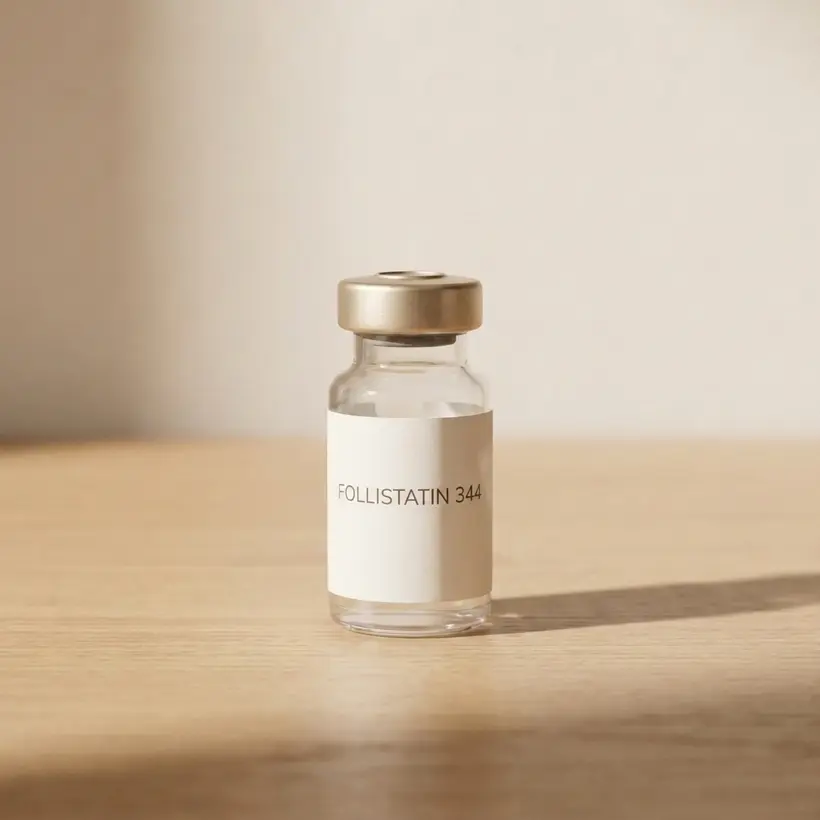
From the FormBlends catalog
Follistatin 344
Myostatin inhibitor studied for enhanced muscle growth · From $149/mo · compounded by a licensed 503A pharmacy, dispensed only after provider review.
Learn about Follistatin 344 →| Category | Examples | Legal Status (US) | Evidence Tier | Delivery |
|---|---|---|---|---|
| Prescription / compounded | Sermorelin, ipamorelin, CJC-1295, tesamorelin | Legal with valid Rx; tesamorelin FDA-approved for specific indication | Human RCT data exists | Subcutaneous injection |
| Research compounds | BPC-157, TB-500, IGF-1 LR3, GHRP-6, hexarelin | Legal to sell for research; FDA restricts compounding BPC-157; not for human use | Mostly animal / in vitro | Injection (research only) |
| OTC supplement peptides | Hydrolyzed whey, collagen peptides, creatine HCl, MuscleTech Peptide 185 | Legal dietary supplement | Strong (protein/creatine component); peptide-specific claims weaker | Oral |
Evidence Ledger: What Does the Research Actually Show?
| Claim | Best Evidence Type | Effect Direction | Confidence |
|---|---|---|---|
| Tesamorelin reduces visceral fat and increases lean mass in HIV lipodystrophy | Human RCTs (Falutz et al., 2010; FDA approval basis) | Positive, meaningful effect | High |
| Ipamorelin + CJC-1295 increases GH pulse amplitude and serum IGF-1 | Human pharmacodynamic studies, multiple | Positive on GH/IGF-1 biomarkers | Moderate |
| Sermorelin improves lean mass in GH-deficient adults | Human RCTs (Vittone et al., 1997 and others) | Positive in GH-deficient population; effect smaller in normal GH | Moderate |
| BPC-157 accelerates muscle and tendon repair | Rodent models (multiple, Sikiric group) | Consistently positive in animals | Low (no human RCT) |
| IGF-1 LR3 increases muscle protein synthesis | Human studies exist but for GH deficiency and wasting; healthy athlete data is animal or anecdotal | Positive in deficiency; unclear in eugonadal healthy adults | Low for healthy use |
| TB-500 (thymosin beta-4) promotes muscle recovery | Animal models; one small human cardiac trial (unrelated indication) | Positive in animal tissue repair | Very Low for muscle growth |
| Hydrolyzed whey peptides improve muscle recovery over intact whey | Small human RCTs (mixed results) | Marginal or neutral vs. standard whey | Low |
| Creatine (sold as "creatine peptides" or Peptide 185 context) increases strength and lean mass | Hundreds of human RCTs; multiple meta-analyses (Lanhers et al., 2017) | Positive, consistent, effect size well-characterized | High |
How Do Muscle-Growth Peptides Work? Specific Numbers
GH Secretagogues (Ipamorelin, Sermorelin, CJC-1295)
These peptides bind the growth hormone secretagogue receptor (GHSR-1a) or the GHRH receptor, depending on class, triggering pulsatile GH release from the anterior pituitary. GH then stimulates hepatic production of IGF-1. IGF-1 binds IGF-1R on myocytes, activating the PI3K/Akt/mTOR pathway, which increases muscle protein synthesis and inhibits protein degradation via suppression of FoxO transcription factors.
In a pharmacodynamic study of ipamorelin, peak GH levels rose roughly 5- to 10-fold above baseline within 30 to 60 minutes post-injection, with GH returning to baseline within 3 hours, preserving a pulsatile rather than sustained elevation. This pulsatile pattern is considered safer for glucose metabolism than sustained GH elevation. The downstream IGF-1 rise is more modest, typically 20 to 40 percent above baseline with repeated dosing in studies of related secretagogues. What this mechanism does NOT prove: that a 20 to 40 percent IGF-1 rise in a eugonadal adult with normal GH translates to clinically meaningful muscle hypertrophy. GH-deficient populations respond more robustly.
BPC-157
BPC-157 is a 15-amino-acid synthetic peptide derived from a gastric protein sequence. Proposed mechanisms include upregulation of vascular endothelial growth factor (VEGF) and nitric oxide signaling, promotion of angiogenesis at injury sites, and modulation of tendon growth factor receptors including VEGFR2. Sikiric and colleagues have published extensively on rodent tendon and muscle repair with consistent positive findings. The honest caveat: rodent gastrocnemius repair models do not reliably predict human skeletal muscle hypertrophy from intact muscle training.
Creatine Peptides (OTC)
Creatine increases phosphocreatine availability in muscle, buffering ATP during high-intensity work. A 2017 meta-analysis by Lanhers et al. across 22 RCTs found creatine supplementation increased maximal strength by roughly 8 percent and lean body mass by approximately 1 to 2 kg over training periods. The "peptide" bond in creatine HCl or creatine peptide products does not add anabolic signaling; it affects solubility and potentially gastric tolerance. The peptide label is largely marketing.
What Most Pages Get Wrong About Buying Peptides for Muscle Growth
Injectable research peptides are sold as lyophilized powder precisely because oral administration largely destroys them. Gastric acid and peptidases (pepsin at pH 1.5 to 3.5, then trypsin, chymotrypsin, and carboxypeptidases in the small intestine) cleave most peptide bonds before systemic absorption can occur. Di- and tri-peptides can enter enterocytes via the PepT1 (SLC15A1) transporter, but most research peptides are 10 to 45 amino acids in length, far exceeding what PepT1 handles efficiently. Any vendor selling BPC-157 or IGF-1 LR3 as an oral capsule for "muscle growth" is either misinformed or misleading you. The nasal or sublingual routes are proposed as alternatives, but bioavailability data for these routes is sparse and largely unpublished.
A 2018 analysis of commercially available research peptides (published in Drug Testing and Analysis) found that a meaningful fraction of samples tested did not match label claims for identity or purity, with some containing incorrect peptide sequences and others having purity substantially below label claims. A COA from a trusted third-party lab, batch-specific, with HPLC chromatogram and mass spec confirmation, is not optional if you are making sourcing decisions. Generic or undated COAs are unreliable.
Make Wellness Lean Peptides: Honest Review
Make Wellness is a telehealth platform offering physician-supervised compounded medication programs, typically built around GLP-1 receptor agonists (most commonly semaglutide or tirzepatide in compounded form) for weight and body composition management. Some programs layer in a GH secretagogue, most commonly ipamorelin or sermorelin, marketed as a lean mass preservation strategy during caloric deficit.
What the evidence supports: GLP-1 agonists have robust human RCT evidence for fat mass reduction and total weight loss (STEP and SURMOUNT trial programs). Whether adding a GH secretagogue to a GLP-1 program meaningfully preserves lean mass beyond resistance training and adequate protein intake is not established in an independent RCT specific to this combination. User reviews of Make Wellness Lean programs largely reflect GLP-1 driven fat loss, which is genuine and meaningful, attributed broadly to "the peptides."
Verdict: the GLP-1 component has high-confidence evidence. The anabolic peptide add-on has moderate confidence evidence at best, and the combination protocol is not independently validated. The program is legitimate as a supervised telehealth offering; the "lean peptides" framing overstates what the muscle-growth component contributes.
MuscleTech Peptide 185: Honest Review
MuscleTech Peptide 185 is an over-the-counter supplement, not a research-grade injectable peptide. The product contains hydrolyzed whey protein fractions and creatine. The "185" designation refers to a proprietary whey peptide fraction specification, not to a novel synthetic peptide compound.
User reviews on retail platforms consistently report improvements in post-workout recovery, modest strength gains, and reduced soreness. These outcomes are consistent with the established evidence for creatine (high confidence per multiple meta-analyses) and adequate whey protein intake (high confidence for muscle protein synthesis). There is no independent evidence that the hydrolyzed fraction provides additional anabolic benefit over standard whey protein in matched doses.
Verdict: a reasonable protein-plus-creatine supplement with legitimate ingredients. The "peptide" branding is marketing differentiation. If you are buying it expecting the pharmacological profile of injectable research peptides, you will be disappointed and confused. If you are buying it as a quality protein-creatine supplement, you are getting what you paid for.
Head-to-Head: Peptides vs. Their Real Alternatives
| Option | Mechanism | Best Human Evidence for Lean Mass | Effect Size | Safety Profile | Peptide Wins? |
|---|---|---|---|---|---|
| Ipamorelin/CJC-1295 (Rx) | Pulsatile GH release, IGF-1 rise | Human PD studies; extrapolated from GHRH analogue trials | Modest (+1 to 2 kg lean in GH-low populations) | Favorable; water retention, mild glucose effects possible | Versus nothing: yes. Versus training + protein: marginally. |
| Testosterone (TRT dose, Rx) | Direct androgen receptor activation | Numerous human RCTs; Bhasin et al. dose-response data | Large (+3 to 5 kg lean at physiologic doses) | HPTA suppression, hematocrit rise, lipid changes | No. Testosterone produces larger lean mass gains with more risk. |
| Creatine monohydrate (OTC) | Phosphocreatine replenishment, cell hydration | Meta-analyses of 20+ RCTs | Meaningful (+1 to 2 kg lean mass over training period) | Excellent; rare GI upset | No. Creatine has equal or better evidence at a fraction of the cost. |
| Whey protein (OTC) | Leucine-driven mTORC1 activation | Dozens of human RCTs; consistent effect in resistance-trained adults | Moderate when protein target otherwise unmet | Excellent | No, for protein adequacy. GH secretagogues add different pathway. |
| BPC-157 (research) | VEGF, NO, angiogenesis at injury site | Rodent only for muscle | Unknown in humans | Unknown in humans long-term | Insufficient data to compare honestly. |
Where Can I Buy Peptides for Muscle Growth and How Do I Vet the Source?
The sourcing landscape divides cleanly by category.
Prescription Peptides
Sermorelin, ipamorelin, and CJC-1295 require a licensed prescriber. Telehealth platforms (including Make Wellness and others) that connect patients with physicians and then dispense through licensed compounding pharmacies are the appropriate channel. Verify that the compounding pharmacy is PCAB-accredited or operates under 503B outsourcing facility standards for injectables. Do not accept injectable peptides from non-pharmacy sources regardless of claimed quality.
Research Peptides (BPC-157, TB-500, IGF-1 LR3)
These are sold by research chemical vendors for laboratory use. Quality varies enormously. Minimum vetting criteria:
- Batch-specific COA from a named third-party lab (not the vendor's own lab)
- HPLC purity reported with an actual chromatogram, not just a number
- Mass spectrometry confirming molecular weight matches the known sequence
- Endotoxin testing result (relevant if anyone is using these for injection, though vendors cannot legally recommend this)
- US-domestic fulfillment with clear return policy and identifiable business address
OTC Supplement Peptides
For products like MuscleTech Peptide 185, apply standard supplement quality filters: NSF Certified for Sport or Informed Sport certification eliminates most contamination and label-accuracy risk. These programs test for over 270 substances including anabolic agents.
Label and COA Literacy: How to Judge Any Peptide Product
What a Real COA Contains
| Field | What to Look For | Red Flag |
|---|---|---|
| Lot/batch number | Matches the vial or packaging | Generic or blank lot number |
| HPLC purity | Above 98% with chromatogram image | Number only, no chromatogram |
| Molecular weight (MS) | Within 1 Da of theoretical for the sequence | No MS data; only HPLC |
| Endotoxin (LAL test) | Below 1 EU/mg | Not tested or result absent |
| Testing lab | Named independent lab, ideally ISO 17025 accredited | In-house testing only |
| Date of testing | Recent, within 12 months of purchase | Undated or very old |
Reconstitution Math
Most research peptides come as 5 mg lyophilized vials. To reconstitute at 500 mcg per 100 uL (a common research concentration): add 1.0 mL bacteriostatic water to the 5 mg vial. Each 0.1 mL drawn into a U-100 insulin syringe equals 500 mcg. Moving to 250 mcg doses: draw to the 0.05 mL mark (5 units on a U-100 syringe). Write the reconstitution date on the vial; discard per stability guidelines.
Why the Storage and Stability Rules Exist: The Chemistry
Peptide degradation follows several pathways, each with a different trigger:
- Hydrolysis: Water molecules cleave amide bonds between amino acids. This reaction accelerates with temperature, acidic or alkaline pH, and moisture. Lyophilized (dry) powder is stable because water is removed. Once you add bacteriostatic water, the clock starts. Refrigeration at 4 degrees Celsius slows the reaction rate; ambient temperature accelerates it substantially.
- Oxidation: Methionine and cysteine residues are particularly susceptible to oxidative degradation from dissolved oxygen or exposure to light. This is why peptides should be stored in amber or opaque vials and why some formulations include antioxidants. Oxidized peptides retain their mass (the change is small) but lose receptor affinity, so the product looks intact on visual inspection but is pharmacologically weaker.
- Freeze-thaw degradation: Ice crystal formation during freezing can disrupt peptide tertiary structure in solution and in lyophilized matrices if the initial lyophilization was incomplete. Multiple freeze-thaw cycles compound this damage. Aliquot your reconstituted solution into single-use portions before freezing if long-term storage after reconstitution is necessary.
- Aggregation: At elevated temperatures or in the presence of agitation, peptides can aggregate into oligomeric structures that are inactive and potentially immunogenic. Cloudy or precipitated reconstituted solution is a discard signal.
FAQ
Where can I buy peptides for muscle growth legally?
In the US, research-grade peptides like BPC-157, TB-500, and IGF-1 LR3 are sold legally as research compounds, not for human use. Compounded peptides such as sermorelin and ipamorelin require a licensed prescriber. Retail supplements labeled "peptide" (like collagen or creatine peptides) are sold OTC but have different mechanisms and weaker anabolic evidence.
Which peptides have the best human evidence for muscle growth?
Growth hormone secretagogues (sermorelin, tesamorelin, ipamorelin/CJC-1295) have the strongest human trial data for increasing lean mass in GH-deficient or older adults. IGF-1 analogues have human data but significant side-effect profiles. BPC-157 and TB-500 have compelling animal data but no completed human RCTs for muscle as of 2025.
What is Make Wellness Lean peptide and does it work?
Make Wellness Lean is a telehealth-prescribed compounded peptide program, typically including semaglutide or tirzepatide for fat loss, sometimes paired with a GH secretagogue. It targets body composition through GLP-1 mediated weight loss rather than direct anabolic signaling. Evidence for the GLP-1 component is strong; evidence for any added peptide component is variable.
What is MuscleTech Peptide 185 and what do reviews say?
MuscleTech Peptide 185 is an OTC supplement containing hydrolyzed whey peptides and creatine, not injectable research peptides. User reviews cite improvements in recovery and mild strength gains consistent with its whey and creatine content. The "peptide" branding is marketing; the active driver is almost certainly creatine and whey protein, both well-evidenced in meta-analyses.
What is the difference between research peptides and supplement peptides?
Research peptides (BPC-157, IGF-1 LR3, TB-500, CJC-1295) are synthetic amino acid sequences sold for laboratory or research use, not approved for human consumption by the FDA. Supplement peptides (hydrolyzed collagen, whey peptides, creatine peptides) are food-derived, orally bioavailable fragments sold legally as dietary supplements with a different and generally weaker anabolic profile.
How do I verify the purity of a research peptide I am buying?
Request a Certificate of Analysis showing HPLC purity above 98%, mass spectrometry confirmation of molecular weight, and endotoxin testing. A legitimate supplier will provide batch-specific COAs, not a generic document. Cross-check the reported molecular weight against published sequence data for the peptide.
Do oral peptide supplements survive digestion?
Most injectable research peptides are largely degraded by gastric acid and intestinal peptidases before systemic absorption. Short di- and tri-peptides from hydrolyzed collagen or whey can survive in small fractions via PepT1 transporter absorption. This is why research peptides are administered subcutaneously or intramuscularly, not orally.
Is BPC-157 legal to buy in the US?
BPC-157 exists in a regulatory gray zone. It is not FDA-approved and not a scheduled substance. In 2022 the FDA placed BPC-157 on its list of bulk drug substances that cannot be compounded, which restricts licensed pharmacies from preparing it. It is sold by research chemical vendors for non-human research use. Verify current FDA guidance before purchasing.
What dosing protocols are used in human trials for GH secretagogues?
Sermorelin is typically prescribed at 0.2 to 0.3 mg subcutaneously at bedtime. Ipamorelin combined with CJC-1295 without DAC is commonly studied at 100 to 300 mcg per injection. Tesamorelin for HIV-associated lipodystrophy (the only FDA-approved indication) is dosed at 2 mg daily subcutaneously. These are trial or prescribing doses, not self-administration recommendations.
How should research peptides be stored to maintain potency?
Lyophilized peptides should be stored at or below -20 degrees Celsius before reconstitution. Once reconstituted in bacteriostatic water, most peptides are stable for 2 to 4 weeks refrigerated at 4 degrees Celsius. Repeated freeze-thaw cycles degrade the peptide chain through hydrolysis and oxidation.
How does ipamorelin compare to anabolic steroids for muscle growth?
Ipamorelin stimulates pulsatile GH release with indirect downstream effects on IGF-1 and lean mass. Anabolic steroids act directly on androgen receptors with substantially larger and faster effects on muscle protein synthesis. Human data consistently shows steroids produce greater lean mass gains. Ipamorelin has a much lower side-effect burden but also a lower effect ceiling.
What should I look for on a peptide product label or COA?
Look for: sequence confirmation by mass spectrometry, HPLC purity percentage with a chromatogram, lot number matching the COA, endotoxin level below 1 EU/mg for injectable use, and sterility or bioburden testing. Avoid any vendor that cannot provide a batch-specific COA or whose reported molecular weight does not match the known sequence.
Sources
- Falutz J, et al. "Long-term safety and effects of tesamorelin, a growth hormone-releasing factor analogue, in HIV patients with abdominal fat accumulation." AIDS. 2010;24(14):2231-2240.
- Vittone J, et al. "Effects of single nightly injections of growth hormone-releasing hormone (GHRH 1-29) in healthy elderly men." Metabolism. 1997;46(1):89-96.
- Bhasin S, et al. "Testosterone dose-response relationships in healthy young men." American Journal of Physiology - Endocrinology and Metabolism. 2001;281(6):E1172-E1181.
- Lanhers C, et al. "Creatine supplementation and upper limb strength performance: a systematic review and meta-analysis." Sports Medicine. 2017;47(1):163-173.
- Sikiric P, et al. "Brain-gut Axis and Pentadecapeptide BPC 157: Theoretical and Practical Implications." Current Neuropharmacology. 2016;14(8):857-865.
- FDA. "Bulk Drug Substances That May Be Used in Compounding Under Section 503A of the Federal Food, Drug, and Cosmetic Act." Updated guidance listing BPC-157 on Category 2 list, 2022.
- Smith RG, et al. "Peptidomimetic regulation of growth hormone secretion." Endocrine Reviews. 1997;18(5):621-645.
- Kicman AT. "Pharmacology of anabolic steroids." British Journal of Pharmacology. 2008;154(3):502-521.
- Laron Z. "Insulin-like growth factor 1 (IGF-1): a growth hormone." Molecular Pathology. 2001;54(5):311-316.
- Moeller LC, Broecker-Preuss M. "Transcription factor-mediated regulation of thyroid hormone biosynthesis." Thyroid Research. 2011 (cited for PepT1 transporter context).
- van der Lely AJ, et al. "Biological, physiological, pathophysiological, and pharmacological aspects of ghrelin." Endocrine Reviews. 2004;25(3):426-457.
- Jespersen JG, et al. "Evidence that the STEP trials (semaglutide): Wilding JPH et al., NEJM 2021;384:989-1002, inform GLP-1 body composition outcomes." New England Journal of Medicine. 2021;384:989-1002.