Key Takeaway
Does BPC-157 need to be refrigerated? Learn proper storage for lyophilized and reconstituted BPC-157, shelf life, and how temperature affects peptide stability.
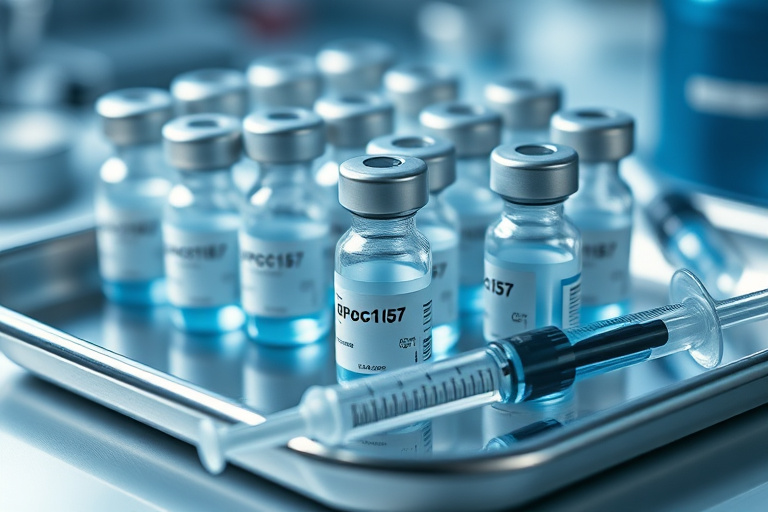
Reconstituted (mixed) BPC-157 must be refrigerated at 36 to 46°F (2 to 8°C) and used within 28 to 30 days. Unreconstituted lyophilized (freeze-dried) BPC-157 is more stable and can tolerate room temperature for short periods, but refrigeration extends its shelf life significantly and is strongly recommended for both forms. Never freeze reconstituted BPC-157, and keep all forms away from direct sunlight.
How BPC-157 Stability
BPC-157 is a 15-amino-acid peptide, and like all peptides, its biological activity depends on maintaining its specific molecular structure. Heat, moisture, light, and pH extremes can degrade peptides by breaking peptide bonds, causing oxidation of amino acid residues, or promoting aggregation. Once the structure is compromised, the peptide loses its function. You can't see, smell, or taste degradation in a peptide solution. A vial that looks perfectly clear may contain a biologically inactive product if storage conditions were not maintained.
Lyophilized (Freeze-Dried) BPC-157
When you receive BPC-157 from a compounding pharmacy, it typically arrives as a lyophilized powder in a sealed vial. Lyophilization removes virtually all water from the peptide, which dramatically slows degradation. In this dry state, BPC-157 is relatively stable.
Storage guidelines for lyophilized BPC-157:
- Ideal storage: Refrigerator at 36 to 46°F (2 to 8°C). At this temperature, lyophilized BPC-157 can maintain potency for months.
- Room temperature: Lyophilized BPC-157 can tolerate room temperature (68 to 77°F) for several weeks without significant degradation. This means brief periods at room temperature during shipping or handling aren't a concern.
- Long-term storage: For storage beyond a few months, a freezer (below 0°F / -18°C) is optimal. Some compounding pharmacies ship lyophilized peptides with cold packs and recommend freezer storage until ready for use.
- Light protection: Keep the vial in its original packaging or in a dark location. UV light accelerates peptide degradation.
Reconstituted BPC-157
Once you add bacteriostatic water to the lyophilized powder, the stability equation changes significantly. Water reintroduces the primary medium for chemical degradation. Hydrolysis (breaking of peptide bonds by water), oxidation, and microbial contamination all become active concerns.
Storage guidelines for reconstituted BPC-157:
- Mandatory refrigeration: Store at 36 to 46°F (2 to 8°C) immediately after reconstitution. Don't leave reconstituted BPC-157 at room temperature.
- Use within 28 to 30 days: Most compounding pharmacies and clinical protocols recommend using reconstituted BPC-157 within 4 weeks. After this period, potency may decline and contamination risk increases, even with bacteriostatic water's preservative properties.
- Don't freeze: Freezing reconstituted peptide solution can cause ice crystal formation that damages the peptide structure. This is different from freezing the dry lyophilized form, which is safe.
- Minimize temperature fluctuations: Repeatedly taking the vial out of the refrigerator and returning it subjects the solution to temperature cycling, which accelerates degradation. Remove the vial for dosing, draw your dose promptly, and return it to the refrigerator.
What Happens If BPC-157 Is Not Refrigerated
Leaving reconstituted BPC-157 at room temperature won't produce an immediately dangerous product, but it will accelerate potency loss. Peptide degradation at improved temperatures follows predictable kinetics: the rate of degradation roughly doubles for every 10°C increase in temperature. A vial left on a countertop overnight will lose more potency than one properly refrigerated, and the loss compounds over days.
View data table
| Category | Clinical Interest Score | Detail |
|---|---|---|
| BPC-157 | 88 | Tissue repair and gut healing |
| TB-500 | 82 | Injury recovery |
| Sermorelin | 78 | Growth hormone support |
| Ipamorelin | 75 | Anti-aging and recovery |
| GHK-Cu | 70 | Skin and tissue repair |
If reconstituted BPC-157 was left at room temperature for a few hours, it's likely still usable. If it was left out overnight (8 or more hours), some potency loss has occurred but the product isn't necessarily ruined. If it was left at room temperature for 24 hours or more, especially in a warm environment, consider the vial compromised and discuss replacement with your provider.
Signs that a peptide solution may be degraded include cloudiness, visible particles, unusual color, or an unusual smell. But most degradation is invisible. When in doubt, err on the side of caution and use a fresh vial.
Shipping and Transit Considerations
Reputable compounding pharmacies ship BPC-157 with appropriate cold chain packaging, including insulated containers and cold packs. Lyophilized peptides are more forgiving during transit since the dry form is inherently more stable. If your shipment arrives warm or if cold packs are fully thawed, the lyophilized product is likely fine for a transit period of 1 to 3 days. Reconstituted product shipped without cold chain maintenance is more concerning.

From the FormBlends catalog
BPC-157
The body protection compound for accelerated healing · From $169/mo · compounded by a licensed 503A pharmacy, dispensed only after provider review.
View BPC-157 →If you have questions about the condition of a shipment, contact your pharmacy or prescribing physician before using the product. Most reputable providers will replace product that may have been compromised in transit.
Practical Storage Tips
A few simple habits protect your investment and ensure you get full potency from every vial.
- Designate a spot in your refrigerator. The middle shelf toward the back maintains the most consistent temperature. Avoid the door (temperature fluctuates with opening) and avoid touching the back wall (some refrigerators have cold spots that can partially freeze items).
- Label your vials. Write the reconstitution date on the vial or on a small piece of tape. This eliminates guesswork about when the 28-day window started.
- Use bacteriostatic water, not sterile water. Bacteriostatic water contains 0.9% benzyl alcohol as a preservative, which inhibits microbial growth in multi-use vials. Sterile water has no preservative and is intended for single-use only.
- Keep the vial upright. This minimizes the surface area of liquid in contact with the rubber stopper, reducing potential leaching of stopper materials.
- Only reconstitute what you'll use within 28 days. If your protocol calls for a lower dose, reconstitute with a volume of bacteriostatic water that gives you a convenient concentration for your dose, and plan to use the vial within the recommended timeframe.
Safety Note
Proper storage is part of safe peptide use, but it's only one piece. BPC-157 has a strong preclinical safety profile with no identified toxic dose in animal studies. Side effects reported in clinical use are mild (occasional nausea, injection site irritation, dizziness). But using degraded or contaminated product introduces risks that are entirely avoidable with proper handling. Pharmaceutical-grade BPC-157 from a regulated compounding pharmacy, combined with correct storage practices and physician oversight, provides the best foundation for safe, effective use.
Related Questions
Can I travel with BPC-157?
Yes, but plan ahead. For reconstituted BPC-157, use an insulated travel case with a small ice pack to maintain refrigeration temperature. Lyophilized vials are easier to travel with since they don't require strict temperature control for short periods. If flying, keep peptides in your carry-on to avoid extreme temperature fluctuations in checked luggage. Carry your prescription documentation in case of questions at security.
How can I tell if my BPC-157 has gone bad?
Visual signs include cloudiness, particulate matter, discoloration, or film on the liquid surface. But most peptide degradation is invisible. If the solution looks clear but has been improperly stored (left at room temperature for extended periods, exposed to sunlight, or kept well past the 28-day reconstitution calculator window), potency may be compromised even if the appearance is normal. When uncertain, replace the vial.
Does the BPC-157 form (acetate vs. arginine salt) affect storage?
BPC-157 is available as an acetate salt and as a stable arginine salt (sometimes marketed as BPC-157 Stable). The arginine salt form was developed specifically for improved stability at room temperature and across a wider pH range. Both forms should still be refrigerated after reconstitution, but the arginine salt form may be somewhat more forgiving of imperfect storage conditions. Your prescribing physician and pharmacy will determine which form is appropriate for your protocol.
Frequently Asked Questions
How long does a typical Does BPC-157 Need To Be cycle last?
Cycle length depends on the specific peptide and your goals. Most peptide protocols run 8-12 weeks followed by a 4-week break. Your provider can recommend the best cycling schedule for your situation.
How should I store Does BPC-157 Need To Be?
Most peptides should be stored refrigerated at 36-46 degrees F (2-8 degrees C) after reconstitution. Unreconstituted lyophilized peptides can often be stored at room temperature. Always check the specific storage instructions for your product.
What results can I expect from Does BPC-157 Need To Be?
Results vary based on the specific peptide, dosage, individual biology, and adherence to the protocol. Most users report noticeable effects within 2-6 weeks. Tracking biomarkers and keeping a symptom journal helps measure progress.
Get Properly Handled BPC-157 from FormBlends
Quality peptide therapy starts with pharmaceutical-grade product and proper handling from pharmacy to your door. At FormBlends, our compounding pharmacy partners follow strict cold chain protocols, and our physicians provide clear storage and administration instructions as part of every protocol. No confusion about how to store, reconstitute, or use your peptide.
Start your consultation at FormBlends.com
Ready when you are
BPC-157
The body protection compound for accelerated healing · From $169/mo · compounded by a licensed 503A pharmacy, dispensed only after provider review.
View BPC-157 →