The "Fountain of Youth stack" is a multi-peptide protocol used in anti-aging clinics that typically combines GHK-Cu (a copper peptide for skin and tissue repair), epithalon (for telomerase activation), BPC-157 (for systemic healing), and sometimes TB-500 or growth hormone secretagogues. The name is marketing, but the individual peptides have varying degrees of published research behind them.
Key Takeaway
The Fountain of Youth stack combines peptides targeting different aging pathways: collagen and skin repair (GHK-Cu), telomere maintenance (epithalon), tissue healing (BPC-157), and sometimes growth hormone stimulation (sermorelin, ipamorelin). Each peptide has some published data, but the stack as a combined protocol has never been studied in a clinical trial. Results are real for some components (especially GHK-Cu for skin) and speculative for others (especially epithalon's telomere claims in living humans).
What Is the Fountain of Youth Stack?
The Fountain of Youth stack is not a standardized medical protocol. It is a name used by anti-aging clinics and peptide providers for a combination of peptides that target multiple aspects of biological aging. The exact composition varies between providers, but the most common formulation includes four components: GHK-Cu (50 mg), BPC-157 (10 mg), TB-500 (10 mg), and epithalon (10 mg), often combined in a single injectable blend.[1]
Some clinics expand the stack to include growth hormone secretagogues like sermorelin or ipamorelin, NAD+ precursors, or thymosin alpha-1 for immune support. The philosophy behind these protocols is that aging is multifactorial, so an effective anti-aging approach needs to address multiple pathways simultaneously.
This article breaks down each component, what the evidence actually supports, and where the marketing outpaces the science. peptide therapy guide
What Does GHK-Cu Do for Anti-Aging?
GHK-Cu (glycyl-L-histidyl-L-lysine copper complex) is the component with the strongest evidence base for visible anti-aging effects. It is a naturally occurring tripeptide-copper complex found in human plasma, saliva, and urine. Plasma levels of GHK-Cu decline with age: from about 200 ng/mL at age 20 to about 80 ng/mL by age 60.[2]
GHK-Cu has documented effects on collagen synthesis, wound healing, and skin remodeling. In fibroblast cell cultures, GHK-Cu at nanomolar concentrations increased production of both collagen and elastin. Animal studies have shown accelerated wound healing in rats, mice, pigs, and rabbits, with improved blood vessel formation and reduced inflammatory cytokines like TNF-alpha.[3]
A randomized, double-blind clinical trial in women found that topical GHK-Cu applied twice daily for 8 weeks produced a 31.6% reduction in wrinkle volume. In this study, GHK-Cu outperformed Matrixyl 3000, a commercially popular cosmetic peptide.[3]
GHK-Cu also modulates gene expression broadly. A gene profiling study found that it affects the expression of 4,000+ human genes, with patterns consistent with tissue remodeling, anti-inflammatory signaling, and antioxidant activity.[2]
One important safety note: GHK-Cu contains copper. Individuals with Wilson's disease or copper metabolism disorders should not use it. Baseline copper levels should be checked before starting a GHK-Cu protocol. The Glow Stack: What It Is, What's in It, and Does It Work?
What Does Epithalon Contribute to the Stack?
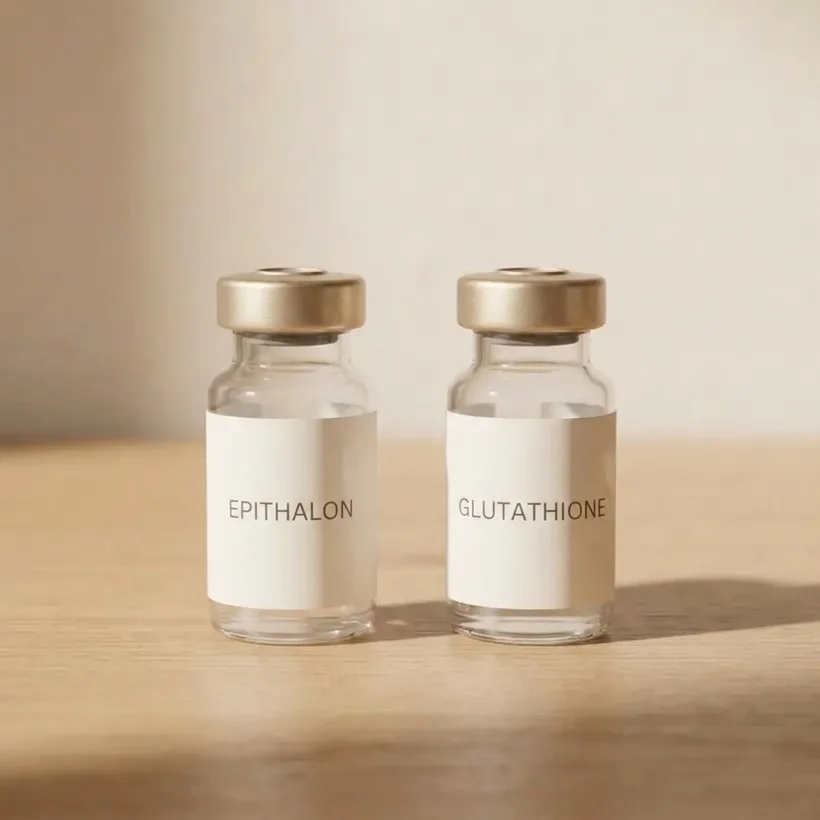
Epithalon (Ala-Glu-Asp-Gly) is a synthetic tetrapeptide derived from the bovine pineal gland extract epithalamin. Its proposed mechanism is telomerase activation, the enzyme that maintains telomere length on chromosomes. In cell culture studies, epithalon increased telomerase activity and extended the replicative lifespan of human fibroblasts.[4]
From the FormBlends catalog
Longevity Reset
Telomere support with the master antioxidant. · Bundle from $270 · provider-reviewed peptide bundle.
View Longevity Reset →The gap between the cell culture data and real-world results in humans remains large. No published clinical trial has demonstrated measurable telomere lengthening in living humans after epithalon administration. The rodent lifespan data (20-40% extension) is from a single research group and has not been independently replicated.
In the context of the Fountain of Youth stack, epithalon is the "longevity at the cellular level" component. Whether it delivers on that promise in practice is uncertain. The standard protocol is 10 mg daily for 10 days, administered subcutaneously, repeated once or twice per year. Khavinson Peptides: What Are Peptide Bioregulators and Do They Work?
What Role Does BPC-157 Play?
BPC-157 (Body Protection Compound-157) is a 15-amino-acid peptide derived from a protein found in human gastric juice. It has an extensive animal study literature showing acceleration of healing in tendons, ligaments, muscles, the gut lining, and bone. It promotes angiogenesis (new blood vessel formation) and has anti-inflammatory effects.[5]
In the Fountain of Youth stack, BPC-157 is the "systemic repair" component. The theory is that aging involves accumulated tissue damage, and BPC-157 accelerates the body's repair processes. This is plausible based on the animal data, but BPC-157 lacks published human clinical trials for any indication. Its widespread use is based entirely on animal studies and clinical anecdote.
The FDA issued a warning letter about BPC-157 in 2023, noting that it had not been approved for human use and that companies marketing it as a treatment were in violation of federal law. This did not stop its use in clinical practice, but it is important context. BPC-157 dosage guide
What About Growth Hormone Secretagogues in Anti-Aging Stacks?
Some Fountain of Youth protocols add growth hormone secretagogues (GHS), most commonly sermorelin, ipamorelin, or CJC-1295. These peptides stimulate the pituitary gland to release growth hormone (GH), which in turn increases IGF-1 (insulin-like growth factor 1) levels.
The rationale: growth hormone levels decline with age (a process called somatopause), and this decline correlates with loss of muscle mass, increased body fat, thinner skin, and reduced bone density. Stimulating GH release with secretagogues is proposed to partially reverse these age-related changes.
Sermorelin has been studied in clinical trials and was previously FDA-approved for diagnostic use and pediatric growth hormone deficiency. Clinical data in adults shows modest increases in lean body mass and reductions in body fat with sermorelin use.[6]
The concern with GH stimulation for anti-aging is the IGF-1 connection to cancer risk. Higher IGF-1 levels have been associated with increased risk of certain cancers in epidemiological studies. This does not mean that GH secretagogues cause cancer, but it is a theoretical risk that should be discussed with a provider. Regular bloodwork monitoring of IGF-1 levels is recommended for anyone using these peptides. sermorelin complete guide
How Do Fountain of Youth Stack Components Compare?
| Peptide | Target Pathway | Evidence Level | Visible Results? |
|---|---|---|---|
| GHK-Cu | Collagen, wound healing, skin remodeling | Strong (human clinical trial data) | Yes, skin improvements within weeks |
| Epithalon | Telomerase activation, telomere length | Moderate (cell culture, single-group human data) | No visible short-term effects |
| BPC-157 | Tissue repair, angiogenesis, gut healing | Moderate (extensive animal data, no human trials) | Variable, most report recovery improvements |
| TB-500 | Tissue repair, inflammation reduction | Moderate (animal data, limited human data) | Variable, similar to BPC-157 |
| Sermorelin | Growth hormone release, IGF-1 | Strong (clinical trials, previously FDA-approved) | Yes, body composition changes over months |
What Does a Typical Protocol Look Like and What Does It Cost?
A typical Fountain of Youth protocol runs 30 to 90 days for a single cycle. A common structure:
GHK-Cu: 1-2 mg subcutaneous injection daily or every other day for 30 days, then 30 days off. Some protocols use topical GHK-Cu for skin-specific benefits.
Epithalon: 10 mg subcutaneous injection daily for 10 consecutive days, typically done at bedtime. Repeated 1-2 times per year.
BPC-157: 250-500 mcg subcutaneous injection daily for 30-60 days. Can be taken continuously or cycled.
TB-500: 2-5 mg subcutaneous injection twice weekly for loading (4-6 weeks), then once weekly for maintenance.
Cost varies widely. A 30-day supply of the blended Fountain of Youth injectable from a compounding pharmacy typically runs $200-$500. Buying individual peptides and stacking them yourself can range from $300-$800 per month depending on dosages and sources. Adding growth hormone secretagogues increases the monthly cost to $400-$1,000+.
These are out-of-pocket costs. Insurance does not cover peptide therapy for anti-aging purposes.
What Are Realistic Expectations vs. Hype?
What you can and cannot reasonably expect from a Fountain of Youth stack:
Realistic expectations: Improved skin quality (texture, elasticity, wound healing) from GHK-Cu within 4-8 weeks. Faster recovery from injuries or exercise with BPC-157 and TB-500. Modest improvements in body composition if GH secretagogues are included. General sense of improved well-being reported by many users.
Unrealistic expectations: Reversing your biological age by 10+ years. Dramatically extending your lifespan based on epithalon alone. Looking visibly younger in days or weeks. Replacing basic health habits like sleep, nutrition, and exercise.
The name "Fountain of Youth" is aspirational. The peptides in this stack can support some aspects of healthy aging, but they are not magic. They work best as part of a broader approach that includes proper nutrition, regular exercise, adequate sleep, and medical oversight.
Frequently Asked Questions
Is the Fountain of Youth stack FDA-approved?
No. None of the peptides in the standard Fountain of Youth stack are FDA-approved for anti-aging use. GHK-Cu is used in cosmetics, sermorelin was previously FDA-approved for diagnostic purposes, and the remaining peptides are research compounds. Use is considered off-label and experimental.
How long before I see results from the Fountain of Youth stack?
Skin improvements from GHK-Cu are typically noticeable within 4-8 weeks. Recovery benefits from BPC-157 may be felt within 1-2 weeks. Body composition changes from GH secretagogues take 2-3 months. Epithalon effects on telomeres, if they occur, are not perceptible and would only show on lab tests over long time periods.
Can I use individual peptides instead of the full stack?
Yes. Many people use individual peptides rather than the full combination. GHK-Cu alone is a reasonable choice for skin-focused anti-aging. BPC-157 alone is commonly used for injury recovery. You do not need to run the entire stack to get benefits from specific components.
Is the Fountain of Youth stack safe?
Individual peptide safety profiles are generally favorable in published literature, with no serious adverse events commonly reported. The main concern is that the combination as a whole has never been studied in a clinical trial. GHK-Cu requires normal copper metabolism, and GH secretagogues require monitoring of IGF-1 levels. Work with a licensed provider for medical oversight.
How does the Fountain of Youth stack compare to the Glow Stack?
The Glow Stack focuses more narrowly on skin and appearance (GHK-Cu, BPC-157, and sometimes thymosin beta-4 for hair). The Fountain of Youth stack has a broader anti-aging scope, adding epithalon for telomere maintenance and sometimes GH secretagogues for body composition. There is significant overlap, particularly around GHK-Cu and BPC-157. The Glow Stack: What It Is, What's in It, and Does It Work?
Do I need bloodwork before starting the Fountain of Youth stack?
Yes. Baseline bloodwork should include copper levels (for GHK-Cu safety), IGF-1 (especially if using GH secretagogues), complete metabolic panel, and CBC. Follow-up bloodwork every 60-90 days during active protocols is recommended. A licensed provider can advise on the specific panels needed for your protocol.
Does FormBlends offer the Fountain of Youth stack?
FormBlends specializes in SEMAGLUTIDE and TIRZEPATIDE through licensed telehealth providers. This article provides educational information about anti-aging peptide protocols. Consult with a qualified peptide provider for access to specific anti-aging stacks.
Medical References
- Spectrum Medical. Fountain of Youth Peptide Blend product information. spectrum4med.com
- Pickart L, et al. Regenerative and protective actions of the GHK-Cu peptide in the light of the new gene data. Int J Mol Sci. 2018;19(7):1987. PMC6073405
- Pickart L, et al. GHK peptide as a natural modulator of multiple cellular pathways in skin regeneration. Biomed Res Int. 2015;2015:648108. PMC4508379
- Khavinson VK, Morozov VG. Peptides of pineal gland and thymus prolong human life. Neuro Endocrinol Lett. 2003;24(3-4):233-240. PMID: 14523363
- Sikiric P, et al. Brain-gut axis and pentadecapeptide BPC 157: theoretical and practical implications. Curr Neuropharmacol. 2016;14(8):857-865. PMID: 29898100
- Vittone J, et al. Effects of single nightly injections of growth hormone-releasing hormone (GHRH 1-29) in healthy elderly men. Metabolism. 1997;46(1):89-96. PMID: 9467534
This article is for educational purposes only and does not constitute medical advice. Always consult with a licensed healthcare provider before starting any peptide protocol. FormBlends connects you with licensed providers who can evaluate your individual health needs.
Last updated: 2026-04-10
Related guides
- Anti Aging Peptide Stack
- Best Anti-Aging Stack 2025: Peptides + Supplements Protocol
- The Goddess Stack: Peptide Protocols Marketed to Women
- Healing Peptide Stack Protocols For Injury Recovery
- The Nootropic Peptide Stack: Semax, Selank, and Cognitive Peptide Protocols
- The Spartan Stack: Performance and Recovery Peptide Protocols
See your options in about 2 minutes
Take the free quiz and see what fits you. Quick, private, and no commitment to continue.
See my options →