Key Takeaway
Dealing with an injury is frustrating. Whether it's a nagging tendon issue, a muscle strain that won't resolve, or post-surgical recovery, healing takes time. A healing peptide stack may help accelerate that process by targeting multiple aspects of tissue repair simultaneously.
Dealing with an injury is frustrating. Whether it's a nagging tendon issue, a muscle strain that won't resolve, or post-surgical recovery, healing takes time. A healing peptide stack may help accelerate that process by targeting multiple aspects of tissue repair simultaneously.
Key Takeaways: - Discover why stack peptides for healing - Healing Stack Protocols by Injury Type - Supporting Your Healing Protocol - When to Consider Adding GH Peptides to a Healing Stack
This guide covers the most effective healing peptide combinations, how to structure a recovery protocol, and what realistic expectations look like.
Why Stack Peptides for Healing?
Injury recovery is a complex biological process. It involves inflammation management, blood vessel formation, cellular migration, collagen synthesis, and tissue remodeling. No single peptide addresses all of these.
That's why stacking makes sense for healing. By combining peptides that target different aspects of the repair process, you can create a more in-depth healing environment.
The most commonly used healing peptides are and TB-500) the . But for certain injuries and recovery situations, adding growth hormone peptides like can provide additional systemic support.
Here's how each component contributes to the healing process.
BPC-157 promotes angiogenesis (new blood vessel growth) at injury sites, modulates nitric oxide pathways to support healing, has shown tissue-protective effects in numerous animal studies, and may support tendon, ligament, muscle, and gut tissue repair.
TB-500 promotes cellular migration to injury sites, reduces inflammation systemically, supports tissue remodeling and scar reduction, and works throughout the body rather than just locally.
GH peptides improve growth hormone and IGF-1 levels, increase collagen synthesis by up to 30-100%, support overall tissue repair and recovery, and enhance deep sleep (which is when most healing occurs).
"We now have cardiovascular outcomes data showing semaglutide reduces MACE events by 20% in people with obesity, independent of diabetes status. The SELECT trial[1] changed how we think about these medications.", Dr. A. Michael Lincoff, MD, Cleveland Clinic, lead author of SELECT
Together, these peptides address healing from local, systemic, and hormonal angles.
Healing Stack Protocols by Injury Type
Different injuries benefit from different protocol emphases. Here's how providers typically approach common injury scenarios.
Tendon and ligament injuries (tendinitis, partial tears, sprains): - BPC-157: 250-500 mcg/day, injected near the injury site - TB-500: 2,000-5,000 mcg twice weekly (loading), then weekly (maintenance) - Optional: CJC-1295/Ipamorelin for systemic GH support - Duration: 8-12 weeks - Why this works: Tendons and ligaments heal slowly due to limited blood supply. BPC-157's angiogenic properties may help by bringing more blood flow to the area. TB-500's ability to reduce inflammation and promote repair complements this.
Muscle injuries (strains, tears, post-surgical): - BPC-157: 250-500 mcg/day - TB-500: 2,000-5,000 mcg twice weekly - CJC-1295/Ipamorelin: Standard dosing before bed - Duration: 6-10 weeks - Why this works: Muscles heal faster than tendons but benefit from all three mechanisms. GH peptides support protein synthesis, which directly feeds muscle repair.
Joint issues (chronic pain, inflammation, cartilage concerns): - BPC-157: 250-500 mcg/day, near affected joint - TB-500: 2,000-5,000 mcg twice weekly - Duration: 8-12 weeks, may require multiple cycles - Why this works: Joint issues are often chronic and involve multiple tissues. The combination addresses inflammation (TB-500), tissue repair (BPC-157), and overall healing capacity.
Post-surgical recovery: - Timing: Consult your surgeon before starting any peptide protocol after surgery - BPC-157: 250-500 mcg/day, starting when cleared by surgeon - TB-500: 2,000-5,000 mcg twice weekly - CJC-1295/Ipamorelin: Standard dosing for systemic support - Duration: 8-12 weeks - Why this works: Surgery creates controlled tissue damage. Supporting the body's repair mechanisms may help improve the recovery process.
Always discuss your specific injury with a before starting any protocol. The right combination and dosing depends on your individual situation.
Free Download: Wolverine Stack Protocol Card Get our complete healing stack protocol card with injury-specific dosing guides, injection site maps, and recovery tracking templates. Get yours free (we'll email it to you instantly.
[Download CTA Button]
Supporting Your Healing Protocol
Peptides are one part of a full healing strategy. Here's how to maximize their effectiveness.
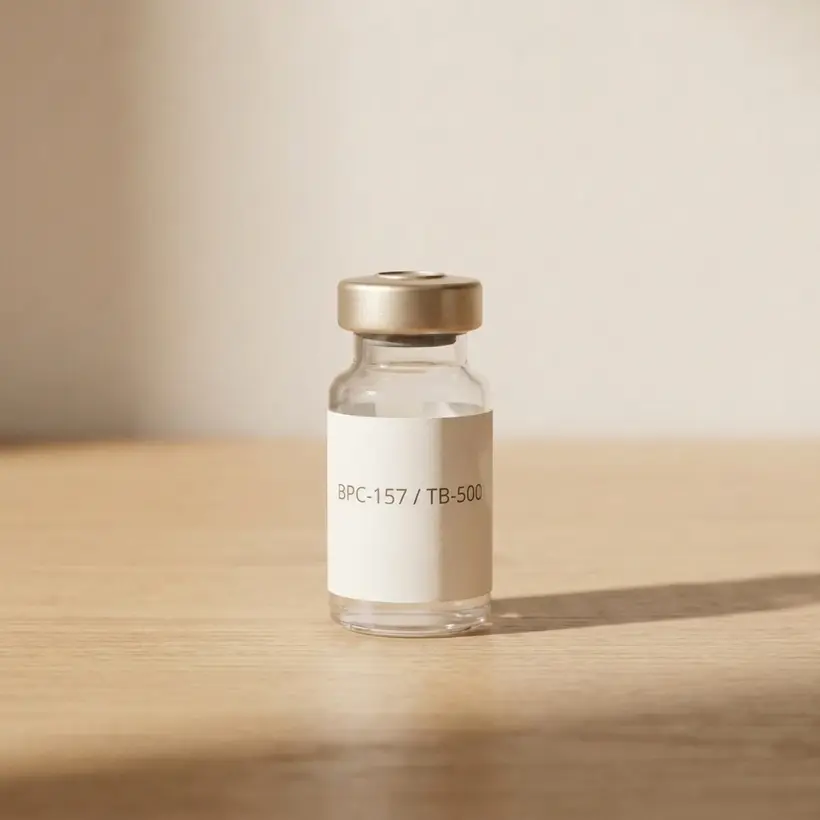
From the FormBlends catalog
BPC-157 / TB-500 Blend
The ultimate recovery stack in one vial · From $249/mo · compounded by a licensed 503A pharmacy, dispensed only after provider review.
View BPC-157 / TB-500 Blend →Nutrition for healing. Your body needs raw materials to repair tissue. Protein intake should be high) at least 1.6g per kg of body weight. Vitamin C supports collagen synthesis. Zinc supports immune function and tissue repair. Omega-3 fatty acids help manage inflammation. Our covers high-protein meal planning in detail.
Physical therapy and rehabilitation. Peptides support biological healing, but appropriate movement and loading are important for functional recovery. A physical therapist can guide progressive loading to ensure tissues heal strong, not just fast. Don't skip rehab because you're "feeling better", the peptides may reduce pain before structural healing is complete.
Sleep improvement. Growth hormone release peaks during deep sleep, and sleep is when most tissue repair occurs. Prioritize 7-9 hours of quality sleep. If your GH peptide dose is timed before bed, you're already supporting this. Learn more about .
Avoid anti-inflammatory overuse. NSAIDs (ibuprofen, naproxen) can interfere with certain phases of tissue healing. While inflammation management is important, chronic NSAID use during a healing protocol may be counterproductive. Discuss pain management strategies with your provider.
Track your progress. Use the to log pain levels, range of motion, functional milestones, and doses. This data helps your provider improve your protocol and gives you objective evidence of improvement (which is motivating when healing feels slow.
Manage expectations. Healing takes time even with peptide support. Tendons and ligaments naturally heal slowly (weeks to months). Peptides may accelerate this process, but they don't eliminate the need for patience. Complete structural healing often continues beyond when pain resolves.
When to Consider Adding GH Peptides to a Healing Stack
Not every healing protocol needs GH peptides. Here's when adding them may be beneficial.
Good candidates for a full healing + GH stack: - Adults over 40 (whose natural GH levels are declining) - People recovering from significant injuries or surgery - Athletes returning from injury who need detailed recovery support - People with slow-healing injuries that haven't responded well to basic approaches - Patients who also want the sleep, energy, and body composition benefits of GH improvement
When BPC-157/TB-500 alone may be sufficient: - Minor injuries (mild strains, minor tendinitis) - Younger adults with presumably adequate natural GH levels - People who want to keep the protocol simple and cost-effective - Short-term healing goals (4-6 weeks)
Your provider can help you determine the right level of complexity based on your injury, age, health profile, and goals. Blood work) including baseline IGF-1 (can inform whether adding GH peptides is likely to provide additional benefit. Learn more about .
Frequently Asked Questions
How quickly can I expect healing improvements from a peptide stack?
Many people notice reduced pain and inflammation within the first 1-2 weeks, particularly from TB-500. Measurable healing improvements (range of motion, function) typically appear over 4-8 weeks. Full recovery timelines depend on injury severity.
Can I use a healing stack while still training?
In most cases, yes) with modifications. Avoid directly loading the injured area beyond what your provider or physical therapist recommends. Training non-injured body parts is usually fine and may actually support overall recovery through systemic hormonal benefits.
Are healing peptide stacks safe for long-term use?
Most protocols are designed for 8-12 week cycles. Some chronic conditions may benefit from multiple cycles with breaks in between. Long-term safety data is limited for both BPC-157 and TB-500, so provider-guided cycling is recommended.
Do I need to inject near the injury site?
BPC-157 may be more effective when injected near the injury (subcutaneously, not into the joint or tendon). TB-500 works systemically regardless of injection site. Your provider will guide injection placement based on your specific injury.
Can I combine healing peptides with GLP-1 medications?
Some patients use healing peptide stacks alongside without issues. These work through completely different mechanisms. But always inform your provider of all medications and peptides you're using.
Ready to Take the Next Step?
Your health goals is personal, and you deserve a plan that fits. FormBlends connects you with licensed providers who can evaluate your needs and create a personalized protocol.
Medical References
- Lincoff AM, Brown-Frandsen K, Colhoun HM, et al. Semaglutide and Cardiovascular Outcomes in Obesity without Diabetes. N Engl J Med. 2023;389(24):2221-2232. [PubMed | ClinicalTrials.gov | DOI]
Sources &. References
- Sikiric P, Hahm KB, Blagaic AB, et al. Stable Gastric Pentadecapeptide BPC 157, Robert's Cytoprotection, Adaptive Cytoprotection, and Therapeutic Effects. Curr Pharm Des. 2018;24(18):1990-2001. Doi:10.2174/1381612824666180515125918
- Chang CH, Tsai WC, Lin MS, et al. The promoting effect of pentadecapeptide BPC 157 on tendon healing involves tendon outgrowth, cell survival, and cell migration. J Appl Physiol. 2011;110(3):774-780. Doi:10.1152/japplphysiol.00945.2010
- Seiwerth S, Brcic L, Vuletic LB, et al. BPC 157 and blood vessels. Curr Pharm Des. 2014;20(7):1121-1125. Doi:10.2174/13816128113199990421
- Bock-Marquette I, Saxena A, White MD, et al. Thymosin beta4 activates integrin-linked kinase and promotes cardiac cell migration, survival and cardiac repair. Nature. 2004;432(7016):466-472. Doi:10.1038/nature03000
- Malinda KM, Sidhu GS, Mani H, et al. Thymosin beta4 accelerates wound healing. J Invest Dermatol. 1999;113(3):364-368. Doi:10.1046/j.1523-1747.1999.00708.x
- Ionescu M, Frohman LA. Pulsatile secretion of growth hormone (GH) persists during continuous stimulation by CJC-1295, a long-acting GH-releasing hormone analog. J Clin Endocrinol Metab. 2006;91(12):4792-4797. Doi:10.1210/jc.2006-1702
Nothing in this article should be construed as medical advice. The information provided is educational only. Always consult with your healthcare provider before beginning, modifying, or discontinuing any medication or treatment. FormBlends connects patients with licensed providers for individualized care.
Last updated: 2026-03-24
Ready when you are
BPC-157 / TB-500 Blend
The ultimate recovery stack in one vial · From $249/mo · compounded by a licensed 503A pharmacy, dispensed only after provider review.
View BPC-157 / TB-500 Blend →