Last November, a 52-year-old financial planner in Scottsdale named Greg told his compounding pharmacist something I've heard variations of at least a dozen times: "I've been on the GHK-Cu cream for four months and my skin looks genuinely better. My wife noticed. But I want more than skin. I want the systemic stuff." His clinician added a 10-day epithalon course. Two months later, Greg reported that his sleep had shifted noticeably, he was waking without an alarm for the first time in years, and his morning energy felt different. "Not dramatic," he said. "Just... younger."
That anecdote captures the logic of this particular stack. GHK-Cu gives you the visible layer. Epithalon goes deeper, into the regulatory machinery of circadian rhythm and cellular aging. Neither is FDA-approved. Both are compounded research peptides dispensed by licensed pharmacies under a valid prescription. And the combination, while not a longevity guarantee, is one of the more intellectually coherent anti-aging pairings available.
What Makes This Pairing Rational (Not Just Trendy)
Think of it like maintaining a house. GHK-Cu is the contractor handling the surfaces: repainting walls, fixing cracks, replacing worn flooring. It supports collagen synthesis, wound healing, antioxidant gene expression, and broad tissue-level repair. Epithalon is the electrician rewiring the control panel: pineal-axis signaling, melatonin rhythm regulation, and (in animal models) telomerase activation.
Three properties make the pairing sensible rather than arbitrary:
- Non-overlapping mechanisms. GHK-Cu works at the tissue level. Epithalon works at the regulatory/circadian level. They don't compete for the same pathways. GHK-Cu modulates expression of genes tied to collagen production, antioxidant defense (particularly SOD and glutathione pathways), and anti-inflammatory signaling. Epithalon acts on the hypothalamic-pineal axis and, based on animal data, may influence telomerase reverse transcriptase (hTERT) expression. These are fundamentally different biological layers: one addresses structural repair, the other addresses timing and replication signals.
- Compatible routes. GHK-Cu is often topical or subcutaneous injectable. Epithalon is subcutaneous injectable. No pharmacological conflict. Both are peptides metabolized into standard amino acid components. There is no known receptor competition, no cytochrome P450 interaction, and no documented case of adverse synergistic toxicity. Your liver does not care that you are running both.
- Complementary timelines. GHK-Cu produces visible changes (skin texture, hair quality) within weeks. Epithalon's effects on sleep architecture and systemic markers emerge more gradually, sometimes over months. This means you get early positive feedback from the GHK-Cu while the slower-acting epithalon builds its effects in the background.
The result is a stack that addresses both what you can see in the mirror and what's happening beneath it.
A Quick Primer on Epithalon
Epithalon (sometimes spelled epitalon) is a synthetic tetrapeptide, Ala-Glu-Asp-Gly, developed in Russia based on the naturally occurring pineal peptide epithalamin. The research base is dominated by Russian-published studies, particularly the work of Dr. Vladimir Khavinson at the St. Petersburg Institute of Bioregulation and Gerontology, with a smaller body of Western literature. It's been studied for pineal gland function support, melatonin pattern regulation, telomerase activity in animal models, and sleep architecture improvement.
Here's the thing about epithalon research: the telomerase data in animals is genuinely interesting, but extrapolating that to human lifespan extension is a leap the evidence doesn't yet support. A 2003 study by Khavinson and colleagues reported that epithalon activated telomerase in human somatic cells in vitro and appeared to elongate telomeres in cultured fibroblasts (Khavinson et al., Bull Exp Biol Med, 2003). That's a meaningful finding in a petri dish. Whether it translates to measurable telomere preservation in a living 55-year-old over a decade of twice-yearly courses is an entirely different question, and one we simply do not have the clinical data to answer yet.
The more grounded case for epithalon is its effect on sleep quality and circadian signaling. Melatonin production declines measurably after age 40, with some studies showing a 50% reduction in peak nocturnal melatonin by age 60 (Pandi-Perumal et al., Sleep Med Rev, 2006). If epithalon genuinely supports pineal function and melatonin rhythm normalization, that alone, for a 50-year-old whose melatonin production has been declining for a decade, can be meaningful. Better sleep quality cascades into better glucose regulation, improved immune function, more efficient tissue repair, and a measurable reduction in systemic inflammation. You don't need to invoke telomere magic to justify the compound.
How People Actually Dose This
Protocols vary by clinician, but a representative approach:
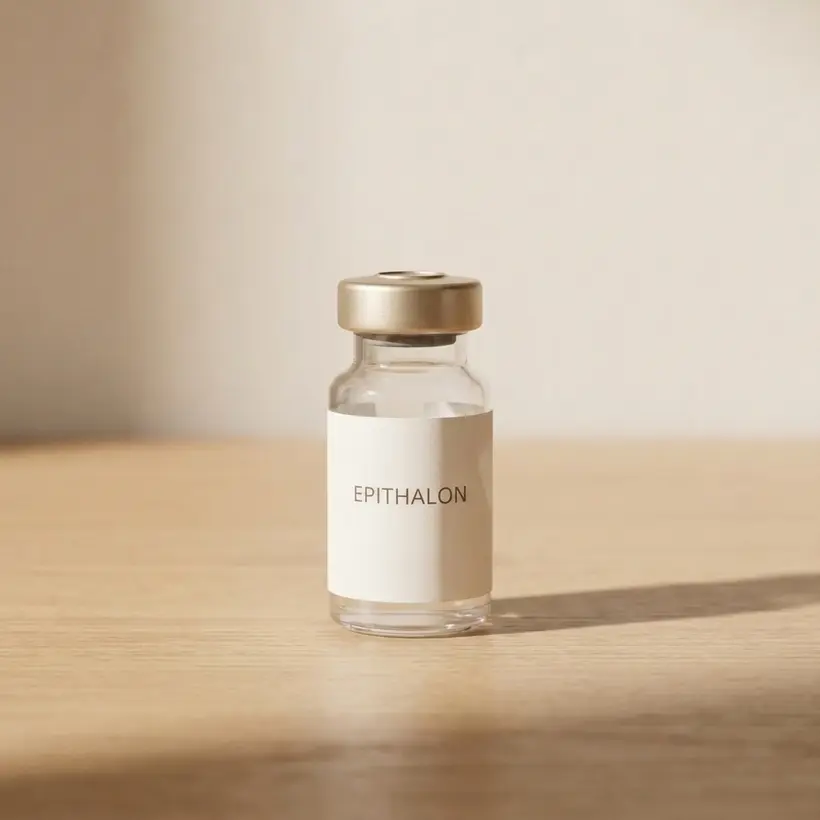
From the FormBlends catalog
Epithalon (Epitalon)
The telomerase activator for cellular youth · From $199/mo · compounded by a licensed 503A pharmacy, dispensed only after provider review.
View Epithalon (Epitalon) →GHK-Cu
- Topical: 2% to 5% cream, applied daily (morning or evening, doesn't matter much)
- Injectable (if used): 1 to 2 mg subcutaneous, 3 to 5 times per week
- Typically continuous for topical; injectable sometimes cycled 12 weeks on, 4 off
- Some clinicians have patients rotate application sites weekly when using topical formulations to reduce the chance of localized saturation or mild irritation
Epithalon
- 5 to 10 mg per injection, subcutaneous
- Traditional Russian protocol: 10-day course repeated every 6 months
- Some clinicians prescribe 5 mg every other day on a continuous basis
- Evening dosing is common for circadian alignment
- Abdominal fat pad is the typical injection site; rotating sides daily helps minimize injection-site reactions
The two cycles don't need to sync up. You can run GHK-Cu daily while doing an epithalon course twice a year, or however your prescribing clinician structures it. A practical scheduling approach many people follow: run GHK-Cu continuously (topical) throughout the year, then overlay the 10-day epithalon course in January and July. This keeps the protocol simple and easy to track.
Realistic Expectations (The Boring Truth)
GHK-Cu delivers the quicker, more visible payoff. Skin texture improvement, better wound healing, hair quality changes. People notice these within a few weeks to a couple months. A 2018 gene expression analysis found GHK-Cu influenced over 4,000 genes at a very low concentration (1 micromolar), resetting many of them toward a pattern associated with younger tissue (Pickart and Margolina, Int J Mol Sci, 2018). That's a broad signal, and it shows up clinically as improved skin elasticity, reduced fine lines, faster recovery from minor cuts or abrasions, and in some cases, improved hair thickness along the frontal hairline.
Epithalon is a slow burn. Sleep quality shifts. Energy patterns change. But you're not going to wake up after your first 10-day course feeling like you've reversed a decade. The systemic, regulatory-level effects take time, and they're harder to photograph. Some patients report noticing a shift in sleep depth by the second or third course, not the first. Others notice improved dream recall or a more consistent wake time, which are indirect indicators of healthier circadian signaling.
Together, the stack covers both the cosmetic and the cellular. But it's not a lifespan-extension agent in any documented human evidence. The healthspan argument, feeling and functioning better as you age, is the honest case. And it only works properly when layered on top of the fundamentals: sleep, nutrition, exercise. Peptides don't compensate for six hours of sleep and a fast-food diet.
Tailoring the Stack to Your Actual Goal
If skin and hair are the priority: Topical GHK-Cu daily is the primary driver. Epithalon sits in a supporting role. Pair with solid foundational skincare: a quality retinoid, daily SPF, and adequate hydration. The GHK-Cu cream handles collagen signaling and tissue repair while the retinoid drives cell turnover. Epithalon's sleep benefits contribute indirectly here, since skin repair peaks during deep sleep phases, but it's not the main engine for visible results.
If you want broad anti-aging coverage: Run GHK-Cu both topically and via injection for systemic effects. Add epithalon courses every 6 months. Consider layering CJC-1295 with ipamorelin for GH-axis support if your clinician thinks it's appropriate. This is the "full protocol" approach, and it's best suited for people who already have their diet, sleep hygiene, and exercise locked in. Without those foundations, you are adding complexity without proportional benefit.
If sleep is the main concern: Lead with epithalon (evening dosing). GHK-Cu becomes the supporting player, primarily topical. Some clinicians add CJC-1295 with ipamorelin pre-bed for the GH pulse. Track sleep metrics carefully during and after the epithalon course. If you're already using exogenous melatonin, discuss with your prescriber whether to taper it during the epithalon window, since the goal is to support your endogenous production, not stack synthetic melatonin on top of a compound designed to promote your own.
Tracking Whether It's Working
Without tracking, you're guessing. Simple approach:
- Monthly photos under consistent lighting (face, hands, wherever you're applying topical GHK-Cu). Same room, same angle, same time of day. Phone photos are fine as long as conditions are consistent. Comparing a photo taken in bathroom fluorescent light to one taken in afternoon sun is meaningless.
- Sleep journal or wearable data (Oura, Whoop, even just a subjective 1-to-10 score). Pay specific attention to deep sleep percentage, sleep latency (how long it takes to fall asleep), and number of nighttime awakenings. These are the metrics most likely to shift with epithalon.
- Baseline and periodic bloodwork: CBC, CMP, lipid panel, IGF-1, hsCRP, and TSH. Draw baseline labs before starting, then repeat at 3 months and 6 months. If you're also running growth hormone secretagogues, IGF-1 tracking becomes especially important.
- Subjective energy and vitality notes, weekly. A simple notebook entry: energy level 1 to 10, mood 1 to 10, joint stiffness yes/no, any notable changes. This sounds low-tech, and it is. But patterns emerge over 8 to 12 weeks that you'd otherwise miss.
Expect skin and hair changes to show up first. Sleep and systemic shifts follow.
Side Effects and What to Watch For
Both peptides have mild individual side-effect profiles, and stacking them doesn't appear to amplify either one.
GHK-Cu: Mild topical irritation is the most common complaint. Some people get a transient blue-green tint at the application site (the copper). This is cosmetically annoying but harmless, and it typically fades within an hour or can be washed off. Injection-site reactions are rare and minor, usually limited to small red bumps that resolve in a day or two. People with known copper sensitivity or Wilson's disease should avoid GHK-Cu entirely.
Epithalon: Remarkably well-tolerated in most reports. Occasional mild headache early in a course, sometimes with a slight flush. That's about it. Some patients report vivid dreams during the 10-day course, which may relate to the melatonin-modulating effects. This is neither harmful nor a reason to discontinue.
No significant drug interactions have been documented for either peptide. That said, if you're on immunosuppressive therapy, active cancer treatment, or anticoagulant medication, have a thorough conversation with your prescribing clinician before starting any new peptide protocol.
The Mistakes I Keep Seeing
The most common error is expecting epithalon to work on the same visible timeline as GHK-Cu. They operate on different clocks.
Second: conflating telomerase activation in rodent studies with proven human lifespan extension. Those are very different claims, and the gap between them is wide. Anyone selling epithalon on the promise that it "reverses aging at the DNA level" is making claims that outrun the evidence.
Third: running both peptides year-round without periodic check-ins or bloodwork. Even well-tolerated compounds deserve annual review. Comprehensive labs (CBC, CMP, lipid, IGF-1, hsCRP), subjective outcome review, photo comparison, and honest reassessment of whether the protocol is still serving your goals.
Fourth, and this is my genuinely opinionated take: if your sleep is bad, your diet is chaotic, and you don't exercise, adding epithalon and GHK-Cu is like putting premium wax on a car with a blown head gasket. Fix the foundation first. Then the peptides have something to work with.
Fifth, and this one comes up more than you'd expect: sourcing from unregulated online vendors instead of a licensed compounding pharmacy. The peptide marketplace is full of gray-market products with questionable purity, inaccurate concentrations, and zero third-party testing. A licensed compounding pharmacy operates under state board oversight and follows USP compounding standards. The price difference between a legitimate compounded product and a vial from an overseas peptide vendor is real, but so is the difference in what's actually in the vial.
Who This Stack Fits Best
Adults over 40 with an anti-aging focus and solid lifestyle foundations tend to get the most out of this combination. People without significant unaddressed pathology, who are thinking about healthspan markers rather than chasing a single dramatic outcome.
The sweet spot, based on what I've observed in clinical conversations, is the 45-to-65 demographic: established enough in their health practices to have the basics covered, old enough that age-related decline in skin quality, sleep architecture, and recovery capacity is measurable, and realistic enough to understand that peptides are an optimization layer, not a miracle intervention.
People under 30? Baseline aging hasn't really established itself yet. The cost-benefit calculus doesn't usually favor it. And anyone expecting rapid, dramatic transformation is setting themselves up for disappointment. This is a long-game protocol.
FAQ
Is this stack better than GHK-Cu alone?
For broad anti-aging, yes. For skin and hair specifically, GHK-Cu alone is often sufficient and simpler. The addition of epithalon makes the most sense when your goals extend beyond the cosmetic, into sleep quality, circadian function, and general cellular maintenance. If your only complaint is fine lines around your eyes, you probably don't need epithalon.
Will epithalon make me live longer?
No documented human lifespan extension exists. Some animal studies show telomerase activity. The healthspan rationale (better sleep, circadian function, cellular maintenance) is on firmer ground than any longevity claim. If a provider tells you epithalon has been proven to extend human lifespan, that's a red flag about their evidence standards.
Can I take both continuously?
GHK-Cu topical: yes, continuous use is standard. Epithalon: the traditional protocol is courses (10 days every 6 months) rather than continuous. The rationale for cycling epithalon is partly historical (that's how Khavinson's original research structured it) and partly biological (pulsed signaling to the pineal axis may be more effective than constant exposure, similar to how pulsatile GnRH stimulates the reproductive axis while continuous GnRH suppresses it). Discuss your approach with the prescribing clinician.
Do I need both peptides?
Depends entirely on your goals. Visible skin and hair improvement: GHK-Cu alone handles it. Broader anti-aging coverage including sleep and circadian support: the stack is more comprehensive. There's no medical necessity to run both. It's a question of what outcomes matter to you and what budget makes sense.
What bloodwork should I get before starting?
A standard anti-aging panel is reasonable as a baseline: CBC, CMP, lipid panel, IGF-1, hsCRP, and TSH. Some clinicians also include fasting insulin, hemoglobin A1c, and a full thyroid panel (free T3, free T4, reverse T3) for a more complete metabolic picture. If you're adding growth hormone secretagogues to the stack, IGF-1 becomes especially important to monitor.
How long should I run this stack before deciding if it works?
Give GHK-Cu at least 8 to 12 weeks for visible skin changes. Epithalon often requires two full courses (so roughly 12 months from your first course) before sleep and energy patterns are clearly distinguishable from placebo or seasonal variation. If you're not tracking with photos, sleep data, and bloodwork, you won't have the information you need to make a good decision at any timeline.
Can women use this stack, or is it primarily for men?
Both GHK-Cu and epithalon are used by men and women. There is no sex-specific contraindication for either peptide. Women who are pregnant, nursing, or actively trying to conceive should avoid both compounds, as safety data in those populations does not exist. Postmenopausal women sometimes report particular benefit from the sleep-quality effects of epithalon, likely because menopause-related hormonal shifts frequently disrupt circadian signaling and melatonin production.
Related Reading
---
Disclaimer: GHK-Cu and epithalon are not FDA-approved. They are compounded research peptides dispensed by licensed pharmacies for individual patients under a valid prescription. This article is for educational purposes and does not constitute medical advice. Individual results vary. Always consult a licensed prescribing clinician before starting any compounded peptide protocol.
Citations: Pickart L, Margolina A. Regenerative and protective actions of the GHK-Cu peptide in the light of the new gene data. Int J Mol Sci. 2018;19(7):1987. Khavinson VKh, Bondarev IE, Butyugov AA. Epithalon peptide induces telomerase activity and telomere elongation in human somatic cells. Bull Exp Biol Med. 2003;135(6):590-592. Pandi-Perumal SR, Srinivasan V, Maestroni GJM, Cardinali DP, Poeggeler B, Hardeland R. Melatonin: nature's most versatile biological signal? FEBS J. 2006;273(13):2813-2838.
Ready when you are
Epithalon (Epitalon)
The telomerase activator for cellular youth · From $199/mo · compounded by a licensed 503A pharmacy, dispensed only after provider review.
View Epithalon (Epitalon) →