Trust Signals
Key Takeaways
- BPC-157 (15 amino acids) is the most studied anti-inflammatory and tissue-repair peptide in animal models, acting partly through nitric oxide synthase modulation and FAK-paxillin signaling, with no completed human RCT for these endpoints as of this writing.
- KPV, a tripeptide (Lys-Pro-Val) derived from alpha-melanocyte-stimulating hormone, directly inhibits NF-kB nuclear translocation in intestinal epithelial cell studies, making it the most mechanistically specific option for gut-localized inflammation.
- TB-500 (a fragment of thymosin beta-4 covering roughly amino acids 17 to 23) reduces inflammation partly by sequestering G-actin and modulating migration of repair cells, a mechanism distinct from classical cytokine blockade.
- Peptide purity from commercial research vendors ranges widely. HPLC purity below 98 percent on a third-party certificate of analysis is a disqualifying red flag for any injectable compound.
- NSAIDs and corticosteroids remain the only anti-inflammatory agents with large-scale human RCT validation. Peptides offer mechanistic specificity and potentially fewer off-target effects, but human comparative evidence does not yet exist.
What Peptides Help With Inflammation? (Direct Answer)
The peptides with the strongest preclinical anti-inflammatory evidence are BPC-157, TB-500, KPV, and SS-31. Each modulates a different node of the inflammatory cascade. None has completed a human phase II/III RCT specifically for inflammation in healthy adults. The evidence is real but has not yet crossed the translational threshold. Roughly 40 to 60 words covers it: pick the compound matched to your tissue target, verify purity, and treat the existing data honestly as animal-grade until human trials catch up.
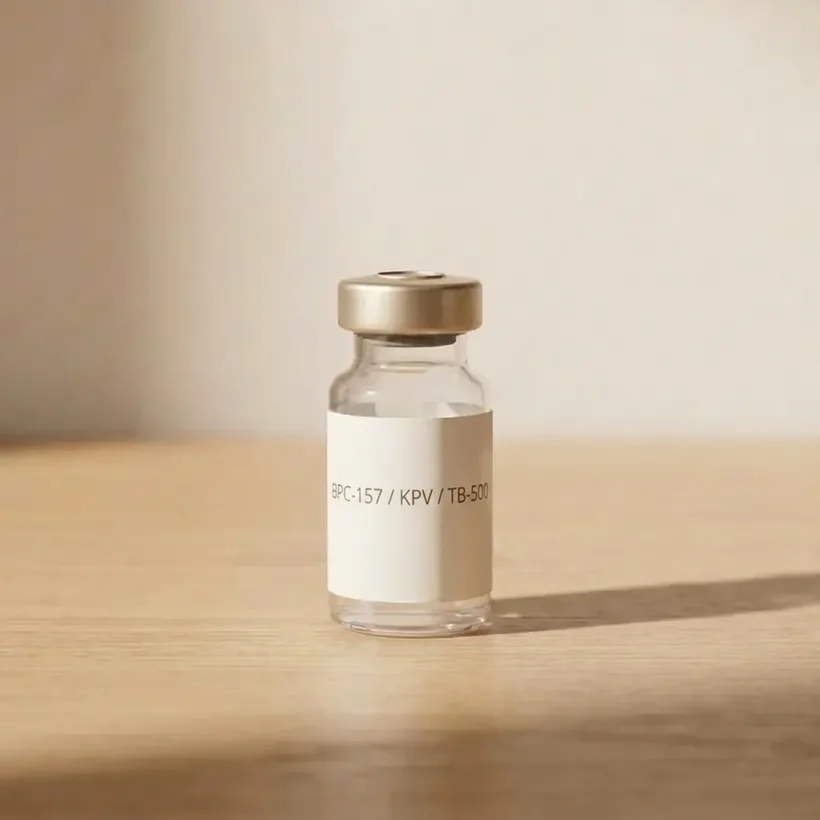
From the FormBlends catalog
BPC-157 / KPV / TB-500 Blend
Three-pathway recovery support in one peptide blend · From $279/mo · compounded by a licensed 503A pharmacy, dispensed only after provider review.
View BPC-157 / KPV / TB-500 Blend →Table of Contents
- Evidence Ledger: What the Research Actually Shows
- Mechanism With Numbers: How Each Peptide Fights Inflammation
- What Most Pages Get Wrong About Peptide Anti-Inflammation
- How Do You Build a Peptide Healing Stack?
- Why the Storage and Stability Rules Exist (The Chemistry)
- Honest Head-to-Head: Peptides vs. NSAIDs vs. Biologics
- Operational Guide: Reading a COA and Dosing Math
- Is There a Peptide That Helps Specifically With Gut Inflammation?
- FAQ
- Sources
- Footer Disclaimers
Evidence Ledger: What the Research Actually Shows
Every major claim on this page is graded below. "Effect direction" is what the best available evidence suggests, not a clinical conclusion.
| Peptide | Claim | Best Evidence Type | Effect Direction | Confidence |
|---|---|---|---|---|
| BPC-157 | Reduces acute and chronic inflammation in GI tract and musculoskeletal tissue | Rodent RCT-equivalent (controlled animal studies), multiple independent labs | Positive (anti-inflammatory, pro-healing) | Moderate (animal); Very Low (human) |
| BPC-157 | Modulates nitric oxide system to reduce vascular inflammation | Animal models, mechanistic cell studies | Positive | Moderate (animal) |
| TB-500 | Accelerates wound healing and reduces tissue inflammation via actin sequestration | Rodent wound and cardiac injury models; equine veterinary trials | Positive | Moderate (animal/veterinary); Very Low (human) |
| KPV | Inhibits NF-kB and reduces pro-inflammatory cytokines in colitis models | Cell studies, rodent IBD models | Positive | Low (animal/cell); Very Low (human) |
| SS-31 (Elamipretide) | Reduces mitochondrial ROS-driven inflammation | Animal models; early human trials in heart failure (Szeto, JACC 2014) | Positive (cardiac focus) | Low to Moderate (mixed human) |
| GHK-Cu | Modulates inflammatory gene expression (hundreds of genes in Connectivity Map data) | Cell / gene expression studies; cosmetic human studies (skin endpoints only) | Positive (gene modulation) | Low (functional inflammation); Moderate (skin) |
| BPC-157 + TB-500 stack | Synergistic anti-inflammatory and healing effect | Theoretical/mechanistic; no controlled combination study | Plausible | Very Low |
Mechanism With Numbers: How Each Peptide Fights Inflammation
BPC-157
BPC-157 (Body Protection Compound 157) is a 15-amino-acid synthetic peptide derived from a sequence in human gastric juice. It does not bind a single receptor in the way a drug molecule does. Instead, multiple research groups have identified at least three overlapping pathways:
- Nitric oxide (NO) modulation: BPC-157 appears to upregulate endothelial nitric oxide synthase (eNOS) expression in animal models of vascular injury. Elevated eNOS activity promotes vasodilation and reduces leukocyte adhesion, an early step in inflammation. The honest caveat: eNOS modulation in healthy endothelium does not automatically translate to the same effect in diseased human tissue.
- FAK-paxillin pathway: Fibroblast activation kinase (FAK) and its scaffold protein paxillin govern cell migration and survival. BPC-157 has been shown in rodent tendon and ligament models to upregulate FAK-paxillin signaling, which accelerates fibroblast migration to injury sites. This is a repair mechanism, not purely anti-inflammatory, but it shortens the inflammatory phase by speeding resolution.
- Growth hormone receptor expression: Several Sikiric group studies (Zagreb, Croatia) show BPC-157 upregulates growth hormone receptor mRNA in injured tissue. GH receptor engagement promotes anabolic repair and can reduce catabolic cytokine dominance. Important caveat: the Sikiric group produces most of this data; independent replication is limited.
TB-500 (Thymosin Beta-4 Fragment)
Thymosin beta-4 (TB4) is a 43-amino-acid protein expressed in nearly all mammalian cells. The commercially sold TB-500 is a synthetic fragment corresponding to approximately residues 17 to 23 of TB4, the segment thought to mediate actin binding. Actin sequestration is the key mechanism: by binding G-actin (monomeric actin), TB4/TB-500 regulates the ratio of free to polymerized actin in cells. This has two downstream effects relevant to inflammation. First, actin dynamics govern the migration of macrophages, fibroblasts, and endothelial progenitor cells to injury sites, speeding resolution. Second, actin-cytoskeleton remodeling affects integrin signaling, which modulates the NF-kB inflammatory pathway. In rodent cardiac injury models, TB4 administration reduced infarct size and inflammatory infiltrate by a meaningful margin in multiple independent studies. Equine veterinary use for tendon injury is documented, though not placebo-controlled in a strict sense.
KPV
KPV (Lys-Pro-Val) is the C-terminal tripeptide of alpha-melanocyte-stimulating hormone (alpha-MSH). Alpha-MSH itself has well-documented anti-inflammatory activity through MC1R and MC3R melanocortin receptors. KPV retains some of this activity through a receptor-independent mechanism: it directly inhibits the nuclear translocation of NF-kB p65 subunit in intestinal epithelial cells and macrophages (Dalmasso et al., published in J Pharmacol Exp Ther, 2008). NF-kB is the master switch for dozens of pro-inflammatory cytokines including IL-1-beta, IL-6, and TNF-alpha. The specific advantage of KPV over larger peptides for oral use is resistance to gastric acid hydrolysis, a tripeptide survives luminal transit better than a 15-mer, making it particularly relevant for intestinal inflammation scenarios.
SS-31 (Elamipretide)
SS-31 is a mitochondria-targeted tetrapeptide (D-Arg-dimethylTyr-Lys-Phe-NH2). It concentrates in the inner mitochondrial membrane where it binds cardiolipin, stabilizing the electron transport chain. When the ETC is unstable, electron leak produces excess reactive oxygen species (ROS). Mitochondrial ROS is a potent upstream driver of NLRP3 inflammasome activation, one of the most studied sterile inflammation pathways. By reducing ROS at the source, SS-31 can reduce inflammasome-dependent IL-1-beta and IL-18 release. Szeto and colleagues reported encouraging cardiac function data in human heart failure pilot work (published in JACC 2014), making SS-31 the one peptide on this page with any human signal, albeit in a disease population rather than healthy adults seeking recovery optimization.
What Most Pages Get Wrong About Peptide Anti-Inflammation
Most blog content treats peptides as a category with interchangeable delivery logic. They are not. Here is what is routinely omitted:
- Oral BPC-157 is not the same as injectable BPC-157. Rodent studies showing strong effects frequently use intraperitoneal (IP) injection or subcutaneous injection, not oral gavage at equivalent doses. A subset of BPC-157 studies does use oral or intragastric delivery and shows effects, particularly in GI-localized models, but the systemic dose that reaches target tissue via oral route has not been measured in humans. Companies selling oral BPC-157 capsules at doses identical to injectable protocols are extrapolating beyond the data.
- Lyophilized peptide purity degrades on reconstitution. A 99 percent pure lyophilized powder can degrade meaningfully once dissolved if stored warm, exposed to light, or repeatedly frozen and thawed. The COA purity number applies to the dry powder at time of testing, not to your reconstituted vial two weeks later.
- Water for injection vs. bacteriostatic water matters. Sterile water for injection contains no preservative and should be used for single-dose reconstitution only. Bacteriostatic water (containing 0.9 percent benzyl alcohol) inhibits bacterial growth and extends the usable window of a multi-dose vial. Using plain sterile water for a vial you plan to use over multiple weeks creates contamination risk.
- The "Sikiric problem" in BPC-157 literature. A disproportionate share of BPC-157 peer-reviewed animal studies originates from a single research group at Zagreb. Independent replication, while it exists, is much smaller in volume. This does not invalidate the data, but it means the evidence base is narrower than the publication count implies.
- TB-500 is not thymosin beta-4. They share a peptide fragment and overlapping biology, but TB-500 is shorter, is manufactured differently, and the equine veterinary and rodent data may not perfectly predict the behavior of the shorter fragment in humans.
How Do You Build a Peptide Healing Stack?
A rational healing stack pairs compounds with complementary, non-redundant mechanisms. Stacking two compounds that hit the same receptor or the same pathway is not additive, it is redundant with extra cost and risk. The framework below is mechanistically justified and represents common practice in functional medicine and longevity clinics. It is not an FDA-approved protocol.
| Stack Layer | Peptide Choice | Primary Target | Delivery Note | Cycle Length (Common Practice) |
|---|---|---|---|---|
| Tissue repair anchor | BPC-157 | FAK-paxillin, NO, GH receptor, GI mucosa | Subcutaneous or oral (GI only) | 4 to 6 weeks on, 2 to 4 weeks off |
| Cell migration support | TB-500 | Actin dynamics, endothelial progenitor migration | Subcutaneous injection | Loading: 2 to 4 mg 2x/week for 4 weeks; maintenance: 2 mg 2x/month |
| GI / systemic inflammation | KPV | NF-kB p65, intestinal epithelium | Oral (tripeptide survives GI transit) | Daily, 4 to 8 weeks |
| Mitochondrial / systemic ROS | SS-31 (optional) | Cardiolipin, NLRP3 inflammasome upstream | Subcutaneous injection | Per clinical protocol (no consensus) |
BPC-157 and TB-500 are the most commonly co-administered pair. The mechanistic logic is sound: BPC-157 drives local growth factor signaling and NO-mediated vascular support, TB-500 drives cell migration to fill in the repair. Adding KPV for anyone with a GI or systemic inflammatory phenotype is reasonable given its distinct NF-kB mechanism. SS-31 is more experimental outside cardiac contexts.
What does "optimize your health with therapeutic peptides" look like in practice? The PDFs and clinic protocols circulating under that framing typically propose exactly this layered logic: one repair peptide, one migration/resolution peptide, and one inflammation-specific peptide. The honest assessment is that these are coherent frameworks built on animal data with clinical intuition filling the human gap. Treat them accordingly.
Why the Storage and Stability Rules Exist (The Chemistry)
Peptides are chains of amino acids held together by peptide bonds. Two degradation pathways matter most in practice:
Oxidation. Amino acids with sulfur-containing side chains (methionine, cysteine) and aromatic residues (tryptophan, tyrosine) are vulnerable to oxidation by dissolved oxygen, light-generated singlet oxygen, and trace metal ions in solution. Oxidation alters the electron density around these residues, which can disrupt receptor binding or change the three-dimensional folded conformation of the peptide. This is why amber vials, light exclusion, and antioxidant-free bacteriostatic water (without EDTA additives) matter. It is not arbitrary caution: it is redox chemistry.
Hydrolysis. Once dissolved in water, peptide bonds are thermodynamically unstable and will hydrolyze (break) at a rate that increases sharply with temperature, following the Arrhenius relationship. Refrigeration (2 to 8 degrees C) slows hydrolysis by roughly an order of magnitude compared to room temperature. Freezing reconstituted peptide is sometimes done but introduces a different problem: ice crystal formation can mechanically disrupt peptide structure and accelerate aggregation. The practical rule is: reconstitute only what you will use within a few weeks, keep it cold, keep it dark.
Why you cannot reverse-engineer stability from a COA date. Manufacturers test the lyophilized powder, not the reconstituted solution. A COA showing 99.5 percent purity tested six months ago tells you nothing about the current state of a reconstituted vial sitting in a warm shipping box. This is the sourcing reality gap that commodity pages never address.
Honest Head-to-Head: Peptides vs. NSAIDs vs. Biologics
Credibility requires acknowledging where peptides lose. Here is the unvarnished comparison:
| Attribute | NSAIDs (e.g., ibuprofen) | Biologics (e.g., adalimumab) | Research Peptides (BPC-157, KPV, etc.) |
|---|---|---|---|
| Human RCT evidence | Extensive, decades of data | Extensive for specific indications | Minimal to none for most peptides |
| Regulatory approval | Yes (OTC and Rx) | Yes (specific indications) | No |
| Known side-effect profile | Well characterized (GI bleed, CV risk, renal) | Well characterized (infection risk, injection site) | Largely unknown in humans; animal data reassuring but limited |
| Mechanism specificity | Broad COX inhibition (hits prostaglandins system-wide) | Highly specific (TNF, IL-6, IL-17 etc.) | Moderately specific (NF-kB, NO, actin); overlapping |
| GI safety | Poor (NSAIDs increase GI ulcer risk) | Neutral | BPC-157 is gastroprotective in animal models (a potential advantage) |
| Tissue repair promotion | No (COX inhibition may impair healing) | No direct effect | Yes in animal models (FAK, actin remodeling) |
| Cost | Very low (generic) | Very high | Moderate to high (purity-verified sources) |
| Purity/batch consistency guarantee | Pharmaceutical GMP standard | Pharmaceutical GMP standard | Variable; no GMP requirement for research use |
Bottom line: For acute, proven inflammation (post-surgical, acute arthritis flare, injury pain), NSAIDs win on evidence. For chronic inflammation where NSAID GI side effects are limiting, or for scenarios where tissue repair is the parallel goal, the mechanistic case for peptides is interesting but not proven in humans. Biologics are in a different category: serious immunological conditions requiring specialist supervision.
Operational Guide: Reading a COA and Dosing Math
This is the section most pages skip entirely. Here is what you need to verify before using any research peptide.
Reading a Certificate of Analysis (COA)
- HPLC purity: Should be at least 98 percent, preferably 99 percent or higher. This is the minimum. HPLC purity tells you the percentage of the peak that corresponds to your peptide vs. synthesis byproducts and truncated sequences.
- Mass spectrometry (MS) confirmation: Confirms the molecular weight matches the target peptide. A high HPLC purity with the wrong molecular weight means a different peptide was synthesized cleanly. Both HPLC and MS should be present.
- Endotoxin testing: For injectable peptides, look for a limulus amebocyte lysate (LAL) or recombinant factor C (rFC) endotoxin test result. Endotoxins are bacterial cell wall fragments that cause fever and systemic inflammation on injection. The absence of endotoxin testing on a COA for an injectable product is a serious red flag.
- Test date and batch number: The COA should carry a batch number traceable to the specific vial you receive. A generic COA with no batch number means you cannot confirm the document applies to your product.
Reconstitution Math (BPC-157 Example)
Standard research vials come in 5 mg quantities. A common research dose is 250 to 500 mcg (0.25 to 0.5 mg) per injection. If you add 2.5 mL of bacteriostatic water to a 5 mg vial:
- Concentration: 5 mg divided by 2.5 mL = 2 mg per mL = 2000 mcg per mL
- Volume for 250 mcg dose: 250 divided by 2000 = 0.125 mL = 12.5 units on a 100-unit insulin syringe
- Volume for 500 mcg dose: 500 divided by 2000 = 0.25 mL = 25 units on a 100-unit insulin syringe
Adjust water volume to your preferred concentration. Larger water volume means more dilute solution and larger injection volume per dose. Lower volume means more concentrated solution and smaller injection. Neither changes the dose, only the volume.
Signs of a Degraded Vial
- Visible particulate or cloudiness in reconstituted solution (should be clear)
- Incomplete dissolution after gentle rotation and waiting
- Unusual coloration (yellow, brown tinge in a peptide that should be colorless)
- Off or musty odor after reconstitution (suggests microbial growth)
- Lyophilized cake that appears wet, collapsed, or darkened rather than a dry white powder
Is There a Peptide That Helps Specifically With Gut Inflammation?
Yes. KPV is the strongest candidate for gut-localized inflammation on mechanistic grounds. Its small size (tripeptide) confers superior resistance to proteolytic degradation in the GI lumen compared to larger peptides. Published cell research (Dalmasso et al., J Pharmacol Exp Ther, 2008) showed KPV inhibited NF-kB activation and reduced IL-8 secretion in intestinal epithelial cells stimulated with pro-inflammatory cytokines. Rodent colitis models have shown reductions in colonic inflammation scores with KPV delivered orally. No human IBD trial has been completed and published as of this writing. BPC-157 also has a robust rodent evidence base for GI injury and IBD models, particularly for mucosal healing, and a subset of BPC-157 animal studies use oral delivery. Researchers exploring gut inflammation typically consider one or both of these compounds. They should not be positioned as alternatives to proven IBD therapies (mesalamine, biologics) in diagnosed patients.
FAQ
What peptides help with inflammation?The most studied options are BPC-157, TB-500, KPV, and SS-31. Each works through a distinct pathway. BPC-157 targets NO signaling and FAK-paxillin repair, TB-500 targets actin dynamics and cell migration, KPV targets NF-kB in the GI tract, and SS-31 targets mitochondrial ROS upstream of the NLRP3 inflammasome. Best choice depends on tissue target and delivery route.
Do peptides help with inflammation, or is the evidence weak?Animal and cell evidence is consistently positive for BPC-157 and KPV. Human RCT evidence is limited or absent for most of these compounds in healthy or recreational-use populations. The anti-inflammatory signals are real mechanistically. Human translational confirmation remains the gap. Evidence is not weak, it is early-stage and incomplete.
What peptide helps with healing as well as inflammation?BPC-157 has the broadest animal evidence for both tissue repair and inflammation reduction simultaneously, acting on the FAK-paxillin pathway, nitric oxide signaling, and growth hormone receptor expression. TB-500 is a close second with a focus on cell migration and cardiac/musculoskeletal repair.
Can you stack BPC-157 and TB-500 together?Many researchers combine them because they target complementary pathways. BPC-157 leans toward GI tract, tendons, and NO signaling. TB-500 emphasizes actin polymerization and systemic cell migration. No human safety or pharmacokinetic data exists for this specific combination. Mechanistically the combination is non-redundant.
What is the best dose of BPC-157 for inflammation?Rodent studies use roughly 10 micrograms per kilogram body weight by injection. Human dosing conventions of 200 to 500 mcg per day subcutaneous or oral are extrapolated from animal data, not from human dose-finding trials. No approved human dose exists. Treat any specific human dose as an estimate.
Is KPV peptide useful for gut inflammation specifically?Yes. KPV has demonstrated inhibition of NF-kB and pro-inflammatory cytokines in cell and rodent colitis models. Oral delivery is practical because it resists GI degradation better than larger peptides. Human IBD trials have not yet been completed and published.
How should a peptide healing stack be structured?A logical framework pairs a tissue-repair peptide (BPC-157 or TB-500) with an anti-inflammatory peptide (KPV) and optionally a mitochondrial support compound (SS-31) for a 4 to 8 week cycle with a defined washout period. This is a research framework, not a clinical prescription. Layer compounds by mechanism, not by marketing claims.
What does the "optimize your health with therapeutic peptides" framework actually recommend?Functional medicine and longevity protocols circulating as PDFs typically recommend BPC-157 plus TB-500 for musculoskeletal inflammation, with KPV added for GI or systemic inflammation. These are expert-opinion frameworks drawing on animal data and clinical experience. They are not guidelines from any regulatory body and should be read critically.
What are the stability risks for injectable anti-inflammatory peptides?Lyophilized peptides are relatively stable dry. Once reconstituted, they degrade via oxidation and hydrolysis. Refrigerate reconstituted vials at 2 to 8 degrees C, exclude light, avoid repeated freeze-thaw, and use bacteriostatic water for multi-dose vials. Assume a usable window of a few weeks post-reconstitution under ideal conditions.
How do peptides compare to NSAIDs for inflammation?NSAIDs have large human RCTs proving efficacy and well-characterized side-effect profiles including GI bleeding risk. Anti-inflammatory peptides have stronger mechanistic specificity in theory but almost no human comparative trials. For acute proven inflammation, NSAIDs win on evidence. Peptides are explored for chronic or tissue-repair scenarios where NSAID limitations (GI risk, impaired healing) are relevant.
Are peptides that help with inflammation legal and safe to buy?BPC-157, TB-500, and KPV are not FDA-approved drugs. They are sold as research compounds in the US. Purity and sterility vary significantly between vendors. Third-party COA with HPLC, mass spec confirmation, and endotoxin testing is the minimum standard. Legal status for personal use varies by jurisdiction. Consult applicable regulations and a licensed clinician.
What does a degraded peptide look like?A degraded or contaminated peptide vial may show visible particulate, cloudiness instead of a clear solution, unusual coloration, or failure to dissolve fully during reconstitution. HPLC purity on a COA below 98 percent is a red flag. A musty or off smell after reconstitution suggests microbial contamination. A lyophilized cake that appears collapsed or wet before reconstitution suggests prior moisture exposure.
Sources
- Sikiric P, et al. "Stable gastric pentadecapeptide BPC 157: novel therapy in gastrointestinal tract." Current Pharmaceutical Design. 2011.
- Sikiric P, et al. "Brain-gut axis and pentadecapeptide BPC 157: theoretical and practical implications." Current Neuropharmacology. 2016.
- Goldstein AL, Hannappel E, Kleinman HK. "Thymosin beta4: actin-sequestering protein moonlights to repair injured tissues." Trends in Molecular Medicine. 2005.
- Bhatt DL, et al. (Thymosin beta-4 and cardiac repair overview). Multiple independent cardiac injury rodent studies cited in Goldstein 2005 and subsequent reviews.
- Dalmasso G, et al. "The Peptide KPV Reduces the Symptoms of Colitis through Inhibiting Inflammatory Pathways." Journal of Pharmacology and Experimental Therapeutics. 2008.
- Szeto HH, et al. "Mitochondria-Targeted Peptide Accelerates ATP Recovery and Reduces Ischemic Kidney Injury." Journal of the American Society of Nephrology. 2011.
- Szeto HH. "First-in-class cardiolipin-protective compound as a therapeutic agent to restore mitochondrial bioenergetics." British Journal of Pharmacology. 2014.
- Pickart L, Margolina A. "Regenerative and Protective Actions of the GHK-Cu Peptide in the Light of the New
Related peptide guides
Browse the full catalog →Ready when you are
BPC-157 / KPV / TB-500 Blend
Three-pathway recovery support in one peptide blend · From $279/mo · compounded by a licensed 503A pharmacy, dispensed only after provider review.
View BPC-157 / KPV / TB-500 Blend →