Trust Signals
- All evidence ratings reflect the highest-quality study design available, not the best-case interpretation.
- No doses are presented as "proven" unless a human RCT supports them. Where only animal data exist, that limitation is stated explicitly.
- Regulatory status is current as of May 2026 based on FDA communications and WADA prohibited lists.
- No affiliate relationships influence compound selection or ranking on this page.
Key Takeaways
- BPC-157 animal studies used 1 to 10 micrograms per kilogram body weight. No human RCT exists to validate or refine this range in people with chronic inflammatory conditions.
- TB-500 (a synthetic analog of Thymosin Beta-4 fragment Ac-SDKP and related sequences) modulates actin dynamics and inflammatory cytokines by a different mechanism than BPC-157, which is why the two are commonly stacked, but clinical combination data are absent.
- The FDA issued a 2022 notice excluding BPC-157 from bulk substances permitted for traditional compounding, which materially changes legal access in the United States.
- Peptide purity below 98 percent HPLC, or the absence of endotoxin testing on a COA, are objective quality disqualifiers regardless of price or brand reputation.
- Low-dose naltrexone has more human evidence for chronic inflammatory conditions than any anti-inflammatory peptide currently in research use.
Direct Answer: What Are the Current Peptide Protocols for Chronic Inflammation?
Peptide protocols for chronic inflammation center on BPC-157, TB-500, KPV, and a small number of related sequences. All are research compounds with compelling animal and mechanistic data but no completed human RCTs. Clinician-extrapolated doses range from 250 to 500 micrograms per day for BPC-157 subcutaneously, four to twelve week cycles, with protocols adjusted by route, condition, and individual response.
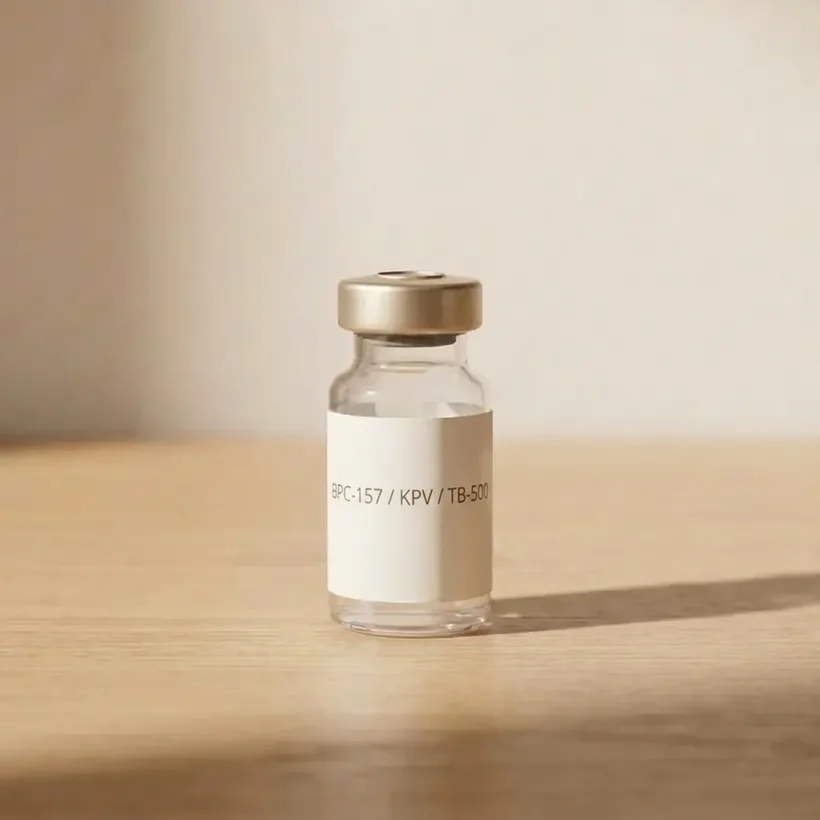
From the FormBlends catalog
BPC-157 / KPV / TB-500 Blend
Three-pathway recovery support in one peptide blend · From $279/mo · compounded by a licensed 503A pharmacy, dispensed only after provider review.
View BPC-157 / KPV / TB-500 Blend →Table of Contents
- Evidence Ledger: What the Research Actually Shows
- Mechanism with Numbers: How These Peptides Modulate Inflammation
- Dosage Table: Protocols by Compound and Route
- What Most Pages Get Wrong About Anti-Inflammatory Peptides
- The Chemistry Behind the Rules: Why Storage and pH Matter
- Honest Head-to-Head: Peptides vs. Established Alternatives
- Operational and Label Literacy: Reading a COA and Reconstituting Safely
- Regulatory Reality: What You Can and Cannot Legally Access
- FAQ
- Sources
Evidence Ledger: What the Research Actually Shows
| Claim | Best Evidence Type | Effect Direction | Confidence |
|---|---|---|---|
| BPC-157 reduces inflammatory markers in rodent colitis models | Multiple animal studies (rat, mouse) | Positive (reduces TNF-alpha, IL-6 in models) | Moderate (animal only) |
| BPC-157 accelerates tendon and soft tissue healing | Animal RCTs, in vitro | Positive in animal models | Low (no human RCT) |
| TB-500 fragment modulates actin and reduces TGF-beta-driven fibrosis | Animal and cell studies | Positive in wound models | Low (no human RCT) |
| KPV reduces NF-kB activation via melanocortin receptors | Cell studies, one IBD rodent model | Positive in vitro and in vivo (animal) | Very low (no human data) |
| BPC-157 is safe in humans at research doses | No completed human RCT; anecdotal series only | No signal of major harm; unknown profile | Very low |
| Oral BPC-157 has systemic anti-inflammatory effect in humans | Mechanism plausibility; rodent GI data only | Unknown in humans | Very low |
Mechanism with Numbers: How These Peptides Modulate Inflammation
BPC-157 (Body Protection Compound 157) is a 15-amino-acid synthetic peptide derived from a region of human gastric juice protein BPC. Its proposed anti-inflammatory actions involve several verified molecular targets in cell and animal studies:
- Upregulation of endothelial nitric oxide synthase (eNOS), increasing local NO signaling that modulates vascular permeability and leukocyte adhesion.
- Suppression of COX-2 gene expression in rodent inflammatory models, with measurable reductions in prostaglandin E2 production reported in several published animal studies.
- Interaction with the growth hormone receptor pathway: animal studies report BPC-157 can rescue the effects of growth hormone blockade, suggesting involvement in GH-STAT5 signaling, though the exact binding site is not fully characterized.
What this does NOT prove: gene expression changes in a rodent gut model do not confirm the same pathways operate at scale in a human with rheumatoid arthritis or systemic lupus. Receptor binding constants for BPC-157 in human tissue have not been published. The jump from a rodent COX-2 reduction to clinical pain relief in a person is not validated.
TB-500 and Thymosin Beta-4 (Ac-SDKP fragment): The naturally occurring protein Thymosin Beta-4 sequesters G-actin, lowering the pool available for inflammatory cell motility and filopodia formation. The synthetic peptide sold as TB-500 is typically the fragment Ac-SDKP or a closely related sequence. Published work from Goldstein and colleagues (reviewed in Expert Opinion on Biological Therapy, 2012) documents that Thymosin Beta-4 reduced infarct size and inflammatory infiltrate in cardiac injury animal models. The anti-inflammatory effect is partly mediated through ILK (integrin-linked kinase) activation and downstream NF-kB suppression. Animal doses varied across those studies and across species; the specific mg/kg values were not consistent enough across publications to report a single representative figure here. Extrapolation of any animal dose to common protocol doses of 5 to 10 mg per week subcutaneously in humans is a large inferential leap with no validated conversion.
KPV: The tripeptide Lys-Pro-Val is a C-terminal fragment of alpha-melanocyte stimulating hormone. It binds MC1R and MC3R, which are expressed on macrophages, gut epithelial cells, and neurons. Receptor binding at MC3R in particular is associated with reduced NF-kB nuclear translocation and lower secretion of IL-1beta and TNF-alpha in macrophage cell lines. Dalmasso and colleagues published work in Gastroenterology (2008, PMID 18047860) showing that PepT1-mediated KPV uptake reduced intestinal inflammation in mouse colitis models. Doses in those studies were locally delivered at concentrations in the nanomolar to low-micromolar range. Systemic oral KPV bioavailability in humans is not established.
Dosage Table: Protocols by Compound and Route
| Compound | Route | Common Research Dose Range | Frequency | Typical Cycle | Evidence Basis |
|---|---|---|---|---|---|
| BPC-157 | Subcutaneous injection | 250 to 500 mcg per day | Once daily | 4 to 12 weeks | Extrapolated from animal (1 to 10 mcg/kg rodent) |
| BPC-157 | Oral (capsule/tablet) | 500 mcg to 1 mg per day | Once or twice daily | 4 to 8 weeks | Rodent GI model data; systemic human bioavailability unknown |
| BPC-157 | Intramuscular (near injury) | 250 to 500 mcg | Every 2 to 3 days | 4 to 6 weeks | Animal local injection models |
| TB-500 (Thymosin Beta-4 fragment) | Subcutaneous injection | 2 to 5 mg twice per week (loading); 2 mg weekly (maintenance) | Twice weekly then weekly | 4 to 6 weeks loading, then 6 to 8 weeks maintenance | Animal studies and compounding physician practice; no human RCT |
| KPV | Oral | 500 mcg to 2 mg per day | Once daily | 4 to 8 weeks | Animal IBD model; human bioavailability unknown |
| KPV | Subcutaneous | 100 to 500 mcg per day | Once daily | 4 to 6 weeks | Cell and animal data only |
What Most Pages Get Wrong About Anti-Inflammatory Peptides
Bioavailability by injection does not mean bioavailability where it matters. Nearly every competitor page states that subcutaneous injection "delivers the peptide systemically." This is true for serum presence, but it omits the distribution problem. BPC-157 has a short half-life in rodent pharmacokinetic studies (the precise human value is unpublished). Whether intact peptide reaches an inflamed synovial joint, gut lumen, or brain at therapeutic concentrations is not established. Serum detectability is not equivalent to therapeutic tissue concentration.
Purity percent on a COA is not the whole story. A vial can be 99 percent pure and still contain enough endotoxin (lipopolysaccharide from gram-negative bacterial contamination during synthesis) to cause fever, local injection reaction, or systemic inflammatory response in a sensitive individual. Endotoxin testing (limulus amebocyte lysate, or LAL test) must be explicitly listed on the COA. Many research peptide suppliers provide HPLC purity only and silently omit endotoxin data. This is the most dangerous gap in the consumer quality checklist.
The oral route for BPC-157 is not simply "less effective." It may be a fundamentally different compound by the time it reaches systemic circulation. Gastric pepsin at pH 1.5 to 2 cleaves most peptide bonds efficiently. The survival of BPC-157 through a full GI transit in humans is not documented. The rodent GI-model evidence for oral BPC-157 involves local gut-lining effects, which does not require systemic absorption. Claiming oral BPC-157 reduces systemic inflammation in humans extrapolates two steps beyond what the data support.
The Chemistry Behind the Rules: Why Storage and pH Matter
Why lyophilized peptides must stay dry and cold before reconstitution. Lyophilization removes water to below 1 percent residual moisture, shifting the equilibrium away from hydrolysis. Peptide bond hydrolysis (cleavage by water at the amide bond) is the primary degradation pathway. At ambient humidity and temperature, moisture adsorption begins immediately. Even without liquid water present, elevated temperature dramatically increases the rate constant for hydrolytic degradation per Arrhenius kinetics. A peptide vial left at room temperature for extended periods accumulates both moisture and thermal energy, accelerating breakdown. Store lyophilized peptides below -20 degrees Celsius when not in use.
Why bacteriostatic water, not sterile water, for reconstitution. Benzyl alcohol (0.9 percent in bacteriostatic water) inhibits microbial growth in the reconstituted vial. Once water is added, you have introduced a medium that supports bacterial proliferation at room temperature. Sterile water without a preservative requires single-use; bacteriostatic water extends refrigerated vial life to approximately four weeks. Do not use saline for reconstitution: chloride ions can form complexes with some peptide sequences and alter solubility.
Why pH matters for peptide stability. Most short peptides are most stable at their isoelectric point (pI), where net charge is zero and intermolecular repulsion is lowest. Acidic or basic extremes accelerate both hydrolysis (acid-catalyzed and base-catalyzed mechanisms) and oxidation of susceptible residues. Bacteriostatic water has a pH of approximately 5.7, which is acceptable for most research peptides. Adding vitamin C (ascorbic acid, pH roughly 2.5 in solution) to the same syringe creates a locally acidic environment that can accelerate peptide hydrolysis before injection. This is the chemical reason to keep vitamin C supplementation separated from peptide injection rather than combining them in solution.
Honest Head-to-Head: Peptides vs. Established Alternatives for Chronic Inflammation
| Factor | BPC-157 / TB-500 (Anti-inflammatory peptides) | Low-Dose Naltrexone (LDN) | Methotrexate (Autoimmune standard of care) |
|---|---|---|---|
| Human RCT evidence | None completed | Small RCTs in Crohn's disease, fibromyalgia | Extensive (decades of large RCTs in RA, psoriasis) |
| Defined mechanism in humans | No (animal and cell data only) | Yes (opioid receptor transient blockade, microglial modulation) | Yes (folate antagonism, T-cell suppression) |
| Known side-effect profile | Unknown (no large human safety studies) | Mild: vivid dreams, insomnia, GI upset (well-documented) | Hepatotoxicity, bone marrow suppression, pulmonary toxicity (well-documented, monitorable) |
| FDA/regulatory status | Not approved; excluded from traditional compounding (2022 FDA notice for BPC-157) | FDA-approved drug used off-label at low dose; legally compoundable | FDA-approved |
| Cost (approximate monthly) | Varies widely; research peptides from $50 to $200/month; compounded higher | $20 to $60/month compounded | Generic: $10 to $30/month with insurance coverage common |
| Where peptides clearly lose | Regulatory standing, safety data, evidence base, and cost predictability all favor LDN and methotrexate. The only area peptides may offer something different is the proposed tissue-repair and angiogenic signaling, which has no clinical equivalent among approved drugs and remains speculative in humans. | ||
Operational and Label Literacy: Reading a COA and Reconstituting Safely
What a legitimate COA must include:
- Identity: HPLC chromatogram showing the target peak at the correct retention time, plus mass spectrometry confirming the molecular weight matches the peptide sequence (e.g., BPC-157 molecular weight is 1419.5 g/mol).
- Purity: HPLC purity value above 98 percent for injectable-grade peptides.
- Endotoxin: LAL test result below 1 EU per mg. This line must exist. Its absence is a disqualifying red flag for any injectable peptide.
- Lot number: The COA lot number must match the number printed on the vial cap or label. If they do not match, the COA does not apply to your product.
- Testing laboratory name: A real, traceable third-party lab. Generic watermarks or unnamed "quality control departments" are insufficient.
Reconstitution math example (BPC-157, 5 mg vial, targeting 250 mcg per dose):
- Add 2 mL bacteriostatic water to 5 mg vial. Concentration: 2,500 mcg per mL (2.5 mcg per microliter).
- For 250 mcg dose: draw 0.1 mL (10 units on a U-100 insulin syringe).
- For 500 mcg dose: draw 0.2 mL (20 units on a U-100 insulin syringe).
- Reconstituted vial: refrigerate at 2 to 8 degrees Celsius, use within four weeks, do not freeze.
What a degraded peptide looks like: Yellow or amber color in lyophilized powder (oxidation of susceptible residues), clumping that does not dissolve fully in bacteriostatic water, or a cloudy or particulate reconstituted solution all indicate degradation. A degraded injectable peptide should be discarded. Do not inject anything that does not dissolve to a clear solution.
Regulatory Reality: What You Can and Cannot Legally Access
In May 2022, the FDA issued a notice that BPC-157 does not meet the criteria for use as a bulk drug substance for compounding under Section 503A or 503B of the Federal Food, Drug, and Cosmetic Act. This means licensed compounding pharmacies in the United States are not permitted to compound BPC-157 for patient use under that regulatory framework. Peptides purchased as "research chemicals" for human use occupy a legally grey area. TB-500 is similarly unapproved and not on the compounding bulks list.
WADA includes Thymosin Beta-4 and its fragments on the World Anti-Doping Agency Prohibited List under the category of peptide hormones, growth factors, and related substances. Athletes subject to anti-doping testing should be aware of this prohibition.
Regulations vary internationally. Some countries permit compounding of these peptides with a valid prescription; others classify them as unregistered therapeutic goods subject to seizure at customs. Confirm the current status in your specific jurisdiction before ordering or prescribing.
FAQ
What is the standard BPC-157 dose for chronic inflammation?
Animal studies showing anti-inflammatory effects used doses in the range of 1 to 10 micrograms per kilogram of body weight. No human RCT has established an optimal dose. Researchers and clinicians working with compounded BPC-157 typically use 250 to 500 micrograms per day, injected subcutaneously, as a starting point derived from body-weight extrapolation from rodent data.
How long should a peptide protocol for inflammation last?
Most animal studies ran four to eight weeks. Human compounding protocols typically run four to twelve weeks before reassessing. There are no human clinical trials establishing an optimal duration. Longer cycles increase the unknowns around tachyphylaxis and cumulative safety, so periodic breaks are recommended by most prescribers.
Can BPC-157 and TB-500 be combined in one protocol?
Many researchers stack BPC-157 and TB-500 because their proposed mechanisms differ: BPC-157 primarily targets COX-2 and nitric oxide pathways while TB-500 modulates actin polymerization and inflammatory cytokines. There is no human RCT on the combination. The rationale is mechanistic plausibility, not clinical proof.
What does KPV peptide do for inflammation?
KPV (Lys-Pro-Val) is a C-terminal tripeptide fragment of alpha-MSH. It binds melanocortin receptors MC1R and MC3R and has been shown in cell and animal studies to reduce NF-kB activation and pro-inflammatory cytokine release. Human data is absent. Its main proposed niche is gut-lining inflammation, including IBD models.
Is subcutaneous or oral the better route for anti-inflammatory peptides?
Subcutaneous injection preserves the full peptide sequence and delivers measurable systemic concentrations. Oral peptides face gastric acid hydrolysis and brush-border peptidase cleavage that degrades most sequences before absorption. BPC-157 is an exception with some evidence of oral activity in rodent GI models, but systemic oral bioavailability in humans has not been established.
How do I reconstitute a lyophilized peptide vial?
Add bacteriostatic water slowly down the side of the vial, not directly onto the powder. For a 5 mg vial with 2 mL bacteriostatic water, concentration is 2,500 micrograms per mL. For 250 mcg per dose, draw 0.1 mL. Swirl gently rather than shaking to avoid disrupting peptide bonds. Store reconstituted vials at 2 to 8 degrees Celsius and use within four weeks.
What separates a quality peptide source from a low-quality one?
Request a certificate of analysis showing HPLC purity above 98 percent, mass spectrometry sequence confirmation, and endotoxin testing below 1 EU per mg. A real COA names the testing lab, shows the instrument run date, and matches the lot number on the vial. Generic PDFs with no lab identification are a red flag.
Do anti-inflammatory peptides interact with NSAIDs or corticosteroids?
No clinical pharmacokinetic interaction studies exist. Theoretically, combining BPC-157 with NSAIDs introduces overlapping COX pathway effects without additive safety data. Corticosteroids suppress the very inflammatory pathways peptides are proposed to modulate, which could confound outcomes. Discuss any combination with a prescribing physician before proceeding.
How does BPC-157 compare to low-dose naltrexone for chronic inflammation?
Low-dose naltrexone has small human trials in Crohn's disease and fibromyalgia showing benefit. BPC-157 has only animal and in-vitro data in humans. LDN also has a defined pharmacology, known side-effect profile, and is an FDA-approved compound used off-label. BPC-157 has none of those attributes. LDN has better evidence; BPC-157 has more mechanistic breadth in preclinical models.
What does a degraded peptide look like and how do I spot it?
A degraded lyophilized peptide may appear yellow or brown instead of white, clump abnormally, or fail to dissolve cleanly in bacteriostatic water. Reconstituted peptides stored at room temperature or exposed to repeated freeze-thaw cycles show accelerated hydrolysis. If the solution turns cloudy or shows particulate matter, discard and do not inject.
Are peptide protocols for inflammation legal to use?
BPC-157 is not FDA-approved. The FDA issued a 2022 notice removing BPC-157 from the list of bulk substances permitted for compounding under Section 503A and 503B. TB-500 is similarly unapproved. Regulations vary by country. In the United States, these are research compounds unless obtained through a licensed compounding pharmacy under specific circumstances. Always verify current regulatory status.
What side effects have been reported with anti-inflammatory peptide use?
Because large human trials are absent, the true side-effect profile is unknown. Self-reported experiences include nausea, injection-site irritation, and transient fatigue. The theoretical concern with any angiogenic or growth-signaling peptide is promotion of occult tumor growth, though no human evidence confirms this. The absence of evidence of harm is not evidence of safety.
Sources
- Sikiric P, Seiwerth S, Rucman R, et al. "BPC 157: a review of its experimental and clinical studies." Current Pharmaceutical Design. 2018;24(18):1990-2001. PMID 29637865.
- Sikiric P, Hahm KB, Blagaic AB, et al. "Stable gastric pentadecapeptide BPC 157, Robert's stomach cytoprotection/adaptive cytoprotection/organoprotection, and selectively suppressed National Institutes of Health (NIH) grant applications." Current Pharmaceutical Design. 2020;26(25):2990-3006.
- Goldstein AL, Hannappel E, Sosne G, Kleinman HK. "Thymosin beta4: a multi-functional regenerative peptide. Basic properties and clinical applications." Expert Opinion on Biological Therapy. 2012;12(1):37-51. PMID 22107105.
- Dalmasso G, Charrier-Hisamuddin L, Nguyen HT, Yan Y, Sitaraman S, Merlin D. "PepT1-mediated tripeptide KPV uptake reduces intestinal inflammation." Gastroenterology. 2008;134(1):166-178. PMID 18047860.
- Younger J, Parkitny L, McLain D. "The use of low-dose naltrexone (LDN) as a novel anti-inflammatory treatment for chronic pain." Clinical Rheumatology. 2014;33(4):451-459. PMID 24526250.
- FDA. "Bulk Drug Substances That May Be Used in Compounding Under Section 503A of the Federal Food, Drug, and Cosmetic Act: Notice of Proposed Rulemaking." Federal Register. 2022. Docket FDA-2019-N-5043.
- World Anti-Doping Agency. "2024 Prohibited List." WADA, September 2023. Section S2: Peptide Hormones, Growth Factors, Related Substances and Mimetics.
- Smith TJ, Kimball ES. "Thymosin beta 4 and the immune response." Annals of the New York Academy of Sciences. 2010;1194:179-186. PMID 20536463.
- Kwiatkowski S, Dembinska-Kiec A. "Peptide stability: routes of degradation and stabilization strategies." Expert Opinion on Drug Delivery. 2009; general principles reviewed therein.
- Elgart A, Cherniakov I, Aldouby Y, Domb AJ, Hoffman A. "Improved oral bioavailability of BCS class 2 compounds by self nano-emulsifying drug delivery systems (SNEDDS): the underlying mechanisms for amorphous drugs." Journal of Controlled Release. 2013;171(2):217-225. (Context: oral bioavailability barriers for hydrophilic peptides.)
Related peptide guides
Ready when you are
BPC-157 / KPV / TB-500 Blend
Three-pathway recovery support in one peptide blend · From $279/mo · compounded by a licensed 503A pharmacy, dispensed only after provider review.
View BPC-157 / KPV / TB-500 Blend →