Key Takeaway
Step-by-step guide to injecting ipamorelin safely and effectively. Learn proper reconstitution calculator, injection technique, site rotation, and storage from peptide therapy experts.
Quick Answer: Ipamorelin is administered via subcutaneous injection, most commonly in the abdominal area, thigh, or upper arm. The peptide must first be reconstituted with bacteriostatic water. Injections are given using an insulin syringe, typically once or twice daily on an empty stomach .
What Is Ipamorelin?
Ipamorelin is a selective growth hormone-releasing peptide (GHRP) that stimulates the pituitary gland to produce growth hormone in a natural, pulsatile pattern. It's one of the most widely used peptides in clinical practice due to its selectivity and favorable tolerability profile .
Ipamorelin is supplied as a lyophilized (freeze-dried) powder that must be reconstituted before injection. While the process may seem intimidating at first, it becomes straightforward with practice. This guide walks you through each step in detail.
Ipamorelin isn't FDA-approved for any medical condition. This guide is for educational purposes only. Your physician and pharmacy will provide specific instructions for your protocol.
What You Will Need
Before you begin, gather the following supplies:
View data table
| Category | Clinical Interest Score | Detail |
|---|---|---|
| BPC-157 | 88 | Tissue repair and gut healing |
| TB-500 | 82 | Injury recovery |
| Sermorelin | 78 | Growth hormone support |
| Ipamorelin | 75 | Anti-aging and recovery |
| GHK-Cu | 70 | Skin and tissue repair |
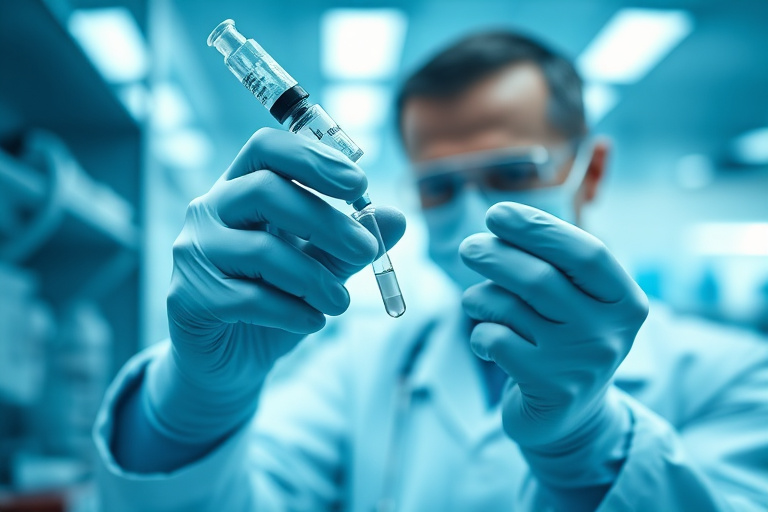
- Ipamorelin vial (lyophilized powder, typically 5 mg or 10 mg)
- Bacteriostatic water (sterile water preserved with 0.9% benzyl alcohol)
- Insulin syringes (29 to 31 gauge, 0.5 mL or 1 mL capacity)
- Alcohol swabs (70% isopropyl alcohol prep pads)
- Sharps disposal container
Don't use regular sterile water or saline for reconstitution. Bacteriostatic water contains a preservative that inhibits bacterial growth, allowing the reconstituted peptide to remain stable for multiple uses over several weeks .
Step 1[1]: Reconstitution
Reconstitution is the process of dissolving the freeze-dried peptide powder in bacteriostatic water to create an injectable solution.
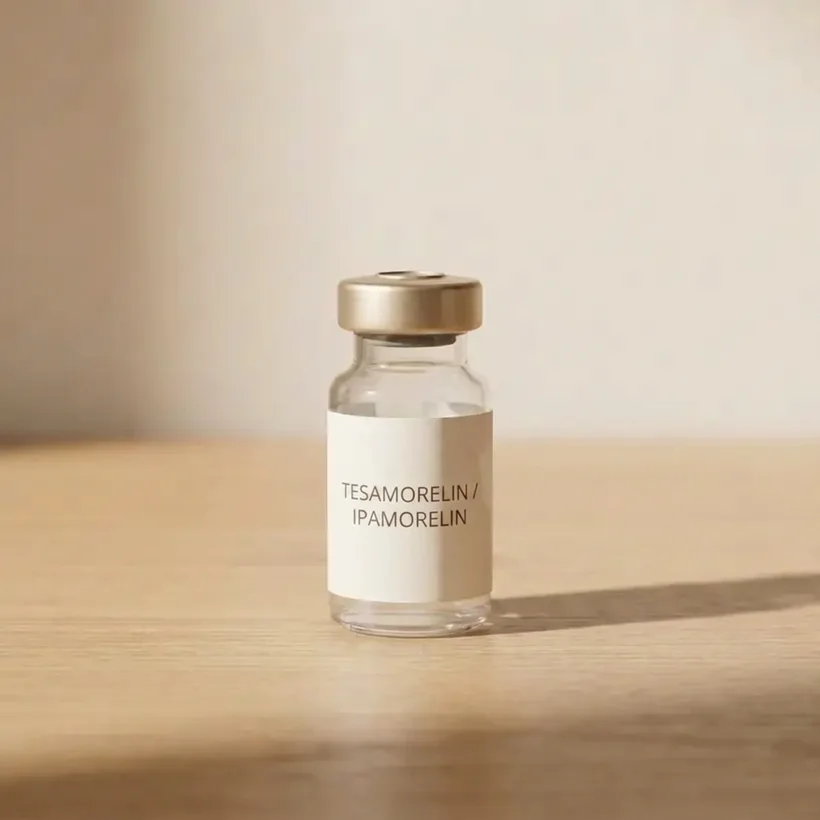
From the FormBlends catalog
Tesamorelin / Ipamorelin Blend
Growth-hormone pathway support in one blend · From $299/mo · compounded by a licensed 503A pharmacy, dispensed only after provider review.
View Tesamorelin / Ipamorelin Blend →Reconstitution Procedure
- Clean your workspace. Work on a clean, flat surface. Wash your hands thoroughly with soap and water.
- Prepare the vials. Remove the plastic flip-off caps from both the ipamorelin vial and the bacteriostatic water vial. Wipe the exposed rubber stoppers with separate alcohol swabs and allow them to air dry.
- Draw bacteriostatic water. Using an insulin syringe, draw the desired volume of bacteriostatic water. Common reconstitution volumes include:
- 2 mL into a 5 mg vial = 2.5 mg/mL (250 mcg per 0.1 mL)
- 2.5 mL into a 5 mg vial = 2 mg/mL (200 mcg per 0.1 mL)
- Add water to the peptide vial. Insert the needle into the rubber stopper of the ipamorelin vial at an angle. Allow the water to flow gently down the inside wall of the glass vial. Don't squirt the water directly onto the powder, as the force can damage the peptide structure.
- Dissolve gently. Once the water has been added, gently swirl the vial in a circular motion. Don't shake. The powder should dissolve within 30 to 60 seconds, producing a clear, colorless solution.
- Inspect the solution. The reconstituted peptide should be completely clear. If it appears cloudy, contains floating particles, or doesn't dissolve fully, don't use it. Contact your pharmacy.
Step 2: Drawing Your Dose
- Wipe the vial stopper with a fresh alcohol swab each time you draw a dose.
- Insert the syringe needle through the rubber stopper.
- Invert the vial so the needle tip is submerged in the liquid.
- Draw the prescribed volume slowly. For example, if your reconstitution produces 250 mcg per 0.1 mL and your dose is 250 mcg, draw to the 10-unit mark on an insulin syringe.
- Check for air bubbles. If bubbles are present, tap the syringe gently with your finger to move them to the top, then push the plunger slightly to expel the air. Air bubbles in a subcutaneous injection aren't dangerous, but they can affect dose accuracy.
- Remove the syringe from the vial and set it aside on a clean surface with the cap on, if needed momentarily.
Step 3: Choosing an Injection Site
Ipamorelin is given as a subcutaneous injection, meaning the needle is inserted into the fatty tissue just beneath the skin. The three most common injection sites are:
Abdomen (Most Common)
The area around the navel is the most popular injection site. Use the fatty tissue at least 2 inches away from the belly button, avoiding any scars, moles, or areas of irritation. The abdomen typically provides consistent absorption and is easy to access.
Thigh
The front or outer aspect of the upper thigh, roughly in the middle third between knee and hip. This area has ample subcutaneous tissue in most individuals.
Upper Arm
The back or outer portion of the upper arm, in the area with the most pinchable tissue. This site is slightly less convenient for self-injection but works well for some people.
Site Rotation
Rotate injection sites with each injection to prevent lipodystrophy (changes in fat tissue) and reduce irritation. A simple rotation pattern might alternate between left abdomen, right abdomen, left thigh, and right thigh .
Step 4: Performing the Injection
- Clean the injection site with an alcohol swab. Allow it to air dry completely (about 15 to 30 seconds). Injecting through wet alcohol can cause stinging.
- Pinch the skin. Using your non-dominant hand, gently pinch a fold of skin and subcutaneous tissue at the chosen site.
- Insert the needle. Hold the syringe like a pen or dart. Insert the needle at a 45 to 90 degree angle into the pinched skin fold. For insulin syringes with short needles (typically 5/16 inch or 8 mm), a 90 degree angle is usually appropriate. For longer needles, a 45 degree angle helps ensure the injection stays subcutaneous rather than entering muscle.
- Inject slowly. Push the plunger down steadily and slowly. There's no need to aspirate (pull back on the plunger) for subcutaneous injections.
- Withdraw the needle. Once the plunger is fully depressed, wait 3 to 5 seconds before withdrawing the needle to ensure the full dose is delivered.
- Release the skin fold and apply gentle pressure with a clean cotton ball or alcohol swab if there's any bleeding. Don't rub the area.
- Dispose of the syringe immediately in a sharps container. Never recap and reuse needles.
Timing Your Injection
When you inject ipamorelin matters because food intake affects its effectiveness:
- Inject on an empty stomach. improved blood sugar and insulin blunt the growth hormone response to ipamorelin. Wait at least 90 minutes after eating (ideally 2 hours) before injecting .
- Wait before eating. After injection, wait at least 30 minutes before consuming food.
- Most common timing: 30 to 60 minutes before bedtime, at least 2 hours after your last meal. This capitalizes on the body's natural nocturnal growth hormone surge.
- Morning option: Immediately upon waking, before breakfast. This can support fat metabolism during the fasted state.
For detailed dosing protocols, see our Ipamorelin dosage guide.
Storage Guidelines
- Unreconstituted powder: Store in a cool, dry place away from direct light and heat. Refrigeration is ideal but not always strictly required for short-term storage before reconstitution.
- Reconstituted solution: Refrigerate at 36 to 46 degrees Fahrenheit (2 to 8 degrees Celsius). Use within 4 to 6 weeks of reconstitution. Never freeze reconstituted peptide.
- Transport: If traveling, keep reconstituted vials cold with an insulated pouch and ice pack. Avoid leaving vials in hot cars or direct sunlight.
- Signs of degradation: Discard the vial if the solution becomes cloudy, develops particles, changes color, or has been stored improperly.
Common Mistakes to Avoid
- Squirting water directly onto the powder: This can damage the peptide. Always let the water run gently down the vial wall.
- Shaking the vial: Vigorous shaking can denature the peptide. Swirl gently instead.
- Injecting too soon after eating: A high-insulin environment reduces GH release. Be mindful of meal timing.
- Skipping alcohol prep: Always clean both the vial stopper and your injection site to reduce infection risk.
- Reusing syringes: Each injection should use a fresh, sterile syringe and needle. Reuse increases infection risk and causes needle dulling, making injections more painful.
- Storing at room temperature after reconstitution: Reconstituted peptide must be refrigerated. Room temperature storage accelerates degradation and bacterial growth.
Safety and Side Effects
Ipamorelin is well-tolerated by most individuals. Injection-related side effects are generally mild and may include brief stinging at the injection site, minor redness, or small bruising. These are related to the injection process itself rather than the peptide.
Peptide-related side effects may include mild headache, transient flushing, water retention, or tingling in the extremities. These are typically temporary, especially during the first week of use.
For thorough safety information, read our Ipamorelin side effects guide.
How FormBlends Can Help
At FormBlends, we believe that peptide therapy should be guided by science and supervised by physicians. Our telehealth platform connects you with licensed medical providers who can prescribe ipamorelin and walk you through every step of the process, from reconstitution to injection technique.
When you work with us, you receive:
- A personalized consultation with a licensed physician
- Pharmaceutical-grade peptides from licensed pharmacies
- Ongoing medical supervision and dosage guidance
- Clear, science-backed information to support your decisions
We don't leave you guessing. Your physician and our support team are available to answer questions about technique, timing, and troubleshooting throughout your treatment.
Frequently Asked Questions
Does injecting ipamorelin hurt?
Most people describe the injection as a brief pinch or barely noticeable sensation. Insulin syringes use very fine needles (29 to 31 gauge) that are designed for comfort. Allowing the alcohol prep to dry fully and injecting slowly can further reduce any discomfort.
Can I inject ipamorelin in the same spot every time?
No. Rotating injection sites is important to prevent lipodystrophy and irritation. Alternate between at least two or three different areas, such as left abdomen, right abdomen, and thigh.
What happens if I see air bubbles in my syringe?
Small air bubbles in a subcutaneous injection aren't dangerous. But they can reduce dose accuracy. Tap the syringe gently to move bubbles to the top and push the plunger slightly to expel them before injecting.
How long does reconstituted ipamorelin last?
When stored properly in the refrigerator (36 to 46 degrees Fahrenheit), reconstituted ipamorelin is generally stable for 4 to 6 weeks. Always use bacteriostatic water (not plain sterile water) for multi-use reconstitution.
Is ipamorelin FDA-approved?
No. Ipamorelin isn't FDA-approved for the treatment, cure, or prevention of any disease. It's available through compounding pharmacies under physician supervision for individual patient use.
Medical References
- Wilding JPH, Batterham RL, Calanna S, et al. Once-Weekly Semaglutide in Adults with Overweight or Obesity. N Engl J Med. 2021;384(11):989-1002. [PubMed | ClinicalTrials.gov | DOI]
- Davies M, Færch L, Jeppesen OK, et al. Semaglutide 2.4 mg once a week in adults with overweight or obesity, and type 2 diabetes (STEP 2). Lancet. 2021;397(10278):971-984. [PubMed | ClinicalTrials.gov | DOI]
- Wadden TA, Bailey TS, Billings LK, et al. Effect of Subcutaneous Semaglutide vs Placebo as an Adjunct to Intensive Behavioral Therapy on Body Weight in Adults With Overweight or Obesity (STEP 3). JAMA. 2021;325(14):1403-1413. [PubMed | ClinicalTrials.gov | DOI]
- Rubino D, Abrahamsson N, Davies M, et al. Effect of Continued Weekly Subcutaneous Semaglutide vs Placebo on Weight Loss Maintenance in Adults With Overweight or Obesity (STEP 4). JAMA. 2021;325(14):1414-1425. [PubMed | ClinicalTrials.gov | DOI]
Ready to Learn More?
If you're interested in exploring whether ipamorelin may support your health goals, FormBlends can connect you with a licensed physician who will guide you through every step. Our team is here to help you make informed decisions backed by science and guided by medical expertise.
Disclaimer: This article is for informational purposes only and doesn't constitute medical advice. Ipamorelin isn't FDA-approved for any medical condition. The injection and preparation instructions presented here are for educational purposes and shouldn't replace guidance from your prescribing physician or pharmacy. Always consult with a licensed healthcare provider before beginning any peptide therapy. Individual results may vary. FormBlends doesn't claim that ipamorelin cures, treats, or prevents any disease.
Ready when you are
Tesamorelin / Ipamorelin Blend
Growth-hormone pathway support in one blend · From $299/mo · compounded by a licensed 503A pharmacy, dispensed only after provider review.
View Tesamorelin / Ipamorelin Blend →