Key Takeaway
Can KPV help muscle recovery? How KPV's anti-inflammatory effects may support post-exercise recovery. Limitations and better peptide alternatives.
Quick Answer: KPV for muscle recovery is a limited application. KPV's anti-inflammatory properties can reduce exercise-induced inflammation that contributes to muscle soreness, but it doesn't directly promote muscle repair, satellite cell activation, or structural tissue rebuilding. For muscle recovery, dedicated peptides like TB-4 (which activates satellite cells) and BPC-157 (which upregulates growth factors) are far more effective. KPV may provide a modest complementary benefit by managing the inflammatory component of muscle damage .
What KPV Can Do for Recovery
Exercise-induced muscle damage triggers an inflammatory response that causes delayed onset muscle soreness (DOMS). This inflammation involves the same NF-kB pathway and pro-inflammatory cytokines (TNF-alpha, IL-6) that KPV targets. By dampening excess inflammation, KPV may:
- Reduce the severity and duration of DOMS
- Decrease excessive inflammatory signaling that can delay recovery
- Support a more efficient transition from the inflammatory to the repair phase
What KPV Can't Do
- Activate satellite cells: TB-4 is the peptide that activates the muscle stem cells responsible for repair
- Upregulate growth factors: BPC-157 stimulates growth factors that drive tissue rebuilding
- Promote angiogenesis: TB-4 promotes new blood vessel formation in recovering tissue
- Build muscle: KPV has no anabolic or muscle-building properties
Better Peptide Options for Muscle Recovery
| Peptide | Recovery Mechanism | Effectiveness |
|---|---|---|
| TB-4 (TB-500) | Satellite cell activation, tissue repair, anti-inflammatory | Excellent for muscle recovery |
| BPC-157 | Growth factors, tendon-muscle healing, NO modulation | Excellent for tissue repair |
| CJC-1295/Ipamorelin | GH improvement, sleep enhancement, anabolic support | Good for recovery and body composition |
| KPV | Anti-inflammatory only | Modest for soreness reduction |
For athletes and active individuals seeking faster muscle recovery, Thymosin Beta-4 for muscle recovery or BPC-157 for muscle recovery should be the primary consideration.
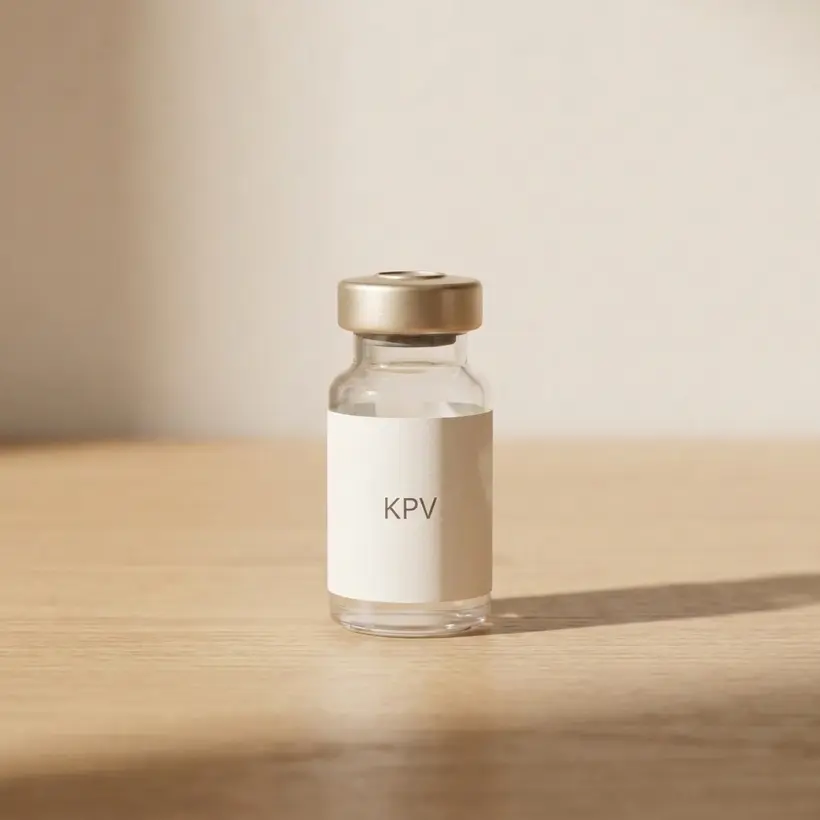
From the FormBlends catalog
KPV
Anti-inflammatory tripeptide for gut and systemic health · From $44/mo · compounded by a licensed 503A pharmacy, dispensed only after provider review.
Learn about KPV →
When KPV Makes Sense for Active People
KPV may be a valuable part of a recovery protocol when:
- You're already using KPV for gut health or skin conditions and want to understand its effect on training
- Chronic systemic inflammation is impairing your overall recovery capacity
- You're combining KPV with TB-4 or BPC-157, where it adds anti-inflammatory support to the repair peptides
Frequently Asked Questions
Will KPV reduce my muscle soreness?
KPV may modestly reduce exercise-induced inflammation that contributes to DOMS. But the effect is less pronounced than dedicated recovery peptides like TB-4 or strategies like proper nutrition, sleep, and active recovery.
Can I take KPV before workouts?
KPV can be taken at any time. But some degree of post-exercise inflammation is necessary to stimulate adaptation. Aggressively suppressing all exercise-induced inflammation may actually impair training adaptations.
Is KPV banned in sports?
KPV isn't specifically listed on the WADA prohibited list as of current guidelines. But WADA rules can change, and athletes should verify current status with their sport's governing body before using any peptide.
Medical References
- Goldstein AL, Hannappel E, Sosne G, Kleinman HK. Thymosin beta4: a multi-functional regenerative peptide. Basic properties and clinical applications. Expert Opin Biol Ther. 2012;12(1):37-51. [PubMed | DOI]
Improve Your Recovery
At FormBlends, our physicians help active individuals choose the right peptides for their specific recovery needs and training goals.
Disclaimer: This article is for informational purposes only and doesn't constitute medical advice. KPV isn't FDA-approved for any medical condition. Always consult with a licensed healthcare provider. Individual results may vary.
Ready when you are
KPV
Anti-inflammatory tripeptide for gut and systemic health · From $44/mo · compounded by a licensed 503A pharmacy, dispensed only after provider review.
Learn about KPV →