Key Takeaway
Complete guide to longevity peptide stacks using epitalon, NAD+, thymosin alpha-1, BPC-157, and GH peptides for healthspan extension and biological age reduction.
A longevity peptide stack targets the fundamental biological mechanisms of aging, including telomere shortening, NAD+ depletion, immune decline, hormonal loss, and accumulated tissue damage, to extend healthspan and reduce biological age.
Longevity medicine has moved beyond wishful thinking. We now understand the key biological processes that drive aging, and we have tools to intervene in many of them. The goal isn't simply to live longer, but to live well for longer, maintaining physical capability, cognitive sharpness, and metabolic health deep into later decades.
At FormBlends, our longevity peptide protocols are designed around the latest understanding of aging biology. We combine multiple peptides that each address a distinct pillar of the aging process, creating a thorough strategy that no single compound can achieve alone.
The Pillars Of Aging That Peptides Can Address
Aging research has identified several interconnected mechanisms that drive biological aging. Effective longevity protocols need to address multiple pillars simultaneously.
- Telomere attrition. Telomeres shorten with each cell division. When they reach a critical length, cells stop dividing or die. Telomere length is one of the most strong biomarkers of biological age.
- NAD+ depletion. NAD+ is important for cellular energy, DNA repair, and sirtuin activation. Levels decline approximately 50% between ages 40 and 60.
- Immune senescence (immunoaging). The immune system loses function with age, increasing vulnerability to infection, cancer, and chronic inflammation.
- Hormonal decline. Growth hormone, testosterone, estrogen, and other hormones decline progressively, affecting every tissue in the body.
- Chronic inflammation (inflammaging). Low-grade systemic inflammation increases with age, damaging tissue and accelerating every other aging process.
- Mitochondrial dysfunction. Mitochondria produce less energy and more oxidative stress as they age, reducing cellular function across all organs.
Key Longevity Peptides
Epitalon
Epitalon is a synthetic tetrapeptide (Ala-Glu-Asp-Gly) based on epithalamin, a substance produced by the pineal gland. It's the only peptide with published data showing activation of telomerase, the enzyme that can extend telomere length. Research by Vladimir Khavinson demonstrated that epitalon extended lifespan in animal models and activated telomerase in human cell cultures.
View data table
| Category | Clinical Interest Score | Detail |
|---|---|---|
| BPC-157 | 88 | Tissue repair and gut healing |
| TB-500 | 82 | Injury recovery |
| Sermorelin | 78 | Growth hormone support |
| Ipamorelin | 75 | Anti-aging and recovery |
| GHK-Cu | 70 | Skin and tissue repair |

Longevity benefits:
- Activates telomerase to maintain or extend telomere length
- Supports pineal gland function and natural melatonin production
- Regulates circadian rhythm signaling
- May slow cellular senescence
- Antioxidant properties that protect against DNA damage
NAD+ (Nicotinamide Adenine Dinucleotide)
NAD+ is the coenzyme that powers mitochondrial energy production and activates sirtuins, the family of proteins most directly linked to longevity in every organism studied. Restoring youthful NAD+ levels is considered one of the most impactful longevity interventions currently available. NAD+ therapy
Longevity benefits:
- Powers mitochondrial function and ATP production
- Activates all seven sirtuin enzymes (SIRT1-7)
- Supports DNA repair through PARP enzyme activation
- Improves cellular stress resistance
- Enhances cognitive function and neuroprotection
- Supports healthy metabolism and insulin sensitivity
Thymosin Alpha-1
Immune decline is one of the most impactful aspects of aging. Thymosin alpha-1 directly addresses immunoaging by supporting T-cell maturation and function. A well-functioning immune system is important for cancer surveillance, infection defense, and controlled inflammation. immune system peptide stack
CJC-1295/Ipamorelin
Growth hormone improvement addresses the hormonal pillar of aging. GH influences muscle mass, bone density, fat distribution, skin quality, cognitive function, and virtually every other marker of biological age. CJC-1295 ipamorelin stack protocol
BPC-157
BPC-157 addresses accumulated tissue damage and chronic inflammation, two driving forces of aging. Its ability to heal gut, tendon, muscle, and vascular tissue helps repair the slow accumulation of damage that aging represents. BPC-157 peptide therapy
Recommended Longevity Stacks
thorough Longevity Stack: Epitalon + NAD+ + Ta1 + CJC-1295/Ipamorelin + BPC-157
This is our most thorough longevity protocol, addressing all major pillars of aging. It's designed for patients who are committed to a proactive, science-based approach to healthspan extension.
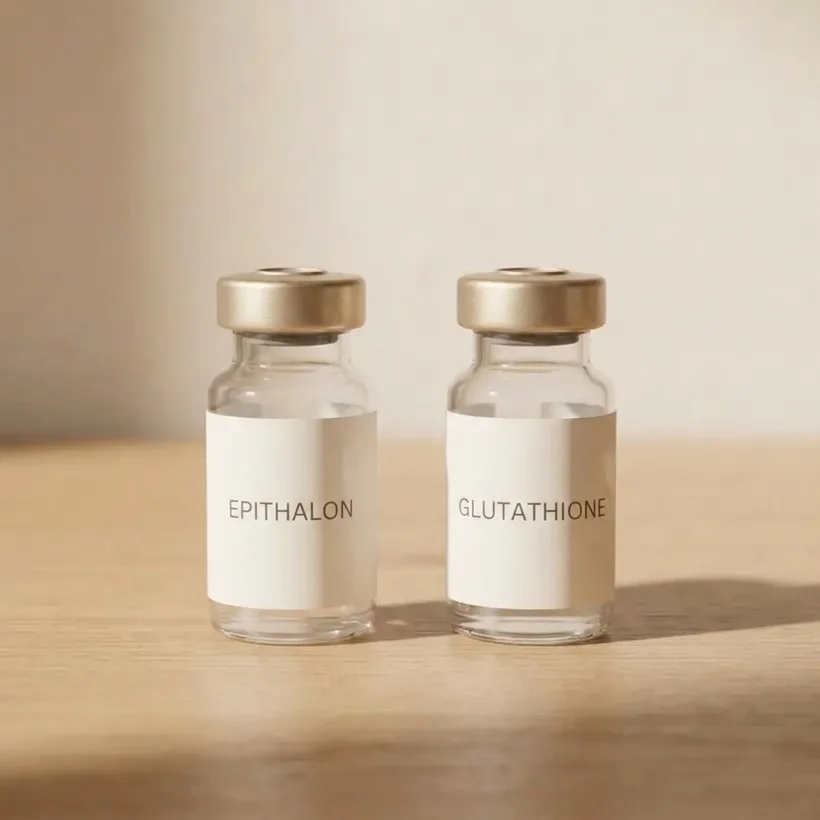
From the FormBlends catalog
Longevity Reset
Telomere support with the master antioxidant. · Bundle from $270 · provider-reviewed peptide bundle.
View Longevity Reset →- Epitalon: 5-10 mg daily for 10-20 day cycles, 2-3 times per year
- NAD+: Subcutaneous 100-200 mg 2-3 times weekly, or IV infusion 250-500 mg every 2-4 weeks
- Thymosin Alpha-1: 1.6 mg subcutaneous, 2-3 times per week
- CJC-1295: 2 mg weekly
- Ipamorelin: 200-300 mcg before bed
- BPC-157: 250-500 mcg daily during peptide cycle phases
Core Longevity Stack: Epitalon + NAD+ + CJC-1295/Ipamorelin
A more simplified approach that covers the three most impactful longevity targets: telomere maintenance, cellular energy, and hormonal improvement.
- Epitalon: 5-10 mg daily for 10-20 day cycles, 2-3 times per year
- NAD+: Subcutaneous 100-200 mg 2-3 times weekly
- CJC-1295: 2 mg weekly
- Ipamorelin: 200-300 mcg before bed
Foundational Longevity Stack: NAD+ + CJC-1295/Ipamorelin
The simplest effective longevity protocol for patients just starting their longevity process. NAD+ handles cellular energy and DNA repair while the GH stack addresses hormonal decline.
- NAD+: Subcutaneous 100-200 mg 2-3 times weekly
- CJC-1295: 2 mg weekly
- Ipamorelin: 200-300 mcg before bed
Protocol Structure
Longevity protocols are designed as ongoing programs with rotating cycles rather than single courses. Aging is continuous, and longevity interventions need to be sustained.
Rotating Cycle Framework
- Months 1-3: Full stack (GH peptides + BPC-157 + NAD+ + Ta1). Epitalon 10-20 day cycle during this period.
- Month 4: Break from GH peptides and BPC-157. Continue NAD+ and Ta1 at maintenance dose.
- Months 5-7: Resume full stack. Second epitalon cycle.
- Month 8: Break period. Continue NAD+ only.
- Repeat pattern.
Lab Monitoring Schedule
Longevity protocols require regular monitoring to track biological age markers and ensure safety:
- Baseline: thorough metabolic panel, IGF-1, fasting glucose and insulin, inflammatory markers (hsCRP, IL-6), immune panel, telomere length testing, NAD+ levels (if available)
- Every 3 months: IGF-1, fasting glucose, metabolic panel, inflammatory markers
- Every 6-12 months: Telomere length, thorough immune panel, biological age testing (epigenetic clocks if available)
Expected Benefits Over Time
Longevity protocols produce both near-term quality-of-life improvements and long-term biological age impacts.
Months 1-3
Improved energy, sleep, and cognitive clarity. Body composition begins improving. Skin quality increases. Exercise recovery accelerates. Inflammation markers start declining on lab work. These near-term improvements reflect the GH improvement and NAD+ effects.
Months 3-6
Measurable improvements on lab biomarkers. IGF-1 improved. Inflammatory markers reduced. Immune function improvements visible on immune panels. Body composition significantly better. Patients report feeling and functioning at a noticeably younger level.
Months 6-12
Cumulative benefits become substantial. Telomere length may stabilize or improve (with epitalon cycles). Biological age testing may show a measurable reduction in estimated biological age. Physical and cognitive performance reach significantly higher baselines. Chronic health issues may improve or stabilize.
Year 2 And Beyond
Sustained protocol adherence produces compounding benefits. The goal shifts from acute improvement to maintaining a youthful biological age trajectory. Patients who remain consistent with longevity protocols often report that the gap between their chronological age and how they feel continues to widen favorably.
Safety Considerations
Multi-peptide longevity protocols require thorough medical oversight due to their complexity and duration.
Side Effects
- Water retention from GH peptides (temporary)
- Flushing or nausea with NAD+ (managed with dose and rate adjustments)
- Injection site reactions
- Mild flu-like symptoms during initial Ta1 use
- Tingling in extremities from GH elevation
Contraindications
- Active cancer of any type
- Uncontrolled diabetes
- Severe organ disease (liver, kidney)
- Pregnancy or breastfeeding
- Organ transplant recipients on immunosuppression
Why Physician Oversight Is important
Longevity protocols involve multiple compounds with different mechanisms, cycling schedules, and monitoring requirements. Self-administering without medical oversight increases risk and reduces effectiveness. Your FormBlends physician coordinates the entire protocol, adjusts based on lab results, and ensures that each component is working safely and together effectively.
Frequently Asked Questions
At what age should I start a longevity peptide protocol?
Most patients begin longevity protocols in their late 30s to 40s, when age-related hormonal and cellular changes become measurable. But patients in their 50s and 60s can still achieve significant improvements. The earlier you start, the more proactively you can maintain youthful biology rather than trying to reverse decline.
How do I know if my biological age is actually changing?
We track biological age through multiple markers: telomere length, epigenetic clocks (DNA methylation testing), inflammatory markers, IGF-1, body composition, and functional assessments. Not every patient needs every test, but regular monitoring provides objective evidence of progress.
Can I do a longevity stack alongside other health protocols?
Yes. Longevity peptides complement hormone replacement therapy, metabolic health programs, and functional medicine protocols. Coordination between your providers is important to avoid redundancy or interactions. anti-aging peptide stack
Is this just for wealthy patients, or is it accessible?
Longevity peptide protocols vary in cost depending on complexity. The foundational stack (NAD+ and GH peptides) is comparable to many monthly wellness investments. thorough stacks with epitalon and telomere testing cost more. We work with patients to build protocols that fit their budget and priorities.
What lifestyle factors should I combine with a longevity stack?
Peptides work best alongside evidence-based longevity practices: regular exercise (both resistance and cardiovascular), Mediterranean or anti-inflammatory diet, quality sleep (7-9 hours), stress management, social connection, and avoiding smoking and excessive alcohol. Peptides amplify a healthy lifestyle. They can't replace one.
Invest In Your Healthspan With FormBlends
Longevity medicine isn't about living forever. It's about living well for as long as possible, maintaining the vitality, cognitive sharpness, and physical capability that make life worth living. At FormBlends, our physicians design thorough longevity protocols based on your current biological age, health status, and long-term goals. Every protocol includes thorough baseline testing, regular monitoring, and ongoing improvement.
Schedule your consultation with a FormBlends physician today and start building a protocol that keeps you performing at your best for decades to come.
See your options in about 2 minutes
Take the free quiz and see what fits you. Quick, private, and no commitment to continue.
See my options →