
Trust Signals
Conflicts: FormBlends sells peptide-related products. This page is designed to give an accurate risk picture, including risks that could discourage purchase, because we believe informed customers make better decisions.
Key Takeaways
- Water retention and injection-site reactions are the most consistently documented side effects of GH secretagogue peptides in human trials, occurring in a meaningful minority of participants across multiple studies.
- Ipamorelin produces significantly less cortisol and prolactin elevation than first-generation GHRPs like GHRP-2 and GHRP-6, making it the most selective secretagogue in this class by receptor pharmacology.
- Chronically elevated IGF-1 is epidemiologically associated with increased colorectal and prostate cancer risk; no human trial has proven secretagogue peptides cause cancer, but no trial has ruled it out either.
- Peptide purity and endotoxin content in gray-market products are unregulated; injection of high-endotoxin material can cause fever, abscess, and systemic inflammatory responses independent of the peptide itself.
- WADA banned GH releasing peptides under class S2 in 2008; athletes subject to anti-doping rules face detection risk extending up to roughly 24 to 48 hours post-injection for several GHRPs.
What Are the Side Effects of Peptides in Bodybuilding?
The side effects of peptides in bodybuilding depend heavily on compound class. Growth hormone secretagogues, the most widely used, consistently cause water retention, transient hypoglycemia, and injection-site discomfort. More serious but less proven risks include insulin resistance with chronic use, IGF-1-mediated mitogenic effects, and hormonal axis changes. The overall risk profile is lower than anabolic steroids but is not negligible, and long-term human data are genuinely sparse.
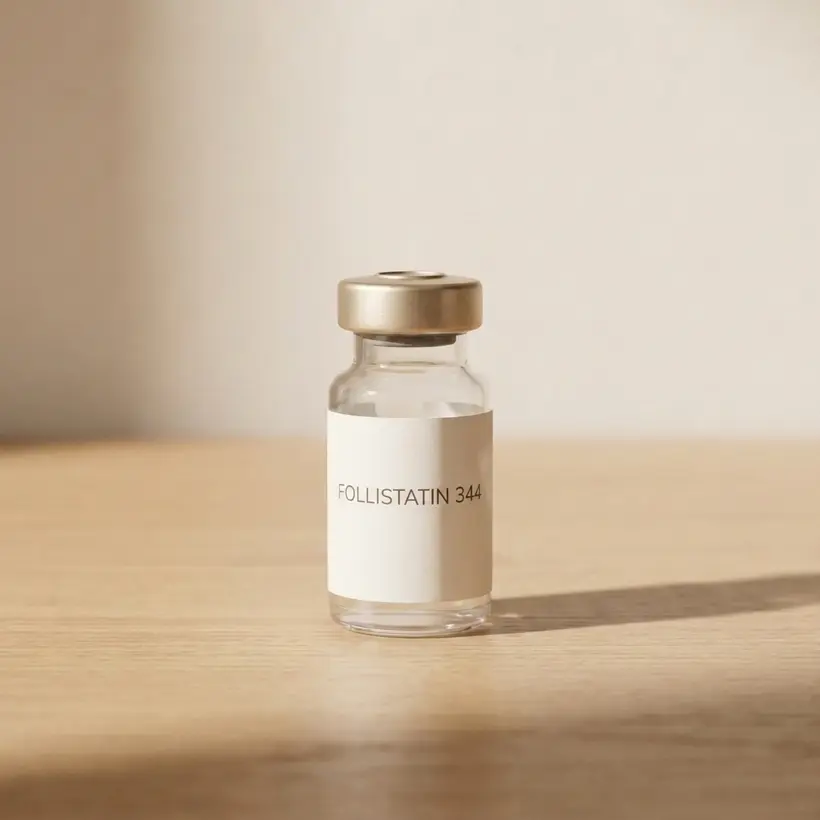
From the FormBlends catalog
Follistatin 344
Myostatin inhibitor studied for enhanced muscle growth · From $149/mo · compounded by a licensed 503A pharmacy, dispensed only after provider review.
Learn about Follistatin 344 →Table of Contents
- Evidence Ledger: Side Effects by Claim
- How Peptides Produce Side Effects: The Mechanism With Numbers
- What Are the Most Common Bodybuilding Peptide Side Effects?
- What Are the Safest Peptides for Muscle Growth?
- What Most Pages Get Wrong About Peptide Safety
- Do Peptides Increase Cancer Risk?
- Honest Head-to-Head: Peptides vs. Alternatives
- Label and COA Literacy: How to Judge a Peptide Product
- Does Protocol Design Change the Risk?
- FAQ
- Sources
- Disclaimers
Evidence Ledger: Side Effects by Claim
| Claim | Best Evidence Type | Effect Direction | Confidence |
|---|---|---|---|
| Water retention with GH secretagogues | Human RCTs (CJC-1295, ipamorelin trials) | Increases extracellular fluid | High |
| Transient hypoglycemia / hunger (GHRPs) | Human pharmacokinetic studies | Blood glucose dips post-injection | Moderate |
| Injection-site redness or irritation | Consistent adverse event reporting in trials | Local reaction, self-limiting | High |
| Cortisol and prolactin elevation (GHRP-2, GHRP-6) | Human pharmacodynamic studies | Elevated, dose-dependent | Moderate to High |
| Ipamorelin does NOT raise cortisol/prolactin significantly | Comparative human PD data (Raun et al., 1998) | No significant elevation vs. placebo | Moderate |
| Chronic insulin resistance with secretagogue use | Extrapolation from GH physiology; limited direct human data | Plausible concern | Low |
| Cancer risk via IGF-1 elevation | Epidemiological association (not causal in peptide users) | Epidemiological signal; no RCT data for peptides | Very Low (for peptides specifically) |
| HPG axis suppression | Mechanistic inference; minimal direct human trial data | Does not directly suppress testosterone axis | Low (benign direction has moderate confidence) |
| Endotoxin reactions from gray-market peptides | Case reports; regulatory warnings | Real risk from unregulated sourcing | Moderate |
| BPC-157 organ-protective effects | Animal studies predominantly | Positive in rodents; unconfirmed in humans | Very Low (human) |
How Peptides Produce Side Effects: The Mechanism With Numbers
Most bodybuilding peptides act on two axis points: GHRH receptors (stimulated by CJC-1295 and tesamorelin analogues) or ghrelin receptors / GHS-R1a (stimulated by ipamorelin, GHRP-2, GHRP-6). Stimulating either pathway causes pituitary somatotrophs to release GH in a pulse.
In the Teichman et al. 2006 trial of CJC-1295, a single dose produced mean GH increases of 2 to 10-fold over baseline depending on dose, with IGF-1 rising 30 to 100 percent above baseline and remaining elevated for up to 6 days due to the drug's extended half-life from DAC (Drug Affinity Complex) technology. That sustained IGF-1 elevation is pharmacologically unlike natural GH pulsatility, and it is where most downstream side effect risk originates.
GH itself is an insulin counter-regulatory hormone. It activates JAK2-STAT5 signaling in adipocytes and muscle to suppress insulin receptor substrate (IRS-1) phosphorylation, reducing glucose uptake. This is a physiologically normal mechanism, but chronic or supraphysiological activation produces lasting insulin antagonism. The distinction that matters: a short, physiological GH pulse clears within roughly 30 to 45 minutes; a prolonged IGF-1 elevation from a long-acting analogue does not.
What this mechanism does NOT prove: that short-pulse, pulsatile secretagogue use at low doses causes meaningful clinical insulin resistance in healthy adults. The pharmacology raises concern; direct trial evidence at bodybuilding doses is insufficient to confirm it.
What Are the Most Common Bodybuilding Peptide Side Effects?
Water retention: GH increases renal sodium reabsorption both directly and through aldosterone activation. Extracellular fluid expansion is well documented with exogenous GH and reproduced, at lower magnitude, by secretagogues. It reverses on stopping the compound.
Hunger and low blood sugar: GHRP-6 is a ghrelin mimetic; ghrelin is the primary hunger signal. Users consistently report markedly increased appetite within 30 minutes of injection. Accompanying blood glucose dips are transient but can cause lightheadedness in fasted or calorie-restricted users.
Injection-site reactions: Subcutaneous peptide injection can cause local redness, swelling, and itching from the mechanical trauma, the solvent (often bacteriostatic water), or from peptide aggregation. These are self-limiting in the vast majority of cases.
Fatigue and drowsiness: Reported consistently in user populations following GH pulses, likely because GH has somnogenic properties mediated through somatostatin rebound. This is why many practitioners time injections pre-sleep.
Tingling or numbness: Fluid retention can cause mild carpal tunnel-like compression. This mirrors the carpal tunnel syndrome reported in exogenous GH studies and is reversible with dose reduction or cessation.
What Are the Safest Peptides for Muscle Growth?
Within the GH secretagogue class, ipamorelin is consistently cited as the safest because Raun et al. (1998) showed it does not significantly elevate cortisol or prolactin at doses that raise GH, unlike GHRP-2 and GHRP-6. Cortisol elevation is catabolic and prolactin elevation causes sexual and mood side effects; avoiding both matters.
BPC-157 (body protection compound 157) appears in this discussion because it does not act on the GH axis. Its proposed mechanisms involve nitric oxide pathways and growth factor signaling at injury sites. In rat and rodent models it shows a strong safety profile and even cytoprotective properties. However, published human RCT data do not yet exist, so declaring it "safe" in humans is premature regardless of how favorable the animal signal looks.
TB-500 (a fragment of thymosin beta-4) has similarly compelling animal data and almost no human trial data for muscle-growth or injury applications.
Bottom line on "safest": Ipamorelin has the narrowest characterized risk profile among studied secretagogues. BPC-157 and TB-500 may well be safe, but the evidence base to make that call is not there yet.
What Most Pages Get Wrong About Peptide Safety
The two most common errors on commodity bodybuilding peptide pages:
1. Treating purity as a given. Lyophilized peptides sold outside a regulated pharmacy supply chain carry no enforced purity or sterility standard. Testing by independent labs of gray-market peptides has repeatedly found underdosing, wrong compound identity, and bacterial endotoxin contamination. Endotoxins (lipopolysaccharides) are heat-stable pyrogens from gram-negative bacteria. They cause fever, chills, and systemic inflammation at very low concentrations, entirely independent of whatever peptide is supposed to be in the vial. The side effect profile you read about in a CJC-1295 trial assumes a pharmaceutical-grade compound; a contaminated gray-market vial introduces a completely different and potentially more serious risk set.
2. Citing "no suppression" as a blanket safety claim. It is true that GH secretagogues do not suppress the HPG (hypothalamic-pituitary-gonadal) axis directly, so there is no testosterone crash requiring PCT the way oral anabolic steroids cause. But the claim that peptides "have no hormonal side effects" is wrong. Chronic GH axis stimulation can gradually desensitize GHRH receptors and alter somatostatin tone. The physiological feedback loops regulating your GH axis are being pharmacologically manipulated. The long-term consequence of that in healthy adults has not been studied adequately.
Do Peptides Increase Cancer Risk?
This question deserves a direct, non-evasive answer. IGF-1 is a mitogen: it promotes cell proliferation via the IGF-1R receptor and downstream PI3K-Akt-mTOR signaling. Epidemiological studies, including prospective cohort work published in journals like the Lancet, have found associations between chronically elevated serum IGF-1 and higher rates of colorectal and prostate cancer. This is an association in populations with naturally high IGF-1, not a trial of secretagogue users.
No human trial has shown that using GH secretagogue peptides causes cancer. The concern is mechanistic and epidemiological, not directly demonstrated. The honest risk statement is: if a peptide protocol chronically elevates IGF-1 above the upper range of normal for sustained periods, the biological plausibility for increased mitogenic pressure exists, and the safety studies needed to dismiss that concern have not been done.
People with personal or family history of hormone-sensitive cancers (prostate, colorectal, breast) should treat this theoretical risk as a meaningful reason to avoid GH-axis peptides altogether, not a technicality.
Honest Head-to-Head: Peptides vs. Alternatives
| Factor | GH Secretagogue Peptides | Anabolic Steroids | Creatine Monohydrate | Exogenous HGH |
|---|---|---|---|---|
| Muscle mass evidence (human RCT) | Modest, mostly in GH-deficient subjects | Strong, multiple RCTs | Strong, multiple RCTs | Moderate, lean mass increases documented |
| Testosterone/HPG suppression | No direct suppression | Severe; requires PCT | None | No direct HPG effect |
| Hepatotoxicity | Not demonstrated | High with 17-alpha alkylated orals | None at standard doses | Not demonstrated |
| Water retention | Moderate (GH-mediated) | Variable; often significant | Intracellular; modest | Significant |
| Insulin resistance risk | Plausible; under-studied | Documented with prolonged use | None; may improve insulin sensitivity | Well-documented at pharmacological doses |
| Cancer mitogenic concern | Theoretical via IGF-1 | Prostate/liver concerns documented | None identified | Same as secretagogues, higher IGF-1 elevation |
| Legal / anti-doping status | WADA prohibited (S2); unscheduled federally in many jurisdictions but often prescription-only | Schedule III (US); WADA prohibited | Legal; WADA permitted | WADA prohibited; prescription only |
| Long-term human safety data | Sparse beyond 12 months | Extensive (mostly negative) | Extensive and reassuring | Moderate; GH-deficiency treatment data |
| Peptide wins | No HPG suppression, no liver toxicity, lower overall documented harm than steroids | |||
| Peptide loses | Weaker muscle-growth evidence than steroids or even creatine in healthy adults; gray-market purity issues; theoretical IGF-1 risks unresolved | |||
Label and COA Literacy: How to Judge a Peptide Product
A certificate of analysis (COA) is the minimum quality document. Here is what it must contain and what to verify:
HPLC purity: High-performance liquid chromatography measures the percentage of the total UV signal that matches the expected compound. Pharmaceutical-grade peptides typically run above 98 percent purity. A COA showing 95 percent may sound close, but that 5 percent unknown fraction in an injectable product is a real concern.
Mass spectrometry confirmation: HPLC tells you how much of the dominant peak exists; mass spectrometry (LC-MS/MS) confirms the peak is actually the correct peptide by molecular weight. Insist on both, not just one.
Endotoxin (LAL) test: The Limulus amoebocyte lysate test measures bacterial endotoxin in EU/mg. USP limits for parenteral injectables are below 5 EU/kg body weight per hour; a peptide COA should show endotoxin results below the injectable threshold. Many gray-market COAs omit this test entirely. Absence of endotoxin data is a hard disqualifier for an injectable product.
What a degraded product looks like: Properly lyophilized peptide is a white to off-white powder that, when reconstituted with bacteriostatic water, produces a clear, colorless solution. Yellow or amber coloration, visible particulates that do not dissolve, or a cloudy solution all indicate degradation or contamination. Degradation pathways include oxidation (especially of methionine and cysteine residues), deamidation of asparagine, and aggregation from freeze-thaw cycling. Do not inject a vial that does not look right.
Storage: Lyophilized peptides are stable at room temperature for a limited period but degrade faster with heat and light. Once reconstituted, most peptides in solution degrade meaningfully within a few weeks even refrigerated. The chemical reason is hydrolysis: water molecules attack peptide bonds, and the rate increases with temperature and with certain pH conditions. Bacteriostatic water (0.9% benzyl alcohol) slows microbial growth but does not stop chemical hydrolysis. Reconstituted vials kept in a refrigerator at 2 to 8 degrees Celsius should generally be used within 4 weeks.
Does Protocol Design Change the Risk?
Yes, meaningfully. The two design choices with the clearest risk implications are pulse pattern and compound selection.
Pulse pattern: Natural GH secretion is pulsatile, with the largest pulse occurring during slow-wave sleep. Injecting a short-acting secretagogue like ipamorelin before sleep mimics this pulse and allows somatostatin rebound to suppress GH between pulses. Using a long-acting DAC-modified CJC-1295 once or twice weekly creates a sustained GH elevation without physiological troughs, which more closely resembles the continuous GH elevation associated with acromegaly side effects at very high doses. For safety, pulsatile short-acting compounds are theoretically preferable to sustained-release analogues, though direct comparative human safety data do not exist.
Cycle length and breaks: There is genuine mechanistic reason to believe that continuous long-term GH axis stimulation reduces receptor sensitivity over time. Cycling off allows the somatotropic axis to re-establish its own sensitivity. How long and how frequently to cycle is not established in human trials; this remains a harm-reduction inference rather than proven guidance.
Baseline IGF-1 testing: If someone's baseline IGF-1 is already in the upper quartile of normal, adding a secretagogue that further elevates it prolongs exposure above the range where epidemiological cancer risk signals have been observed. Getting a serum IGF-1 before starting and monitoring during use is the minimum prudent step if someone proceeds.
FAQ
What are the most common side effects of peptides in bodybuilding?
Injection-site reactions, water retention from IGF-1 and GH elevation, transient hypoglycemia, and increased hunger are the most consistently reported effects across growth hormone secretagogue trials. These are dose-dependent and generally reversible on discontinuation.
Are peptides safe for muscle growth?
Short-term use of well-studied peptides like CJC-1295 and ipamorelin in adults shows a tolerable safety profile in clinical trials, but long-term safety data beyond 12 months are sparse. Tumor promotion, insulin resistance, and hormonal suppression are real concerns that have not been ruled out.
Which are the safest peptides for muscle growth?
Ipamorelin has the narrowest side-effect profile among growth hormone secretagogues because it selectively stimulates GH release without significantly raising cortisol or prolactin. BPC-157 has a favorable animal safety profile, but human clinical trial data are limited.
Can peptides cause insulin resistance?
GH elevation from secretagogues causes transient physiological insulin antagonism. In healthy adults at research doses this typically resolves within hours, but chronic supraphysiological GH exposure, as seen with exogenous GH abuse, is linked to lasting glucose dysregulation.
Do peptides increase cancer risk?
No human RCT has demonstrated that secretagogue peptides cause cancer. However, IGF-1 is a known mitogen and epidemiological data associate chronically elevated IGF-1 with higher colorectal and prostate cancer risk. The clinical significance at bodybuilding doses is genuinely unknown.
Can peptides suppress natural hormone production?
GHRH analogues and GHRPs do not suppress the HPG axis the way anabolic steroids do, but chronic GH axis stimulation can blunt endogenous GHRH sensitivity over time. Evidence in humans is limited to short trials; long-term axis suppression risk is a genuine unknown.
What does a degraded or contaminated peptide look like?
Degraded lyophilized peptide vials may show yellowing, clumping, or a cloudy reconstituted solution that does not clear. Contaminated products can harbor endotoxins that cause fever and injection-site abscess. A COA with HPLC purity above 98 percent and an endotoxin test result is the minimum quality signal.
Do peptides cause water retention and why?
GH elevation increases renal sodium reabsorption via aldosterone and directly, leading to extracellular fluid expansion. This effect is well documented with exogenous GH and is reproduced, to a lesser degree, by GH secretagogues. It is reversible but can mask body composition progress on the scale.
Are peptides detectable in drug testing?
WADA prohibits growth hormone releasing peptides including GHRPs and GHRH analogues under the S2 class. Urine and blood immunoassay tests can detect several secretagogues. Detection windows vary by compound and dose but can extend to 24 to 48 hours post-injection for some GHRPs.
How do peptide side effects compare to anabolic steroids?
Anabolic steroids carry substantially higher documented risks including hepatotoxicity, HPG axis suppression requiring PCT, dyslipidemia, and virilization. Secretagogue peptides avoid most of these mechanisms but introduce their own risks: fluid retention, glucose handling changes, and unknown long-term IGF-1 effects.
What is the safest peptide protocol for muscle growth?
No protocol has been validated as safe in long-term human trials. Among studied approaches, low-dose ipamorelin pulsed to mimic physiological GH rhythm is considered lower risk than continuous GHRH analogue infusion, because it preserves feedback inhibition and keeps IGF-1 within a narrower range.
Sources
- Teichman SL, Neale A, Lawrence B, Gagnon C, Castaigne JP, Frohman LA. Prolonged stimulation of growth hormone (GH) and insulin-like growth factor I secretion by CJC-1295, a long-acting analog of GH-releasing hormone, in healthy adults. J Clin Endocrinol Metab. 2006;91(3):799-805.
- Raun K, Hansen BS, Johansen NL, et al. Ipamorelin, the first selective growth hormone secretagogue. Eur J Endocrinol. 1998;139(5):552-561.
- Hartman ML, Farello G, Pezzoli SS, Thorner MO. Oral administration of growth hormone (GH)-releasing peptide stimulates GH secretion in normal men. J Clin Endocrinol Metab. 1992;74(6):1378-1384.
- Chan JM, Stampfer MJ, Giovannucci E, et al. Plasma insulin-like growth factor-I and prostate cancer risk: a prospective study. Science. 1998;279(5350):563-566.
- Giovannucci E, Pollak M, Platz EA, et al. Insulin-like growth factor I (IGF-I), IGF-binding protein-3, and the risk of colorectal adenoma and cancer in the Nurses' Health Study. J Natl Cancer Inst. 2000;92(22):1820-1829.
- World Anti-Doping Agency. 2024 Prohibited List. WADA-AMA.org. Accessed 2026.
- Svensson J, Johannsson G, Bengtsson BA. Insulin-like growth factor-I in growth hormone-deficient adults: relationship to population-based normal values, body composition and insulin tolerance test. Clin Endocrinol (Oxf). 1997;46(5):579-586.
- US Pharmacopeia. USP General Chapter 85: Bacterial Endotoxins Test. USP-NF. Current edition.
- Renehan AG, Zwahlen M, Minder C, O'Dwyer ST, Shalet SM, Egger M. Insulin-like growth factor (IGF)-I, IGF binding protein-3, and cancer risk: systematic review and meta-regression analysis. Lancet. 2004;363(9418):1346-1353.
- Giustina A, Veldhuis JD. Pathophysiology of the neuroregulation of growth hormone secretion in experimental animals and the human. Endocr Rev. 1998;19(6):717-797.
Disclaimers
Platform: FormBlends is an information and product platform. This page is for educational purposes only and does not constitute medical advice, diagnosis, or treatment recommendations. Consult a licensed physician before using any peptide compound.
Research Compound Notice: Many peptides discussed on this page are research compounds that have not been approved by the FDA for human use outside of specific clinical contexts. They are not dietary supplements. Their manufacture, sale, and use are subject to jurisdiction-specific regulations that change frequently.
Results: Individual outcomes vary. References to clinical trial results reflect study populations and conditions that may not apply to your situation. No outcomes are guaranteed.
Trademarks: All product and compound names referenced are the property of their respective owners. FormBlends has no affiliation with any named compound manufacturer.
Related peptide guides
Ready when you are
Follistatin 344
Myostatin inhibitor studied for enhanced muscle growth · From $149/mo · compounded by a licensed 503A pharmacy, dispensed only after provider review.
Learn about Follistatin 344 →