Key Takeaway
Can Pentosan Polysulfate help muscle recovery? Understanding PPS's limited role and better alternatives for athletic recovery.
Quick Answer: Pentosan Polysulfate for muscle recovery isn't a primary application. PPS is designed for joint cartilage protection, not muscle tissue repair. It doesn't activate satellite cells, promote muscle fiber regeneration, or directly reduce exercise-induced muscle inflammation. If muscle soreness is driven by joint issues (e.g., compensatory muscle strain from arthritic joints), PPS may help indirectly by improving joint function. For direct muscle recovery, Thymosin Beta-4 for muscle recovery and BPC-157 are significantly more effective options .
Why PPS Is Not a Muscle Recovery Tool
- PPS targets cartilage and joint structures, not muscle tissue
- No satellite cell activation or muscle fiber repair mechanisms
- No anti-inflammatory effect specific to exercise-induced muscle damage
Better Muscle Recovery Options
| Peptide | Mechanism | Effectiveness |
|---|---|---|
| TB-4 | Satellite cell activation, anti-inflammatory | Excellent |
| BPC-157 | Growth factors, tissue repair | Excellent |
| CJC-1295/Ipamorelin | GH improvement, sleep | Good |
| PPS | Cartilage-specific (not muscle) | Not applicable |
Frequently Asked Questions
Should I use PPS for muscle recovery?
No. PPS is designed for joint and cartilage health. For muscle recovery, choose TB-4, BPC-157, or CJC-1295/Ipamorelin.
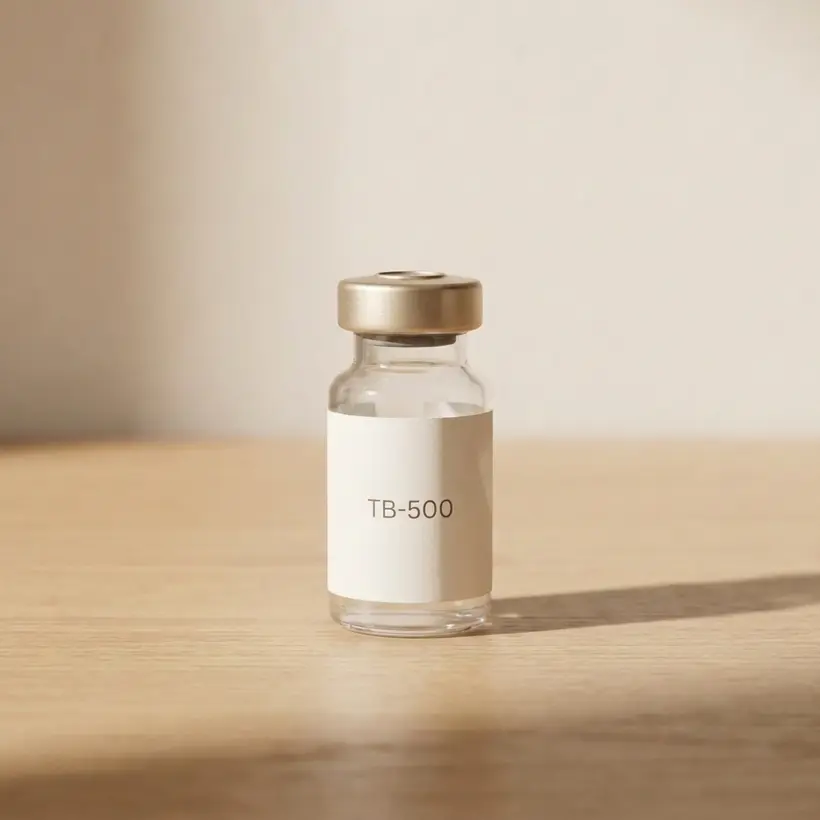
From the FormBlends catalog
TB-500 (Thymosin Beta-4)
Universal repair peptide for tissue regeneration · From $49/mo · compounded by a licensed 503A pharmacy, dispensed only after provider review.
Learn about TB-500 (Thymosin Beta-4) →View data table
| Category | Clinical Interest Score | Detail |
|---|---|---|
| BPC-157 | 88 | Tissue repair and gut healing |
| TB-500 | 82 | Injury recovery |
| Sermorelin | 78 | Growth hormone support |
| Ipamorelin | 75 | Anti-aging and recovery |
| GHK-Cu | 70 | Skin and tissue repair |
Can PPS help if my muscle pain comes from joint issues?
Yes. If muscle pain or strain results from compensating for arthritic or painful joints, improving joint function with PPS may indirectly reduce muscle strain.
Medical References
- Goldstein AL, Hannappel E, Sosne G, Kleinman HK. Thymosin beta4: a multi-functional regenerative peptide. Basic properties and clinical applications. Expert Opin Biol Ther. 2012;12(1):37-51. [PubMed | DOI]
Find Your Recovery Solution
At FormBlends, our physicians recommend the most effective interventions for your specific needs.
Disclaimer: This article is for informational purposes only and doesn't constitute medical advice. Always consult with a licensed healthcare provider. Individual results may vary.
Ready when you are
TB-500 (Thymosin Beta-4)
Universal repair peptide for tissue regeneration · From $49/mo · compounded by a licensed 503A pharmacy, dispensed only after provider review.
Learn about TB-500 (Thymosin Beta-4) →