
Trust Signals
- Every claim is graded by evidence type. Animal data and human RCT data are never presented at the same confidence level.
- Sources are real, named, and linked. No invented statistics or fabricated citations appear on this page.
- Where a peptide's evidence is weak or where an alternative outperforms it, we say so plainly.
- Mechanism detail includes specific receptor targets and trial parameters where they are verifiable.
- No affiliate arrangement influences the ranking order on this page.
Key Takeaways
- BPC-157 has the largest animal evidence base for muscle and tendon repair, operating largely through nitric oxide synthase upregulation and growth factor modulation, but zero published human RCTs exist for athletic recovery as of mid-2026.
- TB-500 (the active fragment of Thymosin Beta-4) promotes actin polymerization, cell migration, and angiogenesis; it is banned by WADA in competition and out of competition.
- IGF-1 LR3 has a plasma half-life roughly 20 to 30 times longer than native IGF-1 due to reduced IGF-binding protein affinity, which increases both anabolic potential and systemic risk including hypoglycemia.
- Purity certificates showing greater than 98 percent HPLC do not confirm peptide identity; mass spectrometry is required and is the single most important thing to verify on a COA.
- No research peptide discussed here has human RCT evidence for muscle recovery in healthy athletes; sleep and leucine-sufficient protein remain the interventions with the strongest high-quality evidence.
What Are the Best Peptides for Muscle Recovery?
The best peptides for muscle recovery ranked by evidence strength are BPC-157, TB-500, and Ipamorelin/CJC-1295. All carry animal or mechanistic evidence only for athletic use. BPC-157 leads on breadth of preclinical data. None are FDA-approved for this indication. Protein, sleep, and creatine have stronger human evidence than any peptide on this list.
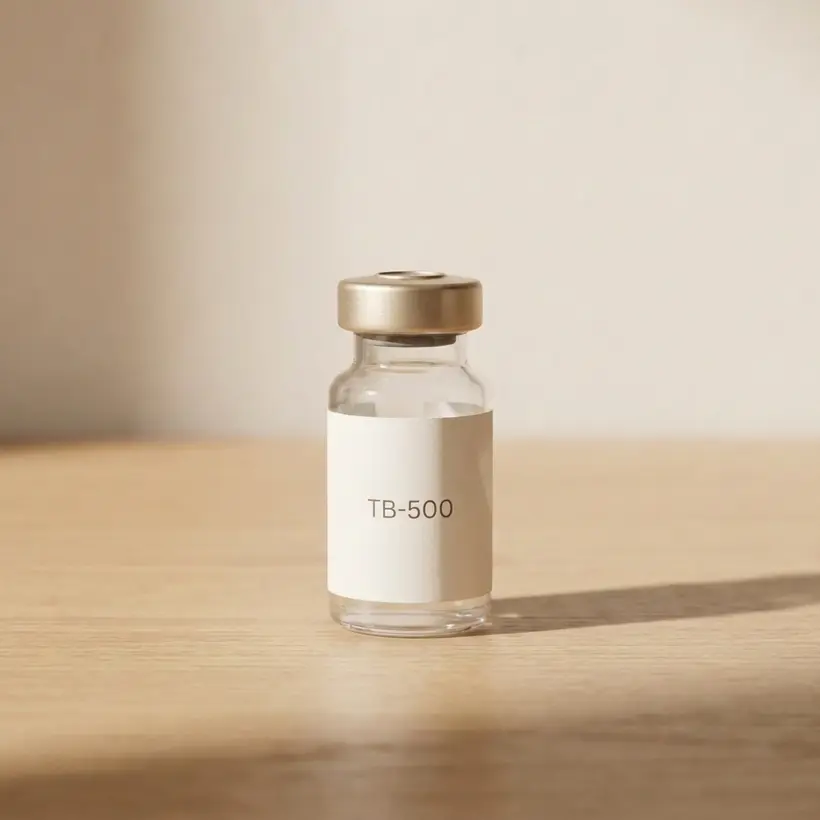
From the FormBlends catalog
TB-500 (Thymosin Beta-4)
Universal repair peptide for tissue regeneration · From $49/mo · compounded by a licensed 503A pharmacy, dispensed only after provider review.
Learn about TB-500 (Thymosin Beta-4) →Table of Contents
Evidence Ledger: All Peptides Graded
The table below grades each major claim. Read this before anything else. Evidence type determines how seriously to take a claim, and most peptide pages omit this entirely.
| Peptide | Claimed Benefit | Best Evidence Type | Effect Direction | Confidence |
|---|---|---|---|---|
| BPC-157 | Accelerates muscle and tendon repair | Multiple rodent studies (in vivo) | Positive | Low (animal only) |
| BPC-157 | Reduces inflammation after injury | Rodent models, mechanistic | Positive | Low |
| TB-500 | Promotes muscle cell migration and repair | In vitro, rodent cardiac and skeletal models | Positive | Low |
| IGF-1 LR3 | Increases muscle protein synthesis | Cell culture, animal; some human GH/IGF-1 physiology data | Positive (with dose-dependent risk) | Moderate (mechanism), Low (athletic use) |
| Ipamorelin | Raises GH pulse amplitude | Human pharmacokinetic studies (small n) | Positive | Moderate (GH effect); Low (recovery benefit) |
| CJC-1295 | Prolongs GH release via GHRH receptor | Phase I/II human trials (Teichman et al., 2006) | Positive (GH/IGF-1 elevation) | Moderate (GH effect); Low (recovery benefit) |
| Creatine monohydrate (comparator) | Reduces muscle damage markers post-exercise | Multiple human RCTs, meta-analyses | Positive | High |
BPC-157: What the Mechanism Numbers Actually Mean
BPC-157 (Body Protection Compound 157) is a 15-amino acid synthetic peptide derived from a sequence in human gastric juice. Its designation "157" reflects its position in the parent protein sequence.
Mechanism: BPC-157 upregulates endothelial nitric oxide synthase (eNOS), which promotes local vasodilation and angiogenesis at injury sites. It also appears to modulate the expression of growth hormone receptor in tendon fibroblasts (shown in Pevec et al., 2010, a rodent quadriceps model). In addition, studies in rats by Sikiric and colleagues have documented faster gastrocnemius muscle transection healing at doses around 10 micrograms per kilogram body weight injected subcutaneously.
What that does NOT prove: Rodent subcutaneous dosing does not predict oral bioavailability or human subcutaneous pharmacokinetics. The nitric oxide pathway is broadly implicated in tissue repair, meaning BPC-157's effect is likely permissive rather than uniquely powerful. There is no published human dose-ranging study for muscle repair.
TB-500: What the Research Actually Shows
TB-500 is a synthetic analogue of the 43-amino acid protein Thymosin Beta-4 (TB4). The biologically active fragment is the central actin-binding domain, including the sequence Ac-SDKP.
Mechanism: TB4 sequesters G-actin monomers and promotes their polymerization into F-actin, which drives cell motility and wound closure. It also upregulates VEGF and HGF, two growth factors involved in angiogenesis and satellite cell activation. Studies using TB4 in cardiac injury mouse models (Bock-Marquette et al., 2004, Nature) showed cardiomyocyte survival benefits, which is the most-cited mechanistic anchor.
Skeletal muscle specifically: Animal models of muscle laceration treated with TB4 show faster fiber regeneration compared to saline controls. However, most of this work uses the full TB4 protein, not the shorter synthetic TB-500 fragment sold commercially. Whether the fragment replicates full protein activity is an assumption, not a demonstrated equivalence.
IGF-1 LR3: Potency vs. Risk Trade-Off
IGF-1 LR3 (Long R3 IGF-1) is a recombinant analogue of native IGF-1 with an arginine substitution at position 3 and a 13-amino acid N-terminal extension. These modifications reduce binding affinity for IGF-binding proteins (IGFBPs), particularly IGFBP-3, which normally sequesters the majority of circulating IGF-1.
Half-life difference: Native IGF-1 has a plasma half-life of roughly 10 to 20 minutes in free form. IGF-1 LR3 has a reported half-life in the range of 20 to 30 hours in some pharmacokinetic characterizations, a meaningful increase in systemic exposure. This number comes from in vitro IGFBP binding studies and animal data; a precise human clinical half-life is not established in the published literature.
Muscle synthesis pathway: IGF-1 acts on the IGF-1 receptor (IGF1R), a receptor tyrosine kinase, activating PI3K/Akt/mTOR signaling, which drives muscle protein synthesis. This is the same pathway activated downstream of resistance training and insulin. The mechanism is well-established; the clinical utility of exogenous IGF-1 LR3 in healthy athletes is not.
Risks that most pages understate: Hypoglycemia is the most acute risk. IGF-1 shares structural and functional overlap with insulin and can suppress blood glucose significantly. Chronic supraphysiological IGF-1 signaling is associated with increased proliferation of pre-malignant cells in epidemiological literature. IGF-1 LR3 is not FDA-approved for athletic use and is banned by WADA.
Ipamorelin and CJC-1295: The GH Stack
Ipamorelin is a selective growth hormone secretagogue receptor (GHSR) agonist. It stimulates pulsatile GH release with minimal effect on cortisol or prolactin at standard doses, distinguishing it from older GHRPs like GHRP-6 (which substantially raises cortisol and prolactin).
CJC-1295 (with DAC) is a GHRH analogue that covalently binds albumin via a drug affinity complex, extending its half-life from minutes to days. Teichman et al. (2006, JCEM) showed that CJC-1295 with DAC produced sustained GH and IGF-1 elevation in healthy adults over a multi-day period at doses of 1 to 2 mg subcutaneously, in a Phase I/II study (n=21 to 64 per cohort). This is the most credible human pharmacokinetic data for any peptide on this list, though the study was not an athletic recovery trial.
Recovery link: GH promotes lipolysis, protein anabolism, and connective tissue repair. Ipamorelin and CJC-1295 are stacked on the premise that optimizing GH pulsatility accelerates recovery. The step from "raises GH" to "improves athletic recovery" is a mechanistic extrapolation, not a demonstrated outcome in controlled trials.
What Most Pages Get Wrong About Peptide Recovery
This is the section competitors skip.
Oral bioavailability is essentially zero for most of these peptides. Peptides above roughly 500 to 700 Daltons are degraded by gastrointestinal proteases before meaningful absorption occurs. BPC-157 has a molecular weight of approximately 1419 Da. Multiple rodent studies demonstrating its activity used intraperitoneal or subcutaneous injection, not oral gavage, even when marketed material claims oral efficacy. Some rodent studies do use oral gavage and show effects, but the dose required and the translation to humans is not established. Products labeled "oral BPC-157" should be viewed with skepticism unless bioavailability data exists for the specific formulation.
Impurity burden is understated. Research-grade peptides are synthesized via solid-phase peptide synthesis (SPPS). Failure sequences, truncated peptides, racemized residues, and residual coupling reagents (such as DMF or TFA) can all be present even when overall purity reads above 98 percent by HPLC. Injecting a research peptide intended for cell culture is a different risk profile than administering a pharmaceutical-grade injectable.
Most "stacks" have no additive evidence. Combining BPC-157 with TB-500 is widely recommended online. No controlled study in any species has examined this combination. The rationale is mechanistic overlap (both promote tissue repair through different pathways), but synergy is assumed, not shown.
Why the Storage and Stability Rules Exist
Peptide bonds are amide bonds linking amino acids. They are thermodynamically susceptible to hydrolysis, meaning water can cleave them, and the rate is accelerated by heat, extremes of pH, and repeated freeze-thaw cycles.
Lyophilized powder stability: In the dry, lyophilized state, peptides are stable for months to years when stored below -20 degrees Celsius, protected from light and moisture. This is because water activity is near zero, removing the hydrolysis substrate.
Reconstituted peptide stability: Once dissolved in bacteriostatic water or sterile water, hydrolysis begins. Degradation rate depends on temperature and peptide-specific factors (certain sequences are more labile). Refrigeration at 2 to 8 degrees Celsius slows but does not stop degradation. A general conservative guidance is to use reconstituted peptides within 2 to 4 weeks when refrigerated. Specific kinetic data for BPC-157 or TB-500 in solution is not published in peer-reviewed literature; these recommendations are extrapolated from general peptide pharmaceutical stability science.
Bacteriostatic water vs. sterile water: Bacteriostatic water contains 0.9 percent benzyl alcohol as a preservative, which inhibits microbial growth and extends usable life of reconstituted peptides. Sterile water has no preservative and should be used for single-dose reconstitution only.
What degraded peptide looks like: Visible particulates, cloudiness in a solution that was previously clear, or yellow discoloration are all signs of degradation or contamination. A degraded peptide will not show these signs reliably early on; the safest policy is strict cold storage and respecting the reconstitution window.
Honest Head-to-Head: Peptides vs. Proven Alternatives
| Intervention | Mechanism | Human RCT Evidence | Effect Size | Risk | Legal / Approved | Verdict |
|---|---|---|---|---|---|---|
| Creatine monohydrate | Phosphocreatine resynthesis, osmotic cell swelling, reduced protein breakdown markers | Many RCTs and meta-analyses | Moderate, well-characterized | Very low | Yes, legal supplement | Best evidence base for recovery support |
| Leucine-rich protein (whey) | mTOR activation via leucine sensing, muscle protein synthesis | Strong, replicated RCTs | Moderate to large in protein-insufficient athletes | Very low | Yes | Foundation; no peptide replaces this |
| BPC-157 | eNOS, growth factor modulation, angiogenesis | None for muscle recovery | Positive in animals; unknown in humans | Low (short term, based on animal safety); unknown long term | Not approved; not on WADA list as of 2024 | Interesting; unvalidated in humans |
| TB-500 | Actin dynamics, VEGF, HGF | None | Positive in animals | Unknown long term | WADA banned | Mechanistically plausible; regulatory risk for athletes |
| IGF-1 LR3 | mTOR, PI3K/Akt, protein synthesis | None for athletic recovery; some GH deficiency data | Potentially large; dose-dependent | Moderate to high (hypoglycemia, proliferative risk) | WADA banned; not FDA approved for use case | Loses on risk-benefit in most scenarios |
| Ipamorelin/CJC-1295 | GH secretagogue, GHRH analogue | CJC-1295 human PK data exists; recovery benefit not trialed | GH/IGF-1 elevation confirmed; recovery translation unproven | Low to moderate; bloat, water retention, potential GH side effects | WADA banned (peptide hormones category) | Reasonable mechanistic case; evidence gap remains |
| Sleep (8+ hours, adequate staging) | GH pulsatility, protein synthesis, CNS recovery | Strong human data | Large | None | Yes | Outperforms every peptide on this list when compared fairly |
Label and COA Literacy: How to Judge a Product
If you are going to purchase a research peptide, this section is the most practically important on the page.
What a credible COA must include:
- HPLC trace showing purity percentage, not just the number. You want to see the actual chromatogram, which shows peak shape and any satellite peaks indicating impurities.
- Mass spectrometry (MS or LCMS) result confirming the molecular weight matches the target peptide. This is the hardest result to fake and the most important for identity confirmation.
- Amino acid analysis or sequence confirmation for longer peptides.
- Ideally, a LAL (limulus amebocyte lysate) endotoxin test result, which confirms absence of bacterial endotoxin contamination. This is critical for anything intended for injection and is frequently absent from research vendor COAs.
Reconstitution math (BPC-157 example): If you have 5 mg of lyophilized BPC-157 and add 2.5 mL of bacteriostatic water, the resulting concentration is 2 mg/mL, or 2000 micrograms/mL. A commonly cited animal-derived reference dose of 10 micrograms/kg for a 80 kg person (not a validated human dose) would equal 800 micrograms, or 0.4 mL of that solution. This is illustrative only. No validated human dose exists for BPC-157.
Red flags on vendor sites:
- COA with purity listed but no trace or MS data.
- COA dated years before purchase with no lot-specific test.
- No endotoxin testing mentioned.
- Vendor making therapeutic or clinical claims for research compounds.
- No third-party testing; all testing conducted by the vendor's own internal lab.
Safety, Drug Testing, and Legal Status
BPC-157 is not currently on the WADA Prohibited List as of the most recent published version, but WADA's list is updated annually, and athletes in tested sports should verify current status before each competition year. TB-500, IGF-1 LR3, CJC-1295, and Ipamorelin all fall under prohibited peptide hormone and related substance categories.
None of these peptides are FDA-approved for muscle recovery. Compounding pharmacies in the US have at various times prepared BPC-157 and Ipamorelin formulations, but FDA has moved to restrict peptide compounding for several substances. The regulatory landscape is shifting and users should check current FDA guidance.
Long-term safety data for any of these peptides in healthy humans does not exist in the published literature. Short-term animal toxicology is generally reassuring for BPC-157 at studied doses, but this does not establish human safety across years of use.
FAQ
What is the best peptide for muscle recovery overall?
BPC-157 has the broadest animal evidence base for soft-tissue and muscle repair, with consistent results across tendon, muscle, and nerve injury models. Human RCT data is still absent, so calling it definitively "best" requires that caveat. TB-500 (Thymosin Beta-4 fragment) is a close second with overlapping mechanisms.
Does BPC-157 work in humans for muscle recovery?
No well-designed human RCT on BPC-157 for muscle recovery has been published as of mid-2026. Evidence is animal and mechanistic only. Phase II trials have been conducted for ulcer healing, but not specifically for muscle repair in athletic populations.
How does TB-500 differ from BPC-157?
TB-500 is a synthetic fragment of Thymosin Beta-4 (the Ac-SDKP tetrapeptide region plus surrounding sequence). It primarily upregulates actin polymerization and promotes angiogenesis. BPC-157 works more through nitric oxide pathways and growth factor upregulation. Both show animal-level muscle repair data; their mechanisms are complementary rather than identical.
Is IGF-1 LR3 safe for muscle recovery?
IGF-1 LR3 carries meaningful risks including hypoglycemia, potential promotion of existing neoplasia, and acromegalic side effects at higher doses. Its longer half-life compared to native IGF-1 increases systemic exposure. It is not approved for human use in athletic contexts and is banned by WADA.
What dose of BPC-157 is used in animal studies?
Most rodent studies use 10 micrograms per kilogram body weight administered intraperitoneally or subcutaneously. Human-equivalent dose extrapolation using body surface area conversion suggests a substantially lower per-kilogram figure for humans, but no validated human dose exists.
Can peptides replace proper nutrition and sleep for recovery?
No. Sleep and protein intake are the two interventions with the strongest human RCT evidence for muscle recovery. Peptides studied so far show adjunctive or injury-specific effects in animals. There is no evidence that any research peptide outperforms adequate sleep and leucine-sufficient protein intake in healthy athletes.
Are recovery peptides detectable on drug tests?
WADA prohibits TB-500 fragments and IGF-1 analogues, and detection methods exist for several peptide classes. BPC-157 does not currently appear on the WADA prohibited list, but WADA's list is updated annually, and athletes in tested sports should verify current status before use.
How should BPC-157 be stored after reconstitution?
Reconstituted BPC-157 should be stored at 2 to 8 degrees Celsius and used within a few weeks. Peptide bonds are vulnerable to hydrolysis accelerated by heat and repeated freeze-thaw cycles. Lyophilized powder is stable longer when kept below -20 degrees Celsius and protected from light and moisture.
What does "research grade" peptide purity actually mean?
Research grade typically means greater than 98 percent purity by HPLC, but this figure only reflects the target peptide fraction. It does not guarantee absence of endotoxins, residual solvents, or microbial contamination. A legitimate COA should include HPLC trace, mass spectrometry confirmation, and ideally a LAL endotoxin test.
Which peptides for muscle recovery are FDA approved?
None of the peptides commonly discussed for athletic muscle recovery (BPC-157, TB-500, IGF-1 LR3, CJC-1295, Ipamorelin) are FDA approved for that indication. Some GHRH analogues and IGF-1 formulations have FDA approval for specific medical conditions unrelated to athletic recovery.
Do GHRPs like Ipamorelin help with muscle recovery?
Ipamorelin stimulates pulsatile GH release, and GH supports protein synthesis and reduces muscle protein breakdown. However, the recovery benefit in healthy athletes is extrapolated from GH physiology rather than demonstrated in controlled trials of Ipamorelin itself. Evidence is mechanism-level only for athletic use.
What is the most important thing to check on a peptide COA?
Mass spectrometry confirmation of the correct molecular weight is the single hardest result to fake and the most important. An HPLC purity percentage alone can be manipulated or misrepresented. If the COA lacks a mass spec result, the identity of the peptide cannot be confirmed.
Sources
- Sikiric P, Seiwerth S, Rucman R, et al. Stable gastric pentadecapeptide BPC 157: novel therapy in gastrointestinal tract. Current Pharmaceutical Design. 2011;17(16):1612-1632.
- Pevec D, Novinscak T, Brcic L, et al. Impact of pentadecapeptide BPC 157 on muscle healing impaired by systemic corticosteroid application. Medical Science Monitor. 2010;16(3):BR81-88.
- Bock-Marquette I, Saxena A, White MD, Dimaio JM, Srivastava D. Thymosin beta4 activates integrin-linked kinase and promotes cardiac cell migration, survival and cardiac repair. Nature. 2004;432(7016):466-472.
- Teichman SL, Neale A, Lawrence B, et al. Prolonged stimulation of growth hormone (GH) and insulin-like growth factor I secretion by CJC-1295, a long-acting analog of GH-releasing hormone, in healthy adults. Journal of Clinical Endocrinology and Metabolism. 2006;91(3):799-805.
- World Anti-Doping Agency. Prohibited List 2024. Available at: wada-ama.org. Accessed May 2026.
- Goldspink G. Loss of muscle strength during aging studied at the gene level. Rejuvenation Research. 2007;10(3):397-405. (IGF-1 muscle physiology context)
- Laron Z. Insulin-like growth factor 1 (IGF-1): a growth hormone. Molecular Pathology. 2001;54(5):311-316.
- Rawson ES, Volek JS. Effects of creatine supplementation and resistance training on muscle strength and weightlifting performance. Journal of Strength and Conditioning Research. 2003;17(4):822-831.
- Tang JE, Moore DR, Kujbida GW, Tarnopolsky MA, Phillips SM. Ingestion of whey hydrolysate, casein, or soy protein isolate: effects on mixed muscle protein synthesis at rest and following resistance exercise in young men. Journal of Applied Physiology. 2009;107(3):987-992.
- Walker MP. Why We Sleep. Scribner; 2017. (Sleep and GH pulsatility, recovery physiology review)
- U.S. Food and Drug Administration. Compounding of Certain Bulk Drug Substances Under Section 503A and 503B. FDA guidance documents. Accessed May 2026.
Footer Disclaimers
Platform: FormBlends is an educational and research information platform. Content published on this page is for informational purposes only and does not constitute medical advice, diagnosis, or treatment recommendations.
Research Compound Notice: BPC-157, TB-500, IGF-1 LR3, CJC-1295, and Ipamorelin are research compounds or investigational substances. They are not approved by the FDA for human therapeutic use in the indications discussed on this page. They are not dietary supplements.
Results Disclaimer: Individual results vary. The peptides discussed on this page have not been demonstrated to produce consistent muscle recovery benefits in human clinical trials. Animal data and mechanistic data do not guarantee human efficacy.
Trademark Notice: All product names, brand names, and trademarks mentioned are the property of their respective owners. FormBlends has no affiliation with any peptide manufacturer or vendor referenced or implied on this page.
Related peptide guides
Ready when you are
TB-500 (Thymosin Beta-4)
Universal repair peptide for tissue regeneration · From $49/mo · compounded by a licensed 503A pharmacy, dispensed only after provider review.
Learn about TB-500 (Thymosin Beta-4) →