Key Takeaway
Aging isn't a single event. It's a collection of processes happening at the cellular level, each one chipping away at your vitality. Peptide therapy anti-aging longevity protocols target these individual processes with precision.
Aging isn't a single event. It's a collection of processes happening at the cellular level, each one chipping away at your vitality. Peptide therapy anti-aging longevity protocols target these individual processes with precision. Rather than one magic pill, the approach uses multiple peptides that each address a specific driver of aging.
Key Takeaways: - The Hallmarks of Aging and Peptide Solutions - Building Your Longevity Stack - Skin and External Aging - Measuring Your Biological Age
The science of longevity has identified several key hallmarks of aging: telomere shortening, mitochondrial dysfunction, cellular senescence, chronic inflammation, and declining hormone levels. Specific peptides can target each of these hallmarks. Here is how a detailed anti-aging peptide strategy works.
The Hallmarks of Aging and Peptide Solutions
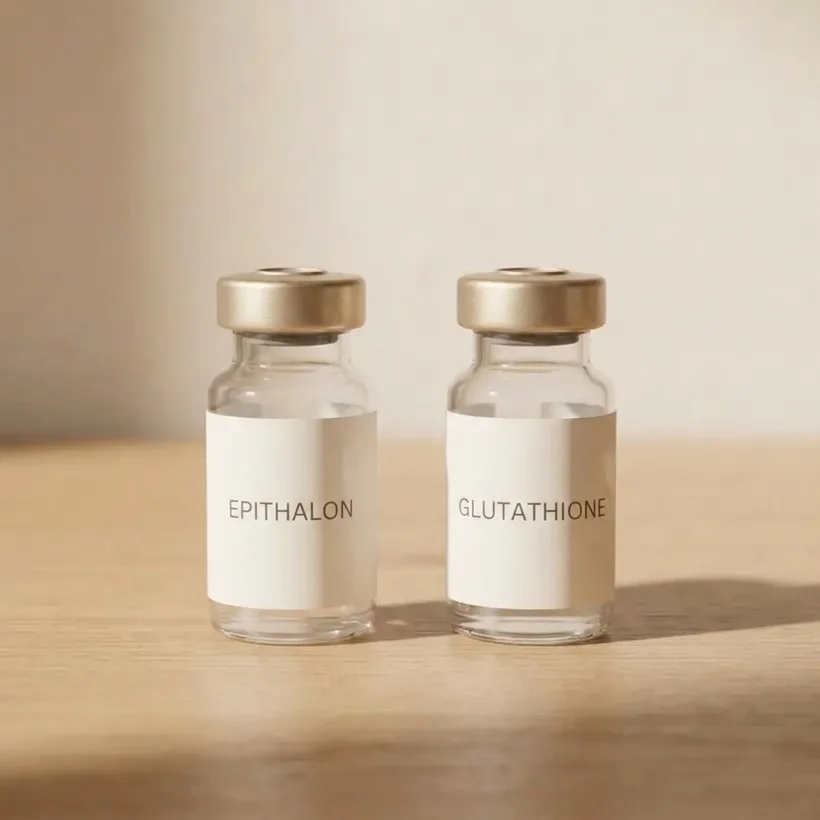
Telomere shortening is one of the most well-known markers of aging. Each time your cells divide, your telomeres get a little shorter. Eventually, cells can no longer divide properly. may activate telomerase, the enzyme that rebuilds telomeres. Research by Dr. Khavinson suggests short 10-day courses of Epitalon, repeated 2 to 3 times per year, may support telomere maintenance.
Mitochondrial dysfunction drives the energy decline you feel as you age. Your cellular power plants become less efficient, producing less energy and more oxidative damage. targets this directly by stabilizing cardiolipin in the mitochondrial membrane. supports mitochondrial function from the cofactor side.
"The key to successful GLP-1 therapy is setting realistic expectations and supporting patients through the titration phase. The side effects are manageable for most people, but they need to know what to expect.") Dr. Caroline Apovian, MD, Harvard Medical School
Chronic inflammation, sometimes called inflammaging, accelerates every aspect of aging. Peptides like and can modulate inflammatory pathways. Reducing your baseline inflammation level may slow aging across multiple organ systems.
Declining growth hormone levels affect body composition, skin quality, bone density, and recovery capacity. Growth hormone peptides like CJC-1295 and Ipamorelin stimulate your pituitary gland to maintain more youthful GH output without the risks of synthetic growth hormone replacement.
Free Download: Protocol Planner Design your longevity strategy with our free protocol planner. Includes multi-peptide scheduling, biomarker tracking, and aging milestone logs. Get yours free (we will email it to you instantly. [Email Input] [Download Button]
Building Your Longevity Stack
A longevity peptide protocol isn't about using every peptide simultaneously. It's about strategic selection and cycling based on your most pressing aging concerns and biomarker data.
View data table
| Category | Clinical Interest Score | Detail |
|---|---|---|
| BPC-157 | 88 | Tissue repair and gut healing |
| TB-500 | 82 | Injury recovery |
| Sermorelin | 78 | Growth hormone support |
| Ipamorelin | 75 | Anti-aging and recovery |
| GHK-Cu | 70 | Skin and tissue repair |
Start with full bloodwork. Key markers include IGF-1, inflammatory markers like hs-CRP and IL-6, metabolic markers including fasting insulin and HbA1c, hormone panels, and if available, telomere length testing.
Based on your results, your provider may recommend starting with 1 to 2 peptides that address your most significant deficits. For example, if mitochondrial function markers are low and you have significant fatigue, NAD+ therapy and SS-31 might be the priority. If inflammation markers are improved, KPV or BPC-157 may come first.
Cycling becomes important when using multiple peptides. Some peptides like Epitalon are used in short bursts with long breaks. Others like growth hormone peptides may be used for weeks to months with defined off periods. Your provider will design a cycling schedule that avoids receptor desensitization and keeps costs manageable.
The lifestyle foundation can't be overstated. No peptide can compensate for poor sleep, sedentary behavior, chronic stress, or a nutrient-poor diet. Think of peptides as the top floor of a building that requires sleep, nutrition, exercise, and stress management as the lower floors.
Skin and External Aging
While internal longevity matters most, external aging affects confidence and quality of life. Several peptides support skin health specifically.
From the FormBlends catalog
Longevity Reset
Telomere support with the master antioxidant. · Bundle from $270 · provider-reviewed peptide bundle.
View Longevity Reset →Stimulates collagen and elastin production, supports wound healing, and may influence over 4,000 genes related to tissue remodeling. It's available in both topical and injectable forms. Topical use targets facial skin while injections may provide broader anti-aging effects.
Growth hormone peptides improve skin thickness, elasticity, and hydration as a secondary benefit. Many users report noticeably healthier skin within the first few weeks of growth hormone peptide therapy.
Combine peptide therapy with basic skin protection: daily sunscreen, retinoid use, and antioxidant support. Peptides enhance your skin's repair capacity, but protecting it from damage in the first place remains the most effective anti-aging strategy.
Measuring Your Biological Age
Tracking your biological age helps assess whether your longevity protocol is working. Your chronological age is fixed, but your biological age, how old your cells actually function, can potentially be influenced.
Biological age tests examine DNA methylation patterns to estimate cellular age. Some providers use these tests before starting peptide therapy and then repeat them annually to track changes.
Simpler markers also help. Grip strength, VO2 max, balance tests, cognitive function assessments, and detailed bloodwork all provide insights into your functional age. Improvements in these markers suggest your anti-aging protocol is working.
Don't obsess over a single number. Longevity is about the trajectory of multiple health markers over time. Consistent improvement across your dashboard, even modest improvement, suggests you're aging well.
Your can help establish appropriate monitoring and adjust your protocol based on results.
Frequently Asked Questions
What is the best anti-aging peptide?
There's no single best anti-aging peptide because aging involves multiple processes. A thorough approach may include for telomeres, for mitochondria, and growth hormone peptides for body composition and recovery.
At what age should I start anti-aging peptides?
Most providers recommend starting longevity-focused peptide therapy in your mid-30s to early 40s, when natural declines in growth hormone, NAD+, and other factors become measurable. Earlier intervention may help prevent decline rather than trying to reverse it later.
How much does a longevity peptide protocol cost?
Costs depend on which peptides you use and how many you combine. Starting with one or two peptides is more affordable. Check for current rates on individual peptides. Your provider can help prioritize based on budget and goals.
Can peptides actually extend lifespan?
Animal studies with some peptides like Epitalon have shown lifespan extension. Human lifespan studies aren't feasible with current methodology. What we can measure is healthspan, the quality and functionality of your years. Peptide therapy may support healthier aging even if lifespan extension hasn't been definitively proven in humans.
Do I need to use peptides forever for anti-aging?
Anti-aging peptide protocols typically use cycling with on and off periods rather than continuous daily use. Some peptides like Epitalon are used in short courses a few times per year. Others may be used for defined periods with breaks. Your provider will design a sustainable long-term approach.
Start your experience Today
Every transformation starts with a single step. Talk to a licensed FormBlends provider about whether this approach is right for you) consultations are free and confidential.
Sources &. References
- Pickart L, Vasquez-Soltero JM, Margolina A. GHK Peptide as a Natural Modulator of Multiple Cellular Pathways in Skin Regeneration. BioMed Res Int. 2015;2015:648108. Doi:10.1155/2015/648108
- Pickart L, Vasquez-Soltero JM, Margolina A. GHK and DNA: Resetting the Human Genome to Health. BioMed Res Int. 2014;2014:151479. Doi:10.1155/2014/151479
- Sikiric P, Hahm KB, Blagaic AB, et al. Stable Gastric Pentadecapeptide BPC 157, Robert's Cytoprotection, Adaptive Cytoprotection, and Therapeutic Effects. Curr Pharm Des. 2018;24(18):1990-2001. Doi:10.2174/1381612824666180515125918
- Chang CH, Tsai WC, Lin MS, et al. The promoting effect of pentadecapeptide BPC 157 on tendon healing involves tendon outgrowth, cell survival, and cell migration. J Appl Physiol. 2011;110(3):774-780. Doi:10.1152/japplphysiol.00945.2010
- Seiwerth S, Brcic L, Vuletic LB, et al. BPC 157 and blood vessels. Curr Pharm Des. 2014;20(7):1121-1125. Doi:10.2174/13816128113199990421
- Bock-Marquette I, Saxena A, White MD, et al. Thymosin beta4 activates integrin-linked kinase and promotes cardiac cell migration, survival and cardiac repair. Nature. 2004;432(7016):466-472. Doi:10.1038/nature03000
- Malinda KM, Sidhu GS, Mani H, et al. Thymosin beta4 accelerates wound healing. J Invest Dermatol. 1999;113(3):364-368. Doi:10.1046/j.1523-1747.1999.00708.x
The information in this article is intended for educational use only and shouldn't be considered medical advice. Consult a qualified healthcare provider before making any changes to your medication or supplement regimen. FormBlends helps with connections with licensed providers for personalized medical guidance.
Last updated: 2026-03-24
See your options in about 2 minutes
Take the free quiz and see what fits you. Quick, private, and no commitment to continue.
See my options →