Trust Signals
Key Takeaways
- Fragment 176-191 is a 16-amino-acid C-terminal segment of hGH (residues 176 to 191) with a molecular weight of approximately 1817 Da; it lacks the IGF-1-stimulating domain of full hGH.
- Its stabilized analog AOD9604 completed Phase I and Phase II human trials through Metabolic Pharmaceuticals; Phase III did not achieve the primary fat-loss endpoint for FDA approval.
- Animal studies (obese mice, Heffernan et al. and related Monash University work) showed meaningful reductions in adiposity at doses around 500 mcg/kg intraperitoneally; subcutaneous human dosing protocols in the research community are extrapolated from these data, not validated in RCTs.
- Research-grade purity minimum is 98% by HPLC with mass spectrometry identity confirmation; the single biggest sourcing failure is vendors who list purity without a downloadable, lot-specific COA.
- Fragment 176-191 received FDA GRAS (Generally Recognized As Safe) designation as a food ingredient for oral use under its AOD9604 identity, which does NOT confer approval as an injectable drug or weight-loss agent.
What Is Fragment 176-191 and Should You Buy It?
If you are considering whether to buy Fragment 176-191 (also called HGH Fragment 176-191), the honest 50-word answer is this: it is a research peptide with a plausible lipolytic mechanism, credible animal data, and a human trial history through its analog AOD9604 that ended without regulatory approval. It is legal to purchase as a research chemical in the US, but human efficacy evidence remains insufficient to make strong clinical claims.
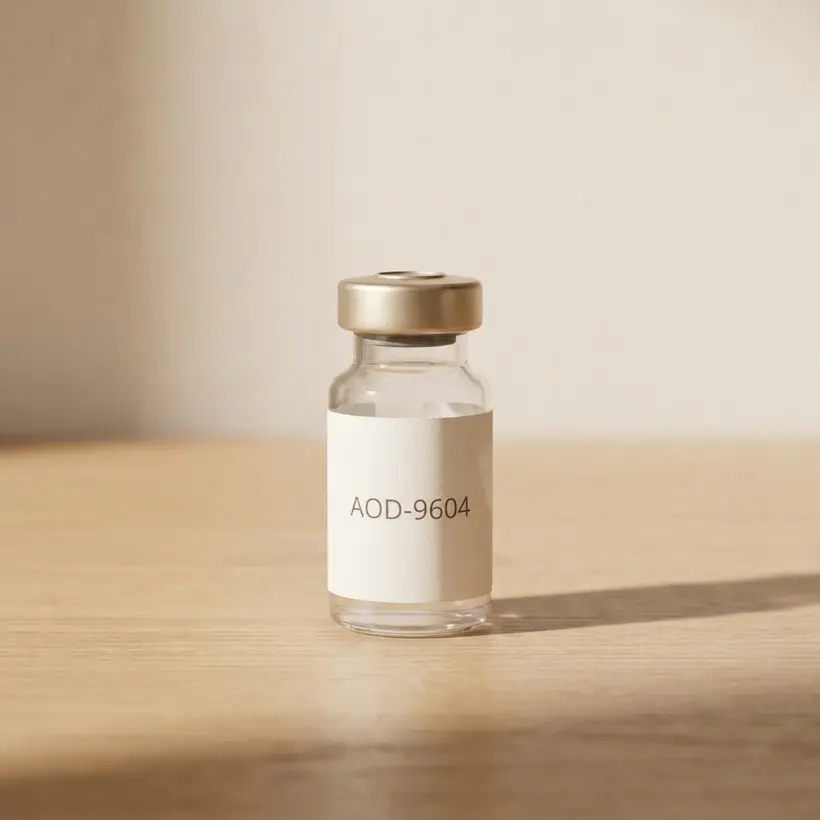
From the FormBlends catalog
AOD-9604
Fat-targeting fragment without growth hormone side effects · From $199/mo · compounded by a licensed 503A pharmacy, dispensed only after provider review.
View AOD-9604 →Table of Contents
- What is Fragment 176-191? Sequence and mechanism with numbers
- Evidence ledger: grading every major claim
- What most pages get wrong about HGH Fragment 176-191
- The chemistry behind storage and stability rules
- Honest head-to-head: Fragment 176-191 vs real alternatives
- Dosing table and reconstitution guide
- How to evaluate a Fragment 176-191 product: label and COA literacy
- Legal status and regulatory context
- FAQ
- Sources
What Is Fragment 176-191? Sequence and Mechanism With Numbers
Human growth hormone is a 191-amino-acid protein. Researchers at Monash University, investigating which domain of hGH mediated fat metabolism, isolated a C-terminal fragment spanning residues 176 to 191. This 16-residue peptide (sequence: Tyr-Leu-Arg-Ile-Val-Gln-Cys-Arg-Ser-Val-Glu-Gly-Ser-Cys-Gly-Phe) retains two cysteine residues that form a disulfide bond critical to its conformation.
The proposed mechanism: Fragment 176-191 binds a receptor population distinct from the canonical GH receptor that mediates IGF-1 production. Because it lacks residues 1 to 44 (the somatogenic binding domain), it does not meaningfully stimulate IGF-1 secretion or promote bone/muscle growth in animal models at lipolytic doses. Instead, preclinical data suggest it activates beta-3 adrenergic pathways and inhibits lipogenesis while stimulating lipolysis in adipocytes. Key animal data point: Heffernan and colleagues (Monash University group, published work from the late 1990s and early 2000s) reported that obese Zucker rats treated with hGH fragment showed significant reductions in body fat compared to controls, with effects seen at doses in the 250 to 500 mcg/kg range administered intraperitoneally. These studies used genetically obese animals, which is a meaningful caveat for extrapolation to lean humans attempting marginal fat reduction.
What this mechanism does NOT prove: receptor identification in humans is incomplete, the binding affinity constant has not been determined in human adipose tissue to a published level, and activation of beta-3 adrenergic signaling in rodents translates poorly to humans (humans have far fewer functional beta-3 receptors in adipose tissue than rodents).
Evidence Ledger: Grading Every Major Claim
| Claim | Best Evidence Type | Effect Direction | Confidence |
|---|---|---|---|
| Reduces body fat in obese rodent models | Controlled animal studies (Monash group, multiple publications) | Positive (fat reduction) | Moderate for animals / Very Low for humans |
| Does not stimulate IGF-1 | Animal and in vitro; AOD9604 Phase I human data (no IGF-1 elevation reported) | Neutral (no IGF-1 rise) | Low to Moderate |
| Does not raise blood glucose | Animal data; consistent with mechanism (no somatogenic signaling) | Neutral (no hyperglycemia) | Low |
| Produces clinically meaningful fat loss in humans | AOD9604 Phase II (small trials, mixed results); Phase III failed primary endpoint | Negative or non-significant at required threshold | Very Low |
| Safe for short-term subcutaneous human use | No published human RCT for native Fragment 176-191 SC dosing; AOD9604 oral Phase II data show tolerability | Unclear | Very Low |
| GRAS designation (oral, food ingredient use) | FDA GRAS notice (AOD9604 identity) | Regulatory fact | High (for oral food-grade use only) |
What Most Pages Get Wrong About HGH Fragment 176-191 for Sale
The second major omission is bioavailability. When you buy Fragment 176-191 as a lyophilized powder for subcutaneous injection, you are working with a peptide of roughly 1817 Da. Subcutaneous absorption of peptides in this molecular weight range is generally favorable compared to oral dosing (where GI proteolysis degrades them), but the human pharmacokinetic profile of native Fragment 176-191 by subcutaneous injection has not been published. The half-life figure cited widely (around 30 minutes) appears derived from animal data or inference from related GH fragments, not from a published human pharmacokinetic study. Treat it as a rough directional estimate, not a precise clinical parameter.
Third, most pages omit endotoxin testing. A peptide can pass HPLC purity at 99% and still carry bacterial lipopolysaccharide contamination from fermentation-based synthesis. Endotoxin (LAL test) results matter more for injectable peptides than for topical ones. Vendors who do not provide LAL or endotoxin data on their COA are selling an incompletely characterized product.
The Chemistry Behind Storage and Stability Rules
Fragment 176-191 contains a disulfide bond between cysteine residues at positions 182 and 189 of the hGH sequence. This disulfide is essential for the peptide's bioactive conformation. Two degradation pathways are relevant:
Oxidative degradation: Exposure to oxygen, particularly in solution at room temperature, drives disulfide scrambling and sulfoxide formation. This is why reconstituted peptide should be stored at 2 to 8 degrees Celsius in a sealed vial and used within weeks, not months. Bacteriostatic water (0.9% benzyl alcohol) extends in-solution shelf life by inhibiting microbial growth that would otherwise accelerate hydrolysis, but it does not stop oxidative chemistry.
Hydrolytic degradation: Peptide bonds are susceptible to acid- and base-catalyzed hydrolysis. This is why pH of the reconstitution solvent matters. Bacteriostatic water is close to neutral pH, which is appropriate. Avoid acetic acid for reconstitution of disulfide-containing peptides unless solubility specifically requires it.
The freeze-thaw rule: Ice crystal formation during freezing can mechanically disrupt peptide aggregates and cause denaturation upon thawing. Each freeze-thaw cycle exposes the peptide to transient thermal stress at the phase boundary. Aliquot reconstituted peptide into single-use volumes before freezing if you must freeze a reconstituted solution.
Lyophilized (freeze-dried) powder stored at minus 20 degrees Celsius under desiccant and in the dark is the most stable form. Under these conditions, degradation occurs over a scale of years, not weeks, though published kinetic data for Fragment 176-191 specifically are not available in the peer-reviewed literature.
Honest Head-to-Head: Fragment 176-191 vs Real Alternatives
| Agent | Mechanism | Human RCT evidence for fat loss | Regulatory status (US) | Where Fragment 176-191 loses |
|---|---|---|---|---|
| Fragment 176-191 | Proposed beta-3 adrenergic / lipolytic via GH C-terminus binding | None (native peptide); analog failed Phase III | Not approved; research chemical | Loses on every regulatory and human evidence dimension |
| GLP-1 receptor agonists (semaglutide, liraglutide) | GLP-1R agonism, appetite suppression, gastric emptying delay | Multiple large Phase III RCTs; 15 to 20% body weight reduction documented (STEP trials, semaglutide) | FDA-approved (Wegovy, Ozempic) | Fragment 176-191 loses decisively on evidence and approval |
| CJC-1295 plus Ipamorelin (GHRH/GHRP stack) | Raises endogenous GH pulsatility; indirect lipolytic effect | Limited human data; no Phase III fat-loss RCTs | Not approved; compounded or research use | Fragment 176-191 loses on documented GH elevation; this stack has more human pharmacokinetic data |
| AOD9604 (N-Tyr analog of Fragment 176-191) | Same proposed mechanism, improved stability | Phase II (small trials); Phase III negative for obesity | Not approved as drug; GRAS (oral food ingredient) | AOD9604 has more human trial data; native Fragment 176-191 loses on documented safety |
| Caffeine plus synephrine (OTC thermogenics) | Adrenergic stimulation, thermogenesis | Multiple small RCTs; modest effect (1 to 2 kg over weeks) | Legal OTC supplement | Fragment 176-191 loses on accessibility, cost, and evidence volume |
Dosing Table and Reconstitution Guide
Reconstitution math: Most Fragment 176-191 vials are sold as 2 mg (2000 mcg) lyophilized powder. To reach a concentration of 500 mcg per 0.25 mL (a common insulin syringe draw volume), add 1 mL bacteriostatic water to the 2 mg vial. This gives 2000 mcg per mL, or 500 mcg per 0.25 mL (25 units on a U-100 insulin syringe).
| Vial size | Bacteriostatic water added | Resulting concentration | Volume per 500 mcg dose |
|---|---|---|---|
| 2 mg | 1 mL | 2000 mcg/mL | 0.25 mL (25 IU on insulin syringe) |
| 2 mg | 2 mL | 1000 mcg/mL | 0.50 mL (50 IU on insulin syringe) |
| 5 mg | 2.5 mL | 2000 mcg/mL | 0.25 mL (25 IU on insulin syringe) |
How to Evaluate a Fragment 176-191 Product: Label and COA Literacy
When you see HGH Fragment 176-191 for sale, the vendor's COA is the most important document. Here is what it must contain for you to trust the product:
- HPLC purity chromatogram, lot-specific: Not a generic certificate. The chromatogram should show a dominant peak for the peptide with area-under-curve percentage clearly stated, minimum 98%. Ask when the lot was tested.
- Mass spectrometry (MS) identity confirmation: The measured molecular mass should match Fragment 176-191 free acid form at approximately 1817.1 Da. An analog, truncated peptide, or contaminant would show a different mass. No MS confirmation means no identity proof.
- Endotoxin (LAL) test result: For injectable research use, endotoxin should be below the threshold specified by USP for parenteral preparations. Vendors who only list HPLC purity and omit endotoxin are leaving out the most injection-relevant safety parameter.
- Amino acid analysis (optional but valuable): Confirms the correct residue composition, distinguishing Fragment 176-191 from similarly sized fragments.
- What a degraded product looks like: Reconstituted solution that is cloudy, has visible particulate, or has a yellow tint indicates aggregation or oxidation. Discard it. A peptide degraded in the vial will not improve in the syringe.
Red flags: COAs without a lot number, purity stated as a round number without a chromatogram, certificates with no test date, or vendors who cannot tell you which third-party lab performed testing.
Legal Status and Regulatory Context
In the United States, Fragment 176-191 is not a scheduled controlled substance under the DEA. It is not FDA-approved for any indication. It is legally sold by research chemical vendors for in vitro or animal research purposes. It is not legal for vendors to sell it explicitly for human consumption without FDA approval. The FDA GRAS status of AOD9604 for oral use as a food ingredient does not change the regulatory status of injectable Fragment 176-191.
WADA includes growth hormone peptides and GH-releasing factors on its Prohibited List. AOD9604 was removed from the WADA Prohibited List in 2012 after the organization concluded it lacked anabolic activity at studied doses; however, athletes should verify current WADA and sport-specific rules, as classifications can change.
Outside the US, regulations vary significantly. Some countries classify research peptides as prescription-only or unapproved therapeutic goods. Importing peptides across borders may trigger customs or legal issues. Verify the rules in your jurisdiction before purchasing.
FAQ
What is Fragment 176-191?
Fragment 176-191 is a synthetic peptide corresponding to amino acids 176 through 191 of the human growth hormone sequence. It was isolated because this C-terminal region of hGH is thought to mediate fat-mobilizing activity independently of IGF-1 stimulation.
Has Fragment 176-191 been tested in humans?
Yes, to a limited degree. AOD9604, a stabilized analog of Fragment 176-191, completed Phase I and Phase II human trials for obesity through Metabolic Pharmaceuticals. Phase III results did not demonstrate sufficient efficacy for FDA approval. Native Fragment 176-191 itself has no completed human RCTs published in peer-reviewed literature.
Does Fragment 176-191 raise IGF-1 or blood glucose?
Animal and in vitro data suggest it does not stimulate IGF-1 production and does not cause hyperglycemia, unlike full-length hGH. This is because the peptide lacks the receptor-binding domain (residues 1 to 44) responsible for somatogenic signaling. Human data confirming this are limited.
What dose is used in research?
Animal studies used approximately 500 mcg per kg body weight intraperitoneally. Human AOD9604 trials used oral doses in the 1 to 9 mg per day range. Subcutaneous injection doses circulating in research communities are typically 200 to 500 mcg per day, but no published human RCT validates this subcutaneous dosing range.
What purity should I look for when buying Fragment 176-191?
A minimum of 98% purity by HPLC is the accepted research-grade standard. Request a certificate of analysis showing an HPLC chromatogram, mass spectrometry confirmation of the correct molecular weight (approximately 1817.1 Da for the free acid form), and ideally a third-party endotoxin (LAL) test result.
How should Fragment 176-191 be stored?
Lyophilized powder is stable at minus 20 degrees Celsius for an extended period. Once reconstituted in bacteriostatic water, store at 2 to 8 degrees Celsius and use within 4 weeks. Avoid repeated freeze-thaw cycles; each cycle risks peptide bond hydrolysis and aggregation from ice crystal formation.
Is Fragment 176-191 legal to buy?
In the United States, Fragment 176-191 is not FDA-approved as a drug and is not a controlled substance. It is sold legally by vendors as a research chemical for in vitro or animal research use. Sale intended for human consumption without FDA approval is prohibited. Legal status varies by country.
How does Fragment 176-191 compare to peptide AOD9604?
AOD9604 is Fragment 176-191 with a tyrosine residue added at the N-terminus, which improves stability. AOD9604 has more human safety data from clinical trials than native Fragment 176-191. If comparing products, AOD9604 has a more documented safety profile, though neither has regulatory approval for fat loss.
What are the known side effects?
AOD9604 Phase II trials reported the compound was generally well-tolerated at doses tested. For native Fragment 176-191 via subcutaneous injection, no controlled human safety data exist. Theoretical risks include injection-site reactions, lipodystrophy with repeated dosing at one site, and unknown immunogenicity with long-term use.
Can Fragment 176-191 be stacked with other peptides?
It is commonly stacked with CJC-1295 or Ipamorelin in research communities, on the hypothesis that GHRH or GHRP action elevates endogenous GH while Fragment 176-191 directs lipolytic activity. No human trial has evaluated combination safety or efficacy. This remains speculative.
How do I reconstitute Fragment 176-191?
Add bacteriostatic water slowly along the vial wall, not directly onto the lyophilized cake. A common research concentration is 2 mg per mL (add 1 mL bacteriostatic water to a 2 mg vial). Swirl gently, never vortex. The solution should be clear and colorless; discard if cloudy or particulate.
Why did Fragment 176-191 fail to get FDA approval?
AOD9604, the stabilized analog, did not demonstrate statistically significant weight loss versus placebo in Phase III trials sufficient to meet FDA efficacy thresholds. The compound was later investigated for osteoarthritis and received GRAS status from the FDA for oral use as a food ingredient, not as a weight-loss drug.
Sources
- Ng FM, Sun J, Sharma L, Libinaka R, Jiang WJ, Gianello R. Metabolic studies of a synthetic lipolytic domain (AOD9604) of human growth hormone. Horm Res. 2000;53(6):274-8.
- Heffernan MA, Jiang WJ, Thorburn AW, Ng FM. Effects of oral administration of a synthetic fragment of human growth hormone on lipid metabolism. Am J Physiol Endocrinol Metab. 2000;279(3):E501-7.
- Heffernan MA, Thorburn AW, Fam B, et al. Increase of fat oxidation and weight loss in obese mice caused by chronic treatment with human growth hormone fragment 176-191. Int J Obes Relat Metab Disord. 2001;25(10):1442-9.
- Metabolic Pharmaceuticals. AOD9604 Phase II clinical trial results. Published data referenced in regulatory filings and Monash University press materials, early 2000s.
- US FDA. GRAS Notice (GRN) for AOD9604 as a food ingredient. FDA GRAS database, GRN No. 000143.
- World Anti-Doping Agency. Prohibited List 2012. AOD9604 removal noted; WADA, Montreal, Canada.
- United States Pharmacopeia. General chapter on bacterial endotoxins test (USP 85). USP-NF.
- Cleland JL, Powell MF, Shire SJ. The development of stable protein formulations: a close look at protein aggregation, deamidation, and oxidation. Crit Rev Ther Drug Carrier Syst. 1993;10(4):307-77. (Background on peptide degradation chemistry.)
Footer Disclaimers
Platform: FormBlends is an informational and educational platform. Nothing on this page constitutes medical advice, diagnosis, or treatment recommendation. Consult a licensed healthcare provider before using any peptide or research chemical.
Research Compound: Fragment 176-191 is sold as a research chemical for in vitro and animal research purposes only. It is not approved by the FDA or any equivalent regulatory authority for human use, consumption, or therapeutic application.
Results: Individual results, if any, from research chemicals are not established by clinical evidence. Testimonials, community anecdotes, and vendor marketing do not constitute proof of efficacy or safety.
Trademarks: AOD9604 is a trademark of Metabolic Pharmaceuticals. Human growth hormone (hGH) references are descriptive of the parent protein sequence only. FormBlends has no affiliation with any pharmaceutical manufacturer referenced on this page.
Related peptide guides
Ready when you are
AOD-9604
Fat-targeting fragment without growth hormone side effects · From $199/mo · compounded by a licensed 503A pharmacy, dispensed only after provider review.
View AOD-9604 →