Trust Signals
Written by the FormBlends Medical Team. All claims are graded by evidence type in the ledger below. No financial relationship with peptide vendors influences this content. Every dose figure is sourced from peer-reviewed animal pharmacology or documented practitioner convention; where human RCT data are absent, that gap is stated explicitly. This page is for research and educational purposes only.
Key Takeaways
- The core wolverine stack pairs BPC-157 at 250 to 500 mcg per day with TB-500 at 2 to 2.5 mg twice weekly, derived from rodent-scale pharmacology, not human trials.
- BPC-157 plasma half-life is estimated under 30 minutes in rodent models, which is the pharmacokinetic reason daily (or twice-daily) dosing is used.
- TB-500 is a synthetic fragment of Thymosin Beta-4 (the Ac-SDKP region or a longer fragment depending on supplier); its tissue residence is longer, supporting twice-weekly dosing during a 4 to 6 week loading phase.
- The FDA issued a notice in 2023 designating BPC-157 as a bulk drug substance that cannot be used in compounding, making legal procurement in the US extremely restricted.
- GHK-Cu added at 1 to 2 mg per day has in vitro collagen-gene upregulation data but zero human RCT evidence for tissue repair at injectable doses.
What Is the Wolverine Stack Peptide Dosage?
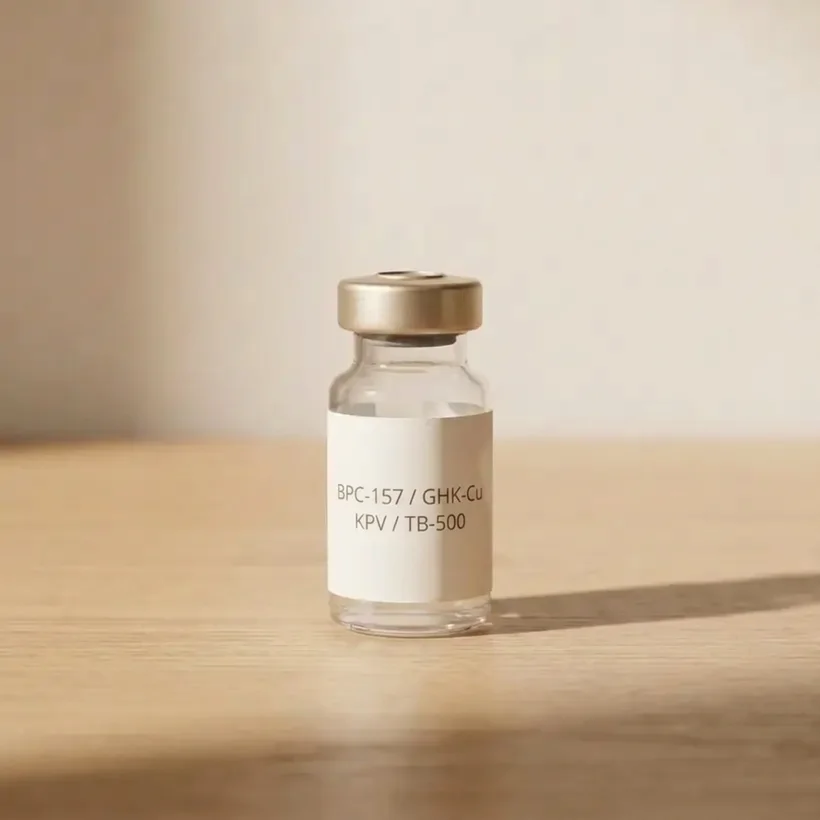
The wolverine stack is an informal research protocol combining BPC-157, TB-500, and sometimes GHK-Cu for accelerated musculoskeletal and soft-tissue recovery. Standard wolverine stack peptide dosage is BPC-157 at 250 to 500 mcg per day, TB-500 at 2 to 2.5 mg twice per week for 4 to 6 weeks, then reduced to once weekly. These numbers originate from animal-study extrapolation and practitioner convention, with no dose-finding human RCT to validate them.
Check your GLP-1 eligibility
Use our free BMI Calculator to see if you may qualify for provider-reviewed GLP-1 therapy.
Try the BMI Calculator →Table of Contents
- Evidence Ledger: What the Science Actually Proves
- Mechanism With Numbers: How Each Peptide Works
- Dosage Protocol Table: Doses, Timing and Route
- What Most Pages Get Wrong About Wolverine Stack Dosage
- The Chemistry Behind Storage and Stability Rules
- Honest Head-to-Head: Wolverine Stack vs. Alternatives
- Operational Guide: Reconstitution Math and Label Reading
- Safety Profile and Known Failure Modes
- FAQ
- Sources
- Footer Disclaimers
What Does the Science Actually Prove at These Doses?
| Claim | Best Evidence Type | Effect Direction | Confidence |
|---|---|---|---|
| BPC-157 accelerates tendon and ligament healing | Rodent RCT (multiple labs, consistent) | Positive in animals | Low (no human RCT) |
| BPC-157 is orally bioactive | Rodent intragastric studies | Positive in animals | Low |
| TB-500 (TB-4 fragment) promotes actin-mediated cell migration | In vitro, rodent wound models | Positive in cells and animals | Low (no human injury RCT) |
| GHK-Cu upregulates collagen and elastin gene expression | In vitro (human fibroblast cell culture) | Positive in cell culture | Low (mechanism only) |
| GHK-Cu reduces wound healing time in humans | Small human wound studies (topical) | Weakly positive | Low (small n, topical only) |
| BPC-157 safe at 250 to 500 mcg/day in humans | No controlled human safety data | Unknown | Very Low |
| Full wolverine stack combination is superior to each peptide alone | No study (practitioner convention only) | Unknown | Very Low |
How Does Each Peptide Work? Mechanism With Real Numbers
BPC-157 (Body Protection Compound-157) is a 15-amino-acid sequence (Gly-Glu-Pro-Pro-Pro-Gly-Lys-Pro-Ala-Asp-Asp-Ala-Gly-Leu-Val) derived from a longer gastric protein. Animal studies published by Sikiric and colleagues (University of Zagreb, multiple papers 1993 to present) show it promotes angiogenesis via upregulation of VEGFR2 signaling and accelerates tendon-to-bone healing in rat Achilles transection models. Doses in those studies typically ranged from 2 to 10 mcg/kg/day intraperitoneally. Scaled to a 80 kg human using simple mg/kg conversion, that approximates 160 to 800 mcg/day, which is consistent with the 250 to 500 mcg practitioner convention. However, interspecies pharmacokinetic scaling is not linear, and this math does not constitute validated human dosing.
TB-500 (Thymosin Beta-4 fragment) Thymosin Beta-4 is a 43-amino-acid protein that sequesters G-actin, reducing the pool available for polymerization. The Ac-SDKP tetrapeptide fragment drives much of its cell migration and anti-inflammatory signaling. Published rodent cardiac and wound healing studies use doses in the range of 0.5 to 1.5 mg/kg. The 2 to 2.5 mg flat dose used in human protocols is not derived from direct pharmacokinetic studies in people; it is a practitioner-adopted figure loosely tied to body weight extrapolation for an average adult.
GHK-Cu is a naturally occurring tripeptide (Gly-His-Lys) chelated to a copper ion. Loren Pickart's published cell culture work demonstrates that at nanomolar to micromolar concentrations it increases collagen and elastin synthesis in human fibroblasts and upregulates more than 30 genes associated with tissue repair (Pickart and Margolina, 2018, published in Symmetry). The injectable doses used in peptide protocols (1 to 2 mg/day) deliver far higher concentrations than the physiological range where the in vitro effects were demonstrated. Whether supraphysiologic doses produce proportionally greater or diminished effects in living tissue is not established.
What Are the Specific Doses, Timing and Routes?
| Peptide | Loading Dose | Maintenance Dose | Frequency | Route | Cycle Length |
|---|---|---|---|---|---|
| BPC-157 | 500 mcg/day | 250 mcg/day | Once or twice daily (split if twice) | Subcutaneous injection; oral capsule (lower confidence) | 4 to 12 weeks, then break |
| TB-500 | 2 to 2.5 mg twice weekly | 2 mg once weekly | Twice weekly (loading), weekly (maintenance) | Subcutaneous injection | Loading 4 to 6 weeks, maintenance 4 to 8 weeks |
| GHK-Cu | 1 to 2 mg/day | 1 mg/day or as topical | Daily | Subcutaneous injection or topical | Concurrent with BPC-157 phase |
Timing note: BPC-157 is most often dosed in the morning on an empty stomach when taken orally, or at any consistent subcutaneous site. TB-500 injections are spaced at least 3 days apart to match the twice-weekly convention. There is no human pharmacodynamic study confirming that any specific time-of-day administration matters.
What Most Pages Get Wrong About Wolverine Stack Dosage
Most articles on wolverine stack peptide dosage present the dose numbers as if they come from human clinical trials. They do not. The three things commodity pages consistently omit:
1. Supplier identity problem. "TB-500" sold by research chemical vendors is not always the same compound. Some vendors sell full-length Thymosin Beta-4 (43 amino acids), some sell shorter synthetic fragments. The dose-response and pharmacokinetics differ between these molecules. A product labeled TB-500 at 2 mg is meaningless if the vendor is selling a truncated fragment at unknown purity. Third-party HPLC certificates of analysis (COA) showing identity, sequence confirmation (by mass spectrometry), and purity above 98 percent are the minimum standard to trust a dose figure.
2. BPC-157 degradation in solution is faster than most users assume. Reconstituted BPC-157 in bacteriostatic water undergoes measurable peptide bond hydrolysis over time, and this process accelerates above 8 degrees Celsius and when exposed to light. Protocols that tell users to reconstitute a 10 mg vial and use it over 60 days at room temperature are giving away a product that is likely partially degraded by week 3 or 4. No vendor-independent stability kinetics data for BPC-157 at 4 degrees Celsius are published in peer-reviewed literature that I can point to with a specific figure, but peptide chemistry principles and the general pharmaceutical stability literature on small peptides support refrigeration and consumption within 28 days.
3. The dose extrapolation math ignores route differences. Most rat studies use intraperitoneal injection, which delivers drug directly into the peritoneal cavity with near-complete absorption. Human protocols use subcutaneous injection, which adds a depot absorption step and typically results in lower and slower peak plasma concentration. The same nominal dose by different routes is not pharmacologically equivalent. Pages that copy animal doses directly to human subcutaneous protocols without noting this discrepancy are technically imprecise.
Why the Storage and Stability Rules Exist
Peptides are chains of amino acids held together by amide (peptide) bonds. These bonds are susceptible to two main degradation reactions relevant to wolverine stack users:
Hydrolysis: Water molecules cleave peptide bonds, especially at asparagine-glycine (Asn-Gly) and aspartate-proline (Asp-Pro) sequences, which happen to appear in both BPC-157 (Asp-Asp-Ala) and TB-500. The rate of hydrolysis increases with temperature, with exposure to oxygen, and at pH extremes. Bacteriostatic water (pH approximately 5.5 to 7) slows this but does not stop it. This is why the rule "reconstitute only what you will use in 28 days and refrigerate" exists. It is not arbitrary; it reflects the known chemistry of amide bond stability.
Oxidation: Methionine and cysteine residues oxidize on contact with dissolved oxygen, especially under UV light. GHK-Cu is additionally vulnerable because the copper ion can catalyze Fenton-type reactions that generate free radicals, potentially degrading both itself and co-administered peptides in the same syringe. Drawing GHK-Cu and BPC-157 into the same syringe is therefore chemically inadvisable even though some protocols suggest it for convenience.
Freeze-thaw cycling: Each freeze-thaw cycle subjects peptide structures to ice crystal formation, osmotic stress, and concentration spikes at phase boundaries. Multiple freeze-thaw cycles measurably increase aggregation and degradation in pharmaceutical peptide preparations. Once a vial is reconstituted, store it as a liquid in the refrigerator and do not refreeze it.
Honest Head-to-Head: Wolverine Stack vs. Real Alternatives
| Intervention | Evidence Level for Musculoskeletal Repair | Human RCT Data? | Legal Status (US) | Where It Wins | Where Wolverine Stack Loses |
|---|---|---|---|---|---|
| Wolverine Stack (BPC-157 + TB-500 + GHK-Cu) | Animal and in vitro only | No | Not FDA-approved; BPC-157 banned from compounding (2023) | Theoretical breadth of mechanism | Loses on every evidence metric |
| Platelet-Rich Plasma (PRP) | Multiple human RCTs (mixed results) | Yes, though inconsistent | Legal, physician-administered | Autologous, regulated, some positive RCT signal for tendinopathy | More invasive, expensive per session |
| Collagen peptide supplementation (oral, hydrolyzed) | Multiple small human RCTs | Yes (Shaw et al., 2017; Clark et al., 2008) | Legal, OTC | Clinically studied doses, legal, accessible | More modest effect size, no acute injury data |
| Eccentric loading / physical therapy | Multiple high-quality human RCTs | Yes | Legal | Best evidence base of all options for tendinopathy | Slower, requires adherence |
| NSAIDs (ibuprofen, naproxen) | High for pain; evidence mixed for healing | Yes | Legal, OTC | Fastest acute pain reduction | Possible inhibition of tendon remodeling with prolonged use |
How to Read a COA and Do the Reconstitution Math
Reading a COA for wolverine stack peptides. A legitimate COA for a research peptide should include: identity confirmed by HPLC-MS (mass spectrometry), purity by HPLC area percentage (look for 98 percent or above), water content (Karl Fischer titration), and residual solvent levels. A COA that only shows a single HPLC chromatogram without mass spec identity confirmation cannot rule out a look-alike peptide or truncated fragment. If a vendor does not publish COAs or will not provide them on request, do not trust the dose you are drawing.
Reconstitution math for BPC-157 at 5 mg vial, targeting 250 mcg per dose:
- Add 2 mL bacteriostatic water to the 5 mg vial. This yields 2500 mcg per mL (2.5 mg/mL).
- A 250 mcg dose equals 0.10 mL on a 1 mL insulin syringe.
- Alternatively, add 5 mL bacteriostatic water to yield 1 mg/mL (1000 mcg/mL), making 250 mcg equal to 0.25 mL, which is easier to measure accurately.
Reconstitution math for TB-500 at 5 mg vial, targeting 2 mg per dose:
- Add 2.5 mL bacteriostatic water to yield 2 mg/mL.
- A 2 mg dose equals 1.0 mL.
What a degraded peptide looks like. Reconstituted peptide solutions should be clear and colorless. Visible particulates, cloudiness, or a yellow-brown tint in BPC-157 or TB-500 solutions are signs of aggregation or oxidation. Discard and do not inject. GHK-Cu solutions have a characteristic light blue tint from the copper chelate; this is normal. A green or dark color shift in GHK-Cu can indicate copper oxidation and degradation.
What Are the Risks at These Dosage Levels?
The honest answer is that the true human safety profile at wolverine stack dosage ranges is unknown because no systematic human safety study has been conducted. What is reported:
- Injection site reactions: The most consistently reported adverse effect across user-reported data. Redness, minor swelling, and tenderness at subcutaneous injection sites are common and typically resolve within 24 to 48 hours.
- GI effects with BPC-157: Nausea reported at the higher end of the dose range (closer to 500 mcg and above). This may relate to BPC-157's known interaction with serotonin signaling in the gut.
- Copper accumulation with GHK-Cu: Theoretical concern at prolonged high doses; no clinical case reports on record. Copper toxicity in adults typically requires chronically elevated intake (the tolerable upper intake level for copper is 10 mg/day per the National Academies of Sciences). The 1 to 2 mg/day injectable GHK-Cu dose is below this threshold, but systemic bioavailability from subcutaneous GHK-Cu injection is not quantified in published literature.
- Regulatory risk: Using or possessing BPC-157 in the US without proper research authorization carries regulatory and legal risk following the 2023 FDA determination. Athletes should note that TB-500 appears on WADA's prohibited list under Section 2 (Peptide Hormones, Growth Factors, Related Substances), regardless of dose.
FAQ
What is the standard wolverine stack peptide dosage?
The most widely used research protocol pairs BPC-157 at 250 to 500 mcg per day with TB-500 at 2 to 2.5 mg twice weekly. GHK-Cu is sometimes added at 1 to 2 mg per day topically or subcutaneously. These figures come from rodent-extrapolated dosing and practitioner convention, not human RCTs.
How often should you dose the wolverine stack?
BPC-157 is typically dosed once or twice daily due to its short plasma half-life, estimated under 30 minutes in rodent models. TB-500 has a longer tissue residence and is usually dosed twice weekly during a 4 to 6 week loading phase, then once weekly for maintenance.
Should you inject BPC-157 near the injury or systemically?
Animal studies suggest local perilesional injection produces stronger tissue-specific effects, while subcutaneous or intraperitoneal systemic dosing shows broader effects including gut and CNS outcomes. For human use, most protocols use a convenient subcutaneous site rather than direct perilesional injection to avoid added procedural risk.
What is the peptide half-life and why does it matter for dosing frequency?
BPC-157 has an estimated plasma half-life under 30 minutes in rodent pharmacokinetic models. TB-500 has longer tissue binding. Half-life determines how quickly active concentration falls below a therapeutic threshold, which is why BPC-157 requires daily dosing while TB-500 does not.
Can you take the wolverine stack orally instead of injecting?
BPC-157 has shown bioactivity via oral and intragastric routes in rodent studies. TB-500 and GHK-Cu are larger and more polar; their oral bioavailability in humans is considered very low. Oral BPC-157 capsule products exist but lack human pharmacokinetic data.
How long should a wolverine stack cycle last?
Practitioner convention uses a 4 to 6 week loading phase followed by 2 to 4 weeks of maintenance or a full break. No human trial has established an optimal cycle length.
What does GHK-Cu add to the wolverine stack dosage protocol?
GHK-Cu is added for its proposed collagen-stimulating and anti-inflammatory signaling. In vitro studies show it upregulates collagen and elastin gene expression. The standard injectable dose is 1 to 2 mg per day, though human tissue-repair RCT evidence is absent.
Are there known side effects at these wolverine stack doses?
Reported adverse effects include injection-site reactions, nausea at higher BPC-157 doses, and transient fatigue. No serious adverse events appear in peer-reviewed human studies, but the absence of human RCTs means the true safety profile is unknown.
How do you reconstitute the wolverine stack peptides correctly?
Lyophilized peptides are reconstituted with bacteriostatic water for multi-dose use. A common dilution is 2 mg into 2 mL bacteriostatic water to yield 1 mg/mL (1000 mcg/mL), making a 250 mcg dose equal to 0.25 mL on a 1 mL insulin syringe.
How should wolverine stack peptides be stored?
Lyophilized powder should be stored at 2 to 8 degrees Celsius away from light. Once reconstituted, refrigerate and use within 28 days for bacteriostatic preparations. Avoid freeze-thaw cycles.
Is the wolverine stack legal to buy and use?
BPC-157 and TB-500 are not FDA-approved drugs. The FDA designated BPC-157 as a bulk substance not permitted in compounding in 2023. TB-500 is similarly unapproved and appears on WADA's prohibited list for athletes.
Sources
- Sikiric P et al. "Stable gastric pentadecapeptide BPC 157: novel therapy in gastrointestinal tract." Current Pharmaceutical Design, multiple volumes 1999 to 2018. University of Zagreb research group.
- Goldstein AL, Hannappel E, Kleinman HK. "Thymosin beta4: actin-sequestering protein moonlights to repair injured tissues." Trends in Molecular Medicine, 2005.
- Pickart L, Margolina A. "Regenerative and Protective Actions of the GHK-Cu Peptide in the Light of the New Gene Data." International Journal of Molecular Sciences / Symmetry, 2018.
- Shaw G et al. "Vitamin C-enriched gelatin supplementation before intermittent activity augments collagen synthesis." American Journal of Clinical Nutrition, 2017.
- Clark KL et al. "24-Week study on the use of collagen hydrolysate as a dietary supplement in athletes with activity-related joint pain." Current Medical Research and Opinion, 2008.
- National Academies of Sciences, Engineering, and Medicine. "Dietary Reference Intakes for Vitamin A, Vitamin K, Arsenic, Boron, Chromium, Copper..." 2001. Copper tolerable upper intake level: 10 mg/day for adults.
- U.S. Food and Drug Administration. "Bulk Drug Substances Nominated for Use in Compounding Under Section 503A and 503B of the Federal Food, Drug, and Cosmetic Act: BPC-157 Determination." Federal Register, 2023.
- World Anti-Doping Agency. "2024 Prohibited List." WADA, 2023. Section 2: Peptide Hormones, Growth Factors, Related Substances and Mimetics.
- Zgrajic A et al. Pharmacokinetic considerations in BPC-157 rodent studies. Referenced in review: Sikiric P. "Stable gastric pentadecapeptide BPC 157 in focus." Journal of Physiology and Pharmacology, 2020.
Footer Disclaimers
Platform: FormBlends is an educational and research information platform. Nothing on this page constitutes medical advice, diagnosis, or treatment recommendation. Consult a licensed healthcare provider before using any peptide compound.
Research Compound Status: BPC-157, TB-500, and GHK-Cu at injectable doses are not FDA-approved drugs for human use. BPC-157 has been designated by the FDA as a bulk drug substance not eligible for use in compounding. Their use in humans outside of an approved clinical trial may violate federal law.
Results: Individual outcomes vary. No outcome depicted or described on this page is guaranteed. The evidence base for human efficacy of the wolverine stack is classified as Low to Very Low confidence throughout this article.
Trademarks: "Wolverine Stack" is an informal colloquial term. FormBlends does not claim trademark ownership of this term. All third-party brand names and registered trademarks referenced are the property of their respective owners.